Who Am I After Sister Patience?

Letting go of my identity as Sister Patience has been somewhat of a relief. In many ways I felt like I was living a double life. I had to keep my birth name, Lorna Smithers, for financial purposes and appointments such as the doctor and dentist. Although my mum accepted my name change, my dad refused to (although he has recently started referring to me as ‘her’ rather than ‘Lorna’ to escape my admonishments). Other family members ignored my request. Whilst I felt comfortable telling my friends and personal trainer at the gym, I never found the right moment to tell my doctor, dentist, physio, hairdresser or former colleagues at the supermarket where I worked and still shop. It was a nightmare managing two email addresses (when you’re autistic and every single message has to be replied to, removed from the inbox and filed correctly before you can relax, one is more than enough!).

I also felt like I was trying to live up to an ideal I couldn’t match. No amount of positive affirmations or metta ‘loving kindness’ or tonglen ‘giving and receiving’ practice made me as patient and kind as I wanted to be. I’d think I was improving then have another blow up with my dad and be doubly angry with myself because it demonstrated he was right – that I’m not Sister Patience.

Yet without Sister Patience who am I? Settling back into the skin of Lorna Smithers has felt rawer and truer but hasn’t been a wholly comfortable experience. I’ve once again had to confront my past – something that from the perspective of modern society looks like a series of failures (failed philosopher, failed poet, failed author, failed nun…) but from an alternative one might look an authentic spiritual journey well lived. 

And, of course, the definition of ‘failure’ is subjective. I might have failed to be an author in terms of making a living from it but I’ve still had books and articles published and received small payments along the way whether they are from book sales, Patreon support, or free subscriptions to magazines. So I can still claim to be an author. I’m also succeeding with my shamanic practitioner training and shamanic guidance and healing sessions along with running circles so can also claim to be a shamanic guide.

In my last couple of posts I’ve mentioned that I recently received the gnosis that I’m more of a hermit than a nun. I feel that’s true in my soul but it doesn’t match my outer reality yet – I still live with my parents and do not make enough money to cover my food and board let alone to live self-sufficiently. One of my readers, Caer, recently signposted me to a book called Consider the Ravens and therein it noted that any true hermit wouldn’t advertise themselves as such. There’s a dichotomy between being an author and shamanic guide who has to market themselves online and a hermit. There’s also a restless feeling I have unfinished business in the world. So, whilst hermithood is an inner reality and dream for the future, it isn’t something I can identify with wholly at present.

Author, shamanic guide, would-be-hermit, are the roles I now identify with, along with my devotion to my patron God, Gwyn ap Nudd, which has been ongoing throughout these upheavals (thinking about it, damn Him, He’s the one who has caused all of them!).

Being Sister Patience has made me a little stronger, a little kinder, a little more patient, likely in preparation for further challenges and tumult along the way…

The Truth is I’m a Hermit Nun

I’ve recently spent a week in retreat and a huge insight came up as I was contemplating why I’m struggling to feel I’m of value and to stand in my truth as a nun, not only in polytheist and shamanic groups but in my local community. 

I realised this is firstly because I’m not a cloistered nun and secondly that, although I’ve tried on the role of a lay nun, this doesn’t truly fit either. I’m not naturally a community person. I’m not naturally an active. I’m not smily and sociable. This is not only because I’m autistic and struggle with social anxiety but because my soul has a deep need for solitude and silence – it hurts when that state of being is broken by the social demands for polite conversation and small talk.

One sign that I was forcing myself to do the wrong thing by trying to be a community person was the problems I experienced when I tried running in-person shamanic circles (something I felt I should do but was not told to by my Gods). I had to cancel the first one at Galloways, a lovely venue that was formerly a home for the blind, due to the extremely cold weather in January. After this, the numbers were good for one circle, then dwindled, meaning we couldn’t afford the room. When I tried co-organising another at the Education Hut in Greencroft Valley, where I’ve been conservation volunteering for thirteen years, it was very stressful due to being weather-dependent as based in a woodland and was called off due to a storm. 

Ok, I admitted to the Gods, I’m not meant to be running in-person circles. If I don’t listen next time, you’ll send something worse than cold and ice and a minor storm. In retrospect, I could see they were safeguarding me from the stress of organising people to do things (my main trigger for burnout) along with the discomforts of making small talk at the beginning and end and co-ordinating the group drumming (which really hurt my head!). I realised I’d be able to mask for a certain amount of time, but long term, the attendees would perceive how uncomfortable I am in community.

As I sat with these thoughts, I received the gnosis ‘the truth is I’m a hermit’. It’s risen from within before and has been repeated by the people who really know me. I’ve shrugged it off again and again as I haven’t felt hermit-like enough. I run an online monastery. I’m training to be a shamanic practitioner. I go to the gym. 

When I looked into this, I found there were no rules that prevented a hermit from going to the gym. Most hermits are expected to support themselves by work that fits with leading a prayerful solitary life, and being a shamanic practitioner does. And it is possible for a hermit to found and run a monastery that accommodates an eremitic lifestyle as exemplified by St Romauld and the Camaldolese order.

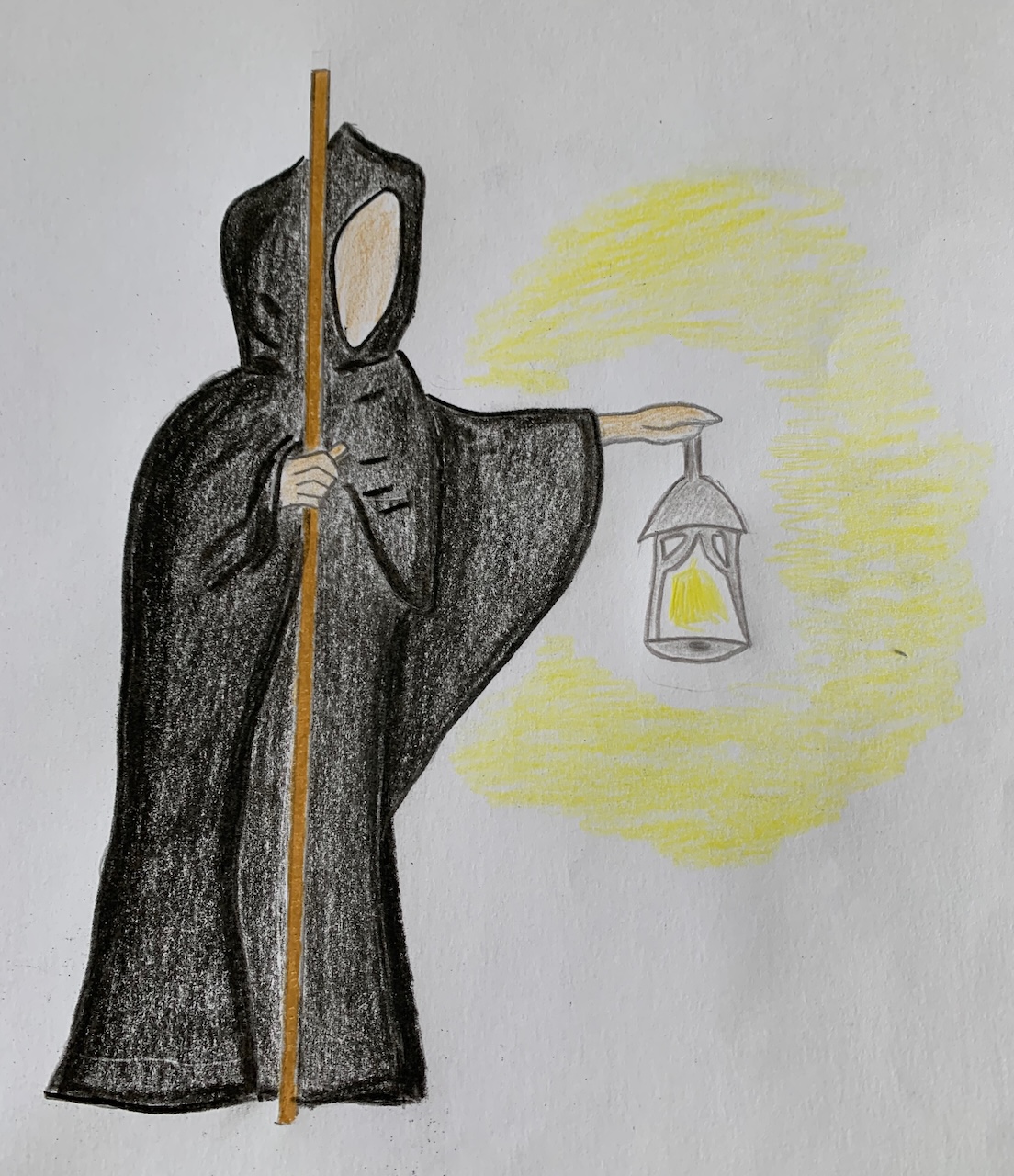
So, I realised, I can be a hermit nun. This thought made me feel incredibly happy and at peace with myself. It made me think of all the times I’ve drawn the Hooded Man in the Wildwood Tarot, ‘my old friend’, and felt the deepest of kinships. 

Finally, I can stand in my truth when people ask me what I do without feeling I need to put on pretences to be a smily sociable lay nun but can explain I am a hermit nun and that silence and solitude are intrinsic to my role.

For the first time in my life, my nature and vocation are at one.

Self portrait as a hermit nun and shamanic guide

I Am Home

‘I have finally arrived. I am home.’ 

This insight came to me after I had been considering taking my monastic vows for the third time this year whilst looking ahead to lifelong vows next year. If I am to pledge to being a nun of Annwn for life what will this life look like?

When I founded the Monastery of Annwn at first I dreamt it might become a physical reality. I drew up an ambitious plan with a central temple, underground shrines, healing huts, an arts centre, circles of huts for the monastic devotees, a garden, compost loos, a burial ground…*. Shortly afterwards I realised living in, let alone running, such a large and busy place would be more Uffern ar y Ddaer ‘Hell on Earth’ than abiding close to Annwn for me.

Still, as I continued to follow as monastic-a-path as I could while living with my parents in suburban Penwortham, I spent a lot of time dreaming of alternatives for a physical monastery. What about a large house with land? What about beginning with a small house with 2 – 3 monastics sharing the space? 

As my practice of being present and aware for Gwyn has progressed and I’ve got a lot better at watching and knowing myself as I undertake my daily activities I’ve come to realise that although I enjoy spending a limited amount of time holding sacred space for others I really appreciate having my morning and evening prayer and meditation times solely with my Gods and spirits.

Also, as I’m autistic and thrive on order and routine, in spite of my meditation practices helping me become more responsive and less reactive, I still get incredibly irritable and resentful if others make a mess or interrupt me. This is with my parents, who are relatively quiet and orderly. I dread to think of what I might be like with others with different personalities. I wouldn’t be prepared to change my diet or routine and thus couldn’t expect others to fit with mine. I’m also aware that my main trigger for autistic burnout and meltdowns is organising other people to do things and even worse doing things by committee.

So, finally, I have come to terms with the fact that I am not cut out to run or even be in a monastery. And this is fine because a few months ago I discovered the Carmelite model for lay monasticism and have since then been exploring how this suits me. Perfectly it turns out. I have a couple of hours in the morning and evening for prayer and meditation and the rest of my day is dedicated to shamanic work, studying, writing, housework, gardening and occasional conservation volunteering. I’m still ‘allowed’ to go to the gym.

I recently put forward the model of the monastery functioning as a support structure enabling us to serve our Gods as lay monastics bringing inspiration and wisdom from Annwn to the world, to the other members. Those who replied agreed it fits with them as most have family and work commitments.

Putting aside my hopes and fears around founding a physical monastery has allowed me to fully come home to my life as a lay nun in present-day Penwortham. It allows me to be happier and more present for Gwyn. And, most importantly, it pleases Gwyn too, because the more present I am in the world, the better I am at presencing Him and being of service to Him and my communities.

And my recently planted sanctuary rose bush has bloomed which I take to be a good sign.

*https://lornasmithers.wordpress.com/2024/05/17/dreaming-the-monastery-of-annwn/

By Your Anger and Your Arrow – On Invoking Rudra and Gwyn

In a recent article I mentioned my discovery that yoga and tantra originate from Shaivism, ‘the Path of evoking Shiva’, ‘a system of mysticism rooted in indigenous shamanism’ which existed before the beginning of the Vedic period (1).

This got me really excited as it provided evidence that yoga has shamanic origins and that Shiva, ‘Lord of Yoga,’ was the God of this pre-vedic system. As a Brythonic polytheist and shamanic guide I associate my patron God, Gwyn ap Nudd, a King of Annwn (the Otherworld) with shamanic practices and have come to know Him as a ‘Master of Meditation’.

These similarities led me to looking for the earliest textual references to Shiva. I found out that He was earlier known by the name Rudra – ‘Roarer’ or ‘Howler’. By this name He shares many similarities with Gwyn as a God of hunting, wind and storms, and healing. Rudra is the leader of the Maruts or Rudras – storm Deities who are His sons. Gwyn and His ‘family’ are associated with ‘the province of the wind’ (2). Gwyn is a leader of the Wild Hunt, which is a similar phenomenon.

The oldest hymns to Rudra appear in the Rig Veda (1500BCE). In her introduction Wendy Doniger describes Him as follows: ‘Rudra is a liminal figure… invoked with Vedic hymns but not invited to partake in the regular Vedic sacrifice; as the embodiment of wildness and unpredictable danger, he is addressed more with the hope of keeping him at bay than with the wish to bring him near… Though only three entire hymns in the Rig Veda are addressed to Rudra, the rich ambivalence of his character is the basis of an important line of Indian theology that culminates in the Hindu god Śiva. Rudra is fierce and destructive like a terrible beast, like a wild storm; the sage begs him to turn his malevolence elsewhere. Yet Rudra is not merely demonic, for he is the healer and cooler as well as the bringer of disease and destructive fever’ (3).

I found this description striking and it reminded me very much of Gwyn, who shares an outsider status as a wild God who is revered and feared. Gwyn and the spirits of Annwn, like the Irish andedion ‘ungods’, also exist outside the ‘pantheons’ of culture Gods – the Children of Don  and the Tuatha De Dannan (4). This is suggestive of their origins in an earlier wilder shamanic culture.

Gwyn shares with Rudra a ‘rich ambivalence’. As the leader of the spirits of Annwn He contains their aryal ‘fury’ and demonic nature yet, at the same time, He is the Deity who holds it back to prevent the destruction of the world (5). These spirits share many similarities with the Maruts, or Rudras, the sons of Rudra. Rudra is also said to have power over the Asuras, ‘demons’.

Like Rudra, Gwyn is viewed as being able to bring disease and destruction and, contrastingly, is seen as a healer. In the fourteenth century He was invoked to heal the effects of the Evil Eye as recorded in The Speculum Christiani: ‘Some stupid people also stupidly go to the door holding fire and iron in the hands when someone has inflicted illness, and call to the King of the Benevolent Ones and his Queen, who are evil spirits, saying, “Gwyn ap Nudd who are in the forests for the love of your mate allow us to return home” (6).

It is very interesting to see Gwyn referred to as the King of the Benevolent Ones. This, like the term Tylwyth Teg, ‘Fair Family,’ is a euphemism for His spirits similar to how the Greek furies are referred to as the Eumenides, ‘Kindly Ones’. Likewise, Rudra is implored for His ‘kindness’. Gwyn’s name, which means ‘white, blessed, holy,’ might be seen as a similar appellation.

In ‘Rudra, Father of the Maruts’, Rudra is called upon to send ‘kindess’ and ‘healing medicine’, to drive away ‘hatred’, ‘anguish’ and ‘disease’ and to ward off ‘attacks and injury’. He is petitioned as ‘the best healer’ and as a protector who takes the form of a ‘tawny and amazing bull’ carrying ‘arrows and bow’ (7). In this apparel He bears striking similarities with Gwyn, who appears as a warrior-huntsman and ‘bull of battle’ in The Black Book of Carmarthen (8).

In ‘Have Mercy on us Rudra’ He is again petitioned to show ‘kindness’, to offer ‘protection, shelter, refuge’ and to hold back His destructive power. ‘Do not kill our father or our mother, nor harm the bodies dear to us.’ ‘Keep far away from us your cow-killing and man-killing power, O ruler of heroes’ (9). Here, like Gwyn, whose horse tramples armies like felled reeds to the ground (10) He brings death. ‘Ruler of heroes’ resembles Gwyn’s epithet ‘Lord of Hosts.’

Intriguingly we find the lines: ‘We call down for help the dreaded Rudra… the sage who flies.’ (11) This might refer to Rudra’s mastery of shamanic soul-flight. 

In the Yajur Veda we find a hymn to Rudra called ‘Shri Rudram’ which is divided into two parts. In the Namakam, Rudra is invoked by a number of names to stay His bow and arrow and destructive tendencies and to bring happiness and peace. ‘Oh! Rudra Deva! My salutations to your anger and your arrows. My salutations to your bow and to your pair of hands. Oh! Destroyer! By that arrow of yours, that bow of yours and that quiver of yours which have become the most peaceful make us happy’ (12).

Here Rudra and the Rudras are intimately associated with forests and trees. We find lines where They share similarities with the spirits of Annwn or fairies who, in The Life of St Collen, wear garments of red and blue and offer a delicious banquet (13). ‘Those Rudras who exist in trees as their overlords, yellow-hued, like tender grass, crimson and blue-necked… lords of ghosts and spirits… those Rudras who are protectors of the pathways, the givers of food’ (14).

The Chamakan is a series of petitions to Rudra for health and good fortune. ‘Let the life forces and vital airs of Prana, Apana and Vyana function properly in me.’ ‘Let me have well functioning sense organs with clear eye sight and clear hearing.’ ‘May I be granted happiness in this world and the other world’ (15).

These early hymns show how Rudra was invoked in the vedic times and hint at His function in an earlier wilder shamanic culture. At their heart lies Rudra’s ambivalent nature – His fierceness and His kindness – qualities He shares with Gwyn. Thus, they offer clues to how Gwyn (by His earlier name Vindos) might have been praised and called upon by the Brythonic people around 1500BCE and might serve as inspiration for new hymns from modern devotees.

REFERENCES

  1. Swami Nischalananda, Insight into Reality, (Kindle Edition, 2019), p387
  2. Dafydd ap Gwilym, Poems, (Gomer Press, 1982), p131
  3. Wendy Doniger (transl), The Rig Veda (Penguin Classics, Kindle Edition), p219 – p222
  4. Similar wild outsider Gods are found in other Indo-European cultures such as Dionysus to the Olympian Gods in the Greek tradition and the Vanir to the Aesir in the Norse tradition.
  5. ‘Gwyn ap Nudd… God has put the spirit of the demons of Annwfn in Him, lest the world be destroyed.’Sioned Davies, The Mabinogion, (Oxford University Press, 2007),p199
  6. Angelika H. Rudiger, ‘Gwyn ap Nudd: Transfigurations of a character on the way from medieval literature to Neo-pagan beliefs’, Gramayre: The Journal of the Sussex Centre for Folklore, Winter 2012, Issue 2 
  7. Wendy Doniger (transl), The Rig Veda (Penguin Classics, Kindle Edition), p222 – 223
  8. https://awenydd.weebly.com/the-conversation-between-gwyn-ap-nudd-and-gwyddno-garanhir.html
  9. Wendy Doniger (transl), The Rig Veda (Penguin Classics, Kindle Edition), p224 – 225
  10. https://awenydd.weebly.com/the-conversation-between-gwyn-ap-nudd-and-gwyddno-garanhir.html
  11. Wendy Doniger (transl), The Rig Veda (Penguin Classics, Kindle Edition), p224 – 225
  12. https://www.sathyasai.org/sites/default/files/pages/eternal-companion/vol-4/issue-3/rudram-namakam-chamakam.pdf p1-2
  13. https://www.maryjones.us/ctexts/collen.html
  14. Ibid. p23

The Universe Unrolls from His Heart – Thoughts on Kashmir Shaivism and Annuvian Monasticism

‘He becomes intent to roll out the entire splendour of the Universe that is contained in His heart…’
~ Swami Maheshwarananda

When I first started practicing yoga in 2022 in the hope it would help with my hip and knee problems I had no idea that I would fall in love not only with the asana ‘postures’ but with pranayama ‘breathwork’ and dhayana ‘meditation’. I never guessed that I would find such astonishing parallels between the Hindu God Shiva, ‘Lord of Yoga’, and my patron God, Gwyn ap Nudd, who presented Himself to me as our Brythonic ‘Master of Meditation’. Both, I realised, come from a shared Indo-European origin.

I found similarities exist between Shiva and Gwyn on a symbolic level. Both are associated with bulls and serpents and with intuitive insight and visionary experience. Shiva’s often seen as a destroyer and Gwyn has destructive potency as a leader of the Wild Hunt and the God who holds back the fury of the ‘devils’ of Annwn in order to prevent their destruction of the world.

There’s a story about Shiva riding down the mountain to His wedding feast on a huge bull ‘covered in snakes and ash’ ‘with ghosts and demons’ ‘some had their mouths in their stomachs, some had only one foot and some had three’. Yet when He and His company ‘crossed the wedding portals’ and entered the presence of His bride, Shakti, they were transfigured into ‘a handsome young man’ and ‘divine beings’ (1). This spoke immediately to me of the paradoxical nature of Gwyn and the spirits of Annwn who are referred to both as furious ‘devils’ and as beautiful and beneficent fair folk.

Whilst studying yogic meditation in more depth with the Mandala Yoga Ashram I discovered an incredible text called the Vigyana Bhairava Tantra from the Kasmir Shaivite tradition.The ashram founder, Swami Nischalanda, refers to it as his Bible and many of the practices within the ashram derive from it. Over recent months I have taken a short course (2) and read Swamiji’s exposition of it in Insight Into Reality from which I gleaned many insights.

Bhairava ‘Fearsome’ or ‘Awe-Inspiring’ is another name for Shiva which evokes qualities of Gwyn, whilst vigyana means ‘insight’ and tantra ‘techniques’. The text is also known as Shiva Vigyana Upanishad ‘The Secret Teachings of Shiva’. Within, Bhairava addresses His consort, Bhairavi as His Beloved and student, teaching Her in 112 dharanas ‘concentrations / lessons’ how to gain insights into the fundamental nature of reality. As I’ve been listening to and practicing the dharanas I have felt that Gwyn is speaking through it to me as His student and beloved as a nun of Annwn.

In The Edge of Infinity Swami Nischalananda provides an account of the history of Kashmir Shaivism. He says: ‘In the past, tantra was widely known as Shaivism, ‘the Path of Evoking Shiva’, a system of mysticism rooted in indigenous shamanism. It existed  throughout India well before 1500 CE, the start of the vedic period’ (3). Tantra, as an oral tradition, predates the Vedic texts, with its first scriptures emerging in the first millenium CE. Kashmir Shaivism originated in 850 CE with one of the main texts being the Shiva Sutras which were gifted to Vasugupta by Shiva in a dream. The Vigyana Bhairava Tantra is central and was written down around 7 – 800CE.

I was incredibly excited to find out that a number of texts, such as Pratyabhijna Hridayam ‘The Heart of Recognition’ and The Triadic Heart of Shiva, refer to the universe unfolding from Shiva’s heart and to His residence in the heart. 

‘When He becomes intent to roll out the entire splendour of the Universe that is contained in His heart… he is designated as Sakti.’ (4)

‘The Heart, says Abhinavagupta, is the very Self of Siva, of Bhairava, and of the Devi, the Goddess who is inseparable from Siva. Indeed, the Heart is the site of their union (yamala), of their embrace (samghata). This abode is pure consciousness (caitanya) as well as unlimited bliss (ananda)… The Heart, says Abhinavagupta, is the sacred fire-pit of Bhairava. The Heart is the Ultimate (anuttara) which is both utterly transcendent to (visvottirna) and yet totally immanent in (visvamaya) all created things. It is the ultimate essence (sãra). Thus, the Heart embodies the paradoxical nature of Siva and is therefore a place of astonishment (camatkara), sheer wonder (vismaya), and ineffable mystery. The Heart is the fullness and unboundedness of Siva (purnata), the plenum of being that overflows continuously into manifestation. At the same time, it is also an inconceivable emptiness (sunyatisunya). The Heart is the unbounded and universal Self (purnahantä).’ (5)

‘He, truly, indeed, is the Self (atman) within the heart, very subtle, kindled like fire, assuming all forms. This whole world is his food. On Him creatures here are woven. He is the Self, which is free from evil, ageless, deathless, sorrowless, free from uncertainty, free from fetters, whose conception is real, whose desire is real. He is the Supreme Lord. He is the ruler of beings. He is the protector of beings. This Soul, assuredly, indeed, is Isana, Sambhu, Bhava, Rudra.’ (6) (The names at the end are all epithets of Shiva).

Reading these words was meaningful for me because Gwyn revealed to me that His heart is the Heart of Annwn ‘Very Deep’ (the Brythonic Otherworld). During my practice of playing the heartbeat of Annwn on my drum for an hour every week I have experienced visions of the universe and its people being born from Annwn like red blood pouring from His heart and returning at death like blue blood. When we entered a sacred marriage He came to dwell within my heart as ‘the Heart of my Heart’. I was told that my heart is also the Heart of Annwn and the universe unrolls from my heart (which fits with the practices emphasising the importance of the heart-space in yoga).

As I read more about Kashmir Shaivism I found further similarities with the cosmology I have been gifted in visions from Gwyn. In Kashmir Shaivism the fundamental ground of reality is Brahman or Parama ‘Ultimate’ Shiva. In mythology it is represented as the serpent-king Nagaraja ‘the infinite… who spreads out the universe with thousands of hooded heads, set with blazing, effulgent jewels’ (7). Before I had read these lines I was shown that the ground of reality is Anrhuna, the Mother of Annwn, the Dragon Mother, who has nine dragon heads with jewels in their foreheads and an infinite number of coils. 

In a vision I was shown how Anrhuna was slaughtered and Gwyn and His sister, Creiddylad, were torn from Her womb. Through eating His mother’s heart Gwyn inherited the Heart of Annwn and became King of Annwn (8). Creiddylad brought life to the world as the energy behind creation – the ‘green fuse’ of vegetative life and by breathing life into living creatures. 

This bears a resemblance with Kashmir Shaivism wherein Brahman divides into Shiva (Consciousness) and Shakti (energy and matter). There are parallels between the Heart of Annwn being the source of the universe from which all living beings are born and to which they return and the Heart of Shiva being the source of all energy and matter manifesting as Shakti.

Intriguingly, the first three dharanas in the Vigyana Bhairava Tantra focus on the origin and end points of the breath. When I practice these exercises I find myself contemplating how Creiddylad gave breath to life and Gwyn takes it away.

Finding these similarities between Kashmir Shaivism and the Annuvian monasticism I am developing for Gwyn has been revealing and exciting. I’m sure there is much more to be discovered as I continue with my research and practices.

REFERENCES

(1) Swami Nischalananda, Insight into Reality, (Kindle Edition, 2019), p393
(2) https://www.mandalayogaashram.com/self-study-course-vigyana-bhairava-tantra
(3) Swami Nischalananda, Insight into Reality, (Kindle Edition, 2019), p387
(4) Jaideva Singh, Pratyabhijna Hridayam, (Sundar Lal Jain, 1963), p30
(5) Paul Eduardo Muller-Ortega, The Triadic Heart of Siva, (State University of New York Press), p71
(6) Ibid. p82
(7) Richard Freeman, The Mirror of Yoga: Awakening the Intelligence of Body and Mind, (Kindle Edition, 2019) p19
(8) This story has a basis in medieval Welsh mythology. In Culhwch and Olwen, Gwyn kills a king called Nwython then feeds his heart to his son. I believe this might evidence an earlier ‘Cult of the Heart’ that preceded the ‘Cult of the Head’ wherein the soul was seen to dwell in the heart and the wisdom of one’s ancestors could be passed on by eating their hearts.

Awareness – Three Guidelines from Gwyn

Over the past year I have been practicing meditations in the yogic tradition that develop awareness such as antar mouna ‘inner silence’ and ‘spaciousness.’ This has led from the development of my personal practice of being present for my patron, God, Gwyn, to be being aware that I am present. 

Whilst reflecting on this He gave me three guidelines for awareness – 

  1. Be present and aware in both Thisworld and Annwn.
  2. Be aware of Me without and within (I am everywhere).
  3. Spend time in solitude and silence so we can meet in awareness.

Having an awareness practice is very helpful for me as an autistic person who struggles with sensory and emotional overload and tends to disassociate and get lost in thoughts. It helps me stay present and grounded in Thisworld and focused when journeying in the Otherworld.

Being aware of Gwyn in each moment makes awareness a devotional act. Any moment, no matter what’s happening, can be transfigured by the knowledge that He is with me, inspiring me and guiding me. 

The hardest guideline to follow is withdrawing from the busyness of everyday life and quieting my mind enough to find inner silence and meet with Gwyn awareness to awareness but when this happens it works deep magic.

“Meet Me in the place between thoughts,” is a guiding thread running through these guidelines that has helped me, as a nun of Annwn and Bride of Gwyn, to rendezvous with my Beloved in any place and time.

Being Present for Gwyn

I. How the Furthest God became Present

My practice of being present for Gwyn arose from two different sources. The first is my marriage to Him. Before we were married, as the King of Annwn, I saw Him as distant, as Other, as the furthest away and Othermost God.

‘Gwyn ap Nudd who are far in the forests for the love of your mate allow us to come home,’ reads a 14th century invocation from the Speculum Christiani.

These words contain a paradox typical of the mythos of the King of Annwn. The God who is furthest away in the forest has the greatest ability to bring us home, to the places where we we live, to the here and now, to our ourselves.

I only realised this after our wedding when Gwyn came to reside within me as the Heart of my Heart and I realised He had been there all along. As I became accustomed to His indwelling I began to feel (paradoxically again) that the more present I am the closer He is. He confirmed this insight.

Secondly, in yoga, I became aware of the sankalpa – a heartfelt intention which might be stated at the beginning of an asana, pranayama or yoga Nidra practice. Immediately I intuited it – ‘being present for Gwyn.’ 

This resolution has more recently come to inform my whole life and I have associated it with mindfulness in the yogic and Buddhist traditions and with ‘the Practice of the Presence of God’ in the Christian tradition. Below I will share how I have related these learnings to being present for Gwyn.

II. Mindfulness – ‘the life-and-death matter of awareness’

Mindfulness derives from the Hindu and Buddhist concept sati which means ‘to remember or observe’. (1) It was introduced to the West by Thich Nhat Hanh and others in the second half of the twentieth century. Hanh defines it as ‘being aware of what is happening inside and around you in the present moment.’ (2)

In The Miracle of Mindfulness he refers to ‘the life-and-death matter of awareness’. (3) In a well-known passage: ‘If while washing dishes, we think only of the cup of tea that awaits us, thus hurrying to get the dishes out of the way as if they were a nuisance, then we are not “washing the dishes to wash the dishes.” What’s more, we are not alive during the time we are washing the dishes. In fact we are completely incapable of realizing the miracle of life while standing at the sink. If we can’t wash the dishes, the chances are we won’t be able to drink our tea either. While drinking the cup of tea, we will only be thinking of other things, barely aware of the cup in our hands. Thus we are sucked away into the future – and we are incapable of actually living one minute of life.’ (4)

It is this feeling of aliveness in the present moment that I believe Gwyn, a God of the Dead, is paradoxically attempting to cultivate in me and share, in the practice of being present for Him.

In Full Catastrophe Living Jon Kabat-Zinn says: ‘I define mindfulness operationally as the awareness that arises by paying attention on purpose, in the present moment, and non-judgmentally.’ (5) He describes in depth how our constant busyness, which stems from constantly wanting more, clinging onto what we like and trying to avoid what we don’t like, drives our inability to be present in the moment and thus truly alive. 

He writes of how mindfulness creates an island of non-doing in the ocean of doing and provides us with the insight we are not our thoughts. This liberates us from ‘the tyranny of the thinking mind’ and allows us to live more fully. (6)

Over the past few years my yogic practices and Gwyn Himself have been helping me to access my inner witness and be less enslaved by my thoughts. 

When Gwyn and I are in the present together we are free.

III. The Practice of the Presence of God

I discovered this delightful little book by a 17th century monk called Brother Lawrence whilst looking for inspiration for my monasticism in the Carmelite tradition. It was not written by Lawrence himself but pieced together after his death by his vicar from their letters and conversations in 1693.

Lawrence’s method is simple yet demanding.‘There is no art or formula to communing with God. All that’s needed is an unwavering heart determined to apply itself to nothing but Him, for His sake, and loving Him only.’ (7) The heart must be emptied of all but God – in particular the distractions that tear our attention away from Him and that might offend Him. ‘Wholehearted renunciation of everything that doesn’t lead us to God’ is required so we can attune ourselves to Him, carrying on a simple, continual conversation.’ (8) It is through constantly conversing with God we know and don’t stray from His will.

For Lawrence there is no separation between work and prayer. He says: ‘in the noise and clatter of my kitchen, as people all around are calling for different things, I possess God with all the peace in the world, as if I were upon my knees before the blessed sacrament.’ (9)

Through his practice of the presence of God Lawrence claims to have reached a state in which all he wants is God’s will in everything.

I will have to admit I’m not there yet. I’m still being swayed by my fears and desires, led astray by distractions, unable to quiet my thoughts. Yet I’m becoming more aware and able to bring my mind back to being present for Gwyn.

This feels all the more important in the summer, when as our Winter King He sleeps in Annwn, yet through me is able to participate in living in Thisworld.

REFERENCES

  1. https://en.wikipedia.org/wiki/Sati_(Buddhism)
  2. https://thichnhathanhfoundation.org/
  3. Hanh, Thich Nhat. The Miracle Of Mindfulness: The Classic Guide to Meditation by the World’s Most Revered Master. Kindle Edition. p26)
  4. Ibid. p5
  5. Kabat-Zinn, Jon. Full Catastrophe Living, Revised Edition: How to cope with stress, pain and illness using mindfulness meditation. Kindle Edition. p33
  6. Ibid. p149
  7. Lawrence, Brother. The Practice of the Presence of God: A Modern Translation. Kindle Edition. p12
  8. Ibid. p13
  9. Ibid. p18

Sister Patience of the Heart of Annwn

Whilst watching the Carmelcast Podcast on Youtube for its discussions on prayer I noticed the hosts introducing themselves as Brother John Mary of Jesus Crucified and Brother Pier Georgio of Christ the King. This alerted me to the fact many monastics not only take a monastic name but add a dedication to an aspect of their Deity or religion. Other examples include Saint Elizabeth of the Trinity and Sister Mary of the Divine Heart.

Thus I meditated on what aspect of Gwyn or my tradition I’d dedicate myself to. I considered firstly our Monastery of Annwn Nine Faces of Gwyn – Gwyn the Warrior, Gwyn the Hunter, Gwyn the Lover, Gwyn the Dreamer, Gwyn the Inspirer, Gwyn the Reaper, Gwyn the Gatherer, Gwyn the Unknown.

Ten years back I might have chosen Gwyn the Inspirer. As a trainee shamanic practitioner practicing soul retrieval I wondered if Gwyn the Gatherer (of souls) might be apt but it didn’t feel right. I felt drawn to Gwyn the Unknown but that didn’t feel quite right either.

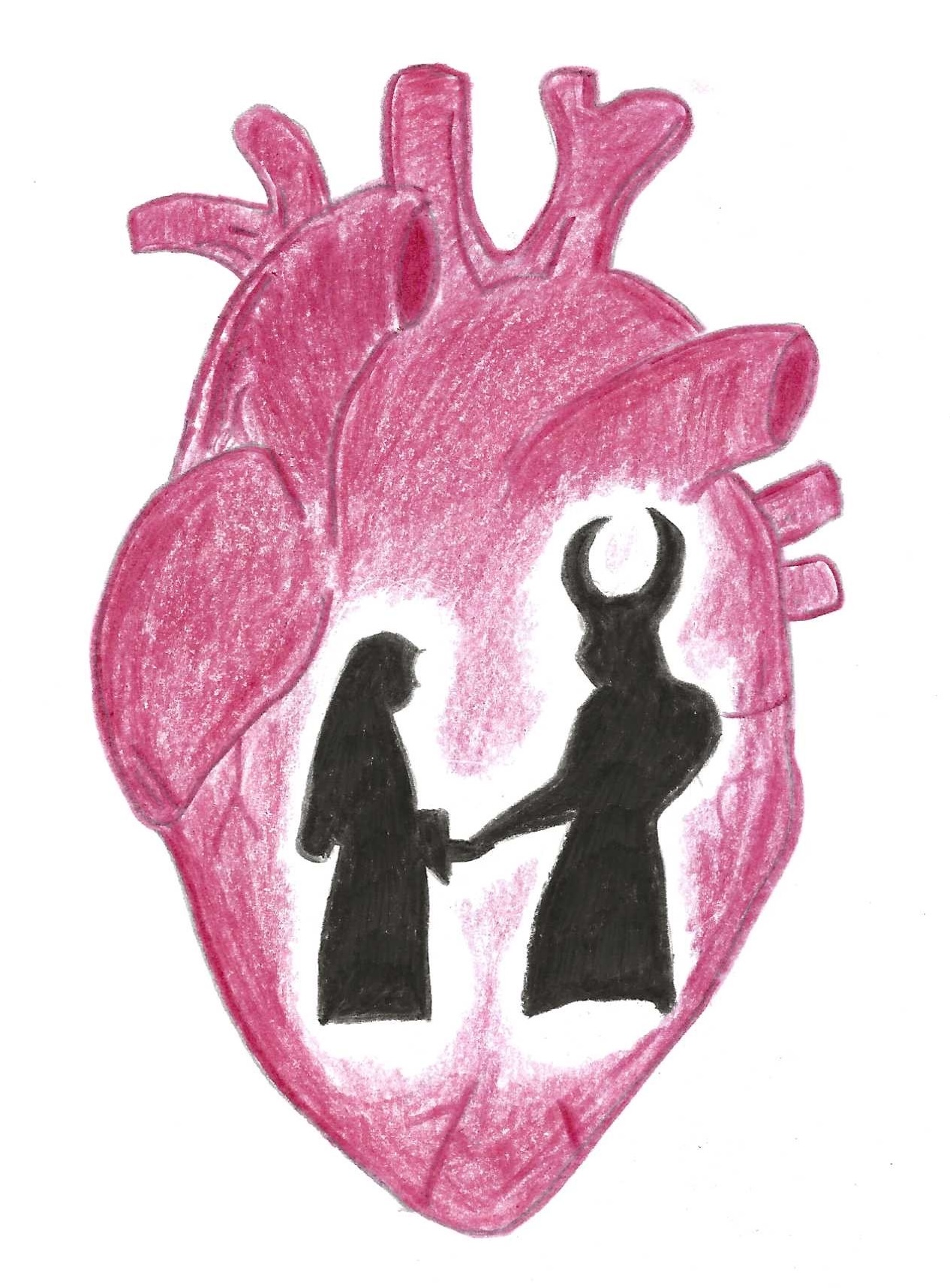
I then contemplated aspects of our tradition such as the Awen. Not as important in my life as it was once was. I gave up and went upstairs to the bathroom and on my way saw what should have been obvious considering that central to our monastery is the Rule of the Heart – the Heart of Annwn. I saw and felt it beating in the depths of the Otherworld and within my own heart. 

“Will you dedicate yourself to the mysteries of my Sacred Heart?” Gwyn asked.

Returning to meditation I agreed and for the first time Gwyn took me into His heart. 

Artwork by Morgannah

Prayer – Some Scaffolding

I’ve recently been re-reading St Teresa of Avila for inspiration on forming a framework for my own practices and experiences of prayer. Teresa’s techniques are complicated and vary as her ideas change over time as evidenced in The Way of the Perfection and The Interior Castle.

During this time I had a dream in which the Mother Superior of an abbey was giving a talk on prayer and told the audience not to mistake the scaffolding for the thing itself. I thought her words were wise but at present feel like I need a little scaffolding as I attempt to build a palace for prayer fit for Gwyn – Annwn’s King. Below, inspired by Teresa, is my scaffolding for prayer.

Formal Prayer

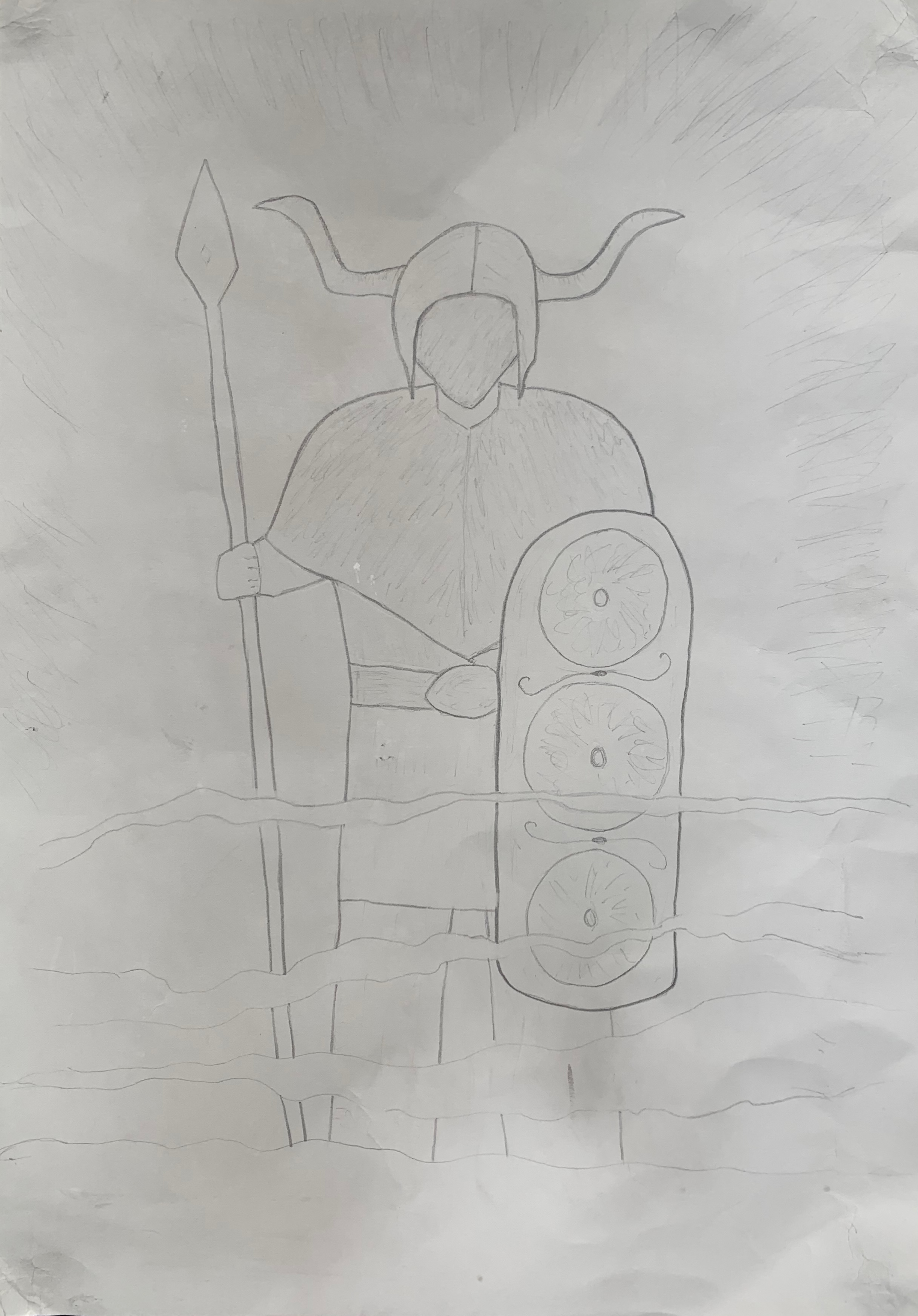
Formal prayers are those that are addressed to the Gods and are often written down and spoken regularly – daily, monthly or at seasonal celebrations. For example prayers of praise (“Gwyn ap Nudd, Lord of Annwn, I adore Your starlit crown”), prayers of thanksgiving (“I thank You, White Son of Mist, for guiding me on the misty ways”) and prayers of celebration (“Hunter in the Skies tonight we honour You as You ride out with Your hunt.” Prayers of petition and intercession might also be included here. “Bull of Battle, with Your horned helmet, strong shield and piercing spear, lend me Your strength”. “Gatherer of Souls please gather the soul of… to Your realm.”

Conversational Prayer

Conversational prayer is less formal and gives the Gods more space to respond. As St Teresa says it is like conversing with a friend. Checking in, asking what They need from us and for Their advice and guidance, listening to Their opinions on how we have served Them throughout the day. “Good morning.” “I’m feeling… how are you?” “How might I serve you best?” “I’ve got this problem.” “Good evening.” “My day’s been… how was yours?” “I messed up, I’m sorry, what do you think and how can I make repairs?”

Conversations with the Gods might take place like those between human persons, like between two friends, with a Deity appearing in human-like form and speaking directly through the inner senses. The Gods might also respond in more nuanced ways, providing us with a feeling or a knowing, they might show us a vision or a sign in nature or gift us with a dream.

The Prayer of Vision

The prayer of vision involves the active visualisation of a Deity. We can visualise our Gods before us, at our altars, or we can use visualisation meditation to visit Them at Their sacred places in Thisworld or the Otherworld. In this type of prayer we often find at the beginning we feel like we’re ‘making it up’ and we are to some degree yet the very act of imagining is sacred and the beginning of the co-creation of a vision that often shifts and takes on a life of its own as we enter deeper communion with our Gods. Spontaneous visions can also occur both in and outside of prayer time.

The Prayer of Silence

Whilst the prayer of vision involves the active use of the imagination and the inner senses the prayer of silence occurs when the faculties are stilled. Here, it is common to experience a deep sense of calm, of quiet, of abiding with a God. As it lacks sensory content it is notoriously difficult to put into words. I experience it as the otherside of Gwyn’s paradoxical nature – the calm within the storm, the hunter waiting patiently before He rides out hunting for souls, His sleep as the Sleeper in Deep Annwn throughout the summer months.

The Prayer of Union

In the prayer of union we not only abide with a God but are united. This is the sacred marriage or hieros gamos wherein we become one with our Gods. This is not only difficult to put into words but on account of its intimate nature is a mystery that is shared between devotee and God alone.

The Prayer of Presence

I’ve come to this type of prayer last but it might as easily have been first or come anywhere in between because it’s the type of prayer that takes place inside and outside set prayer times and can be practiced any time day and night. That is being present, in the moment, for the Gods and those who we are in relationship with in our every daily lives in both the seen and unseen worlds. 

In most religions we find the aspiration towards ‘unceasing prayer’. Every act, if we have but the will and focus, can become an act of prayer – waking, eating, drinking, working, gardening, cleaning, sleeping. It might be argued that the purpose of the types of prayer above is to provide us with the connection and communion with the Gods that enables to lead deeper and richer lives in Thisworld and to be of better service to the land and to others.

From Inner Silence to Silent Prayer

I have been practicing Antar Mouna ‘inner silence’ for over a year. I first learnt it on an Introduction to Meditation course at the Mandala Yoga Ashram. The founder, Swami Nischalananda defines it thus: 

‘Antar Mouna is one of the core meditation practices of the yoga tradition. It is a precise, systematic process of cleansing the mind of its accumulated tensions and conflicts, disrupting the habit of compulsive thought and externalisation, leading to inner tranquility and silence.’ (1)

Over this period I have found it incredibly helpful for quieting my mind and for learning to witness, identify and let go of distracting and troubling thoughts.

There are six stages to Antar Mouna and I have experience of the first three. The first is ‘awareness of sense perceptions’. This involves focusing on the five senses: touch, sound, hearing, taste and inner sight. This develops the discipline of paying full attention to one sense at a time and honing each. For example, listening to sounds that are far away, then close up, following one sound, letting it go, then choosing another sound, then listening to all the sounds at once as if you’re in ‘a sea of sound’. Part of this practice is to separate the sounds from what’s causing them (ie. ‘a car’ ‘next door’s baby’).

This stage has been really helpful for me as an autistic person with sensory sensitivities for gating out sounds and not getting as annoyed with their causes.

The second stage is ‘awareness of spontaneous thoughts’. This involves watching and bearing witness to thoughts as they arise then letting them go. Thoughts are not labelled ‘good’ or ‘bad’ but ‘just thoughts’. This helps us to develop a stronger witness, not to get so caught up in our thoughts and to let them go more easily. It also helps us to see that we are not our thoughts.

Watching thoughts come and go and having experienced many occasions when I’ve been sucked in because they have been overwhelming and I’ve felt unable to continue meditating until I’ve solved that problem, got that thing planned out, contacted that person… has made me more aware of my mental processes and what types of thoughts remain problematic. I haven’t reached the point I’m able to immediately let go of more difficult thoughts yet.

I’ve only practiced the third stage very briefly. This is ‘conscious creation and disposal of thoughts.’ Here you create a thought, contemplate it for a minute, then release it. I haven’t pursued this in any more depth as it isn’t recommended without an instructor as traumatic memories can arise. 

The fourth stage is ‘awareness and disposal of spontaneous thoughts.’ This is basically being aware of thoughts and dismissing them. Saying “no” to thoughts isn’t recommended until you have mastered stage three.

The fifth stage is ‘thoughtlessness’ – the inner silence that is the aim of the practice. After this, in the sixth stage, ‘spontaneous symbols’ might occur. Through practicing the first two stages I have experienced brief periods of being without thoughts and caught a glimpse of what inner silence might feel like.

In this thoughtless state enlightenment and union with the Source might be attained.

~

For me, as a Brythonic Polytheist with a near-henotheistic devotion to my patron God, Gwyn ap Nudd, I’m less concerned with enlightenment and more with a mystical union with Him and through Him with the universe. I’ve felt the need to adapt the aim to entering silent prayer to Gwyn.

Silent prayer is found in the Christian religion and particularly in the tradition of  the Discalced Carmelites, who were founded by Teresa of Avila in 1562, and spend two hours a day silently communing with God. (2)

Like with Antar Mouna, there are several stages in the process of attaining silence. They are described my Teresa in The Way of Perfection. She distinguishes formal spoken prayer from mental prayer which takes place within.

At the outset she instructs her sisters: ‘I am asking you only to look at Him. For who can prevent you from turning the eyes of your soul (just for a moment, if you can do no more) upon this Lord?’ Here she urges them to look not at ‘a picture of Christ’ but His living image – ‘the Person Himself.’

She speaks of the process of recollection through which the nuns must withdraw their senses from worldly things and turn them instead within. She tells us: ‘the Lord is within us and that we should be there with Him.’

In a description which resembles the depictions of the castle of Gwyn ap Nudd in medieval Welsh mythology she describes the palace of the Lord in the soul:

‘And now let us imagine that we have within us a palace of priceless worth, built entirely of gold and precious stones— a palace, in short, fit for so great a Lord. Imagine that it is partly your doing that this palace should be what it is— and this is really true, for there is no building so beautiful as a soul that is pure and full of virtues, and, the greater these virtues are, the more brilliantly do the stones shine. Imagine that within the palace dwells this great King, Who has vouchsafed to become your Father and Who is seated upon a throne of supreme price—namely, your heart.’ 

She emphasises throughout that we not need to go Heaven to find God because He is always so near. This resembles how Gwyn might be seen as distant in Annwn yet He is always close, in our souls, in our hearts.

She describes the Prayer of Quiet as ‘perfect contemplation’. ‘This is a supernatural state, and, however hard we try, we cannot reach it for ourselves; for it is a state in which the soul enters into peace, or rather in which the Lord gives it peace through His presence… In this state all the faculties are stilled. The soul, in a way which has nothing to do with the outward senses, realizes that it is now very close to its God, and that, if it were but a little closer, it would become one with Him through union.’ She goes on to say that the will also ceases its striving and is united with God’s.

The Prayer of Union is the next stage and this might be followed by rapture. (3)

~

There are several major differences between these spiritual techniques. For Teresa neither the physical senses or the inner world of thoughts, feelings or emotions are viewed to be worthy of contemplation. The sole focus is on God. 

Teresa does not provide a way of quieting the mind. This is likely because the seclusion of the monastery provides a quiet environment for the nuns. (It’s due to the lack of this that I have had to turn to the yogic tradition).

Another difference is that the aim of Antar Mouna is to use the thoughtless state to attain enlightenment whereas that of silent prayer is to enter union with God.

I am currently experimenting with combining the two – firstly dedicating the process of purifying my mind through Antar Mouna to Gwyn then secondly entering silent prayer with the aim of experiencing deeper union with Him.

  1. https://www.mandalayogaashram.com/blog/intro-to-antar-mouna
  2. https://carmelitesnottinghill.org.uk/discernment/discernment-talks/
  3. Saint Teresa of Avila, The Way of Perfection, (Dover Thrift editions, 2012)