‘It lives in Europe, in winding holes in sheer sandy hills’ – Linnaeus
I. Riparia riparia from ripa ‘of the river bank’ sounds like their djirr djirr prrt beside the Ribble
as they arrive in sixes, sevens, in their twenties, swoop in from Africa
tumbling for gnats.
II. Excited by the sight of their forked tails and white bellies
we run to prepare the nesting boxes –
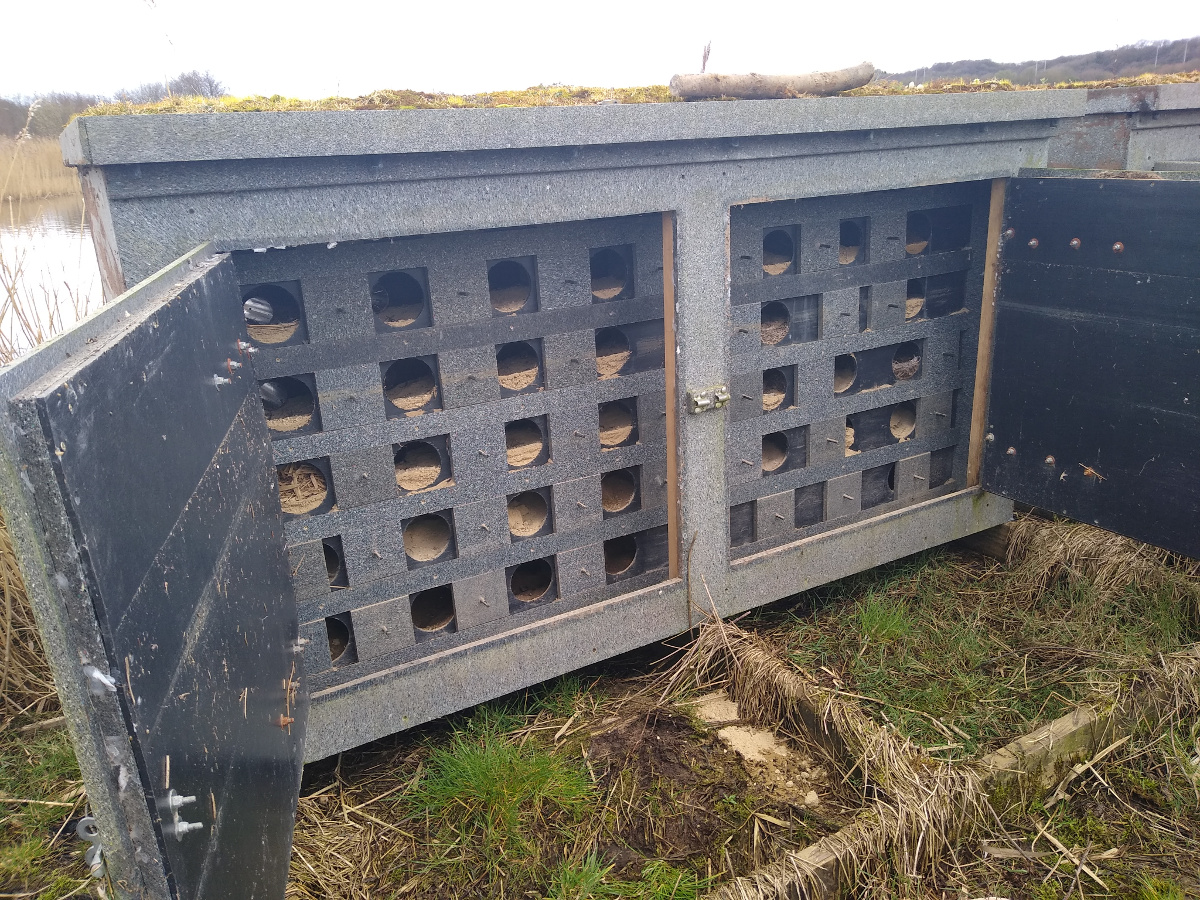
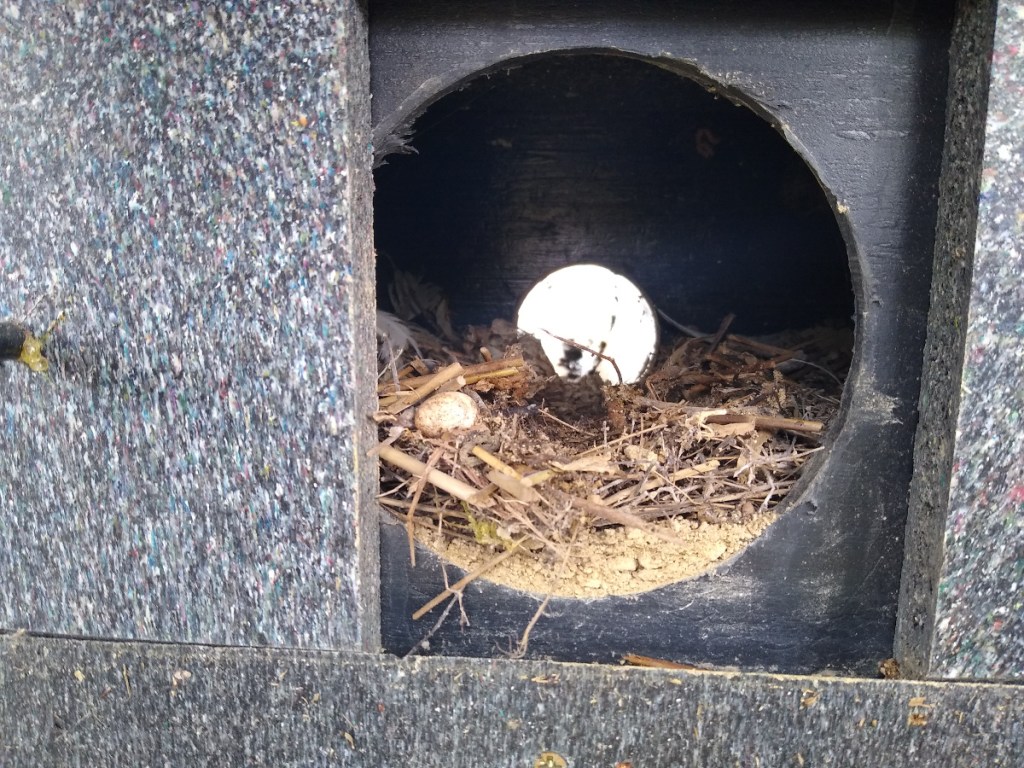
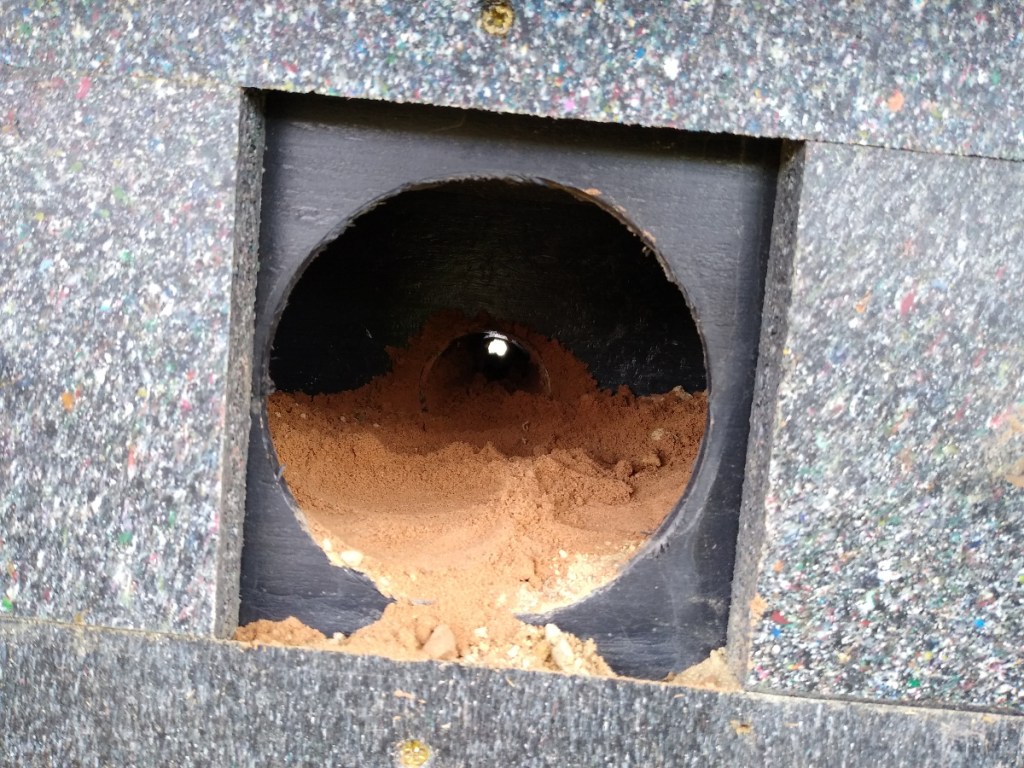
all 300 with their sandy tunnels, dark and cavernous interiors, tightly locked back doors,
dig out the moat to protect them from predators.
III. When the world is too big, the arguments at home intolerable
I think of them snug in their hotel on their little island paradise.
“That’s it,” I tell my mum and dad. “I’m moving in with the sand martins.”
IV. I pack my rucksack full of feathers, gather twigs, bits of reed, to make my nest
and push my way down the long, dark, sandy tunnel
to the cave where I stay all summer between three pairs of sand martins and a mouse.
V. As I sit alone and listen to the chatter of males and females and soon their chicks I realise it is not unlike being at home –
surrounded by happy families.
I listen to the tales they tell their young – of the rite of leaving the cave, exiting the tunnel, of the bright sunlit river and countless flies that lie outside.
Of how all this was made for them by the goddess of the Ribble.
Of how mighty Belisama loves riparia riparia and her river-light guides them back.
VI. I hear them tell of distant gods, distant flying insects, distant animals whose shapes I see dancing on the cave walls –
gazelles, cheetahs, wild dogs, buffalo, hartebeest, scimitar-horned oxen with us no longer.
VII. I hear the tales of the drought years passed down from the legends who survived
(they have names like Long-Brown-Wing-Fly-Catcher White-Belly-Diver-River-Dancer… chattering on and on that I can’t pronounce in one breath)
the concerns of the elders who have seen future droughts in the patterns of flies.
VIII. I listen to their final farewells to their young and hear them depart to roosts where I cannot follow because
I do not have brown wings, a white belly, a forked tail.
I am not marked by a bar across my chest. Thus barred from becoming a bird where will I go this winter?
~
In early March, one of my tasks, as a conservation intern at Brockholes Nature Reserve, was preparing the sand martin nesting boxes on Number One Pit (this is the name of a lake that formed in a pit dug for sand and gravel quarrying).
We opened up the backs of the boxes, cleared out old nesting materials (which can be a hot bed for parasites), added fresh sand and re-filled the tunnels with sand for the birds to push their way through in imitation of tunnelling into a sandy bank. They usually excavate horizontal tunnels up to 1m in length with a chamber at the end.
At this point in time the sand martins had started arriving in sixes and sevens and the day we finished twenty were seen over Number One Pit. They tend to arrive between mid-March and mid-April and to lay their eggs in late May.
This poem was written following a conversation with one of my colleagues, who I prepared the boxes with, about how good it would be to move in with the sand martins.
Cover these bare bones no longer considered sacrosanct.
Cover me with eleven magical mosses:
Give me back my fringe of fimbriatum and my cow-horns of denticulatum.
Let cuspidatum fill my wet places.
Let flat-topped fallax enfold my curves. Let papillosum return my pimples rising in the damp. Let squarrosum be my spikes of dignity.
Return to me my ruby slippers of capillifolium.
Let palustre and subnitens make me lustrous. Let fuscum dress me in rusty colours. Let magellanicum work its magic.
Give me back my hummocks and my hair of hare’s tail cottongrass and common cottongrass, cross-leaved heath, bog rosemary and bilberry and I will be a common for the large heath butterfly where all commoners are welcome.
Cover me in moss come make these mosslands whole again.
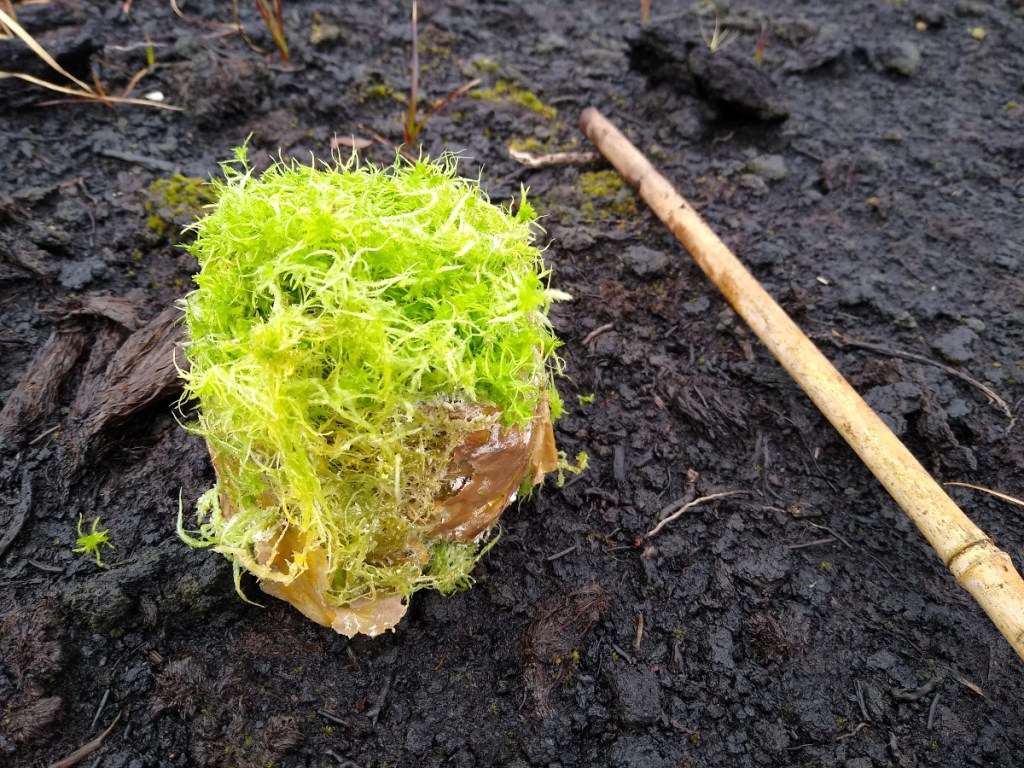
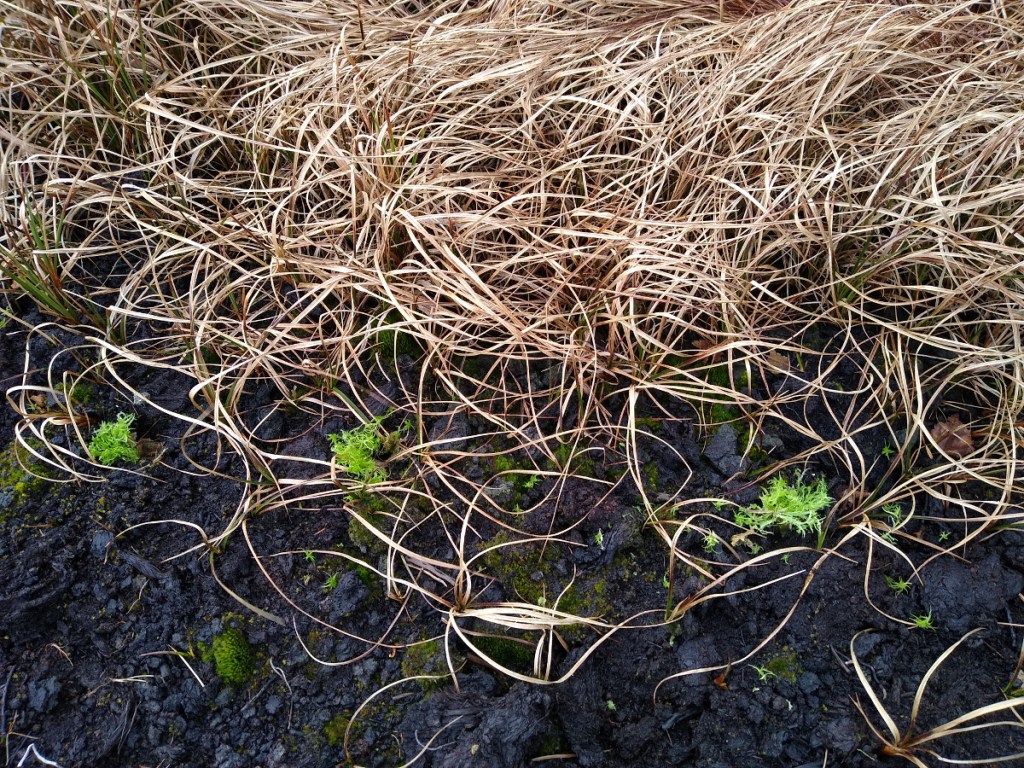
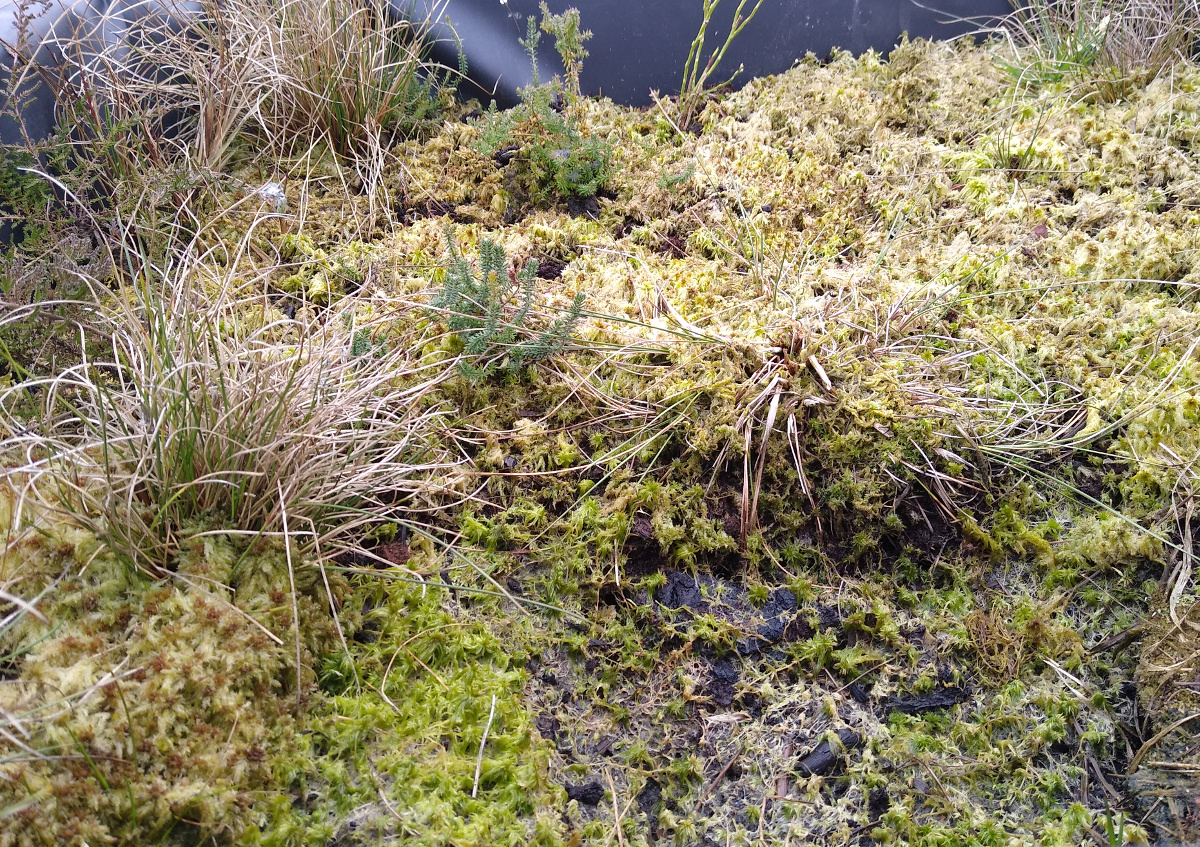
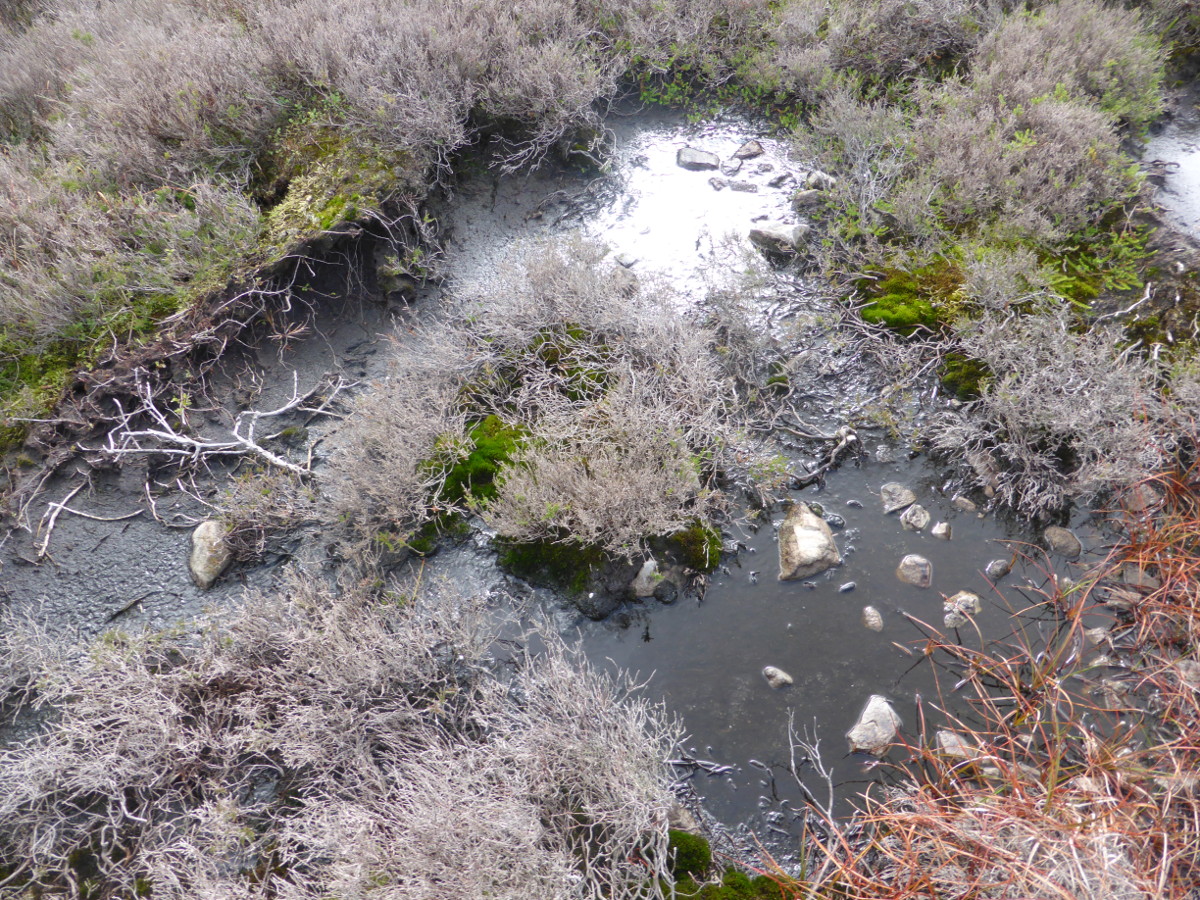
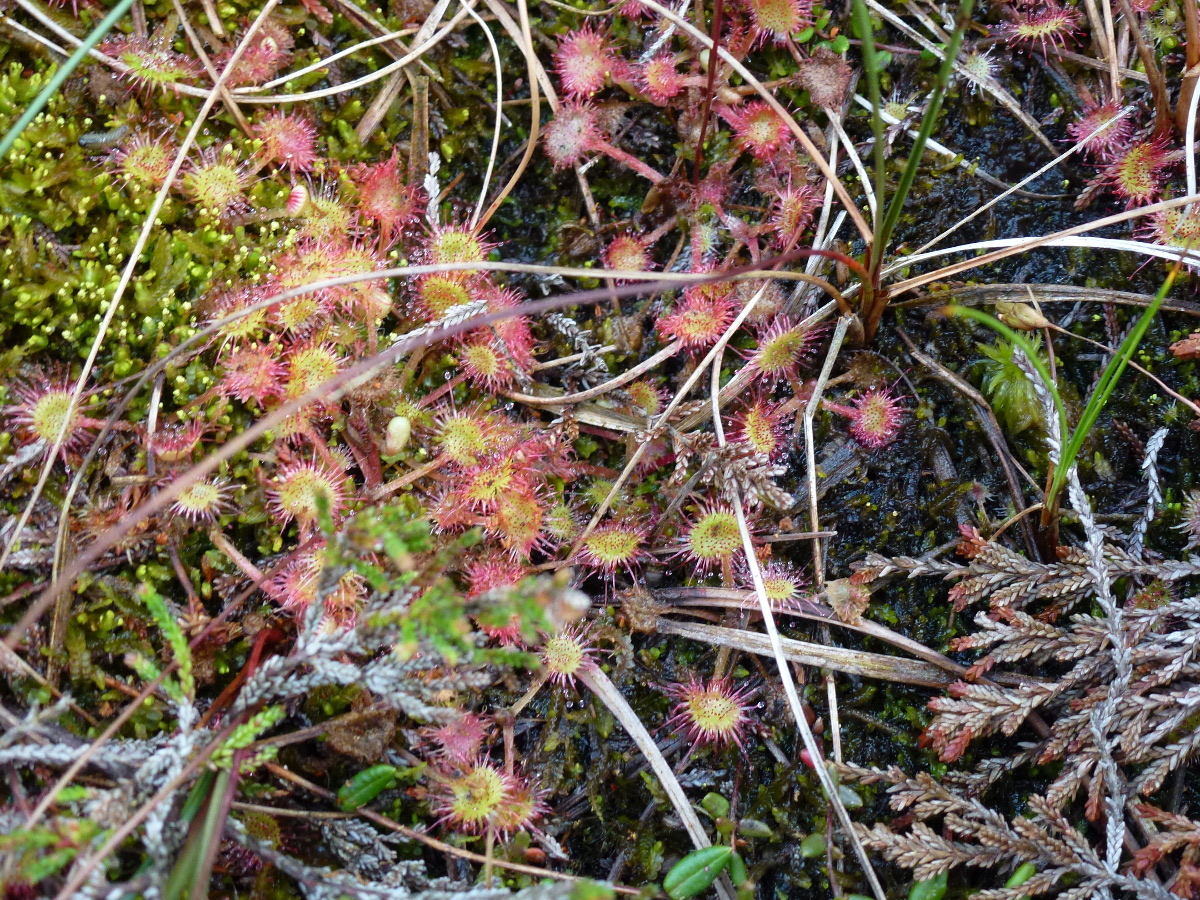
This poem is based on my paid restoration work with the Lancashire Wildlife Trust’s contract team on Little Woolden Moss. This mossland, badly damaged by peat extraction, was taken over by LWT in 2012. Since then the drains have been blocked and new bunds built. We are currently planting cotton grass, hare’s tail cottongrass, sphagnum, cross-leaved heath and bog rosemary to recolonise the mossland and make it inhabitable for wildlife. Hare’s tail cottongrass is the food source of the large heath caterpillar and cross-leaved heath is the nectar source of the large heath butterfly. Planting these species will make possible its later reintroduction. The image of the ‘bog in a box’ directly above shows what the mossland will look like when restored.
This poem is written in the voice of the Mother of the Moss – a title of the wetland goddess Anrhuna.
A plot of land in the bend of Fish House Brook, tell me, my gods, is this my allotted place?
A place to dig, to sow, to watch life grow, leaving the battlefield and the ravens behind me
like the servicemen returning from the First World War?
Is it time to leave the heroes to be pecked apart and join, instead, with the labouring poor?
To set aside the books of heroic poetry – the verses on shattered shields and clashing spears,
the blood and bones to the soil return with spade and hoe to feed the future generations?
Tell me, my gods, is this my allotted place? A plot of land in the bend of Fish House Brook
my Bremetennacum Veteranorum as I enter my later years?
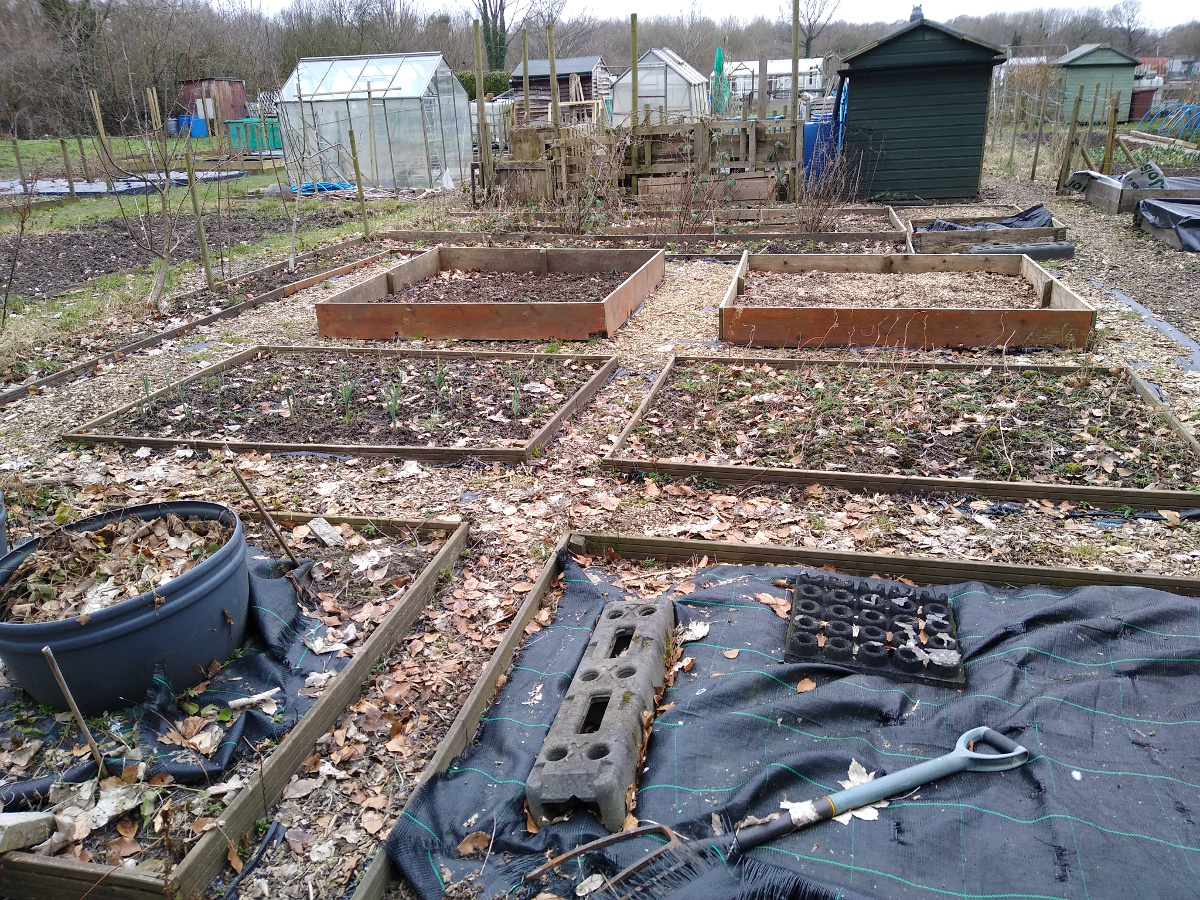
As you might have guessed, after a year’s wait, I am finally the proud tenant of an allotment. This has come about after a difficult year during which I’ve felt like I’ve been kicked in the teeth by the universe in many ways, one of them being the landslide on Castle Hill cutting off my access to the yew tree where I dedicated myself to Gwyn on Fairy Lane.
I now feel my gods have gifted me with an alternative. It is happily within a bend of Fish House Brook, which begins near my house and runs through Greencroft Valley, where I run a friends group, before joining the Ribble at Fish House Bridge on the other side of the allotments. In this I see the guiding hand of Belisama, goddess of the Ribble, along with the land spirits and Gwyn and his ‘family’ – the Tylwyth Teg or ‘fairies’.
Whereas I had been considering moving away to find a job in conservation this has led me to decide to remain rooted in Penwortham, even if it means a longish commute. I am beginning a month of cotton grass planting on Little Woolden Moss near Manchester next week, which will be my first paid contract, and a couple of paid traineeships have come up in Bolton, so possibilities are opening up.
Having spent the last decade working with the heroic poetry of the Old North, not least in my latest collection ‘Co(r)vid Moon’ whose main characters are battlefield ravens, I’m sensing a shift away from the medieval courts, where I never belonged with the Taliesins, toward a poetry of the land, to where I belong, alongside other labouring poets.*
Although I’m far from retirement age I see this as a step in maturing and and stepping up to take responsibility for leading a sustainable life as I head toward the big 40 this November.
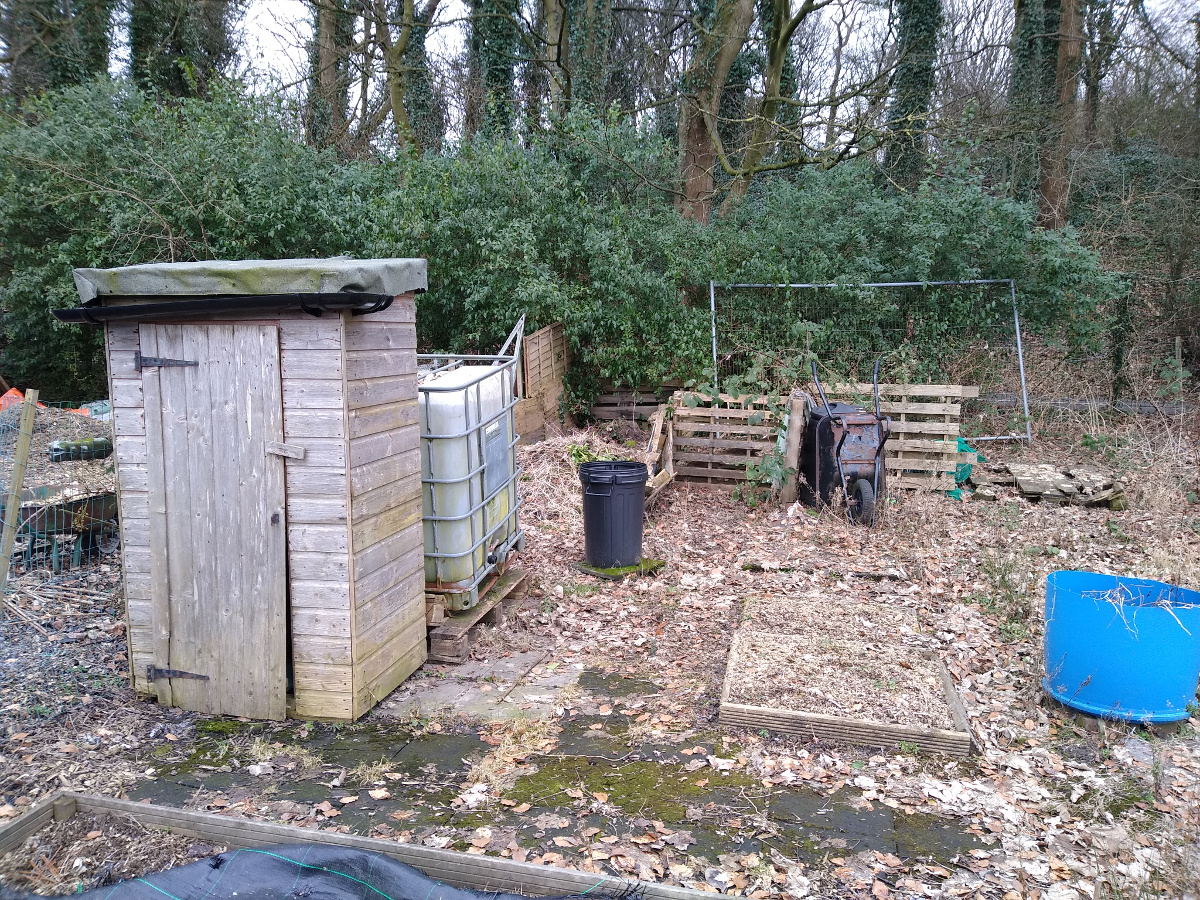
Since I took this photograph I have been clearing the paths, weeding, digging and putting manure on the beds, and chitting my first early potatoes.
I can now call myself an allotmenteer 🙂
*For example Ted Hughes and Alice Oswald whose work is based on their lived experience of working the land. (Although, of course, I do not claim to be as good!).
Only art can bring back that which should never be touched:
grave goods, treasures of the mound and bottomless lake,
your cauldron.
Like you, my lord, they are beautiful and cursed,
filled with spirits who haunt us with wishes that shall never be.
Sword of Nodens, Spear of Lugus, Shield of Brân,
your mother’s secret jewellery,
the Golden Ring by which you are bound to fight your enemy,
numinous and just as deadly as the battles of dragons.
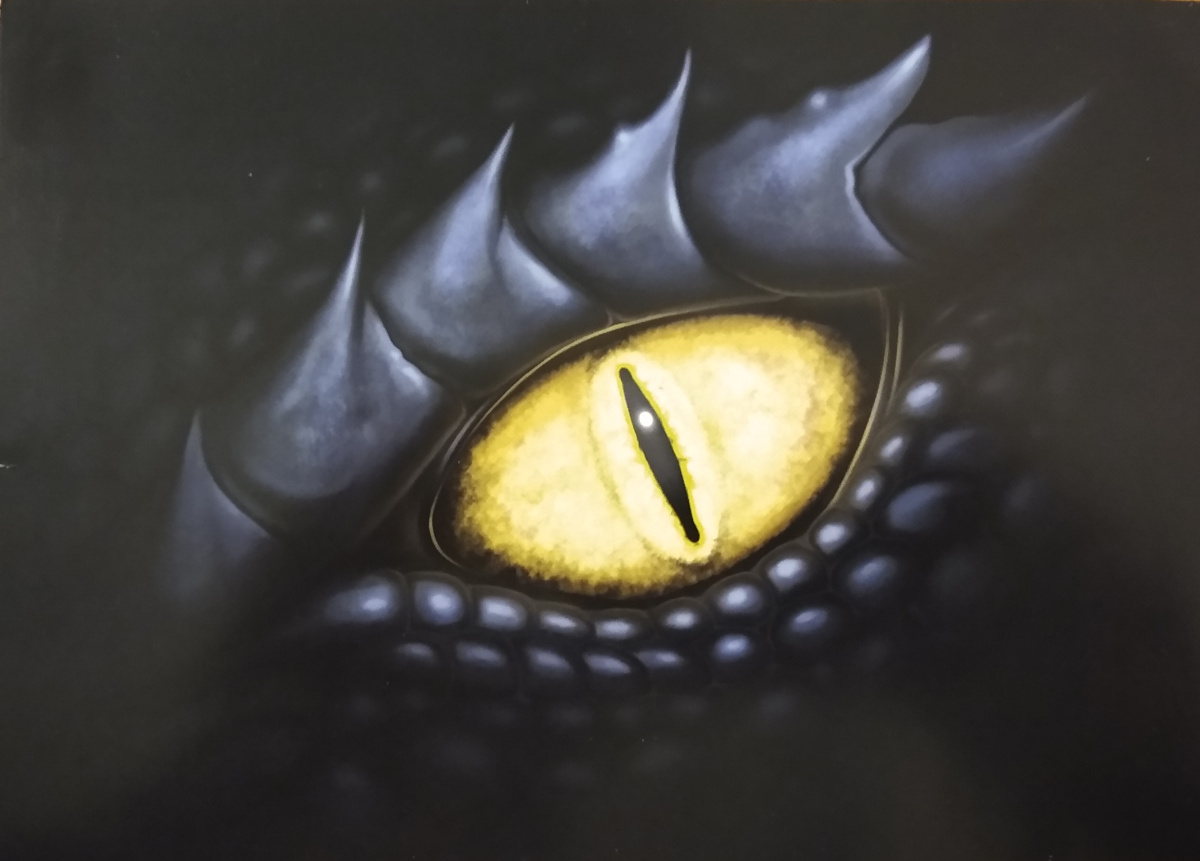
As a great black dragon you watch over the dragon-spirits within.
Only art can bring them back and for those who touch your terrors reign.
*This image of a dragon’s eye is from a birthday card my aunt sent me last year. It reminds me of Gwyn-as-dragon and is blu-tacked on my wardrobe, overlooking my writing desk.
For nearly a decade I have been writing enthusiastically about two topics – the lost wetlands of Lancashire (lakes, marshlands, wet woodlands, peat bogs) and my patron god, Gwyn ap Nudd. I didn’t realise there was a link until I watched the first of Gwilym Morus-Baird’s videos on Gwyn’s folklore.
Here he shared three poems by the Welsh poet Dafydd ap Gwilym (1315-1350). Whilst I had read ‘Y Dylluan’, ‘The Owl’, and ‘Y Niwl’, ‘The Mist’, I was unfamiliar with ‘Y Pwll Mawn’, ‘The Peat Pit’. In this masterfully crafted and, in places, humorous poem, Dafydd ap Gwilym narrates how he and his‘grey-black horse’ foolishly get lost on a ‘cold moor’ in the darkness and fall into a peat-pit.
Unfortunately much of the craftsmanship of the poem in Welsh is lost in translation. The original is written in strict metre with seven syllables in each line, follows an AA BB rhyme scheme, and also contains internal rhyme (possibly cynghanedd – it is beyond my skill to judge). It also features repetition.
Gwae fardd a fai, gyfai orn, Gofalus ar gyfeiliorn. Tywyll yw’r nos ar ros ryn, Tywyll, och am etewyn! Tywyll draw, ni ddaw ym dda, Tywyll, mau amwyll, yma. Tywyll iso fro, mau frad, Tywyll yw twf y lleuad.
Woe to the poet (though he might be blamed) who’s lost and full of care. Dark is the night on a cold moor, dark, oh, that I had a torch! It’s dark over there, no good will befall me, it’s dark (and I’m losing my senses) over here. Dark is the land down below (I’ve been duped), dark is the waxing moon.
Here, in the first verse, we see that not only are the rhyme and metre lost in the English translation but also the repetition of tywyll ‘dark’ at the beginning of six of the eight lines.
Dafydd ap Gwilym goes on to lament his ‘woe’ ‘that the shapely girl, of such radiant nature, / does not know how dark it is’ before admitting his foolhardiness for venturing out on the moors at night.
It’s not wise for a poet from another land, and it’s not pleasant (for fear of treachery or deceit) to be found in the same land as my foe and caught, I and my grey–black horse.
Here we gain a sense of unhomeliness, of the poet having ventured far from home, to an arallwlad ‘other-land’ – to the land of his ‘foe’, who we might surmise is the otherworldly Gwyn, from the following lines and those in other poems. In ‘Y Niwl’ the mist is described as ‘his two harsh cheeks’ which ‘conceal the land’ ‘thick and ugly darkness as of night / blinding the world to cheat the poet.’
After speaking of how he and his horse drowned in the peat-pit, Dafydd ap Gwilym goes on to describe evocatively and curse the place of his undoing and to associate it directly with Gwyn and his spirits.
Such peril on a moor that’s an ocean almost, who can do any more in a peat-pit? It’s a fish–pond belonging to Gwyn ap Nudd, alas that we should suffer it!
I love this image of ‘a moor that’s an ocean’. It reminds me of the German term schwingmoor ‘swinging wetland’. This evokes how a bog can sway with each step like the sea.
I am dying to know whether the reference to the peat-pit as a ‘fish pond belonging to Gwyn ap Nudd’ is a metaphor that Dafydd ap Gwilym has created or whether it comes from the oral tradition.
We know Nudd/Nodens, the father of Gwyn, is associated with fishing by the iconography at his temple in Lydney. A crown, which would have been worn by a priest of Nodens, features a strange fisherman with a long tail catching a salmon and images of fish and sea-serpents appear on a mural.
So it isn’t too surprising to find a reference to fish ponds belonging to Gwyn. However, anyone familiar with the ecology of peat bogs will be aware it is very rare to find fish in their waters due to the low oxygen levels. This raises the question: for what is Gwyn fishing?
I believe an answer can be found in a later English poem by Winthrop Mackworth Praed (1802 – 1839) called ‘The Red Fisherman’ which might also contain echoes of an older tradition.
This recounts how an abbot came to a pool with the ‘evil name’ ‘The Devil’s Decoy’ and encountered ‘a tall man’ on ‘a three-legged stool’ clad all in red with shrunken and shrivelled ‘tawny skin’ and hands that had ‘long ages ago gone to rest’ – ‘He had fished in the flood with Ham and Shem’.
With a ‘turning of keys and locks’ he took forth bait from his iron box’ and when he cast his hook ‘From the bowels of the earth / strange and varied sounds had birth’, ‘the noisy glee / of a revelling company’.
To this otherworldly music the red fisherman drew up ‘a gasping knight’ ‘with clotted hair’ ‘the cruel Duke of Gloster’. Casting off again, ‘a gentleman fine and fat, / With a big belly as big as a brimming vat’ ‘The Mayor of St Edmund’s Bury’. His next catch, with ‘white cheek’ ‘cold as clay’ and ‘torn raven hair’ was ‘Mistress Shore’ and, after countless others, finally a bishop. The abbot was cursed by the Red Fisherman to carry his hook in his mouth and from then on stammered and stuttered and could not preach.
If this poem derives from an older tradition based around the lore of his Gwyn and his father (like the Red Fisherman Gwyn was also identified with the devil) we might surmise he is fishing for the dead.
The mention of the noise of a revelling company is also pertinent as in ‘Y Pwll Mawn’ we find the lines:
A pit between heath and ravine, the place of phantoms and their brood. I’d not willingly drink that water, it’s their privilege and bathing–place.
The term ellyllon is here translated as ‘phantoms’ but also means ‘elves’. It no doubt refers to Y Tylwyth Teg, ‘the fair family’ or ‘fairies’ over whom Gwyn rules as the Fairy King. ‘Brood’ has been translated from plant ‘children’ which is also suggestive of the family of Gwyn.
The peat-pit, like other bodies of water such as lakes, pools, springs, and wells, is a liminal place where Thisworld and the Otherworld meet, where the fair folk bathe, and their leader fishes for souls.
Finding out about this lore has deepened by intuition that Gwyn is associated with Lancashire’s lost peat bogs and former peat-pits, such as Helleholes, just north of my home.
At the end of his poem Dafydd ap Gwilym curses ‘the idiot’ who dug the peat-pit and swears he will never ‘leave his blessing in the peat bog’. This may refer to a practice taking place in his day – people leaving butter in peat bogs for the fairies, which may carry reminiscences of more ancient offerings to Gwyn and his family.
Contrarily, the next time I visit a peat bog, I intend to leave a blessing for Gwyn, the Blessed One.
*With thanks to Gwilym Morus-Baird for his video HERE and for pointing me in the direction of Dafydd ap Gwilym.net where ‘Y Pwll Mawn’ can be read in Welsh and English.
What if it was found by a ragged band of hunters and amongst them was a young man who spoke a single word that rolled like a stone from the back of his throat onto the tip of his tongue recalling the unblocking of a passageway to an ancient cave
where an unknown creature was painted in red ochre with long tusks?
What if, when he spoke its name, those old bones and the ragged chunks of skin and dirty frozen clumps of fur began to shudder and something massive began to raise itself from the ice?
What if, when it shook itself off, the boy climbed onto its back like a monkey?
Would you stare with eyes wide as frozen lakes or would you run or would you take his hand, climb onto mammoth-back, put your arms around his chest and ride away?
I wrote this poem based on a journey I undertook to find out more about my haunting by visions of mammoth graveyards. I have recently found out such places exist, for example at Yana-Indighirka and Volchya Griva in Siberia and that, more disturbingly, as the ice melts due to climate change, more mammoth remains are being exposed. This has sparked a ‘Siberian mammoth tusk gold rush’ and, in Yukatia, guided tours to mammoth graveyards are being offered along with the opportunity to join hunts.
I also discovered that people in Dolní Věstonice, in the Czech Republic, and in Mezherich, in Russia, built houses out of elaborately arranged mammoth bones and that, at Kostenski, a 40 foot circular building created from the bones of 60 mammoths was unearthed – possibly a temple? These buildings are some of our oldest examples of human architecture and are suggestive of a spiritual relationship with the massive creatures with whom they shared their tundral landscape. Such care and shared communal use contrasts with the individualistic money-grabbing in our time.
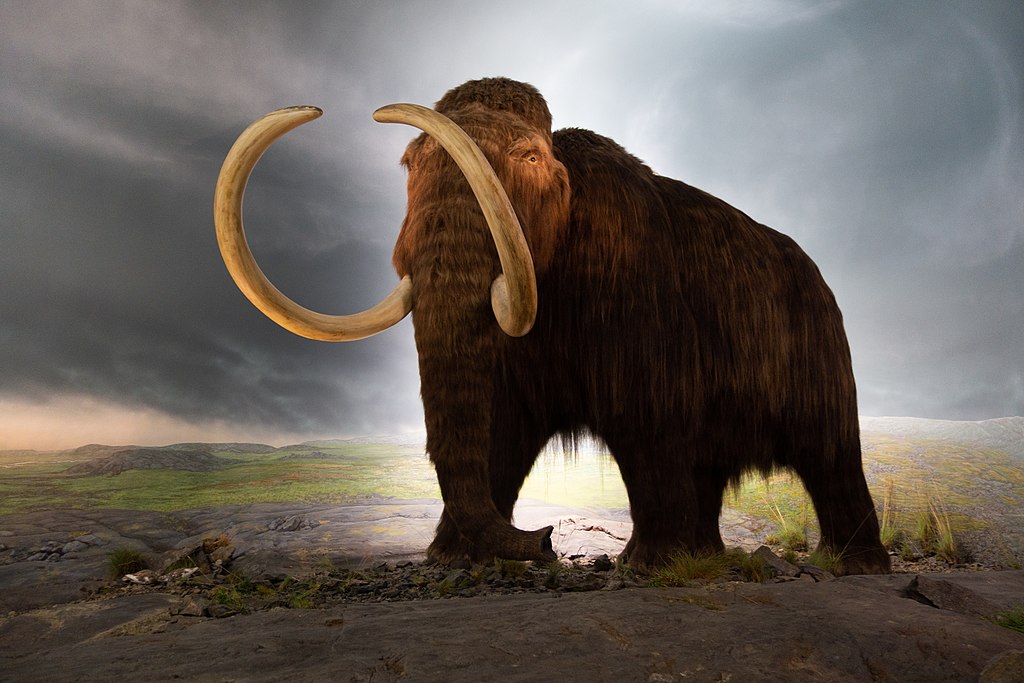
The woolly mammoth (Mammuthus primigenius) roamed not only Siberia but Europe during the Ice Age. Its remains have been found in Scotland but are most concentrated in southern England, where the glaciers did not reach for so long, particularly on the Thames.
Remains of the steppe mammoth (Mammuthus trogontherii), the woolly mammoth’s older larger predecessor, dating back 600,000 years, have been found on West Runton Beach in Norfolk.
It seems likely the mammoth played a central part in the religion and culture of Paleolithic people in Europe too. The Red Lady of Paviland (who was really a male hunter) was buried with mammoth ivory in Paviland Cave, on the Gower Peninsula, 33,000 years ago and is our earliest ritual burial. In the Franco-Cantabrian caves are numerous paintings of mammoths including the Cave of the Hundred Mammoths in Rouffignac.
There is a mammoth-shaped hole in our psyches which cannot be filled in an interglacial. Yet the memories of mammoths continue to speak to us in visions, in dreams, and, more hauntingly, in physical reality as their remains are removed from the ice.
For three days she journeyed there and for three days journeyed back
to return a lost son to return a lost brother and I alone stand witness at the standing stone
that might have been placed here for this day as his golden rays shine over the marshland.
How did she win him back from Winter’s King? That is for her alone to know and the birds who sing.
This poem is a follow up of my poem ‘I light a candle for Epona‘ based on the journey of the Great Mare to the Otherworld to win back her lost son. I linked this to my brother’s period of hospitalisation. I’m glad to say he is back now and on the road to recovery so many thanks to the mare goddess and to those who sent good wishes and lit candles.
The photographs are of the sun beginning to set over the winter solstice stone at the stone circle at Brockholes Nature Reserve and over the visitor village and Meadow Lake.
with all the sisters who have lost their brothers.
We flit like bats against the walls.
We are searching for our oldest animals
to lead us through the darkness
to the prison of the child now a young man.
On the solstice when the sun stands still by candlelight
we will bring him back.
Today, December the 18th, is the festival of Epona, the Great Mare. Over the past few years the story of the search of the Mare Goddess for her lost son has been revealed to me as a relief of Epona riding through the Otherworld with engravings of animals, Rhiannon’s loss of Pryderi, and Modron’s loss of Mabon have sealed into one.
It’s my personal belief the episode in Culhwch ac Olwen featuring the search of Arthur and his men for Mabon with the help of the Oldest Animals and his rescue from the House of Stone replaced an earlier version in which the Great Mare (Epona) / Great Queen (Rigantona) / Great Mother (Matrona) searched for her son and rescued him from Annwn, where he was taken by his father, Annwn’s King. A similar story is told in the modern film, Labyrinth, where Sarah rescues her brother from the Goblin King.
It has taken on a personal meaning for me this year because, at the beginning of the month, my brother was admitted to hospital for brain surgery. It went well and he came back home to stay with me and my parents to recover, but was readmitted due to complications. We are hoping he will be returning from the hospital, a liminal place like the House of Stone that was Mabon’s Annuvian prison, between sickness and health, life and death, some time after his reassessment on the winter solstice.








 The Sanctuary of Vindos