I Awenydd

“Remember who you are.”

I am an awenydd of Annwn.

I am a keeper of an ancient monastery
(yes this monastery is ancient although
its builders only built it yesterday).

Likewise I am born from the Deep.

I am forged in Annwn’s fires.

I am the creation of a myriad creatures
who continue to live within me,
barking, stampeding.

I am born of the Dragon-Headed Mother.
The nine elements swirl within me.

I live by the rule of awen*.

My destiny lies before me.

~

This poem was born from a time of crisis and struggle as I have suffered from poor mental health as a result of working a late shift as I find it very difficult to cope with changes in routine and sleeping pattern as an autistic person.

Following the realisation I can’t make a living from my vocation as an awenydd, for the last three years I have poured most of my energy into pursuing a career that is in alignment with my spiritual values. I’ve volunteered my way into paid work in conservation, completed a year-long conservation traineeship, and gained a permanent job as an ecologist.

There is a lot to like about ecology. There is much to learn. I get to visit varied sites. There is an art to getting the best deal for people and nature. But the job is also high pressure and, in many consultancies, (thankfully not mine) there is a complete disregard for mental health with junior ecologists working several nights a week and being expected to keep up with day work

I have been lucky to gain work with a team who are not only friendly and professional but aware of and supportive around mental health problems and have allowed me to cut down nights and take time out for counselling.

Over the period I have been developing my career I have had less time for my spiritual vocation and, it’s sad to say, have only fallen back on it at a time of crisis, when my work alone has not been enough to pull me through.

Having realised that my difficulties with night work will mean I cannot become a good all round ecologist (I will not be able to get my great crested newt and bat licences and will be limited to developing my abilities with habitat and vegetation surveys and protected species I can survey by day) I’ve been questioning if this is the right career path and assessing where my talents lie.

“Remember who you are,” I have heard the voice of my God, Gwyn, on a few occasions, reminding me of my vow to Him, to serve as His awenydd.

This has led to the realisation that I’ve been living an unbalanced life. Devoting too much time to Thisworld and not enough to Annwn, the Deep.

This doesn’t mean that I’ve made a poor choice of job, but outside it, whereas I was spending all my free time reading ecology books and articles, trying to record and memorise plants, and carrying out extra surveys, I need to make room for the soul-world.

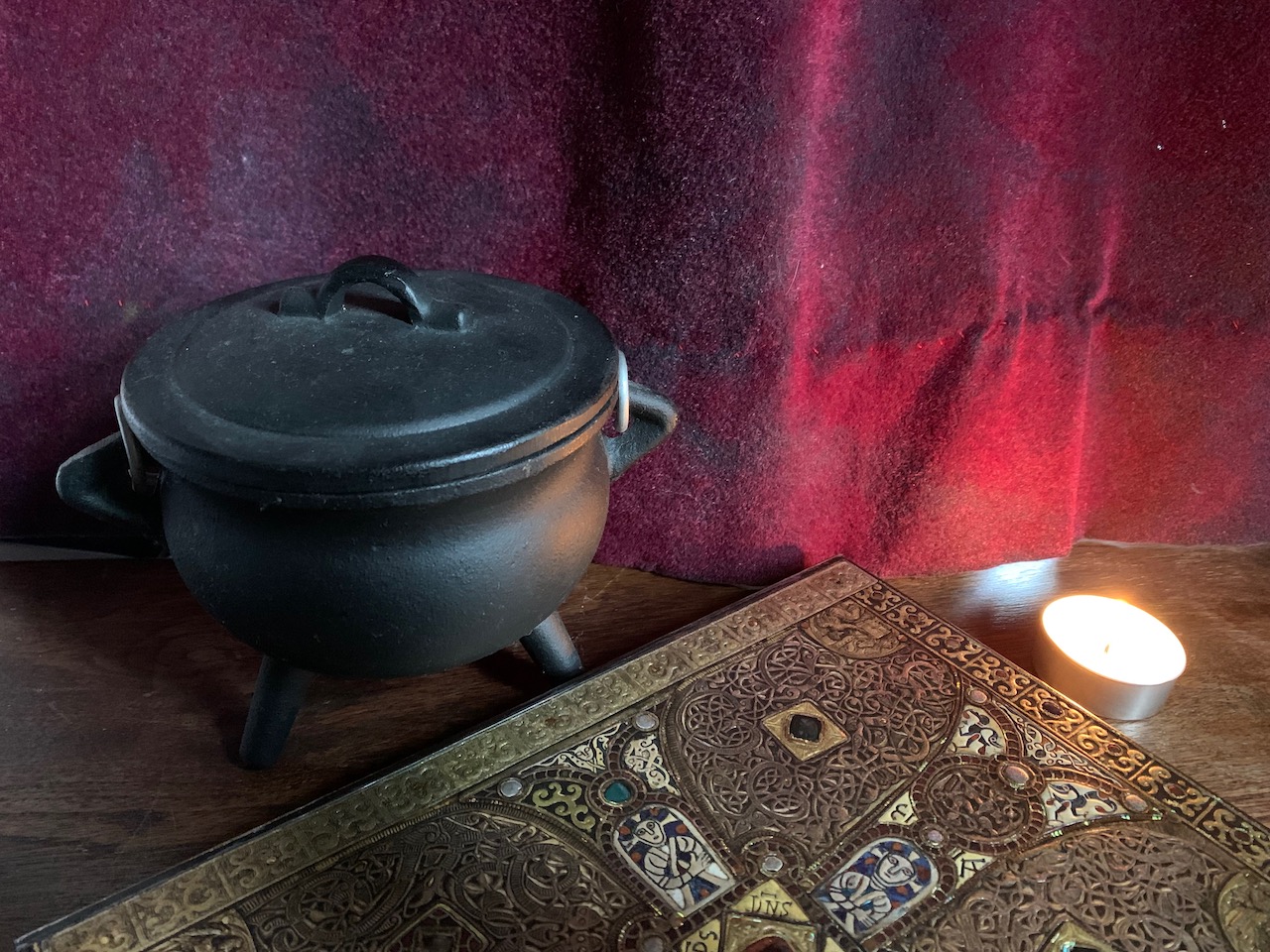
From this has been born the Monastery of Annwn as a sanctuary to retreat to; where the Gods and the Deep are revered and honoured and put first; as a place that provides the strength to return to Thisworld and pursue one’s awen/destiny**.

*The phrase ‘the rule of awen’ is not my own but is one of the principles of the Gnostic Celtic Church which resonates deeply with me. 
**In Medieval Welsh poetry ‘awen’ means not only inspiration but destiny.
In the Monastery of Annwn

there will be no rulers and there will be no rule.

All will uphold the virtues of their choosing.

Neither light nor dark will be banished
for they form the night sky and the stars –
the womb of Old Mother Universe.

Eating, drinking, fasting, will all be allowed
for all states of the cauldron must be embraced –
empty and full and there will be no divisions between
the ones who drink and the ones who stir as
this was the root of the original disaster.

There will be no good and there will be no bad.

We will exist in a world before sin existed.

The before that 365 plants come from and art
and who we bring to life with our songs.

There will be room for men and women and all between.

It will be accepted that we all are monsters.

The monstrous will be raised on high with the dragons,
spiralling, spiralling down, descending into
darkness, sleepily drunk on mead.

We will be visible and invisible.

No-one will see that we wear our habits
like invisible cloaks as we got about our daily lives.

No-one will see the Monastery of Annwn because
it lies beyond doors and walls and no-one
will read the forbidden books
in our personal libraries

because they lie unwritten
on the dark shelves of our souls.

No-one will be able to read our motivations.

I ask is this monastery meant to be built?

If I build a monastery will they come?

Or will it always be a rule of one?

Ecology and the Language of Home

I.
‘Ecology’ from the Greek oikos and logos
seems to suggest there is a logic to our home.

And ‘home’ from ham (like in Penwortham),
from the German heim, from the Norse heimr
‘abode, world, land,’ is so much more than a haus.

Hiraeth is the Welsh word for the longing for a home.

II.
Do the Welsh gods want this English awenydd
to untangle the threads, to follow this longing back
to when she started asking questions about her home:

“Why did only one group of snowdrops from the hundred
bulbs we planted in Greencroft Valley ever come up?”

“Why did the bluebells take so many years to appear?”

“How do the crocuses spread around the garden?”

“Why do the starlings disappear come back greedier?”

“Why did the mouse come in May and make a nest of my feathers?”

“What is it with spiders and September?”

III. 
Do we ask science to explain
because we are no longer able to talk to
the creatures because we have forgotten their language?

Because we have forgotten how to speak and share our home?

Did we know the answers to these questions long ago
when we were more at home rather than longing?

Is it the ecologist’s task to call us home

with all the words in her repertoire –
Anglo-Saxon, Brythonic, Latin, Greek?

IV.
In the Norse myths
Heimdallr guards against
the threats to the home such as
invaders, Ragnarok, the end of the world.

One blast on his horn will blow a warning.

Is it the ecologist’s task to be a horn-blower?

To sound the alarm and call us back?

*This poem is a series of reflections on my transition from working many miles away restoring the Manchester Mosslands to my new job as a Graduate Ecologist much closer to home. I am seeing it as a form of homecoming.

My Lady Verdant

I shall follow
the threads of her hair –
her hair is verdant.

I shall follow
the bats to her lair –
my Lady Verdant.

I shall follow
the ancient pathways
to Peneverdant.

I shall meet her 
there ivies in my hair –
my Lady Verdant.

*A poem and image for Anrhuna, the goddess who I believe to be the mother of my patron god, Gwyn ap Nudd, appearing in her localised form as the Lady of Peneverdant.

A Rainbow Bridge

A Rainbow Bridge that rises and greets your foot…
will carry you over the void as you step, trusting and empowered, into the unknown…
– 0 The Wanderer, The Wildwood Tarot

I stand 
with one foot 
on Astley Moss,

rising onto tiptoe,
the other raised, flexed,
heel up, toe down,

like the hoof of a winged horse.

I still know little 
about where I came from
and less about where I am going.

There is little comfort or security
in the shifting mists below,
haunted by the ghosts,

the bog bodies,
the severed heads,
the voice of Worsley Man.

They are all telling me,
compelling me to move on,
unlike restless spirits.

I am reminiscing 
about the day I drove into
the end of the rainbow on the M6,
throwing up splashes of rain
like fairy gold.

‘Do Not Look Back.’

I hear His arcane commandment.

My wings are spread and deep within
I know it is time to move on.

On Learning Mosses

If I could learn
every species of moss
In Britain I would know 763 names.

A bardic task and a half and did those old bards
know the distinct differences between
the acrocarps and pleurocarps,

let alone the Andreales, the Bryales,
the Dicranales, the Grimmiales, the Hypnales,
the Orthotricales and Polytrichales?

We will never know how they named
the mosses and how they remembered them

but might imagine that they asked bardic questions

like “name the three pocket mosses in my pocket”:

Fissidens viridulus ‘Green pocket-moss’
Fissidens pusillus ‘Petty pocket-moss’
Fissidens bryoides ‘Lesser pocket-moss’

and “name the three beard mosses that grow in my beard”:

Bryoerythrophyllum recurvirostrum ‘Red beard-moss’
Bryoerythrophyllum ferruginascens ‘Rufous beard-moss’
Pseudocrossidium revolutum ‘Revolute beard-moss’

and “name three mosses that have swan’s necks”:

Campylopus flexuosus ‘Rusty swan-neck moss’
Campylopus fragilis ‘Brittle swan-neck moss’
Campylopus setifolius ‘Silky swan-neck moss’

and “name three mosses that look like feathers”:

Kindbergia praelonga ‘Common feather-moss’
Bracythecium rutabulum ‘Rough-stalked feather-moss’
Brathythecium velutinum ‘Velvet feather-moss’.

Of course we know they did not use binomial names,

that the coming of the Romans was the death of the druids
if not of the bards, who lived on to learn Latin, Greek,
survived the Anglo-Saxons to learn the meaning
of grimm, if not of Johann Friedrich Carl Grimm and Grimmia:

Grimmia laevigata
‘Hoary grimmia’
Grimmia pulvinata ‘Grey-cushioned grimmia’
Grimmia decipiens ‘Great grimmia’.

Somewhere between these names

the magic is coming back – I can feel it
whenever a word and a moss I have found connect.
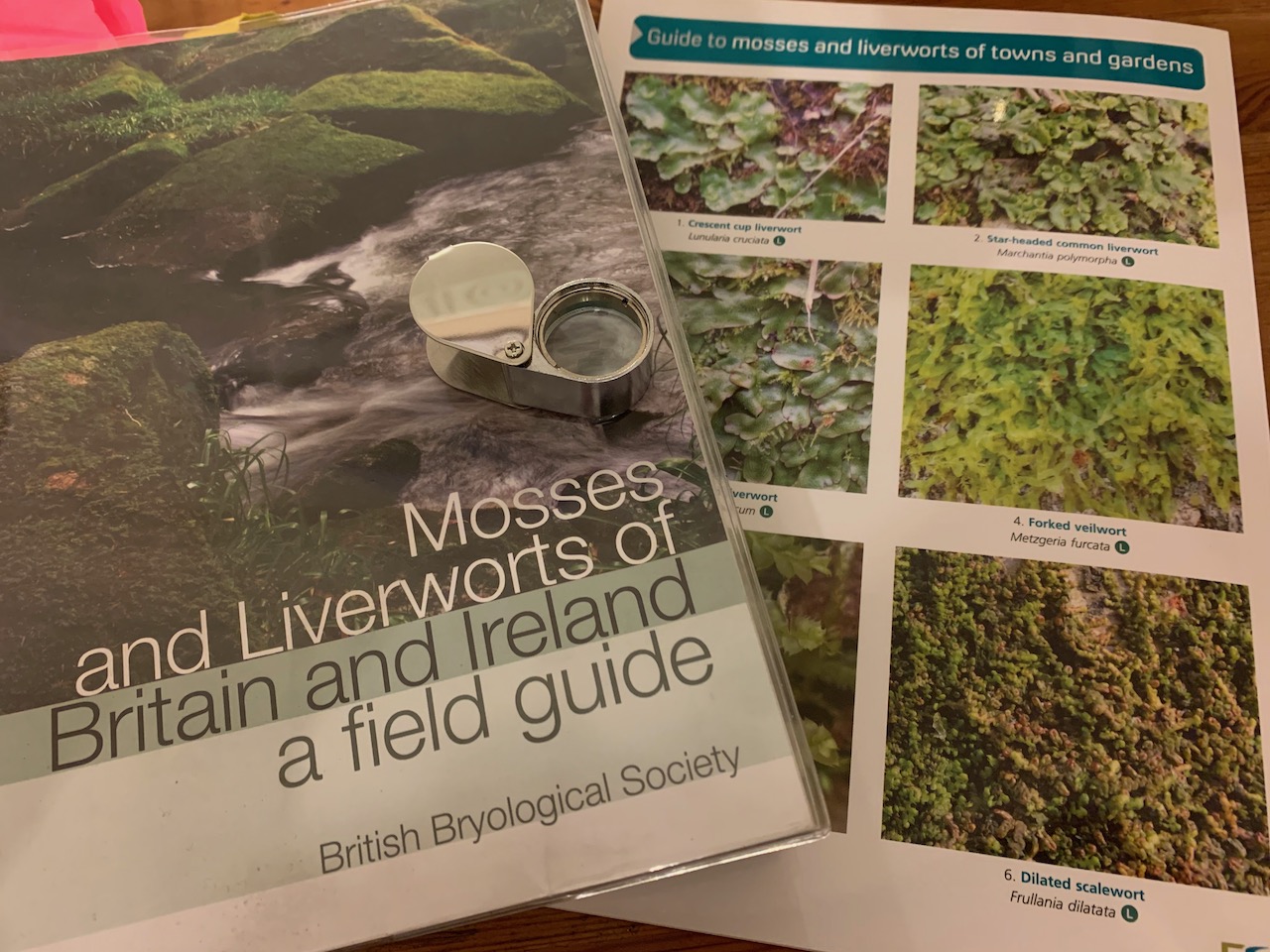
My field guide is like some archaic text.

‘Pleurocarps with straight, nerved leaves

Rhychonstegiella, Rhychostegium,
Brachythecium, Eurynchium, Homalothecium

Pleurocarps with curved, nerved leaves

Scorpidium, Craetoneuron filicinum

charming me like some ancient spell,
leading me onward on my quest.

My Green Chapel

I watch through the window
of the only house on this street not lit 
by party lights, the only one where ivy grows,
the one that seems shrouded by darkness and by sorcery.

The steady sound of hoofbeats has been coming to the North
since before the beginning of time, the beginning of myth,
the court of Arthur, and still he comes, the one we call Gawain.

He does not expect a woman this time crowned in holly and ivy.

He cowers away from the blood-red berries of my eyes 
and averts his gaze from the scars on my arms, 
imagining some distant rite of passage
even I can no longer remember.

I have been sharpening my axe
for a long, long time, waiting for the day
my Lord will no longer have the time to play this game.

I commend his courage, speak of the mathematical percentages
of the people who would take the Green Knight’s challenge,
those who would return to meet their fate.

“You’re the only one,” I laugh aloud.

His eyes are big as portals to the Otherworld. 

One day I will step through them and he will follow.

But not today because the blade of my axe just nicks
his neck, a small cut, which will leave a scar beside the others.

I straighten up with a blood-red stare and send him on his way
because my Lord and I have no more time for games.

Sunless Solstice

I.
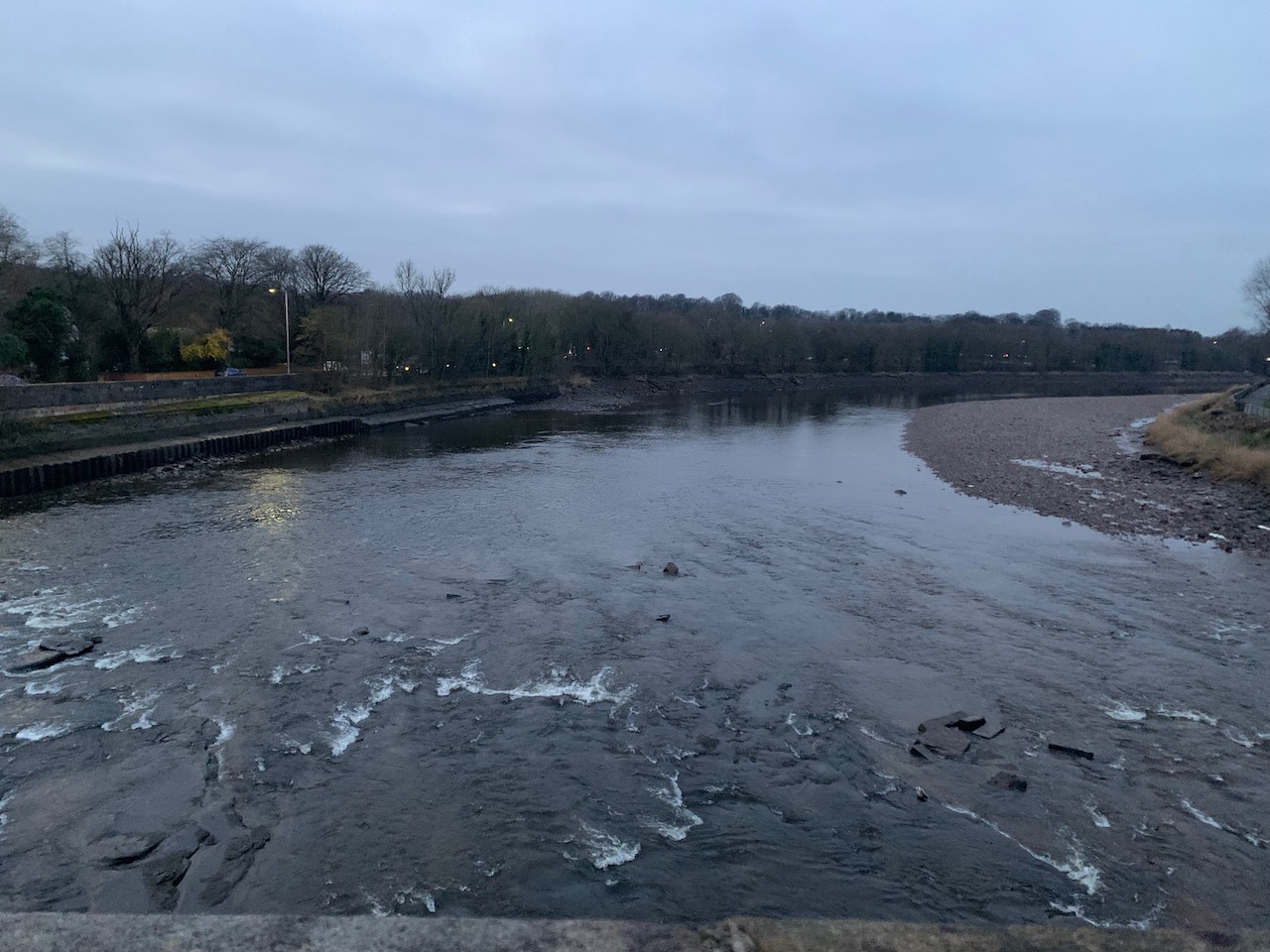
It’s a sunless solstice
on my bridge over the Ribble
but yet the river flows

as if she has done so
since the beginning of time

in spite of the stopping and 
starting of the ice floes.

II.
I remember how once-upon-a-time
I held the sun in my hand
like the monster with the monstrous

CLAW

and wonder if I am the monster from
beneath the bridge who stole
the girl whose bike lights shine above.

III.
As the streetlights light up one-by-one

I ask Belisama – Great Goddess of the Ribble,
Old One, Shining One, Mighty One,

how many suns and how many stars,
how many daughters have swum
down your river to the GREAT BEYOND?

Will they ever be returned like Peter Pan

and the Lost Boys from Never Never Land,
like Pryderi, like Mabon, like the unnamed girls

whose names never reached the tongue-tip of song?

IV.
A sunless solstice, bike lights shine bright,
past Tinkerbell’s Nursery
I cycle on.

For the Dead, for the Mad, for the Poets

for the torn apart all the parts of our bodies will ride tonight,
crawl up from the bogs onto our swampy horses,

not the bog bodies who were found,
but those who were not found.

*

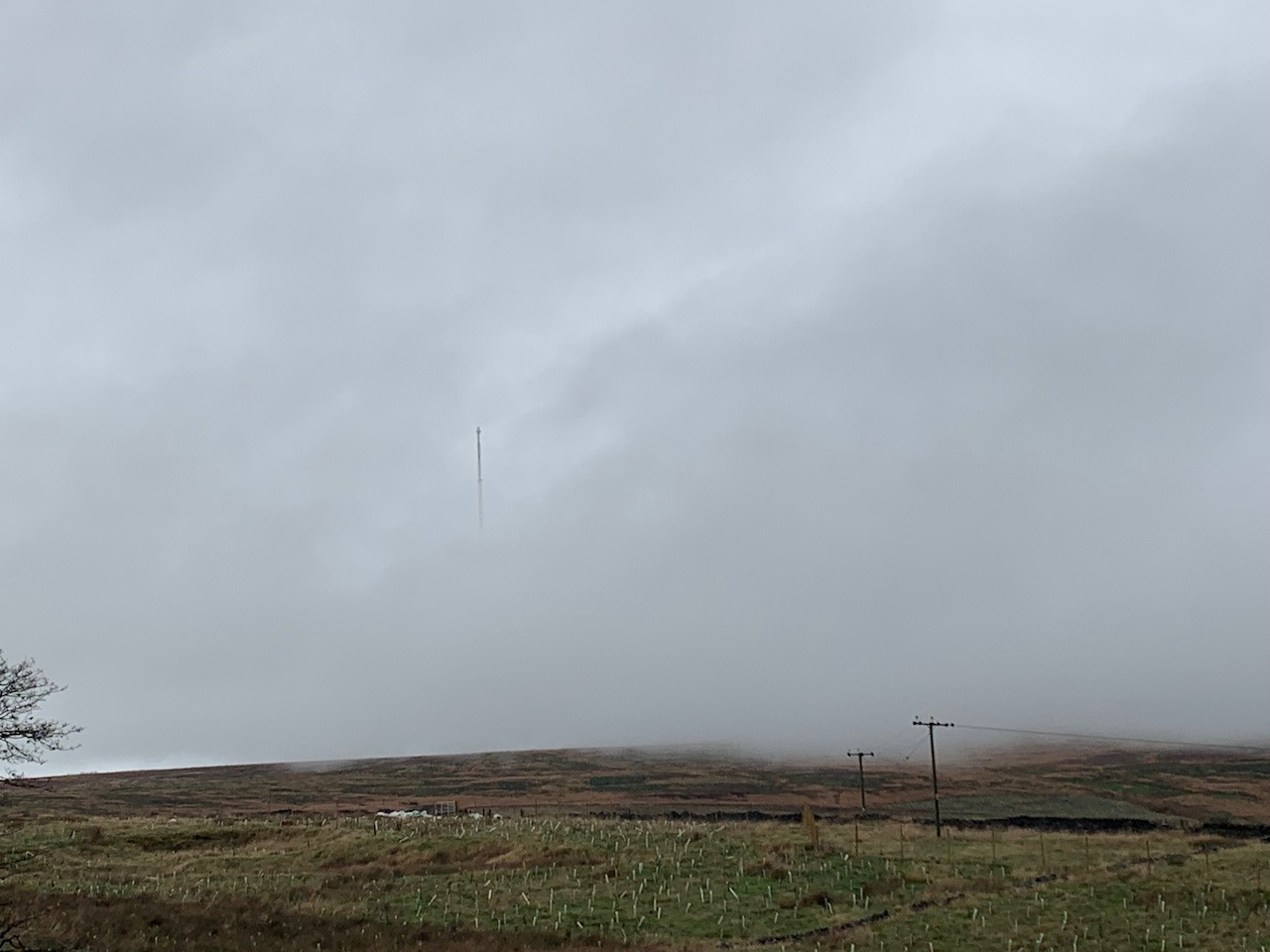
You summon back our voices like the mast on Winter Hill.

You make us appear again like television. Your hunt
would make a good film but most times myth
is better told in softly spoken words
and half-seen visions.

Radio broken. 
Someone smashed the television.

*

You are always off screen.
You are the one who is not named.
You are the one whose face is the face of a god.

The howls of the wind are the chorus of your hounds,

your words are furies and each has a hand, 
clutching, pulling, ripping, tearing.

*

You are the god of illusion
and the rending apart of all illusions.

The one who tears our false truths to shreds.

The jostling elbows, stuck-out toes, the heels dug in.

*

This is the time of fire, flood, rain, and catastrophe,
yet the beech leaves are yellow, gold, and green

in the kingdom beyond the kingdom beyond the kings 

and we call you a king without knowing the true meaning

of sovereignty, that your throne means more than gold.

*

Are you silence or the breaker of silence? 

So long ago I wrote: 

“The universe began 
with a howl and from the howl came death.”

The death-hounds within me giving tongue to a mythos
that came to me before my world had begun.

*

AWEN is not always a smooth chant
in the mouths of druids, but the broken vowels
of an awenydd when language cannot help and poetry fails.

Still, the body, its dislocated limbs, remember how to ride tonight.

*

And where is she in all of this? Riding ahead treading air un-abducted? 
Did you take her from the underworld or did she take you there?

Time, the clock does not obey, pivots like she on her wild white mare

like a dislocated limb. I have found that myth dislocates too,
frees itself from time and space, free and true.

This poem marks the first time I have felt inspired to share something here for a long time, something I felt compelled to share for my god after a walk near Winter Hill on Nos Galan Gaeaf. Maybe there will be more, maybe not, no promises, no deadlines…

King Fishing

I.

Your azure blue splash.

The quickness
of your dive.

Your kiss of fire.

Your splendour.

Your spine-snapping
savagery.

II.
Your body weight
in fish eaten

every day

fishing for
each of your young.

Your aeronautics.

III.
You were here
before someone wounded
the Fisher King

red dripping into blue

the blood from
his groin

like blood
from his queen’s
menses

flowing into the sea

(when male and female
had to bleed).

IV.
You were here
before the fae danced
in your colours

in the hall
of the King of Annwn
like devils

burning red
and cooling blue.

V.
You sat on your perch
and you watched

the gods –

some say
you advised
the Fisher King.

VI.
His wound

is beginning to heal
with the demise

of industry.

The red rivers
are flowing blue.

VII.
You are no longer
a myth

we cannot reach

on boats
of fish bones

sailing for halcyon days

because
they are here
like you

on this river.

VIII.
The Fisher King
is fishing.

The red world
is turning
blue.

This poem is the third of three pieces about creatures who build their nests in sandy banks and can be seen at Brockholes Nature Reserve. I wrote it a couple of weeks ago when I was applying for a paid traineeship on the Kingfisher Trail – a 14 mile recreational route following the rivers of the Croal-Irwell Valley connecting ‘the rural West Pennine Moors to the urban communities of Bolton, Bury, and Salford’ (HERE). Although I didn’t get the job (of 300 applicants I made the top three) I intend to walk the trail.

In this poem I link the kingfisher to Nodens/Nudd, an ancient British god of hunting, fishing, healing and dreams, from whose mythos the story of the Fisher King may have arisen (although Brân is a candidate too) and to his son, Gwyn ap Nudd, a King of Annwn/Faery, whose people make merry in red and blue costumes in his feasting hall.

Coincidentally, around the same time, Gwilym Morus-Baird published a video on ‘Gwyn ap Nudd and St Collen’ (HERE) where he discusses the symbology of Gwyn’s people wearing red and blue, which might have alchemical significance. Intriguingly he linked this to the two streams, Y Gwter Las and Y Gwter Goch which flow into Llyn y Fan Fach, the location of a story where a fairy bride is given away by a Fairy King-like figure.