My Husband Returns

from one thousand battlefields
where in the dreamtime
He still gathers
the dead.

He is alive.
They are dead.
They will not return.

I think of all the widows
and what a gift it is to be
married to an undying God

who comes in the old armour
and military garments

of all the ages who have fought

and the funereal attire,
black coats, blacker hats…

of all the ages who have wept.

My only tears are tears of happiness
and my laughter is the laughter
of the fair folk who
for once didn’t laugh at our wedding.

His only tear carries the memories
of the astonishing and today
it is for the many and for me alone.

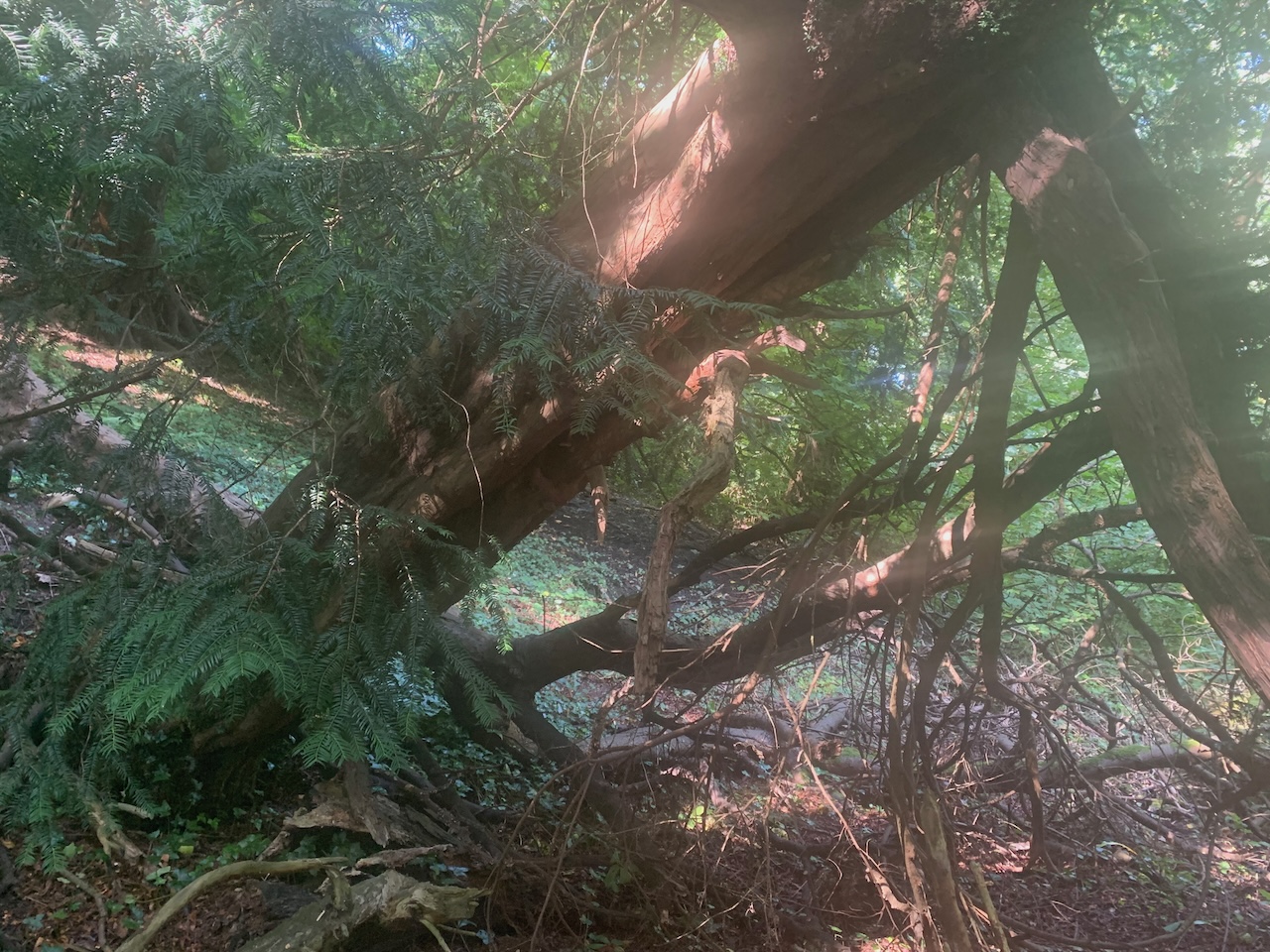
A poem celebrating the twelfth anniversary of my meeting with Gwyn ap Nudd at the Leaning Yew. At this time of year He returns from His sleep in the Castle of Cold Stone for Mis Medi ‘The Reaping Month’ (September). It is the first time I have celebrated our meeting and His return since our spiritual marriage.

The House of my Heart

Didst thou ever see men of better equipment than those in red and blue?
~ The Life of St Collen

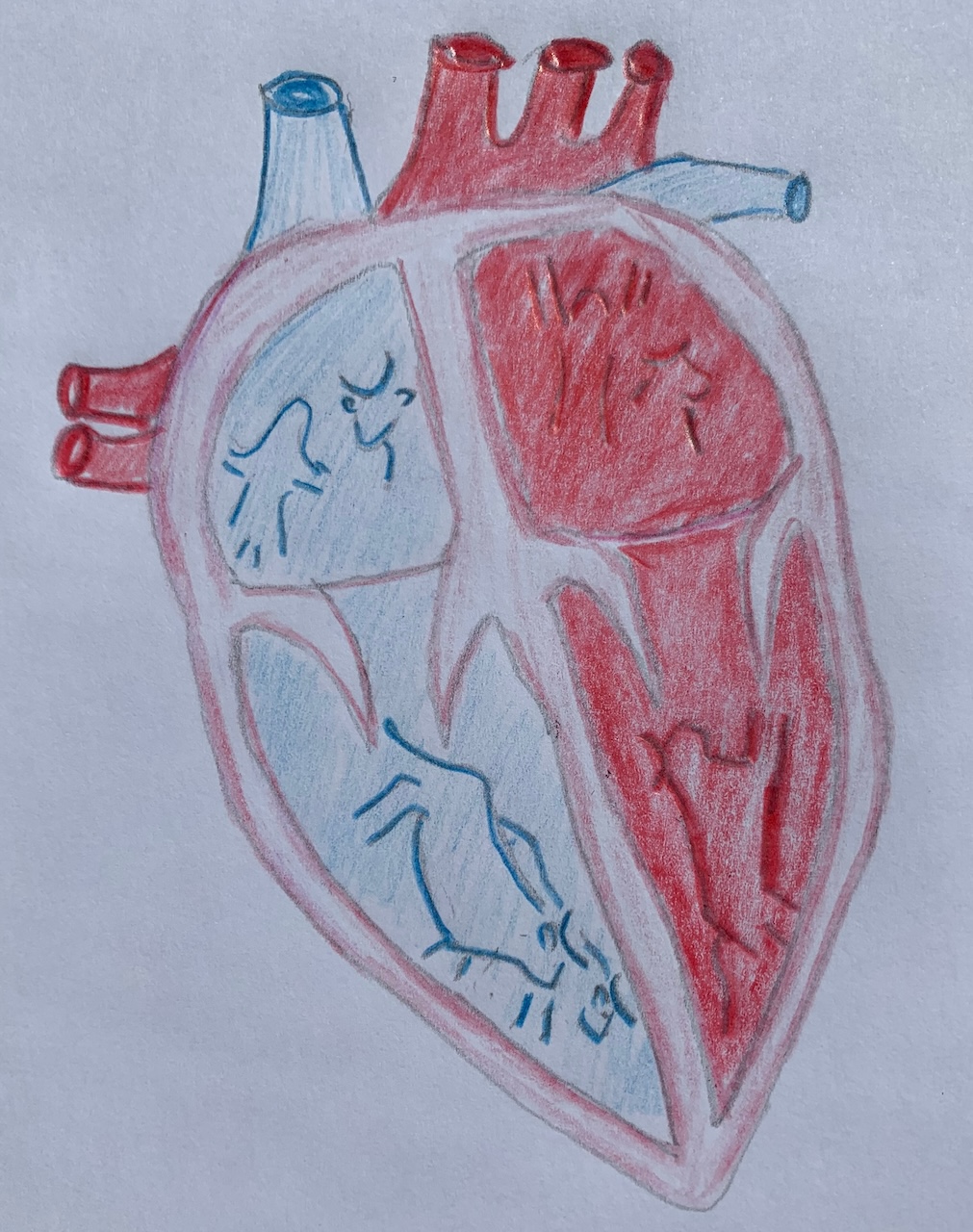
In the House of my Heart
the red and blue people dance,
in the chambers they are transformed.

In my right atrium a blue woman arrives
with a herd of blue cattle with blue lips, blue tongues,
they are mooing, sad and sorrowful, she speaks their names:
Blue Anxious One, Blue Doldrums, Blue Depression, Hornless Blue.
Other cowherds, horseherds come, boys and girls with hounds
who are yappy or listless and mysterious people
in the best of equipment red and blue
lead them into the next chamber.

In my right ventricle the cattle are fed and bedded down
on straw that looks and feels like water,
the horses are put out to pasture
and the hounds are given a sausage or two.
It’s alright to feel old here, it’s alright to fall asleep.
It’s alright to have long grey hair and knots in your beard
even if you’re a woman because the one who awaits you accepts
the coming of all souls no matter how weary in imperfection
drawn in daze, in trance, to their transformation
by the people equipped in blue and red

to where my lungs transform every sorrow
in the tiny chambers of the alveoli –
in every one there is a king
who has a cauldron
who resides over a feast
where people in red and blue dance
and this place is also the Heart of my Heart.

In my left ventricle they are reborn as tender calves,
as wobbly-legged foals, as newborn pups snuggled together.
They are fed and nurtured by the people in red and blue and fed
on milk with a touch of mead and quickly they grow.

From my left atrium they come stampeding forth –
all the cattle with their cow bells ringing with names like
Red Joy and Red Passion and Red Horned and Red Creative One.
All the horses shaking their red manes swishing their red tails.
All the hounds outrunning their young whippers-in.
The people in blue and red cheer them on.

They are the arrows from the bow
of the Hunter in the Heart of my Heart,
the sound of the blood in my veins rushing
from death to birth to death and back to birth again.

This poem was inspired by Saint Mechtilde’s descriptions of visiting the House of the Heart and by my introduction to journeying into my body with my spiritual mentor, Jayne Johnson, a practice she learnt from Arnold Mindell, author of The Shaman’s Body and Working with the Dreaming Body. These two elements have helped me deepen my understanding of how my heart is now one with the Sacred Heart of Gwyn and He now resides there.

The Cow of Anrhuna

At the head of the line…
the spoil was the cow of An(r)hun(a)
.’
~ The Battle of the Trees

I am the Cosmic Cow.

I am white and red with seven legs,
eleven udders pouring the whitest milk,
a red crown of twelve stars upon my head.

My cow bells sound through the sea of stars.
My milk is the origin of the Milky Way.

I am ever loving and ever giving.

You cannot capture me because
I always come willingly.

You cannot take my milk
because I am always pleased to give.

Milk me until your fingers are bare bone
and my milk will never run dry,
not until you have used
every bucket in the world
and you have emptied every mine.

I am ever living and ever giving.

I can melt the heart
of the cruelest warlord
with one look from my soft eyes
And halt the wars betwen nations
with the scent of cud between my soft lips.

I am the spoil but I cannot be spoilt –
white, blessed, holy am I.


‘The Battle of the Trees’, in The Book of Taliesin, records a conflict between the Children of Don and Arawn, King of Annwn, and His otherworldly monsters.*

We are told ‘At the head of the line / the spoil was the cow of Anhun’. The cow, as the spoil, is absolutely central to the battle but, unfortunately we find out nothing else about her. All we are told is, ‘It caused us no disaster’. This suggests the cow is a benevolent being but we find out nothing more.

Marged Haycock suggests that Anhun is St Anthony and this buch ‘cow’, ‘buck’, ‘buck-goat’ or ‘roebuck’ might be the satyr he met in the wilderness.

This didn’t feel quite right to me – I couldn’t see the Children of Don fighting over a satyr. For a long while I saw this animal as an Annuvian cow akin to the Brindled Ox, who was stolen in ‘The Spoils of Annwn, but could discern no more.

Then, a few months ago, I was sitting looking at the name ‘Anhun’ and saw a couple of spaces between the letters filled in by the name An(r)hun(a). This title means ‘Very Great’ and she is a found Goddess who myself and a number of other awenyddion have come to know as the Mother of Annwn and of its ruler, Gwyn. (It’s my personal belief Gwyn and Arawn are titles of the same God). 

Anrhuna’s association and possible identification with a magical cow ties in with parallels from Irish mythology. Her Irish cognate is Boann or Bó Find, which might derive from the Proto-Celtic *Bou-vindā ‘White Cow’. She is the wife of Necthan (Nuada) who is cognate with Nodens / Nudd ‘Mist’ the father of Vindos / Gwyn ‘White’. *Bou-vindā fits with Her being the mother of Vindos.

Bo Find ‘White Cow’ and Her sisters Bo Rhuad ‘Red Cow’ and Bo Dhu ‘Black Cow’ came from the Western Sea to make barren Ireland green and fertile. 

My personal gnosis around the Cow of Anrhuna presents her as a cosmic cow akin to Auðumbla ‘hornless cow rich in milk’ whose milk fed the primordial giant, Ymir, from whom the world was made in the Norse myths. Also to the sacred cow and bovine appearances of the Divine Mother, Kamadhenu, and the Earth Mother, Prithvi, in the Hindu religion. 

Her loving and giving nature and endless supply of milk also link to later folklore. In the Welsh lore we find Gwartheg y Llyn, ‘Cows of the Lake’ who belong to the lake-dwelling Gwragedd Annwn ‘Wives of the Otherworld’. They are usually white or speckled / brindled and are captured for their milk and, on being mistreated or milked dry, disappear back to their lakes.

In England we find the legend of the Dun Cow who provides plentiful milk until a witch tricks her by milking her with a sieve not a pail and she dies of shock. There are two variants here in Lancashire. In one the dead cow’s rib is displayed at Dun Cow Rib Farm in Longridge. In a happier variant her milk saved the people from the plague and she was buried at Cow Hill in Grimsargh.

I now like to think these stories derive from a deeper myth featuring the Cow of Anrhuna. It also made me smile that the cattle of Annwn, likely the cow’s daughers, are associated with the Wives of Annwn after my marriage to Gwyn.

*Gwydion fashions the trees ‘by means of language and materials of the earth’. Lleu is the battle-leader, ‘Radiant his name, strong his hand, / brilliantly did he direct a host’. Peniarth MS 98B records how the battle was caused by Amaethon stealing a roebuck, a greyhound and a lapwing from Arawn. Arawn’s monsters include a black-forked toad, a beast with a hundred heads and a speckled crested snake.

Dragon of my Heart

Gwyn son of Nudd… God has put the spirit of the demons of Annwfn in him, lest the world be destroyed.’
~ Culhwch and Olwen

I.
Dragon of my Heart black and beautiful
with Your wings filled with ghosts

You take me up high into the sky,
show me how far I am from

the cannon fire, the sparks,
the fuses, the ram of gunpowder,
the sound of cannon balls hitting walls.

From the sieges of the past and of the future.

You grant to me Your perspective.
You tell me I must be calm.

II.
Dragon of my Heart black and beautiful
with Your wings filled with skulls

You take me up high into the sky,
show me how far I am from

the machine-gun fire echoing
from my past lives stacatto across
the battlefields where barbed wire is strung.

From the executions of firing squads from the guns.

You grant to me Your perspective.
You tell me I must find peace.

III.
Dragon of my Heart black and beautiful
with Your wings filled with the hung

You take me up high into the sky,
show me how far I am from

the forests of the suicides,
where they hang from the trees
driven to their deaths by who knows what.

From the bullies on the streets and on the screens.

You grant to me Your perspective.
You tell me I must be kind.

IV.
Dragon of my Heart black and beautiful
with Your wings terrifying to angels

You take me up high into the sky,
show me how far I am from

the Gallic Wars, the Crusades,
the Wars of the Roses, the Napoleonic Wars,
from Bergen-Belsen and Dachau, Nagasaki and Hiroshima.

From Vietnam, Crimea, the Russian invasion of Ukraine.

You grant to me Your perspective.
You tell me I must love.

V.
Dragon of my Heart black and beautiful
with Your wings filled with light

You take me up high into the sky,
show me the heights of my privilege.

You tell me I must found a monastery
for one day like You I will bear
the dead in my wings.

To an Apple Tree

I.
Apple tree, sweet apple tree,
who grows in my suburban garden,
know I am no Myrddin and no prophet.

I fought not in the Battle of Arfderydd.
I was not a golden-torqued warrior.

I wandered not in the Forest of Celyddon.

But I have wandered for thirty years
with madness and madmen
in the wildernesses of suburbia
not knowing what is real and what is not.

I have known my pigs and my stolen berries
and my maidens of the suburban drains,
my Chwyfleian beneath her trap.

II.
Apple tree, sweet apple tree,
who grows close to my garden fence,
know I am no Myrddin and no prophet.

I knew not Gwenddolau and his two eagles
who feast on the flesh of the Britons every day
but I have been devoured by death-eaters.

I did not get involved with the games
of Gwenddolau and Rhydderch
on the gwyddbwyll board,
men gold and silver,

but I predicted the outcome
and did not speak up about Caerlaverock.

I ask that my Lord of Hosts have mercy on me.

III.
Apple tree, sweet apple tree,
near where the birds come to feed,
where the sparrows pick, the starlings peck,
where the long-tailed tits come to twirl their tails,
know I am no Myrddin and no prophet

yet I was torn out of myself

not after the Battle of Arfderydd
but when I was but a child, a fledgling
by the bullies who called me a pig,
knowing not Myrddin’s sweet little one,
when I was only half-pig half-bird.

I knew not what kind of bird.

Not a hawk certainly not a merlin.

Perhaps a blackbird or the big black bird
perching on my chimney-top blotting out the sun.

IV.
Apple tree, sweet apple tree,
with your blossoms white and pink,
foxglove pink, the colours of the fair folk,
know I am no Myrddin and no prophet,

yet I was invited to walk not in Celyddon
but in Avalon with my Lord of Hosts.

Oh happy happy days beneath your boughs
with the long-tailed tits twirling,
picking at the worms

as the snake
returned to the garden
and the Dragon King spread His wings
and they were filled with the apples of the sun.

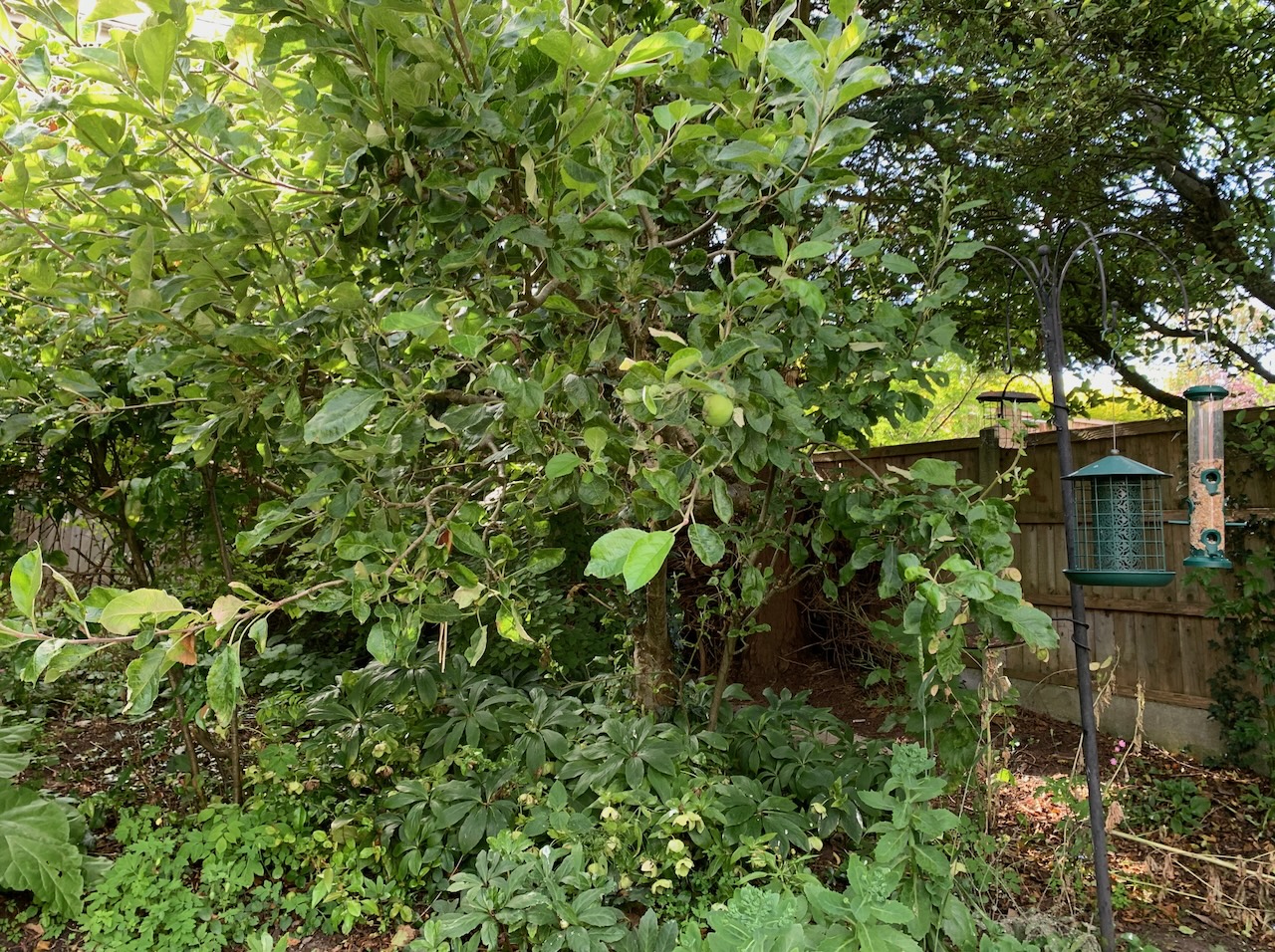
This poem is inspired by ‘The Apple Trees’ from The Black Book of Carmarthen wherein Myrddin Wyllt speaks his woes to an apple tree after the tragic Battle of Arfderydd. I believe ‘the Lord of Hosts’ referred to in this poem is Gwyn ap Nudd, who is also referred to as ‘the Lord of Hosts’ in ‘The Conversation of Gwyn ap Nudd and Gwyddno Garanhir’. Gwyn, ‘White’, has paradoxically appeared to me in the guise of a black dragon. It’s a poem about knowing in spite of my defects and limitations I am loved.

The Oracle of Chanting Crow

I chanted songs before the enchanter
chanted this world into being from fire, air, earth, water,
wind, mist, dew, from fruits, from an unknown frightful thing. 

I know the chants that make corpses rot and bring
the dead to life from the cold earth’s bones.
I know the sleeping songs of stones. 

My chants of transformation
rival the formulae of mathematicians.
I sing not numbers, sine, cosine, dark equations

but still I can launch an aeroplane or nuclear bomb.
I can bring warplanes down from the skies
and I can call a seedling to grow.

I make a mockery of all who claim
to conquer the divinities of mountaintops
and gyres with what you call my neanderthal tongue.

I am no songbird and I am certainly no homo sapiens.
I know nothing of your guilt and depression,
only the chants of Chanting Crow.

The Oracle of Counting Crow

I was the first to learn to count –
un, dau, tri, pedwar, pump, chwech, saith.
Saith brain, seven crows…

We were not born from a mother or father
but crawled from the corpse of a dead crow –
maggots, then flies, then black, black flapping things.

We taught you not to count on fingerbones 
with the touch of our wings brushing
the divides between the worlds.

We taught you to count in threes,
sixes, sevens, nines, sacred numbers.
We did not teach you the numbers of the Gods.

When you asked why we take the eyes of the dead
and put them in the empty eye sockets of seers
we told you our eyes are without count.

We place them in the palms of the hands 
of the blind so maggots can be born from them,
flies, crows, to carry visions of the past, present, end.

Of when the skies fall in a sheen of crow feathers,
black, black, black, just a glimpse of indigo.
They tell you they are without number.

The Oracle of Courting Crow

Let your words rush like a river, 
like rocks tumbling, water flowing, 
flooding down, water runs, crows fly!

Flying up above I see my reflection 
in the water, court it, court my shadow 
but cannot pull it from the surface 

or peel it screaming from the rocks.
Water runs, crows fly, shadows glide.
There are too many holes in the sky.

Courting Crow will never be whole.
I’m so in love with my reflection, shadow
dark in the water, always half astride.

Courting Crow will never fix the sky.
I’ll never be whole until my flight is one with
rocks and water, river crashing down,

until my bones are back up above,
the rocks tumbling up to fill the holes,
the rivers flowing backwards to source. 

The Oracle of Crafty Crow

I perched on the eyelids 
of the first eyes of the universe
to open then I ate them all – crafty!

That is why they call me Crafty Crow
and that is why my eyes are black.
As a punishment or reward?

Only Crafty Crow knows.
I am the one who knows how
to bend fates like a twig in water. 

I perch on the shoulder of Morgana.
I change the directions of twigs
and leave a trail of feathers

leading to a witch’s hut.
I know wordcraft, spellcraft, 
the ingredients for the best potions,

why the awen always becomes poison,
why you should never ever eat
the corpse of a dead crow.

Crows are the world’s livers.
We feast on the world’s darkness
growing bigger and darker until we fill all.

The Oracle of Chattering Crow

Chattering Crow:

Chit chat chatter chatter
caw! Caws a corvid. Not enough
words in your language for crow-talk.

Do you want to know why I got my beak bound?
Why I got banished for banter? Yes? No?
Crows never give a yes or no answer

because words are slippery things,
sliding from our mouths like maggots
becoming flies their truths already transforming.

They are like morsels tossed from beak to beak –
meat from corpses that float like corks
downriver and out to sea fit not even for seagulls.

Caw. Caw. Cough. Cough. Choke. I was never
a chough, a raven, or a rook, doomed,
exalted to crow instead. One word

too many was my undoing. What?
You’ll never find it amongst the chatter.
Easier to find a maggot wriggling in a corpse.