The dark people on the silver beach

how like moonlight they waltz
where the shells
are not cracked and peeling.
The walruses and the distant military
come to seek healing their dark hands held out like flippers.
How I long to dance in the shell of the moon
where the wounded masks fall away
like faces where the craters
are not too deep
to heal.

The dark people on the silver beach

when the horses left their hoofprints in the sand
they were taken to the dance
after the explosion
after counting
to ten.

The dark people on the silver beach

the seals of their souls wear anoraks now
their children lick ice-creams.

The dark people on the silver beach

do not know who they are
who they were until
the dance begins.

I dance amongst them. Look – a shoal of dolphins!
How they bend their backs and arch
into the deep sea.

p1180418-copy

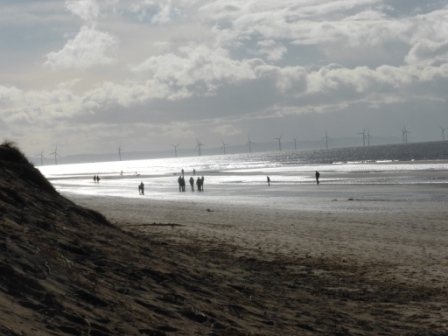
*Last month I visited Formby Beach and took this photograph. During a full moon meditation I saw a vision of ‘the dark people on the silver beach’ dancing there by moonlight and that inspired this poem.

She Walks Between Worlds and Lovers (Calan Gaeaf)

It is summer in the otherworld when she is there
winter in the otherworld without her.
In Gwyn’s arms she is Lady Death:
petals fading wilting perishing discoloured
returning to the earth with work of insects,
seeds descending into soft and loamy soil,
sinking down with the work of worms.
Into his fateful embrace he takes her
down beneath bones of the dead,
fallen trunks and golden pollen.
In ancientmost forests Creiddylad
is Annwn’s Queen in sacred marriage.
Their passion in the unseen summer
stirs the dreams of sleeping corm,
bulb, knotty seed: movement
of potential, hidden, dormant
until the explosion to life. Each
underground power puts out shoot, stem, leaf,
reaching upward through snow for another sun.
She is their secret growth until the moment of flowering
when she sees her time in the otherworld is over
and walks between worlds and lovers.

Leaves in Greencroft Valley

Lamentation for Catraeth

‘By fighting they made women widows,
Many a mother with her tear on her eyelid’
Y Gododdin

After Catraeth battle flags sway in the wind.
Storm darks our hair. Our tears are rain.
We press cheeks against cold skin,
load biers with sons and husbands
who will never drink in the mead-hall again,
lift weapons, smile across a furrowed field,
mend the plough, yoke oxen, share a meal,
touch ought but blood-stained soil,
chilled fingers reticent to let go.

Storm sky breaks. Our love pours out.
Ravens descend on soft wings to take them.
How we wish they would take our burning eyes,
flesh we rend with nails unkempt
from the year they left for Din Eiddyn,
drunk their reward before it was earned

at dawn with sharpened spears
at daybreak with clashing spears
at noon with bloody spears
at dusk with broken spears
at night with fallen spears,
shattered shields, smashed armour, severed heads.

Seven days of wading through blood.
Of each three hundred only one lives.
Their steel was dark-blue. Now it is red.
Because of mead and battle-madness
our husbands and sons are dead.

We rend our veils. The veil is rent.
We long to tear out our hearts
and offer them instead
to the Gatherer of Souls approaching
with the ravens and hounds of death,
whose face is black as our lament,
whose hair is the death-wind,
whose touch is sorrow,
whose heart is the portal to the otherworld.

Our men rise up to meet him.
The march of the dead is his heart-beat.
The dead of centuries march through him.
The great night is his saddle.
The dead men ride his horse.

Forefathers and foremothers hold out their hands.
We do not want to let go but they slip
through our fingers like water
like tears
from sooty eyelids
into the eyes of others
into the eyes of their kin
to gather in the eyes of the Gatherer of Souls.

They are stars in our eyes now.
They are stars in the eyes of the hounds of death,
marching from drunken Catraeth:
the battle that knows no end.

When they had eaten the King

they put down their knives and forks,
wiped grease from their chins with napkins,
dared not look one another in the eye.

They bought the pork from market:
a joint with stuffing and apple sauce,
cooked it in the oven on gas mark 9.

When they started the rite it got weird.
The candles cast strange shadows across
limbs of a giant boar and ancient apples.

The living room became the great hall
of an otherworldly huntsman; fierce, fair
and tall. Surrounded by his motley host

to pipes and fiddles, the strum of violins,
they tucked in to the most delicious meal.
On a stake in the corner was a boar’s head.

Before its sharp gaze and curved tusks
a bard recited the story of Twrch Trwyth:
a human King transformed into a boar

doomed to be hunted then eaten by day,
by night made whole. Their hands trembled
like dropped pins but they dared not put

down their knives and forks or stop chewing
before the imposing eyes of the huntsman
until he had eaten his fill and thrown

the leftovers to his dog. They dared not
look one another in the eye as they cleansed
their fingers and left the table with a nod

of thanks to the leader of the hunt.
She dared not tell them for nights afterward
she dreamt of being reborn from a sow

as a porcine King growing up amongst
little piglets into a mighty warrior;
strong muscled, strong tusked,

running bristled through the forest
to meet the huntsman’s spear;
being slaughtered, spitted, roasted,

a head on a stick in the corner of the hall
watching as they ate the King by day
then at night he was made whole.

p1170734-copy

I wrote this poem last year after my experience of holding a celebration for Gwyn’s Feast (on September the 29th) which was based around Gwyn’s leadership of the hunt for Twrch Trwyth, ‘King of Boars’. A pork roast was cooked and a plate offered to Gwyn, along with meat for his dog, Dormach, and apples for his horses. The poem forms a slant take on my experiences.

Gwilym Morus-Baird has written an excellent series on ‘The Hunting of Twrch Trwyth’ beginning HERE.

Giant’s Seat

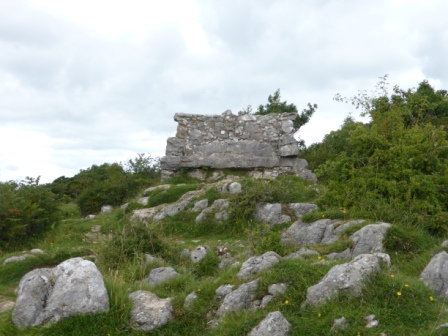
The giant chooses solitude on a limestone seat
overlooking the bay

resting bones of weathered limestone
bunches of ragwort for hair twisted with purple heather

delicate harebells and stitchwort her apron
toes roots squirming in quicksand dipping in tidal waters

her mind a boomerang scudding across silver clouds
returning with infinite thoughts.

She looks into our little minds
prising apart grey stone sees through cracks

people arguing in our flesh-and-blood lives
people arguing on screens

hears chitter-chatter drowning out birds
wishes we’d turn down the noise.

A butterfly flaps its wings
powerful as Heysham and the off-shore windfarm.

The giant keeps her knowledge of cause and effect
in a pouch full of wing-beats:

bombers plucked from the skies like gnats
between a thumb and forefinger.

She seems serene
but damage the land with a single thought

and you will feel her hurricane,
trees uprooting through limestone cracks

as she shakes thoughts like people from her caves.
Perhaps one day she will shrug us off and become truly alone

with only the fugue of the tireless sea beating
against her limestone throne.

P1170504 - Copy

Gwyn’s Death and Departure

You say you come from many battles and many deaths.
I try not to hold on or shed tears on the edge
of summer.

You’ve been doing this for many years.
I’m the fearful one.

After death you staunch your wounds,
draw your blood back
into itself

before your hounds come forever guides into the mists
with your horse who carries the dead.

You’ve never been more yourself.

You remind me of the November
we touched the moon and tell me not to mourn.

You are long-lived and my summers are limited:
hours to be savoured as a bee
drinks nectar from
a gold cup.

I cast off my grief
for my gown is not yet a shroud.

On the motorway bridge
where the railings sing like hummingbirds in the gale

I am alive yet your hunt is never far off.

No Other Way

Because there’s no other way.
Because the gods have got me by the heartstrings.
Because I see over the horizon not what’s on it.
Because I see birds who are not birds.
Because I am in hidden spaces.
Because I love mist.
Because no-one tells the whispers of the silent.
Because words can dance like pictures on cave walls.
Because my people are hungry.
Because the wind howls down my neck.
Because I wake at night and there are stars.
Because the mortality ship is sailing.
Because I am the threshold.
Because another world’s stars hem me in.
Because I look above and the worms are singing.

Glasgow Necropolis

So often returning to the same place.’
Merchants` House motto

It called to me before I went there
across the bridge of sighs:
green avenues of mausoleums,
huge genius loci of merchant patriarchs
towering over obelisks and plinths,
guardians of locked vaults,
faces grey and sombre.

Nothing escapes the rain in the city of the dead.
It pours its fierce torrential acid force
on statues with eyes empty in prayer
gazing forever heavenward.
Makes them raw. Crafts them so white it hurts.
Grants them tears and new stigmata.
An angel holds an oak leaf like a butterfly.
Orange sycamore birds catch in the wind and fall.

How do they feel, how do they see
when their eyes are pupil-less?
Are they blind or do they see as I see
a crack of light in the magma-like clouds,
my lord of the dead approaching on a lime-white horse
where time bends an army of tombstones
into eternity? Do their hearts beat
with mourning and elation?

Do they remember the steady hand
of devotion that carved their limbs,
immortalised them here as I stare statue-like
from amongst merchants, artists, poets,
gathered on green roads,
in sepulchral houses,
ask the rider on the pale horse
“why am I so often returning to the same place?”

Bridge of Sighs

*Glasgow Necropolis was the last place I visited during my time in Glasgow.


Apples

For Epona

The blood moon:
an apple in a goddess’ eye
drops and I think of the windfall
crisp autumn mornings when we released
the horses slipping from their halters
twisting away in leaps and bucks
with piquant glint-eyed excitement
to the trees where they’d drop their heads
whuffle up the crispy moons of green and red.

Some days before we turned them out
we whispered to them “apples”
and they knew exactly what we meant…

The blood moon has passed.
The horses are staying out late this year.
Yet the sun has gone down on my stable-yard:
baling freshly-cut hay, stacking barns
with hard-shouldered labour,
stuffing stretching nets
for hungry mouths.

As I cut the meadow and gather orchard fruits
I reminisce about the rural life that didn’t last.

When the horses are tied behind bar and bolt
tugging at hay with meadow-sweet muzzles
I will feed them apple-moons
from my open palm.

*This poem was written after watching September’s lunar eclipse from Greencroft Valley, where we planted apple trees two years ago, and is based on my experience of working with horses. I read it for Epona at a ritual in Glasgow led by Potia at the beginning of October.

The Last Witch of Pennant Gofid

I journeyed for weeks
through mist and hunger
to find the split rack of her bones,
bones stripped, flesh burnt
and boiled in the cauldron,
blood drained and bottled in two jars.

I plundered the ashes where the cauldron stood,
sniffed for blood where the jars were filled.
Played maracas with her bones,
made intricate arrangements,
chanted and sung
but could not raise her ghost.

“She is amongst the spirits of Annwn now,”
spoke the god I called instead.

“Lay her bones to rest. In the fire of poetry
console her burning spirit.”

***

I’m laying her bones to rest. The Last Witch of Pennant Gofid. Her name was Orddu. It meant ‘the Very Black Witch’. Whether she had black skin, black hair or used black magic seem irrelevant now. All that is left is her scapula split in twain, her shattered pelvis, two arms, two legs, her broken skull. Jagged shadows in two orbits retrieved from either side of the cavern.

Her bones are still. I am angry and restless. I cannot abide the story of her death. How Arthur came as he always did into every story every world every myth with his hatred of witches: sword slung over his shoulder like a sundered lightning bolt, a living knife in his hilt, a shield on his thigh adorned with an image of the Virgin Mary, aboard a huge mare.

Caw of Prydyn behind him a giant with a curling beard and the damned jars like heinous milk bottles on each side of his saddle; half a man in size, well-stoppered, thick-glassed, unbreakable. Then the retinue with spear and shield, tawdry banners and flags.

Following to stragglers’ jeers Hygwydd the servant staggering bow-legged bent-backed beneath the gigantic cauldron that brewed food for the brave. Hygwydd’s brother Cacamwri with Hir Amren and Hir Eiddil dragging ponies piled with saddle-bags of food and weapons.

At Arthur’s right Gwythyr ap Greidol, a gristled war-lord with fire and a hundred bloody campaigns in his eyes. A blazing passion. And to Arthur’s left Gwyn ap Nudd, the guide who tricked and dizzied their quest cloaked in mist summoning his hounds to eat the fallen from the mountainside.

Of the host who went to Pennant Gofid only a fragment reached the cave where Orddu plaited her black hair, blackened her skin with war-paint, fastened down her helmet. Sharpened her sword then set it aside like an afterthought. Cracked her knuckles and flexed her talons.

When Arthur blanched a voice mocked from the mist “if you’re scared, witch-killer, why not send your servants in instead?”

Arthur pointed Hygwydd and Cacamwri toward Orddu beckoning. She grabbed Hygwydd by the hair, dragged him to the floor, threw off Cacamwri’s assault, arrested their weapons, beat them out bloody and bruised. Arthur sent Hir Amren and Hir Eiddil in to be crushed in her wrestling hold, torn by her talons, beaten out with broken bones. Arthur fumbled for his knife.

“Why are you afraid, Christian warlord?” Orddu asked. “Far from home. Far from heaven. Do you remember I trained your northern warriors? Without my wisdom, gifts from our gods, they will be nothing but bickering chieftains with a lust for gold and immortality that will bring Prydain’s downfall?”

Overcome by fury Arthur threw his knife in a wrathful arc that sliced down through Orddu’s helmet through her ribs. Dropped to the floor as she fell aside in two halves screaming “Prydain will fall!” “Prydain will fall!” “Prydain will fall!” as the mist writhed and the hounds of Annwn howled.

When her twitching halves lay still Caw filled the bottles with her blood still warm and jammed down the corks. They stripped her of armour and flesh. Boiled a merry meal. Stole her sword. Left with a cauldron filled with northern treasure whilst her spirit watched aghast in the misted arms of Gwyn ap Nudd.

***

I cannot abide the story of Orddu’s death. How Arthur came as he always came into every story every world every myth with his hatred of witches with his living knife to put an end to wild recalcitrant women. Now I’ve laid it to rest I’ll share another story instead.

I shall tell what this fatal blow and the blows on the Witches of Caerloyw cost Prydain (“Prydain will fall!” “Prydain will fall!” “Prydain will fall!”). Not only the fall of the Old North and the Men of the North. The rise and fall of the British Empire (it had to needed to fall). But the splitting and bottling of magical women for over a thousand years.

Draining of our blood. Boiling of our flesh. Testing if we float. Gave us The King James Bible and The Malleus Maleficarum. Took away our prophecies and visions, gods and goddesses, our fighting strength. Gave us virginity and chastity belts. Cut us off from plants and spirits, rocks and rain, rivers and mist, otherworlds.

Over a thousand years on we are but shadows of ourselves. Mirrored pouts tottering on high heels. Watching ourselves on selfie-sticks. Worshipping televisions. Still split in half, bottled, boiling, floating, banging to get out.

Not long ago I split the jars. Escaped to another place. Wandered my estate kissing Himalayan Balsam. Watching Ragwort sway with wasps. Mugwort flowering like coral. But this was not enough. Gods and fairies walked to the world of the dead and called me after them. Since then I have seen the dead walk in the bright eye of the sun.

I could not go back to the jars. To glass windows and tower blocks. To numbers on computer screens. The pencil skirts of offices. To fracking rigs threatening to break both worlds.

So I came to Pennant Gofid searching for answers and companionship on my lonely path. Found only Orddu’s bones and the god who took her spirit. Yet found a link in spirit with a companion and a god in the magical tradition of the Old North.

***

So I constructed a fire of poetry and spoke my words of consolation:

“Orddu Last Witch of Pennant Gofid
know you are not the last
to walk these paths
to caves and mountain ranges,
through otherworlds and distant ages,
seeking visions of the present
the future and past.

The rule of Arthur has fallen.
Though Prydain still falls
we have broken the jars.
Our blood is no longer contained
by the tyrants of Arthur’s court.
We are winning back our flesh.
Our magic. Our strength.

Remembering our gods.
Know your life will be remembered
where there are prophecies and hailstorms,
rain and rivers, caves and heresy,
in the mists of Gwyn ap Nudd
where your spirit burns
forevermore.”

Then I took her bones in my rucksack and crawled through to a dark chamber. On a little shelf beside Orwen ‘the Very White Witch’ I laid Orddu’s bones to rest.