10, 11. The Vat and Dish of Rhygenydd

The Vat and Dish of Rhygenydd the Cleric: whatever food might be wished for in them, it would be found.’
Thirteen Treasures of the Island of Britain

It’s a secret knowledge
passed down by generations:
the perfection of malt, mash, wort,
the duration of fermentation,
the best flavouring herbs.

Rhygenydd kept the doors
of his brewery shut – the people
of the North imagined him winnowing,
threshing, malting, sparging, boiling,
praying as he added yeast

and closed the lid of the vat.
They wondered if he knelt palms
pressed together in prayer to God
or petitioned pagan grain gods,
for the Vat of Rhygenydd

brewed Britain’s finest food.
Little did they know with one wish
the cleric could summon any ale:
pale, light, malty, dark, bitter
with bog myrtle or sweetened

with heather or meadowsweet,
that behind closed doors he liked
to sample each tipple and could
be found snoring contentedly,
an empty tankard in his hand.

To which monastery did he pass on
his secret and who owns the vat now?
I’m doing a round of the breweries,
comparing pales, IPAs, stouts,
amassing my tasting notes…
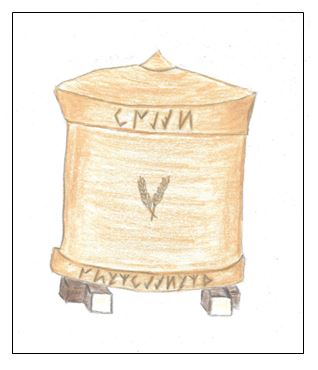
The Vat of Rhygenydd

~

If I was a cleric
with a magical dish
would I take it round
the cities of the North:
Liverpool, Manchester,
York, Carlisle, Newcastle,
Glasgow, Edinburgh,
in each square wish up
bread, fruit, stew, soup,
feed all the homeless
or keep it locked up
in a gold-adorned box
opened only on Sundays
and offer one thin wafer
to melt on each tongue?
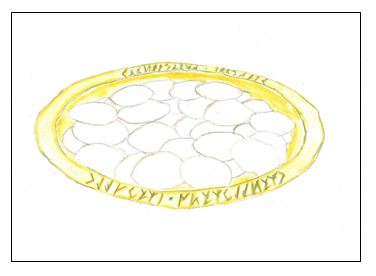
The Dish of Rhygenydd

~

Rhygenydd Ysgolhaig ‘the Cleric’ does not appear by that name in any other sources. Rachel Bromwich notes the resemblance of the name to Renchidus episocpus who with Elbobdus episcoporum sanctissmus (Saint Elfoddw) gave Nennius the information about the baptism of Edwin of Deira by Rhun ap Urien, which appears in The History of the Britons.

 Nennius notes Edwin seized the kingdom of Elmet from Ceretic (son of Gwallog) and a year later received baptism by Rhun along with twelve thousand of his subjects within forty days. This took place in York in 627. By this time Rheged had been integrated into Northumbria. It seems Rhun maintained a position of power as a bishop. As Rendichus gives such importance to Rhun baptising Edwin it is possible he was connected with former Rheged and supported the taking of Elmet from Ceretic, whose father, Gwallog had turned against Urien and his sons.

Vat is translated from gren, ‘big vat or vessel, tub, pail, pitcher’. I found this somewhat confusing in relation to its property of generating ‘food’ until I realised that, well into the medieval period, ale was seen as a food-like source of nourishment and the vat was likely used for brewing.

People have been brewing in Britain since grain has been cultivated. In Skara Brae on Orkney,  Neolithic buildings were found with a malting floor, kiln flue, pots for mashing, and huge Grooved Ware pots with stone lids for fermentation that contained 30 gallons. ‘Vats’ of this nature have been found near a number of Neolithic henges and stone circles demonstrating the longevity of our tradition of drinking at seasonal rituals.

Although wine was imported into Britain in the Roman period, it was mainly drunk by the ruling classes. Soldiers and non-Romans, particularly the Britons, drank ale. Wine was consumed less in the North because of the difficulties transporting it. One of the tablets from Vindolanda is inscribed with a request to ‘order beer’ for the soldiers and our earliest reference to a brewer: Atrecus cervesarious, is from the Roman town.

When the Roman Empire collapsed it was the monasteries who retained the knowledge of brewing and wine-making. This fits perfectly with Rhygenydd the Cleric owning a magical vat.

It’s difficult to pinpoint when people began eating from wooden plates or dishes because wood rots. One of the earliest examples in Britain comes from the Bronze Age settlement at Must Farm where ‘a number of wooden platters… carved from a single piece of wood’ were preserved due to a fire.

Although people began hand-making pots from clay by the open fire method during the Neolithic period we do not find any earthenware plates. Wheel-made Samian tableware along with silver and pewter dishes were imported by the Romans. One of the best known dishes is the Great Dish, which was made of silver, weighed 8 kilograms, and was decorated with the face of Neptune and other Roman deities including Bacchus, Pan, Silenus, maenads, and nymphs.

Was Rhygenydd’s dish of similar make and proportions, perhaps minus the pagan deities, or was it humbler? Within the Christian tradition bread is served on a ‘paten’, a small plate, usually made of silver or gold’ as part of the mystery of the Eucharist alongside wine.

 ~

SOURCES

Kenneth Jackson, ‘On the Northern British Section in Nennius,’ Celt and Saxon: Studies in the Early British Border, (Cambridge University Press, 1964)
Michelle of Heavenfield, ‘PW Rhun ap Urien of Rheged, Heavenfield
Merryn Dineley and Graham Dineley, ‘From Grain to Ale: Skara Bra, a Case Study’, Neolithic Orkney in its European Context, (McDonald Institute for Archaeological Research, 2000)
Robin Wood, ‘History of the Wooden Plate’
Rupert Millar, ‘Send beer! The Romans in North Britain’, The Drinks Business
Alcohol in the Middle Ages, Dark Ages, or Medieval Period’, Alcohol Problems and Solutions
Dig Diary 25: Wooden Objects’, Must Farm
Gren’, Geiriadur Prifysgol Cymru
Paten’, Wikipedia
Mildenhall Treasure’, Wikipedia

9. The Coat of Padarn

The coat of Padarn Red-Coat: if a well-born man put it on, it would be the right size for him; if a churl, it would not go upon him.’
Thirteen Treasures of the Island of Britain

I don’t want to look at it,
let alone touch it,
try it on.

Padarn’s ‘red coat’
is Tyrian purple:

colour of the Roman Empire;
its emperors, consuls, priests.

If it touched my shoulders
one of us would
shrivel

like bolindus brandaris
boiled in a vat.

At Tyre are mountains
of snail shells –

it took twelve thousand
just to dye the trim.

I’m spitting mucus.

I’d rather go naked
than wear that thing!

~

The Coat of Padarn - drawing - border

~

Padarn (Paternus) Beisrudd ‘Red Coat’ was born around 300 and was the son of Tegid (Tacitus). He was the ruler of Manaw Gododdin, a kingdom that may have centred on present-day Clachmannan ‘stone of Mannan/Manaw’ and perhaps extended to include Din Eidyn. His son, Edern (Aeternus), was the father of Cunedda Wledig, founder of Gwynedd.

The Latin names in Padarn’s pedigree suggest his rulership was subject to Roman authority. John Rhys argues Padarn’s ‘red coat’ was a purple robe worn by Roman officials. This fits with the fact the Tyrian purple symbolic of power in the Roman Empire ranged from red to purple to dried blood.

The dye was made from the mucus of a snail called bolinus brandaris, which was extracted by boiling the creatures in a vat for several days. To make 1.4g – enough to provide pigment for the hem of one robe – took twelve thousand snails. Mountains of their shells have been found in Tyre.

Padarn’s fame and his red coat seem to be bound up with him being held in favour by Rome. The descent of the rulers of Gwynedd from the northern lineage of Padarn is held important in Wales to this day. This is probably the source of the lines about his coat only fitting well born men.

In other lists of the Thirteen Treasures it is stated the coat will fit anyone whether they are well born or a churl or large or small or, obversely, that it will only fit Padarn. An additional property is that it will prevent its wearer from coming to harm. These might stem from older lore about magical garments originating from Annwn.

Curiously, in The Life of St Padarn, Padarn, who lived during the 6th century, is named as the owner of a tunic that Arthur longs for. Padarn refuses to give it to Arthur because it is ‘not fitting for the habit of a malign person, but for the habit of the clerical office’. Arthur storms away and returns levelling the ground with his feet. Padarn asks the earth to swallow Arthur, who he is buried to his chin until he acknowledges his guilt and begs forgiveness. This strange tale perhaps originates from the earlier Padarn’s red coat.

~

SOURCES

Colin Schultz, ‘In Ancient Rome, Purple Dye Was Made From Snails’, Smithsonian
Mark Bradley, ‘The Colour Purple in Ancient Rome’, Issuu
Peter Bartrum, A Welsh Classical Dictionary: People in History and Legend up to about A.D. 1000, (National Library of Wales, 1993)
Rachel Bromwich (ed), The Triads of the Island of Britain, (University of Wales Press, 2014)
Padarn’, Wikipedia
Tyrian Purple’, Wikipedia

8. The Whetstone of Tudwal

The whetstone of Tudwal Tudglyd: if a brave man sharpened his sword on it, if he (then) drew blood from a man, he would die. If a cowardly man (sharpened his sword on it), he (his opponent) would be no worse.’
The Thirteen Treasures of the Island of Britain

This is not
a Naniwa 5000
Shapton Glass 8000,
or DMT Diamond Hone.

Cut, sawed, planed, smoothed,
in a factory unknown
to its owner

it is not sandstone, siltstone,
gritstone, quartzite or schist.
Nobody has graded the grit –
the sharpness of the weapon
is dependent on the courage
of its wielder.

If I could sharpen my tongue
on this magical bar,

keening across its smoothness
like a sword,

would my words draw blood
from the villains everyone hates:
the bankers, the frackers, the president
even old ladies long to assassinate?

Would they fall down dead?

Or would my cowardice be proved
by the dullness of my blade
ringing in deaf ears?

~

The Whetstone of Tudwal

~

Tudwal Tudglyd, ‘defender of the people’* was a ruler of Alt Clut. His estimated date of birth is 510. His father is Clynog ap Dynfwal and he is part of the Macsen Wledig lineage. Rhydderch Hael and Morgan Mwynfawr (owners of the Sword and Chariot) are his sons. It seems possible the whetstone was passed on by Tudwal to Rhydderch to keep Dyrnwyn, the Sword, sharp. According to an eighth century poem and The Life of St Ninian Tudwal was blinded by Ninian for his rejection of Christianity then healed by the saint, presumably when he agreed to convert. Nothing else is known about him.

The need for whetstones originated with the invention of metal weapons in the Bronze Age. They were made from sandstone or gritstone. After the stone had been quarried, the slabs were sawed, cut into bars, planed, and smoothed by metal tools. Whetstones held an important place in post-Roman society: without a whetstone a warlord and his warriors could not sharpen their swords and maintain their power. A good whetstone was highly treasured for its magical capacity to sharpen a blade and passed down through generations with its stories.

The skills of a talented furbisher were also valued. This is shown in Culhwch and Olwen. Cai is allowed into the castle of Wrnach/Dyrnwch the Giant (owner of the Cauldron) because he possesses the skill of furbishing swords. Taking a ‘striped whetstone’ he asks Wrnach whether he would prefer his sword ‘white-bladed or dark blue-bladed’. The colour of a sword determines its value**. Cai’s ability to produce either result suggests that, like Tudwal’s whetstone, it is magical. It may even be the same whetstone. Wrnach allows Cai to choose how he furbishes the sword. We might assume that, like other sharp weapons in the tale, it can draw blood from the wind once Cai is done. Cai uses Wrnach’s newly sharpened sword to behead him and claims it for Culhwch in fulfilment of one of the impossible tasks.

*Rachel Bromwich explains her translation: ‘With tud cf. Ir. túath ‘tribe, people’, and the corresponding personal name Tuathal; Tutklyd ‘defender of the people’. Gwâl = ‘leader, ruler; so Tudwal ‘leader of the people’.
**In the law texts it states that a dark blue-bladed sword is worth sixteen pence and a white-bladed sword twenty-four pence. A blue blade is produced by tempering and a white blade by polishing and burnishing.

~

SOURCES

Aurélie Thiébaux, Marc Feller, Bruno Duchêne, Eric Goemaere, ‘Roman whetstone production in northern Gaul’
Peter Bartrum, A Welsh Classical Dictionary: People in History and Legend up to about A.D. 1000, (National Library of Wales, 1993)
Peter Nowlan, ‘The Best Sharpening Stones’
P.F. Whitehead, ‘A pictorial field guide to whetstones and related artefacts in Worcestershire during the past 4000 years’
Rachel Bromwich (ed), The Triads of the Island of Britain, (University of Wales Press, 2014)
Sioned Davies (transl.), The Mabinogion, (Oxford University Press, 2007)

The Last Wolves

Every district has its last wolf.’
Lays of the Deer Forest

I watch across the troubled waters
of the Bay whilst you gather up
the Last Wolf of Lancashire
from Humphrey Head.

Some say he was driven
over Kirkhead and Holker
and plunged across the Leven,
sheltered on Coniston Old Man,
swam Windermere to Gummershaw,
Witherslack, Eggerslack, Grange,
met his end in Sir Edgar’s cave
by John Harrington’s lance,

others he fled the Bowland forest
where your ghost-wolves still howl
and was stuck by a thousand pikes
where tides meet the headland.

With thumb and forefinger
you squeeze his wounds closed,
pass your hand across glazed eyes
like the shadow of a lantern.

You shake out his pelt. His soul slips free
to join the wolf-dance in your death-light:

the dance of all the Last Wolves you gathered up…

From Gleann Chon-fhiadh, the Wolves’ Glen,
you gathered up the Last Wolf of Chisolm:
pulled the dirk from her breast, the spear
from her flank, the steel gauntlet,
lamhainn chruaidh from
the trap of her jaws,
laid her amongst
her slaughtered cubs
and sang out their yelping souls.

From between Fi-Giuthas and Pall-a-chrocain,
pinewood known for deer and township in the crooked river,
you gathered up the Last Wolf of Chisolm:
carried back his heavy black head
severed for fear he’d live again,
sewed up his severed throat,
wounds where he’d been
buckled and dirkit,
sang his black shape hurtling back
through pines, upriver, startling deer.

From a cave of bones in Helmsdale
you gathered up the Last Wolf of Sutherland:
closed her stab-wounds,
straightened out her tail from when she was suspended
by a God-like hand, wolf-shadow snapping
ineffectually over her dead cubs,
their ruddy-armed killer.
Her tail straight,
you sang her family whole into the Otherworld.

You gathered up the Last Wolf
of Inverness: pieced together his skull
shattered by an old woman’s frying pan,
sang him back to where he will no longer
prowl into houses or lick
a human hand.

You gathered up all the Last Wolves from
the Wolf’s Rivers, Burns, Crags, Glens, Dens,
Hills, even from Wormhills. You gathered
up the Last Wolf of the Weald

as you gathered up the Last Elk, Aurochs, Bear, Lynx, Boar…

I watch the Last Wolves join your wolf-dance.
White wolves, grey wolves, black wolves,
she-wolves and cubs vivid as stars
whilst bioluminescent fishes
leap across the Bay.

Humphrey Head III

When Black Water Horses Meet

Why, once in a lifetime, do black water horses meet?

Why do they come slithering out of the peat bogs,
out of the mires, from lakes, ponds, estuaries, crooked bays,
coated in sphagnum and sundew, purple moorgrass, wild angelica,
tails filled with water-mint and bog asphodel, bog bush crickets between their ears,
covered in duck-weed, dashing with water-lilies, ribbeting with frog-song,
clacking with barnacles, bright with sea-stars, fronds of thongweed,
wireweed, dabberlocks, spiral wrack, in their startling manes?

Are they brought together by a herding instinct in their perilous unbones
by which they shift into the ubiquitous shapes of tall dark men
and seductive women with cotton grass in their lapels
or chewed in a strand between their teeth?
Long teeth… you’ll recognise them
by their hooves…

Do they come together because they hate each other so much?
Because they’re jealous of each other’s riders,
of each other’s prey?

Or are they fearful that black water horses are disappearing
like the large heath and brown hairstreak butterflies and marsh fritillary,
the argent and sable and Haworth’s minor moths and the mire pill beetle,
the tiny ‘bog hog’ black as them and the grasshopper warbler?

What do they fear more, the drains and pumps, or our lack of belief?

When we say “there are no black water horses” it seems fine to drain that bog,
to suck the water from that fifteen-mile lake, fill in that pond,
take every shell-fish from that estuary;

we are like vacuum cleaners sucking
at the unfathomable miles of the deep extinguishing
the three-dimensional flowers with their blossoms and ignoring
the rippling pulsations of sea mice and sea cucumbers,

we are making the world 1D and black water horses
do not want paper cut out riders.

They complain that we do not want to be eaten anymore:
we do not want their sharp teeth gnashing our shoulders,
their constant gnawing where fish slide past our ribcages,
their teachings of how to breath underwater
and anaerobically.

The Black One of the Seas,
the Stallion of the Crooked Bay who is just about in charge
(although the colts raise their upper lips at him)
listens to their complaints and rolls his eyes
like billiard balls and flickers
his radar ears

just like he does at every meeting of black water horses,
nods his handsome head and whinnies
absolutely nothing.

Why do they meet, these fading beings, larger than life?

Why do I speak of them?

Kelpies, 1886, pub dom - Copy


Missing God

For Gwyn

I knew you were there from the day I was born
because I needed you.

I could not find your name in The Bible
or scrawled on church walls,

there was something about the Devil,
but no…

The feeling in my navel kept tugging me
through the portals in the books I read about sundered worlds.

They opened something and I fell into you
but I didn’t know what you were,

(that a god could be the underworld).

I searched the absences
and filled my hands with empty air

and filled my ears with words without sound.
I danced and raised my hands to the sky

but only found you when I fell to the ground.
I drank my way back to you living

in the epoché where the rules of thisworld
fall away like empty shells

and all the hidden people are revealed,
the times piled on top of one another like broken cars.

You showed me silver spaceships,
three shining gateways,

pathways to the stars that always led back down.
Your world – you – were so beautiful you frightened me.

I returned to my shell
but could not deny what you are or what I am.

Eventually you showed me your face and told me your name.

P1220706 - Copy

The Two Birds of Gwenddolau

In The Triads of the Island of Britain we find two triads referring to ‘the two birds of Gwenddolau’.

The first is Triad 10. W ‘Three Chieftains of Deira and Bernicia, and they were three bards, and three sons of Dissynyndawd, who performed the Three Fortunate Slayings’; ‘Gall son of Dissynyndawd who slew the two birds of Gwenddolau, who were guarding his gold and his silver: two men they used to eat for their dinner, and as much again for their supper.’

The second is Triad 32. ‘Three Men who performed the Three Fortunate Slaughters’. ‘Gall son of Dysgyfawd who slew the two birds of Gwenddolau. And they had a yoke of gold on them. Two corpses of the Cymry they ate for dinner, and two for their supper.’

These birds must have been significant and held a sinister reputation if their deaths are recorded twice amongst the three fortunate slaughters/slayings of the island of Britain.

Who or what were they and why were they so feared so much?

Birds who feast on the corpses of the dead are common in Brythonic tradition. To ‘feed the ravens’ or ‘feed the eagles’ is a common metaphor for death. Gwyn ap Nudd, a death-god, appears with ravens who ‘croak’ on ‘flesh’ and ‘gore’. In the Heledd Cycle the eagle of Eli drinks ‘has swallowed fresh drink, / heart blood of Cyndylan the fair’ and wallows in the blood of ‘fair men’. Similarly the eagle of Pengwern ‘is eager for the flesh of Cyndylan’.

Interestingly August Hunt suggests a possible etymology for Arderydd, where Gwenddolau lived and was killed in battle. ‘Ardd = Hill’, ‘Erydd (= eryr) = Eagle) ‘Eagle-Hill or Eagle-Height’. He backs this up with lines in ‘The Dialogue of Myrddin and His Sister, Gwenddydd’, gueith arderyd ac erydon’ ‘The Battle of Arderyd and the Eagles’.

It thus seems likely the two birds of Gwenddolau were eagles. We might enquire further ‘what kind of eagles?’ In the Heledd Cycle the eagle of Eli is clearly a white-tailed eagle (often referred to as a sea-eagle): ‘The eagle of Eli keeps the seas; / He will not course the fish in the Aber. / Let him call, let him look out for the blood of men!’

Haliaeetus_albicilla,_Mull_2 Wikipedia Commons

Ian L. Baxter argues that the white-tailed eagle is the ‘carrion-gulper’ of Anglo-Saxon and Norse poetry in which ‘men… gave the eagle food’; ‘Olaf feeds the eagles… the erne* drinks his supper’. He notes the white-tailed eagle is a ‘predator, scavenger and kelptoparasite’ and has a ‘marked preference for carrion… compared with the golden eagle’. Thus I believe Gwenddolau’s birds were white-tailed eagles.

Parallels with Irish stories where pairs of birds bound by gold or silver chains are transformed humans suggest Gwenddolau’s two eagles may be of human origin. Owain Rheged’s army are depicted as ravens who attack Arthur’s army, first carrying off their heads, eyes, ears, and arms, then seizing men into the sky and tearing them apart between each other.

On the Papil Stone we find a fascinating portrayal of two axe-wielding human warriors with bird’s heads and long beaks with a human head between their beaks. It seems possible Gwenddolau’s birds were warriors transformed into white-tailed eagles.

Papilstone

Their ritualised eating of two corpses of the Cymry for dinner and two for supper may symbolise Gwenddolau’s brutality as a warlord who slays four of his Cymric neighbours every day. Or it might refer obliquely to him practicing excarnation – leaving the bodies of his own Cymric people to be eaten by the birds before they were buried. Whatever the case, their corpse-eating certainly inspired a significant amount of fear across the island of Britain.

It is of interest the birds were also seen as guardians of Gwenddolau’s gold and silver. Gwenddolau was renowned for ‘gathering booty from every border’. One of his most treasured possessions was a golden chessboard with silver men who, once set, played by themselves.

How Gall son of Dysgyfawd slew the two birds of Gwenddolau remains unknown. It might be conjectured that they were slain after Gwenddolau was killed at the Battle of Arfderydd in 573 and his ‘Faithful War Band’ who ‘continued the battle for a fortnight and month’ were killed.

The death of Gwenddolau and his two birds, like Diffydell Dysgyfawd’s slaying of Gwrgi Garwlwyd, ‘Rough Grey’, who ‘used to make a corpse  of one of the Cymry every day, and two on each Saturday so as not to (slay) one on the Sunday’ might be seen to form part of a process of eradicating shapeshifters associated with the pagan world. Gwrgi’s appearance alongside ‘dog-heads’ in ‘Pa Gur’ suggests he was a dog-headed man who feasted on human flesh.

These beings may once have been considered psychopomps by the pre-Christian peoples of Britain, devouring the flesh of the dead and conveying their souls to the Otherworld, who appeared increasingly uncanny and threatening as pagan beliefs were eliminated and replaced by Christian ones.

In the Neolithic Tomb of the Eagles on Orkney the bones of eight white-tailed eagles were found alongside human remains. It is likely they were buried with the humans as guides into the next life. Perhaps the birds’ associations with treasure might be linked to their custodianship of the wealth of the grave and guardianship of grave goods?

No white-tailed eagles soar over Arderydd anymore. White-tailed eagles became extinct in the UK in 1918 as a consequence of their poisoning and shooting by gamekeepers because they were viewed as threat to livestock and gamebirds. The slaughter of the two birds of Gwenddolau forms an unhappy precedent to the white-tailed eagle’s extinction.

However, white-tailed eagles have been reintroduced to the west coast of Scotland. Since their reintroduction in 1975, 140 have returned to the wild. Still they are threatened by those who seek to poison them and to steal their eggs. We have a long way to go to restoring the sense of sanctity surrounding these birds which was clearly in decline around the time of Gwenddolau.

~

In this poem I attempt to evoke the presence of the two birds of Gwenddolau:

Two warriors fight over the corpse;
two sea-eagles juggling,

sun-yellow metatarsals
a band around the head crushing,
beaks yellow, sharp-tipped,
spliced tongues

darting the eyes
tugging out the optic nerve
sucking up the olfactory
clawing into the pit of the heart.
The sticky lungs are stretched between two beaks,
the duodenum unravelled to the stars like a birth cord.
Well-oiled beaks slide between joints
snipping ligaments.

They glean the bones.
The skull shines on the hilltop of the eagles.

As the extracted part flees like a glowing grain
toward the light of the Otherworld
they rattle their chain,

stomp their feathered legs
and laced up talons.

How long until they are free
to circle Arderydd white-tailed on strong brown wings
coursing for fish and skudding clawing feet
across the shining skin of the sea?

~

*Earn is Anglo-Saxon for white-tailed eagle and erne is Gaelic.

SOURCES

August Hunt, The Mysteries of Avalon, (August Hunt, 2011)
Ian L. Baxter, ‘Eagles in Anglo-Saxon and Norse Poems’, https://www.academia.edu/29025802/Eagles_in_Anglo-Saxon_and_Norse_Poems
Kelly A. Kilpatrick, ‘The iconography of the Papil Stone’ http://archaeologydataservice.ac.uk/archiveDS/archiveDownload?t=arch-352-1/dissemination/pdf/vol_141/141_159_205.pdf
Mark Prigg, ‘The return of the sea eagle’ http://www.dailymail.co.uk/sciencetech/article-2216152/The-return-Sea-Eagle-Researchers-say-extinct-bird-thriving-Scottish-coast.html
Peter Bartrum, A Welsh Classical Dictionary: People in History and Legend up to about A.D. 1000, (National Library of Wales, 1993)
Rachel Bromwich (ed), The Triads of the Island of Britain, (University of Wales Press, 2014)
Sioned Davies (transl.), The Mabinogion, (Oxford University Press, 2007)
William F. Skene (transl), ‘The Heledd Cycle’ http://www.maryjones.us/ctexts/h16.html

The Myrddin Who Guides Me

The Myrddin who guides me is Merlin Silvestris not Merlin Ambrosius.

The Myrddin who guides me does not serve Arthur or wear a pointy wizard’s hat and designer robes.

The Myrddin who guides me does not live in a castle and scrape or bow or ensorcel for Christian warlords.

The Myrddin who guides me does not condone the wars the warlords of Britain cause and support.

The Myrddin who guides me remembers the Battle of Arfderydd repeating as if it was yesterday.

The Myrddin who guides me remembers Gwenddolau beneath red soil and stacks of heads and limbs.

The Myrddin who guides me remembers the departing souls and the Gatherer of Souls speaking to him…

a hand gripping him and assigning him to the wild things of the wood.

The Myrddin who guides me shed his battle-madness with his warrior’s calluses like dead skin.

The Myrddin who guides me flew as a hawk and ran as a pine martin.

The Myrddin who guides me was the friend of a happy little pig, a golden apple tree, a silver birch,

and a skinny-flanked wolf with age-whitened hairs who shared the icicles on his naked limbs.

The Myrddin who guides me spoke the Awen from the wells of Annwfn with the aid of a water-sprite.

The Myrddin who guides me was a terrible-eyed prophet who made every tree of Celyddon tremble

with warnings St Kentigern and the Christian warlords ignored.

The Myrddin who guides me died and is dead and haunts me with mynydd ellyllon, ‘mountain ghosts’.

The Myrddin who guides me predicted his death: by stoning, by a skewering stake, by drowning.

The Myrddin who guides me would never have begged for the sacrament from St Kentigern before his death.

The Myrddin who guides me is not the Myrddin kneeling in the stained glass window at Stobo Kirk.

The Myrddin who guides me smashes every window, every text, every screen. He will never be contained.

He bursts from this poem!

The Myrddin who guides me is Myrddin Wyllt: the mad, the wild, the free.

Loch Awe and Cuillich Wood 137 - Copy

A Prayer For When You Sleep

For Gwyn

Four months without your presence here,
May, June, July, August…

you have pulled the hill-doors shut,
drawn your shadow

into your fortress
where snow is heaped upon the roof

and you are guarded by a vigil
of loyal, loyal hounds.

In the blink of your eye
the fortress turns –

one moment
an eternity in Annwn,

here May, June, July, August…
The flowers mark the stations

of your sleep – bluebells, red campion, ox-eye daisies.
The trees are green with your rival’s victory

yet in a yew grove I see you sleepwalk,
mime the making of a bow.

For four months I count forget-me-nots,
blow white seeds of dandelions

into the silent tolling of Annwn
and gather mugwort.

Four months without your presence here,
May, June, July, August…

P1210750

Gwyn Altar - Sleeping - Caer Ochren - Meg Falconer

Image Caer Ochren, based on lines about the birth of Pen Annwn in Preiddu Annwn, by Meg Falconer

I Call to the Ancestors

Featured Image -- 12744

My poem ‘I Call to the Ancestors’ has been published on Gods & Radicals. As an antidote to the anthropocentrism of the Anthropocene, it forms a call to all our ancestors since life’s beginning.

Lorna Smithers's avatarGODS & RADICALS

I call to the first single-celled bacteria who divided on that fateful day.
I call to the green-blue algae sun-bathing slimily on the sea.
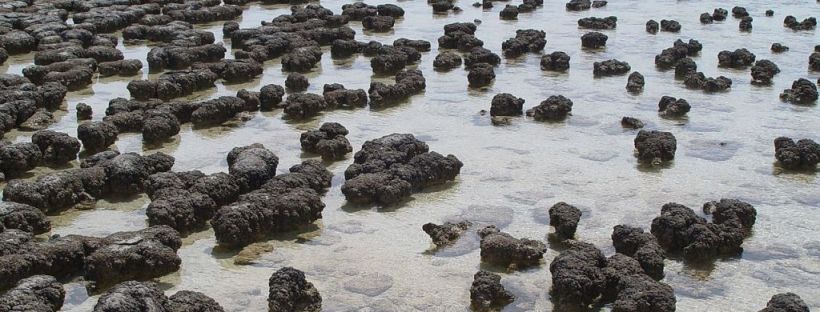
I call to the stromatolites, living rocks, anchors, billions of years old.
I call in the Cambrian explosion: BOOM! Let there be life!
I call to the trilobite. Come famous one, hard-shelled, scurrying,
many-legged, throwing off your shadow-fossils on the sea-floor.
I call to anomalocaris: stalk-eyed predator, lobed,
spike-armed, round-mawed.
I call to ottaia, opabinia, hallucigenia, canadaspis, marrela.
I call to the crinoids and nautiloids; many-tentacled in party hats.
I call to the sea scorpion, to jawless and jawed, ray-finned and lobe-finned fish.
I call to the sporing plants; Cooksonia, ready your sporangia.
I call to fern, horse-tail, club moss, scaly tree.
I call to the tetrapods; casineria with your five toes,
aconthostega, diadactes, eucritta from the black lagoon.
I call to the gigantic dragonfly: let…

View original post 284 more words