‘These three stone tools date from the Stone Age. They were mainly used to cut down trees and chop wood but sometimes as weapons. The large polished axe was found in the Broadgate area of Preston and the smaller axe and large mace head were found in the Forest of Bowland.’ The Harris Museum
It’s not one of those new born-of-mountain green-blue shiny polished “wrap it up tightly” “do not get it dirty” ceremonial “do not touch” “the Thunder God at the top of the mountain who stands on a bull with a bolt of lightning in his hand will blow your head off” “only she who has bathed in the spring at the foot of the Green Hill on the Water then walked round it sunwise blindfold on one leg after fasting for a year,” kind of things…
No, my father’s axe was split from an old flint abandoned on the hillside slightly lopsided blunt at one end sharp at the other like his temper. He worked at it all his life – knapping, sharpening, polishing between felling trees and splitting heads. Grumbling, cursing, like the odd dwarf who led him to it – a gift of the Sons of Stone, from the Lord of the Mines tapped from his veins.
There was flint in him, my dad, flint and river water, bulls and lightning too when he wanted his own way…
This is my my last piece of him chipped from the hills where he wandered with the cattle brought them home safely with the hornless skulls of men.
Yet I am no axe-wielder. I will bury it within – return it to the mines of the Old Ones. Sharpen and polish the stone axe of this voice instead.
*With thanks to the Harris Museum for use of the photograph.
Taut and tense the ganglia no longer relay the music.
Weak, worn, frayed, spent, the tendrils torn and stretched from the strings of a harp.
Like broken bowstrings they sting and twitch.
II. On the empty frame the ‘devils’ of Annwn sit and mock and chatter.
I cannot take my eyes from their neat little fangs and paper-like origami wings.
I cannot shut out their voices, low, high, squeaking in the wind, fat with my stolen melodies,
for I am strangely in love with my distractions.
I court them feed them daily.
I have become their instrument.
And so I lie broken beneath their claws…
III. And where is my god? Not the harpist or the one who taught him but the one who listens for the song in his eternal hall
where the harp played with no player at all?
Is he still listening? Waiting? For the bow to be restrung? For the song to be sung? For the arrow that will pierce his heart fine and true?
~
The Place Where the Sky is Falling
In the place where the sky is falling and the winged and the wingless ones with it I am galloping. The faster I gallop the faster it falls and the faster they chase me, swishing, swooping, on wings and not on wings (yet still sounding torn and leathery and creaky-jointed), with and without teeth and claws.
As a little experiment I touch a rein, a brief half-halt, steady from a flat-out to a slower gallop. The sky-fall slows, the flight of the ‘devils’ of Annwn who pursue me, the winds of the abyss that drive us all. I slow to a canter, to a trot, to a walk, pull up. The sky is still. The winged and wingless ones hang before me like puppets on strings, immobile in the air, without a single wing-beat. I frown. They frown. I move my left hand. They move to the left. I move my right hand. They move to the right.
“Is this some game?”
An eruption of laughter flows through them, breaking the strange spell. They shift, flap, nudge, jest. Some fly away and others descend to look on this strange phenomenon of an awenydd in Annwn.
“What are you?” I ask. “Are you devils?” For that is what Christians have called them for hundreds of years and they do look like something out of Doré’s woodcuts for Milton’s Paradise Lost. Yet I have a feeling they have existed in the Otherworld before the Christian imposition of Heaven and Hell.
They laugh and shriek and pull their grins wider with their foreclaws like demonic Cheshire cats.
“Seriously…”
“Fliers,” squeaks one. “Fliers, fliers,” the others echo. “Fliers.” “Clawers.” “Takers.” “We take…” “We take what you feed us.” “We feed.” “We bring the takings.” “We bring what you feed us to the abyss.”
“Cursed, cursed.” “We cannot set down our feet.” “We have no feet.” “We fly between the worlds knowing nothing but taking.” “We even sleep on the wing.” “Ours is the dream-storm over the abyss.”
“What have you taken from me?” I have no wounds but no teeth and no claws leave no mark…
They cackle, grin, smack their lips. “What you fed us.” Their mouths purse like secrets.
“Then you are welcome to it,” I incline my head in acknowledgement, “add it your storm of dreams.”
I depart at a slow walk knowing gratefully in Thisworld I will dismount onto the ground onto two feet.
~
It’s Easy to Fall
and keep on falling when there is nothing to hold on to – no can, no bottle and its easy
soon empty comfort.
Its gentle guidance down into oblivion.
(It is an illusion the abyss has a bottom).
It’s easy to fall and keep on falling when you don’t know how to do anything else. Because no-one taught you how to tread empty air. How to breathe when there is no oxygen. How to balance when there is nothing between your two empty ears.
How to hear what when there is nothing beyond the abyss?
It’s easy to fall and keep on falling unless some unexpected hand reaches out to shake you from
that free fall before you wake with a jolt – upright in your bed.
It’s easy to fall and keep on falling before some person or some god gives
you a task only you can do. HERE. NOW. Where there is land to stand on air to breathe. Hope on the horizon.
~
Why These Worries
I do not need unlike the wind that moves the washing?
Why the fear that if they stop I will be nothing like a lump of a coal in the toe of a Christmas stocking?
Why do I feel worthless when I am wanted by a god?
Why do I feel like a failure when I’ve written three books?
Why does it feel more heroic to be battling on against these thoughts when I could let them go to the graveyards of the winds beneath the towers from which they were born?
How big a grave for a thought?
How great the work of the gravedigger?
How to engrave the gravestones with suitable death’s heads?
And if I should let them slip away… If I should carry them like childhood toys gifted on Christmas morning then broken by bullies in cardboard boxes like little coffins (each has a face like my own like in the fairy funeral and the Fairy King sings a mournful chant as I lower them in)…
how do I know I will let them rest
and not dig them up like a restless hound?
Come, come, a blast on his horn, come away from my graveyards and away from mourning. Spring is here and flowers and hares to chase. In these sunrise mists a new hunt dawning.
~
*These poems are based on journeys to Annwn undertaken during the process of giving up alcohol as self-medication for my anxiety (which I began on New Year’s Day). This forced me to stop falling, face my worries, and see them for what they are – distractions from my work as an awenydd devoted to Gwyn. **The image is Doré’s ‘The Fall of Lucifer’ (courtesy of Wikipedia Commons).
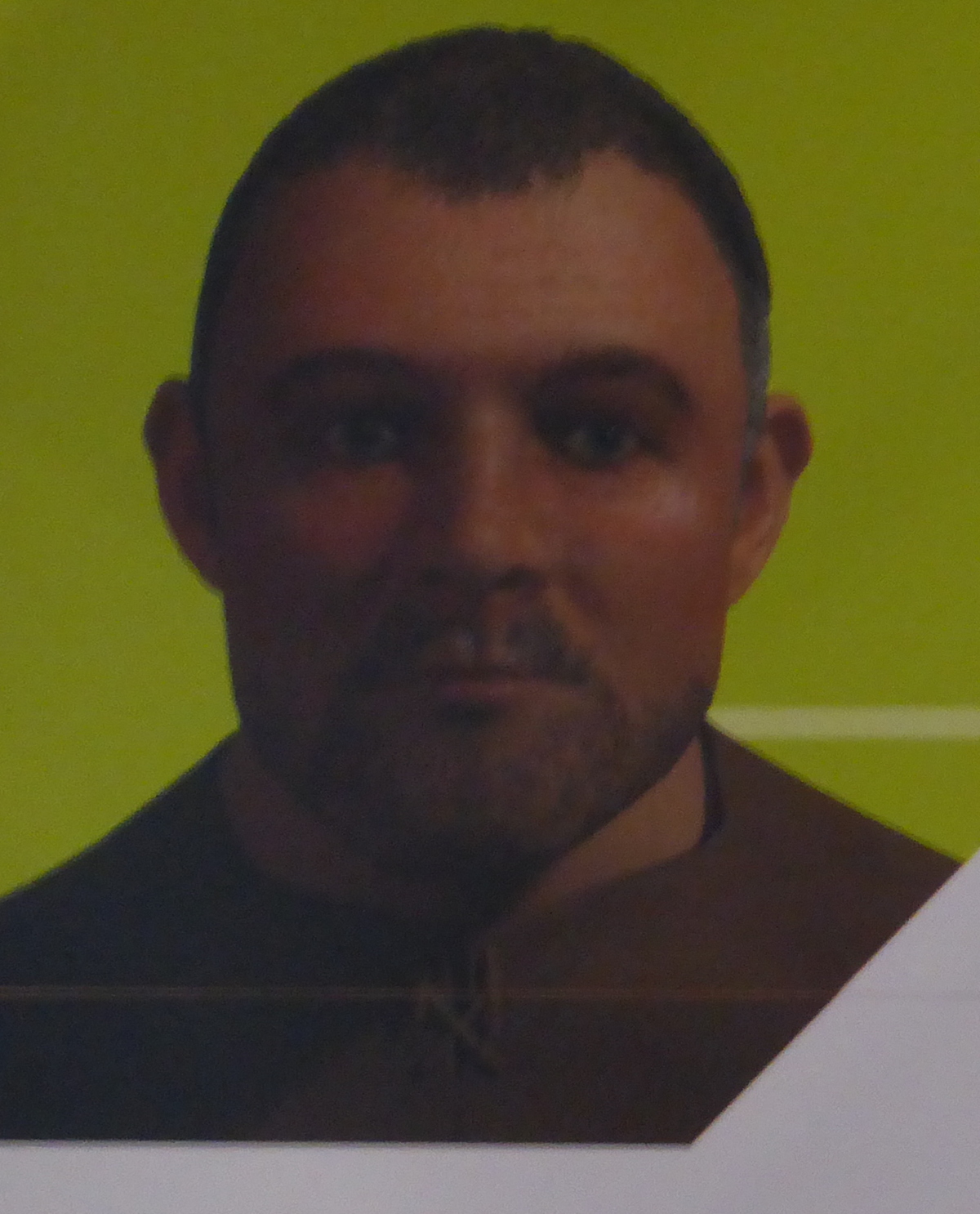
‘The face of a Stone Age man from the North West… about 40 years old when he died’ The Harris Museum
They’ve given you a face.
Taken your 5,500 year old skull, added facial tissue and facial muscles – temporalis, masseter, buccinator, occipito frontals, nose, lips.
Decided upon your expression.
It’s 2019 and the ‘ug’ caricatures and Flintstones references are behind us yet there is flint and stone in your jaw. Your shoulders are like a boxer’s
so I imagine you ‘putting them up’.
Fists of stone – you were a prize fighter. You would have been the strong man of your day, felling old bog oaks with your rough stone axe,
pulling them two at a time,
the muscles in your back – trapezius, rhomboideus, serratus, teres minor and major, thoracolumbar fascia straining as your broad feet sucked in and out of the marsh.
Your children swinging from your broad arms like long-tailed tits – countless, twittering, as you tossed them like juggling balls into the air.
Your wife liked to massage out your knots and twists – tighter more oaklike as you aged, treating each muscle in turn like a polished stone,
tending to your calloused hands –
bathing your blisters, dabbing ointment on your cracked knuckles, mending your broken fingers with oaken splints.
When you fell like a tree, not in battle but quietly on your way back from the woods, little birds in your branches,
muscles knotting one last time,
she did not carve your head but your fists in stone, cast them into the river with the oaklike log of your corpse.
The little pebbles of your pisiform bone, metacarpals and phalanges can be found on the riverbank where she once grieved.
~
Cribra Orbitalia
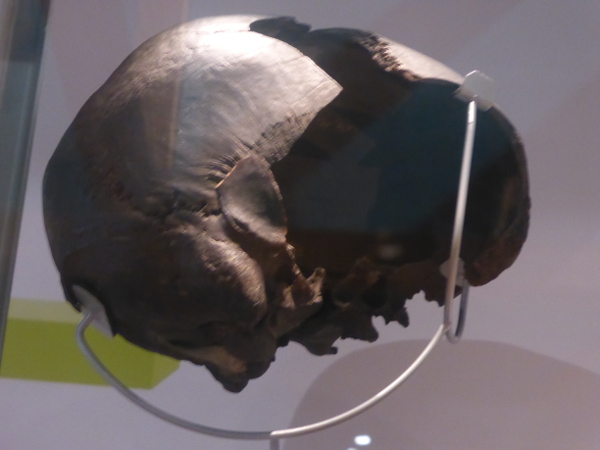
‘This is the oldest skull so far dated – to between 3820 and 3640BC… This woman may have suffered from anaemia, indicated by an area of pitting in her left eye known as cribra orbitalia.’ The Harris Museum
You were a pale child.
Always the first to tire on the walk from camp to camp, struggling for breath, clutching at your chest. You said your head was light as a wisp of smoke before you lay down and floated away. You said you were a feather.
The reddest of meat failed to bring a blush to your cheeks, to keep you to the ground.
Often you touched the ridge of your left brow and pressed as if probing for the lesion.
When your skin turned yellow as the beak of a whooper swan, your eyes eerie and wolf-like,
you were exalted and they listened
to your visions of flying white-winged to the distant north where frost giants fought with fists of ice and the claws of bears were hungry for your children.
When you returned with seven cygnets ghosting from beneath your right wing
they walked on egg shells fearing you were the daughter of the God of the Otherworld.
When you were found with a single feather on your breast it was said you flew with him to Cygnus, rising on your last swan’s breath.
Now instead they point to the pitting of your left eye and speak of cribra orbitalia – the hypertrophy of red bone marrow, megabolasts, megabolastic anaemia, lack of intrinsic factor, the uptake of coblamin (vitamin B12).
And I try to hold both science and myth in the cavelike porosities of your left orbit….
~
Shades of Blue
‘an older man who may have lived in the Stone Age as there is evidence that he has been killed with a stone implement, similar to the axes displayed’ The Harris Museum
You had a violent reputation.
It travelled with you across the Water Country like the flies on the back of the aurochs
who buzzed around the heads of your enemies clotting like blood around their pecked out eyes.
She always knew when you were coming back by the noise of the bluebottle… zzz…???
A flicker across the rush light. Zzz… zzz…. zzz… unmistakeable. A rush of dread as it was lit up on the wall shiny iridescent blue.
When she was little she counted its colours and gave them names like New Dawn Blue, Noon Blue, Happy Blue, Deep Waters, Dwellings in the Sea-Sky Blue. As the shadows of her marriage darkened she named them Twilight Blue, Indigo, Bruise Blue, Black Blue of Murder.
Her hand went to her broken cheekbone.
She took the children to the Whistler in the Rushes.
In her hands she took the sharpened stone.
Nobody questioned or regretted your death: “A crash in the night – so many enemies.”
Except the bluebottle who buzzed in circles around your head, spiralling, spiralling upwards. Death Blue, Decision Blue, Tear Blue, Last Bruise, River-mirror Blue, Bright Blue of Freedom.
It disappeared as you sunk into eternal blue.
~
Loose Tongue
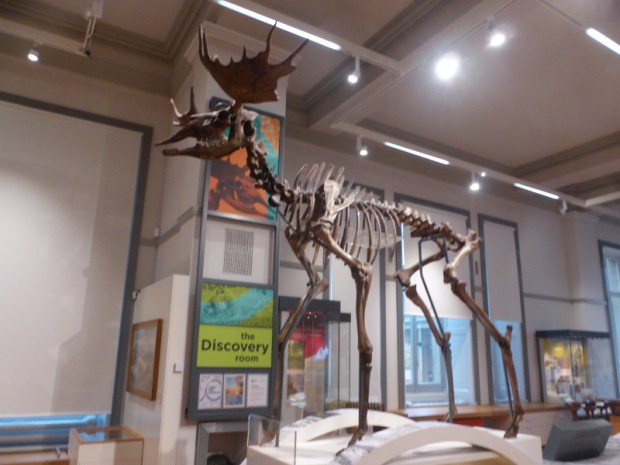
‘Experts disagree whether it is a skull of a woman or man. It’s smaller than other skulls found in the dock, but it has distinct male eyebrow ridges. There is evidence that this person may have died by from a weapon entering their skull. It may be the skull of a Roman settler or someone born in Iron Age Britain.’ The Harris Museum
No-one knew if you were Roman or Briton, noble or commoner, male or female, only that you were not from the North. The names of the gods mixed on your tongue like wine and mead in the fortresses of the Otherworld. “Vindos-Dis, Mars-Nodens, Apollo-Maponus, Belisama-Minerva, Taranis-Jupiter.”
Your tongue got you into trouble stirring the desires of the young but allowing none to lift up your robe.
Everywhere you went there was gossip.
You’d come to the High Hills in purple wearing sandals, golden bangles, golden rings on your fingers and toes and a jewelled golden crown. Come back down like madness to the Water Country, ragged as a beggar, preaching of a world where Roman and Briton lived in unison with no divisions between man and woman or wrong places to put one’s tongue.
A parochial chieftain hated your androgyny and the hateful looseness of your tongue so it was not long before you were stripped naked and fishlike beside the river before the gods.
The spear thrust into your mouth did not stop your brazen tongue from wagging on as the water embraced you as both daughter and son.
*With thanks to the Harris Museum for use of the photographs.
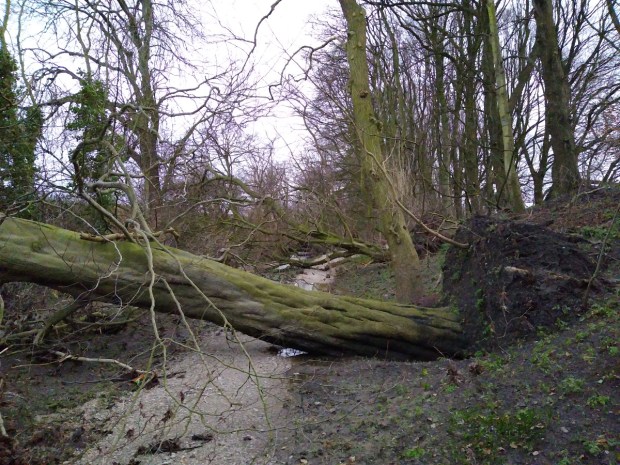
that broke me or the storm before it or the storm before it. Ciara, Brendan, Atiyah, even distant Ophelia or Freya.
It was not the winter storms of 2013 – 2014 before storms were given alphabetical names. It was not the St Jude storm,
the London or Birmingham tornadoes, Storm Kyrill – killer of 11 people, the Great Storm of 1987 or any of the storms
before I was born in 1981. It was not the cliché of the storm within although winds have swept through my branches broken
my fingers swayed me that way and this like a sapling turned me over like a hay wheel rattled me like a bag on a barbed wire fence.
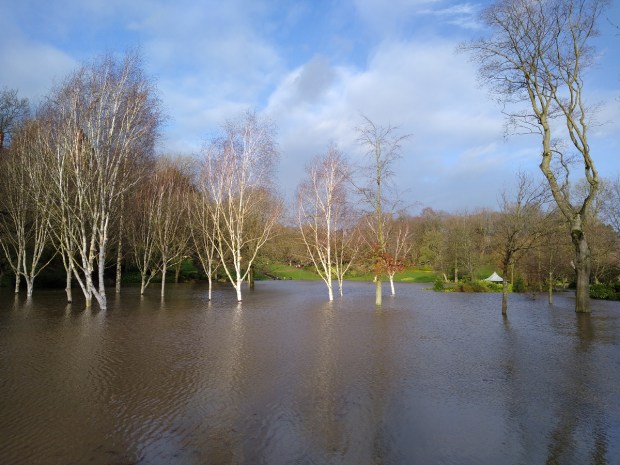
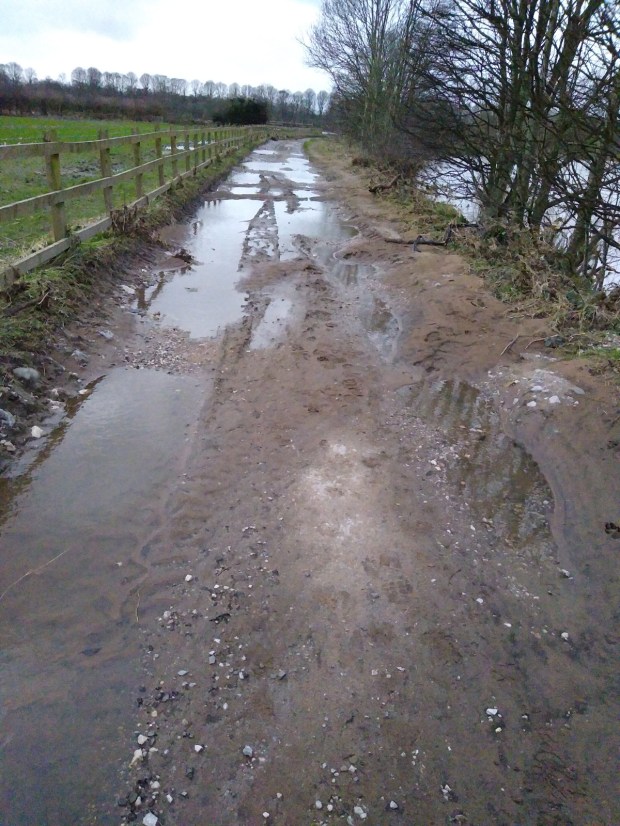
Rain has flooded my landscape, rising up over my pagodas and bins, my fountain and its four nymphs, washed away all my bridges,
receded to leave a mottle of reed, rainbow puddles to splash wellies in, birches surprising in their reflections like Rimbaud illuminated in 1876.
It has cleaned and cleansed me. My Taekwondo belt is blue and green. I am learning O Jang I but I do not call myself Master of the Wind
for I do not know what broke me – childhood bullying, a neurotic father, a defective gene or something deeper within? But it was not the storm.
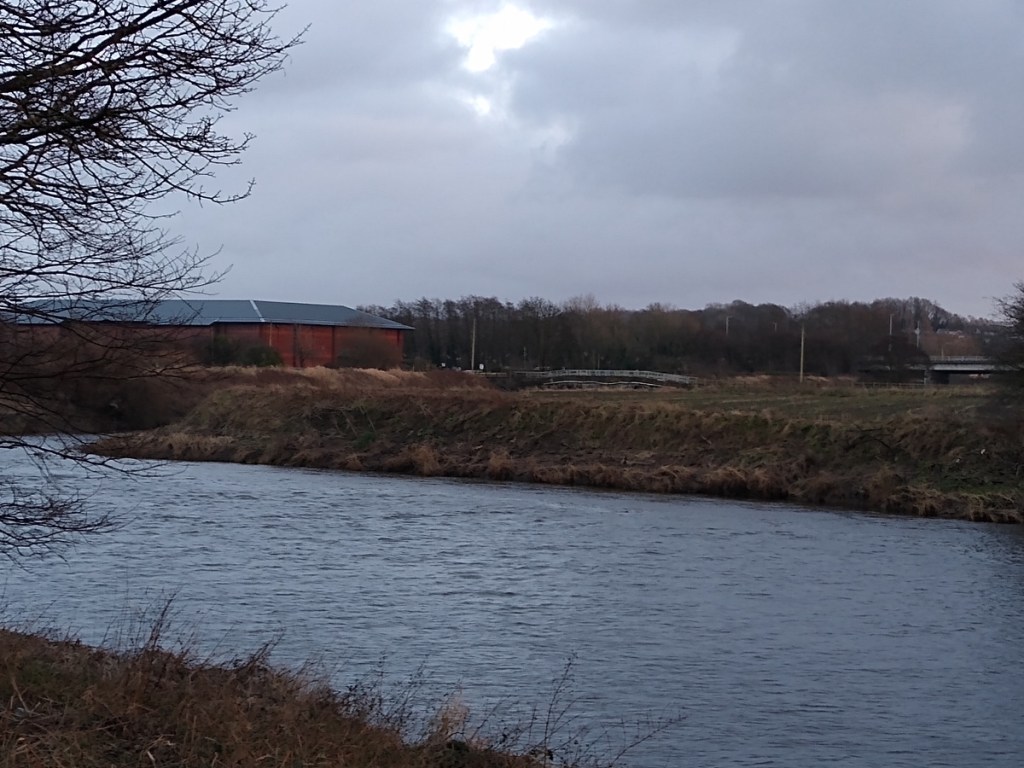
*Arthur Rimbaud wrote his Illuminations in 1876. **O Jang means ‘Wind’ and it is the fifth pattern in WTF Taekwondo. ***I wrote this poem in the aftermath of Storm Ciara during which the Ribble broke her banks at Avenham and Miller Parks and further upriver.
There are some familiar trees but they look at me with different eyes
like the Highland cattle who have come from Lincolnshire – the ginger bullocks with their long curved horns.
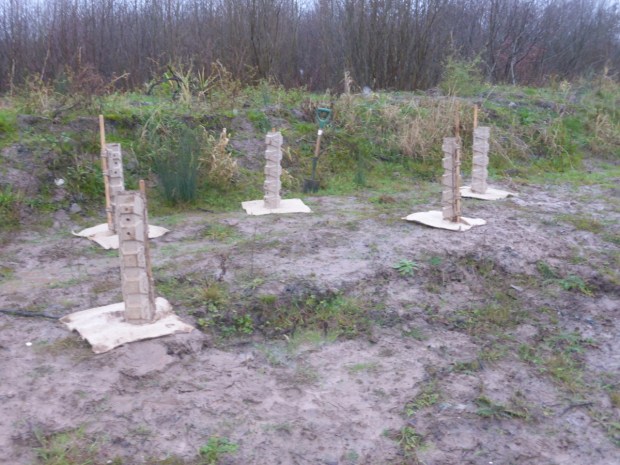
I want insects to walk in the tracks of my wellies as I pick up my mallet, spade, hessian mat, wooden pegs, cardboard guard carefully labelled with an arrow pointing up lest I forget my sense of direction in the wind and rain.
But they will not trust me for a long while yet nor will the lapwings, the redwings, the fieldfare…
I want to be more than a cardboard cut-out just miming and even more so when I remember the miners – hard hats, spades, picks
(when I Google Bickershaw it says more about the colliery than the village),
sinking shafts to the Plodder seam,
the falling cage and…
I am here planting trees sometimes overturning a stone or a piece of coal the chuck chuck chuck of my mallet a reminder of all the years of hammering
and I am afraid of the absence of the Whistlers who once upon a time gave a warning.
I am chucking out their memories.
Oh birds return oh birds return!
I believe this rod of willow is stronger than my prayers and I take faith in knowing it will outgrow the touch of a stranger.
Of all the challenges in my life that are linked to my path of devotion to Gwyn – poetry, running, fighting, the restoration of wild places and creatures, learning practical skills out in the woodlands – the one that requires the least is probably the hardest, that is spending time in stillness and silence listening.
There’s seldom anything to show from it. Few ways to express the feeling of simply being in the presence of a god yet the subtle realignments of the soul that take place in such a state are slowly revealed.
In moments where once I’d have panicked I find myself falling back instead on those moments of stillness, find my strength in the strength of the bull-horned warrior-hunter god who works tirelessly to gather the souls of the dead back into his realm. I’m beginning to understand that, having led me to my spiritual path, gifted me with its magical core, given me a reason to live, he is now teaching me the means of survival and opening up possibilities of me finding a place within the wider world.
Where exactly that will be I’m not sure but I’m coming to know I’m heading in the right direction when I can find stillness, when my breath is one with my god’s, when my will is aligned with his will.

















 The Sanctuary of Vindos