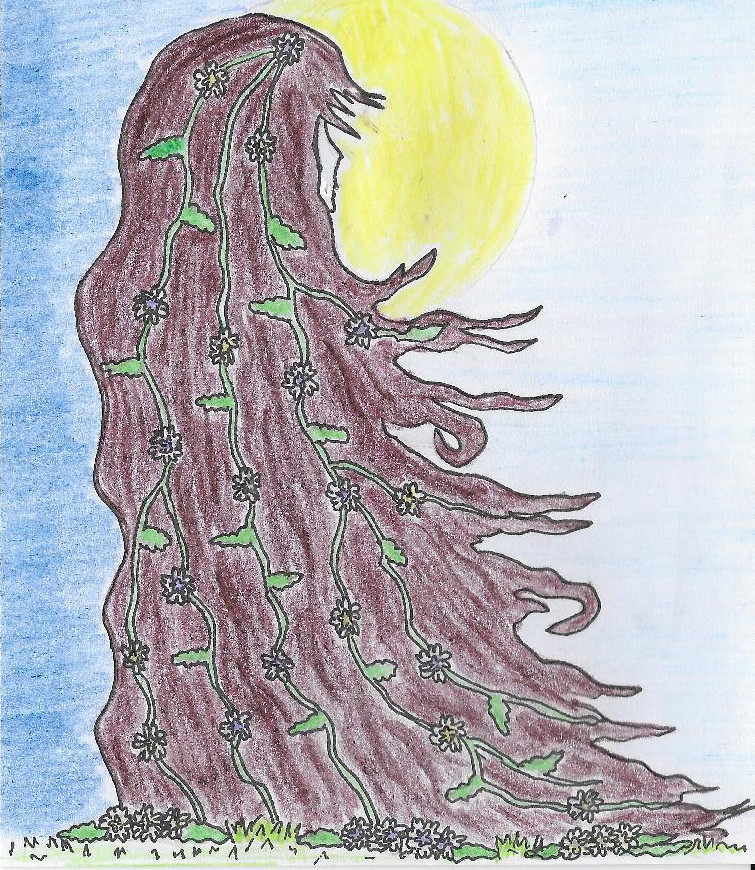
Last Night

was the night
you were furthest
away from the world
like a distant asteroid
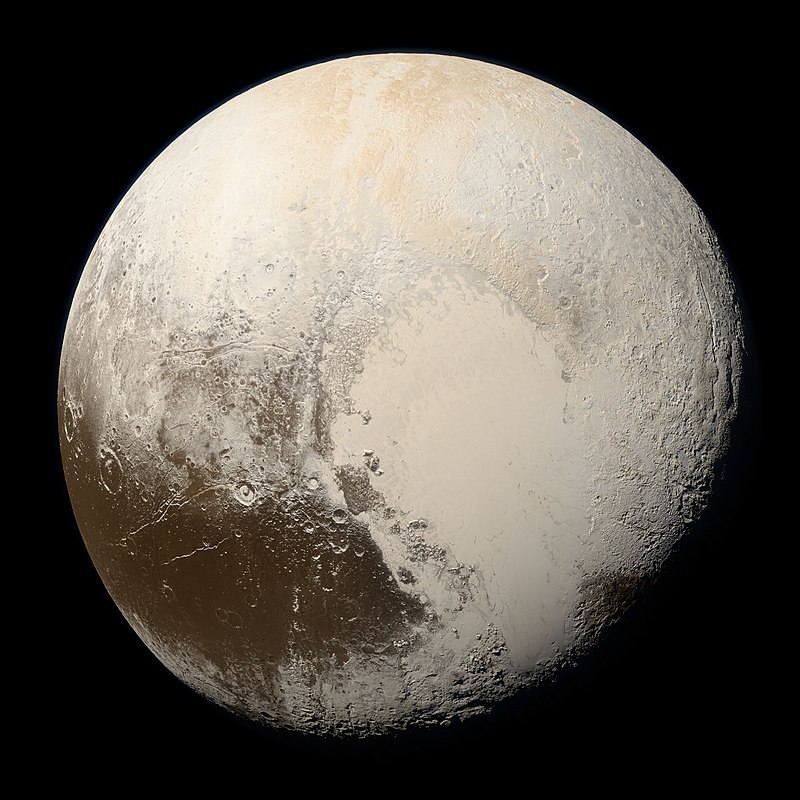
– like Pluto.

From now
you’re coming back
– your land of ice and darkness
will thaw and the mists will make it beautiful again.

From the coffin where you dream of nuclear winter
you will step into a new suit of armour.

Summer is a’coming to Annwn
and winter is already
on its way here.
This poem is based on my gnosis that whilst it is summer in Thisworld it is winter in the Otherworld. It is addressed to Gwyn ap Nudd, a Brythonic ruler of the Otherworld and Winter’s King, who is killed by his rival, Gwythyr ap Greidol, Summer’s King, on Calan Mai, and sleeps through the Summer.

After I received this poem in a vision this morning I looked up Pluto, a planet named after the Roman King of the Underworld and saw that, in Japanese its name is Meiōsei – ‘Star of the King of the Underworld’. I thought this was very beautiful and apt for the planet that rules my birth sign, Scorpio, much as Gwyn, my patron god, is the ruling force in my life.

I then returned to an essay by Brian Taylor called ‘Photographing the Underworld? A Note of NASA’s Pluto Fly-by’ which has had a big influence on me. Here he speaks of how the photographing of Pluto ‘ruler of occultation, and protector of the integrity of mystery’ may have been saved from being an act of ‘casual intrusion’ by the plutonium powered spaceship carrying the ashes of Clyde Tombaugh ‘discoverer of Pluto’ (as a kind of offering to the underworld gods?).

Brian also speaks of how he ‘traced the exteriorisation of Pluto in the history of the nuclear era, and found the planet’s signature etched into the geography of the discovery region, most notably in an extraordinary spatial co-incidence. Pluto was discovered in 1930 at the Percevall Lowell Observatory in Flagstaff Arizona. Ten years later Plutonium was manufactured at the Lawrence Livermore Laboratory in California, and five years after that the first atomic bomb was detonated at the Trinity Test Site north of Alamagordo in New Mexico. Curiously these three sites fall in an almost perfect straight line, about a thousand miles long, that maps the connection between the planet and the nuclear project on to the land in the most unexpectedly graphic way.’

Coincidentally I have been returning to these themes, which I touched on in The Broken Cauldron, in the later sections of the new book I am writing, which explores more deeply the influence of the gods within the modern world and Gwyn’s connections with nuclear war and nuclear winter.

At the bottom of the essay I saw an old comment I left for Brian in 2015 mentioning a dream I had about Gwyn and nuclear winter, leading me to recall it. Brian notes that the spaceship made closest contact with Pluto on a dark moon and the moon was dark last night.

The Mother of the Son

Spoke the Prophet with the Dragon’s Tongue,
The Voice of the Goddess with Nine Dragon Heads:
“The Dragon Goddess shall be slain and in Human Form
She shall be reborn as the Mother of the Son.

In His darkest dreams the King of Annwn will tear
Out the Eye of Bel, He will tear down the Sun and put it
Inside the Belly of His Dead Mother and the Queen of Annwn
Will shape for Her Dead Mother a new Earthen Form

And They will send Her in a boat to Portus Setantiorium
Where She will be met on the Western Shore with Reedlights
And up the River of Belisama will sail to Ribel-Castre
And there the Eye of Bel will once again be reborn

As Maponos ‘the Son’ to Matrona ‘the Mother’.
Yes! Throughout Belisama’s Vale in the Sacred Groves
At the Springs and Wells and the Roaring Fords at the Roman
Altars and in the Temples They shall be Honoured.

At the birth of every child She shall appear Threefold
To Breathe the Blessings of the Awen into the Infant Mouth.
As the Three Mothers of Destiny She shall be Revered
In all the Holy Places in the Hills and Vales of the Old North.

And she shall appear Ninefold the Dragon Daughter
Of the King of Annwn as Morgana and her Sisters breathing
Life into His Cauldron before spiralling into Serpent Forms.
And the Nine shall be Recoiled in Circles of Stone.

And when the Priests of Christendom come armed
With Book and Vestment and Mitre treading widdershins
Around our Holy Wells with splashings of Unholy Water
But failing with their Prayers to undo our Spells.

Henceforth she will be known as Mary in Nine Churches
In Belisama’s Vale: at Peneverdant, at Prestatun, at Wahltun,
At Euxtun, at Leyeland, at Sceamlburgh, at Bamber Brig,
At Ruhford, at Fernihough, she will be Honoured.

At Cockersand Abbey as Mary of the Marsh
As the Magdalen in Maudlands in Nine Times Nine Churches
Across the Islands of Prydain and beyond she will be Honoured,”
Spoke the Prophet with the Dragon’s Tongue.

This poem was written as an early experiment in writing in the voice of ‘The Prophet with the Dragon’s Tongue’ in a Blakean style and brings together some of the mythic overlayerings of mother figures I have perceived within my landscape, in the Brythonic myths, and in visions and journeys.

I recognise this will not accord with everybody else’s perception of these deities and is very much a personal revelation. And, of course, I won’t be attempting to imitate Blake again, which I knew before setting out is impossible and foolhardy. I see it as a first step on the way to creating a myth to live by.


The Buttercup Meadows

The tunnel
leads to Paradise.

To the buttercup meadows
where the goalposts
have no goals.

Although the bike sheds
and the mural of St Teresa
in her ecstasy are gone
her sigh lingers on.

The last gasp of a steam train
on the railway lines
overgrown.

The smoke no longer stains
the city walls.

I walk here like a dog
without a master

thrown by life’s curve balls

whilst he sleeps in
deep Annwn.

In the future
will I be your guide dog
or the one that went barking
into the unknown?

The Lean Wolf

approaches
with a little bit
of Chernobyl
in its deadly
stride.

A big black bell
is ringing inside it.

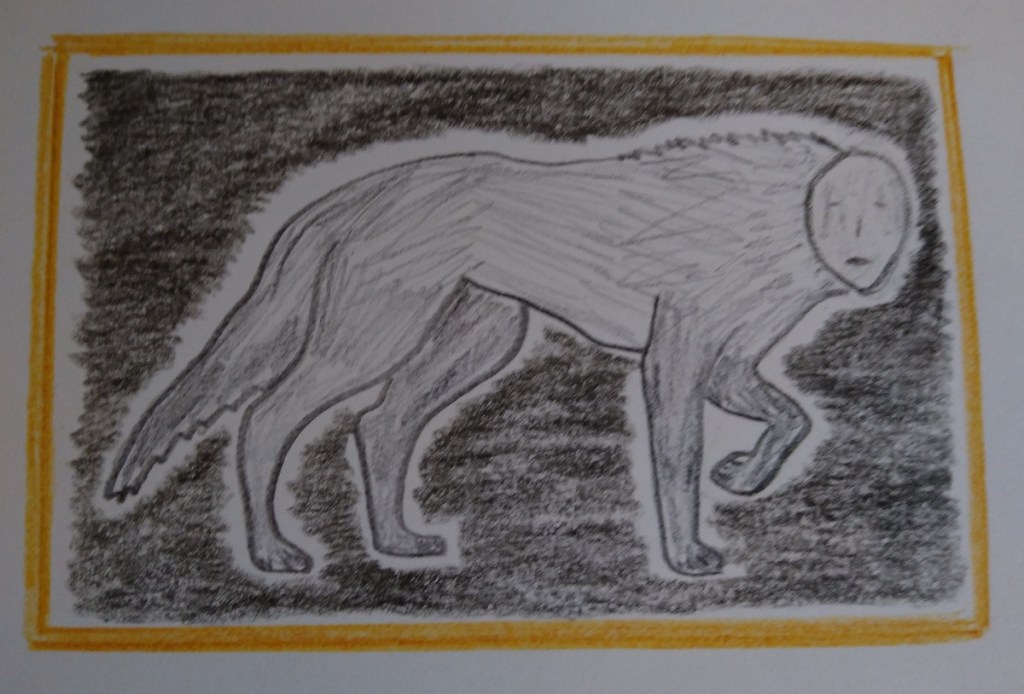
Its face is a man’s.

There is nothing
behind it.

I wrote this poem following a dream of which I remember little but the vivid image of a lean menacing wolf with a man’s face and the knowing because I’d seen it, been its presence, I was going to die.

I’ve had a handful of dreams in which I’ve had this gnosis. In one I was a captured soldier awaiting execution and Gwyn prepared me for death by telling me I must go into the hazel, and the beetle, and something I can’t recall. In another I was a clawed creature clinging to a lift descending to the abyss. And in another I was and was not a dark magician, who in a magical battle against mechanical forces, was cut into a thousand pieces by whirling blades and resurrected as a vampiric woman.

Through these dreams I know I have lived many lives, died many deaths, in Thisworld and in Annwn, and perhaps in worlds beyond. That a part of me, which I call my soul, carries these memories.

When I was talking to my dad about his funeral plans I was surprised to hear that he, like me a philosophy graduate, had never thought about whether he had a soul or what would happen when he died. He might have theorised about it but had never really contemplated what would happen to him.

Such questions have been on my mind as long as I can remember. Like my dad I theorised about them, attempting to find answers through philosophy, until I met Gwyn and he taught me to journey to Annwn. Until he and his father, the dream-god Nudd/Nodens, helped me to sleep and listen to my dreams.

For the first time since the Second World War people in Britain are suddenly facing death, due to the threat of the coronavirus. This is a complete unknown for people of my mum and dad’s generation, for mine, and the next generation, who might have included my children, if I’d had them.

I understand that one of the reasons Gwyn appeared in my life and taught me to journey was to help me prepare for death. I know a small handful of others who have had similar experiences with him and different gods, and of those who have gained their own understanding without experience of deity.

In contrast to the advice I’ve seen in various places to focus only on the positives, I believe at this time, when so many of us have so much extra time, there is no better time to contemplate the lean wolf.

Creiddylad’s Garden

Creiddylad
most majestic maiden
in the Islands of Britain,
let me know your
majesty

in this garden

on my knees
two hands clasped
together on this trowel
making offerings
of water

amongst flowers
where you walk unveiled,
stunning, bees dancing
around you.

Let me be your bee!

Feed me
when I’m hungry.
When I fall exhausted
pick me up gently

and I will make
the sweetest honey.

“Stay here in this garden,” my patron god, Gwyn ap Nudd, advised me a week before the lockdown. A couple of days before my conservation internship was cancelled and, like many, I was rendered jobless.

We’ve been on lockdown in the UK for over a fortnight now and how I’ve to-and-froed, some days accepting this advice and, on others, after reading the news, wishing I was doing something more important, more heroic, than shopping and cleaning for my parents, tending the garden, doing my best to find the focus to pray, meditate, spend time in devotion to my gods, and to write for my supporters.

My main battle has been against feelings of guilt and uselessness caused by my awareness of the utter contrast between my easy life, touched by the bliss of the spring sun, and the hell that the nurses and doctors are going through on the front line, risking their lives fighting for the lives of others. The risks taken by the funeral services. The chaos and stress faced by supermarket staff. Our dependence on the long hours and monotonous work of fruit and veg pickers usually imported from abroad.

I’ve thought of applying for, have actually applied for, some of these jobs (which may have necessitated moving out of my parent’s house so I do not put them at risk), but nothing has come of it.

“Stay here in this garden.” I accept the gods have their reasons when the Blasted Oak, spelling disaster, appears in a tarot reading on what will happen if I take a veg picking job.

And deep within I know if I took any of the above jobs I’d likely get physically or mentally ill. That there is something fundamentally wrong with this industrialised and militarised system that keeps comparing the ‘fight’ against this virus with the Second World War and tries to inspire a wartime ethos.

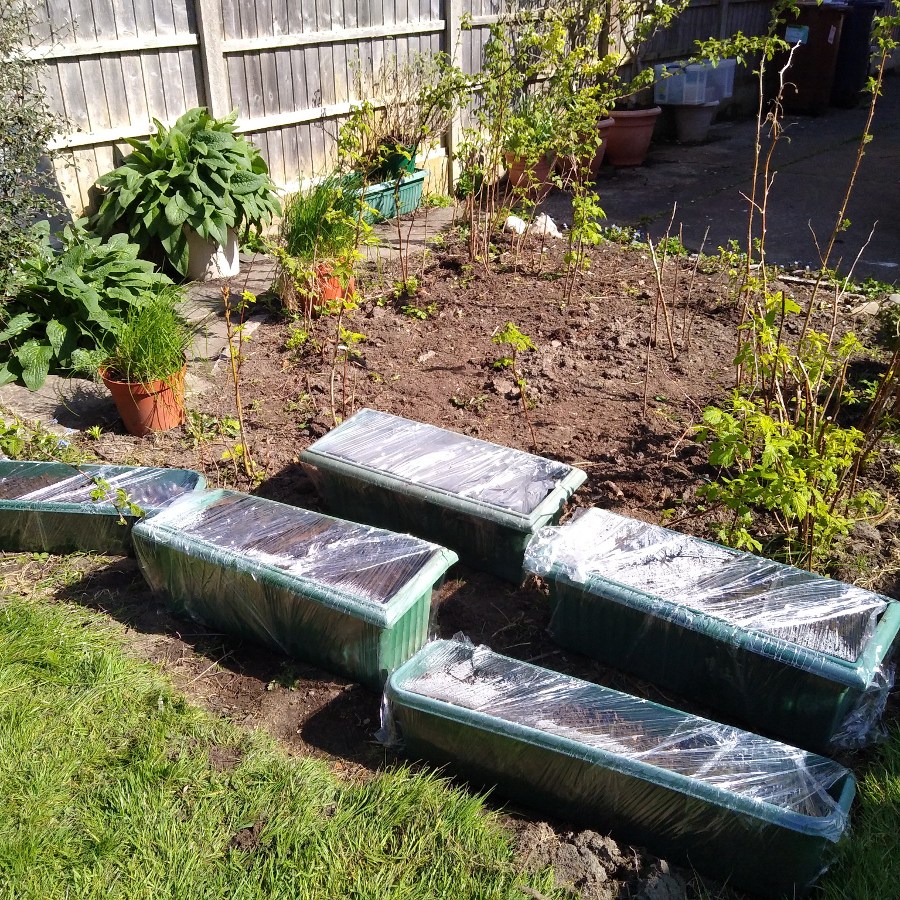
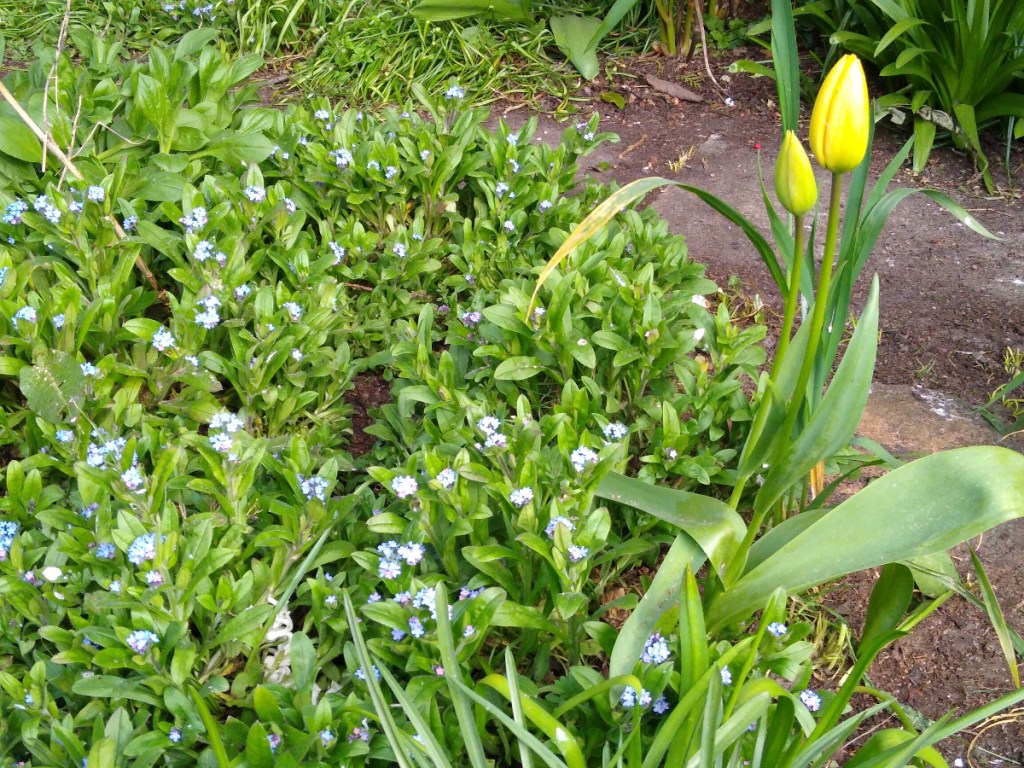
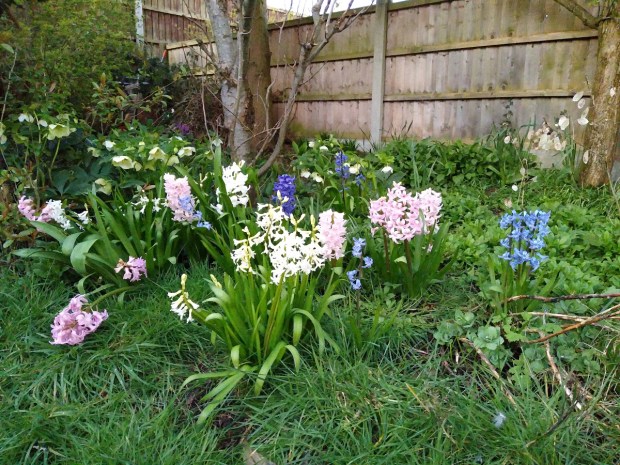
And so I tend my parents’ garden, cutting back years of overgrowth, clearing the paths, weeding amongst the many beautiful flowers that already grow here – hyacinths, daffodils, bluebells, honesty. And the shrubs and trees – apple, pear, rose, quince, camelia. Watering the raspberry canes. Sowing herb and lettuce seeds in troughs and veg seeds – carrot, turnip, onion, cauliflower, broccoli – in the soil.

And somewhere along the way it enters my mind this is ‘Creiddylad’s Garden’. And once the thought has entered it will not leave. I come to see the face of Creiddylad, ‘the most majestic maiden in the islands of Britain’, one of our Brythonic goddesses of flowers and spring, in each flower.

Creiddylad is a sovereignty deity who walks between worlds and lovers. This ‘majestic maiden’ is truly a majesty, a Queen, the lifeforce of nature who inspires great awe in her worshippers and the male deities, Gwyn and Gwythyr, Kings of Winter and Summer, who fight for her every Calan Mai.

Through the Winter she dwells with Gwyn, in the Otherworld, as Annwn’s Queen. In the Summer, with Gwythyr, she is May Queen, a great sovereign in Thisworld, revealing herself slowly flower by flower.

In Creiddylad’s contrary nature I find a better understanding of my own pulls between darkness and light, Thisworld and Otherworld. There is a part of me that wants to walk with Gwyn, a warrior and psychopomp, facing death, disease and sorrow. And at the same time an awareness he and other humans do this so the rest of us can appreciate the flowers and the sunlight and the lives that are our gifts.

It sometimes seems easier, more worthy, to embrace pain than pleasure. Why? I do not know. Only that in Annwn the sadness of the dead is transformed into great beauty and joy, and it this is that Creiddylad brings with her when walks from the Otherworld, into the light, and embraces Gwythyr.

Many of the flowers in my garden speak of similar myths through the correlates of other cultures. The narcissus, or the daffodil, was the plant Persephone was picking before Hades took her to… Hades. The hyacinth was born from the blood of Hyacinth, the lover of Apollo, killed by his rival Zephyrus, and its beautiful petals are inscribed with ‘AI AI’ ‘Alas’. Lungwort’s petals turn from pink to blue as the flowers are pollinated, edging toward death, like flesh, or deoxygenated blood.

Nature and myth, death and life, Thisworld and Otherworld, are deeply intertwined in Creiddylad’s garden. A place where I work slowly, contemplating the mysteries, where I meet flowers, goddess, gods. It seems they don’t want me to be a hero but instead a small suburban bee offering a taste of Creiddylad’s honey.

Jobs

I.
They’ve got jobs –
we finally see the key workers:

the paper-clad doctors and nurses
saving the sick and the dying (or trying to
on the linen streets of the front lines)

the stackers and cashiers within
the tin-packed walls of the supermarkets
who are saving us from starvation

and the students and unemployed bar staff
stepping up to pick and pack berries and lettuces
packed with vitamins to keep us healthy

whilst the grave diggers and funeral service
pack post-vegetable bodies back into the earth

and the binmen in their bleeping lorry continue
to turn up weekly to remove our waste.

II.
And no, I have never seen a binwoman, but
I was asked if I was one when I was litter picking.
Now even this small job has been taken away

I am flicking through job descriptions application forms
fingers hovering over wonky letters stuck on keys because
the originals were rubbed off over long years of writing
(which has never quite been a ‘proper job’) weighing

the balance between making myself enjobbed useful
and the risk to my seventy-odd year old parents.

III.
All the while the name of a job
that I have never seen advertised online
or even in a fluffy cloud in a Pagan magazine
is pressing its silver lining against the back of my brain:

low risk, innocuous, invisible: ‘MYSTIC.’

“By the Stars of Annwn are you having a laugh?”
I rage at my gods before joining them
laughing loud and hysterically.

I Will Go On

I am
green growth
rising from rhizome,
bud and bulb.

I am
sepal, petal,
stigma, stamen,
stolon,

male and female,

sexual
and asexual.

I am
pretty where
you want me: I am tulip,
poppy, geranium
and rose.

I am
hogweed,
balsam, knotweed
where you
don’t.

No-one
can stop me.

No Arthur
can lock me up.

Even my beloved
in his cold stone fortress
loses his hold.

I am
Creiddylad.

I am freedom

reaching from
darkness towards
the sun.

I will go on.

What if Barinthus was Blind?

guided by Barinthus to whom the waters and the stars of heaven were well known. With him steering the ship we arrived’
Vita Merlini

What stars will you navigate by when they have fallen from the sky?
Where is North when there is no North Star?
How will the swans fly?

When your boat is stuck on a turning oar in the blackest of midnights
shall I tie my blindfold with a sailor’s knot?
Trust your sightless eyes?

Speak the words that have never been heard this side of the sunrise?
Place my payment shiny and cold in your spitless
mouth that never lies?

Your cloak of stars ragged torn will you wrap around my shoulders tight
as you swear by dead sea-gods we will arrive
on your boat that flies

on the wings of a swan where the sea is filled with the Northern Lights?
Find the frost-dark isle of my mysterious god where the sun
escapes the sunrise?

Where the living are dead and the dead alive and the blind no longer blind
will we find the oar, the compass, the stars, bring them back
with the starlight?

*This image is the Six of Arrows – Transition – from the Wildwood Tarot.

The Best Defence

“Laughter is the best defence against madness,”
from somewhere in my garden
my god decries.

The hyacinths
are at their most beautiful –
white, pink, red, blue, and I cannot tell
if they are laughing at us or with us.

The full moon has burst her sides
(reminding me of lysis – the bursting
of cell walls, expulsion and release
of viral progeny like a sneeze).

“This crisis is no longer a laughing matter
with its potential to bring a tear to our eyes,”

I reply whilst acknowledging it’s laughable
how a strand of RNA in a protein jacket
can cause such mayhem worldwide…

… panic buying… shelves depleted
of curly strands of pasta and the virulent
internet replicating and replicating our demise…

“Stand your ground in this garden and breathe
the fresh spring air, laugh well, laugh deep,”

my god’s voice rises from Annwn grounds me.

“I can save none from the tragedy and sadness
in which my realm and your realm are steeped but
laughter is the best defence against madness.”

The Calling of Creiddylad

Creiddylad,
strings of birdsong
pull your hair.

Creiddylad,
they turn your head
towards the sun.

Creiddylad,
your face is a gently
opening petal.

Creiddylad,
your footsteps call
the flowers from sleep
in hill and mound
and dun.

Creiddylad,
you are unstoppable
in your majesty

although a part of you is weeping inside
for the love of winter
who will soon
be gone.

Creiddylad,
do not turn back,
do not turn
back

to the darkness
of Annwn.

Creiddylad,
step into the light
of the spring sun.