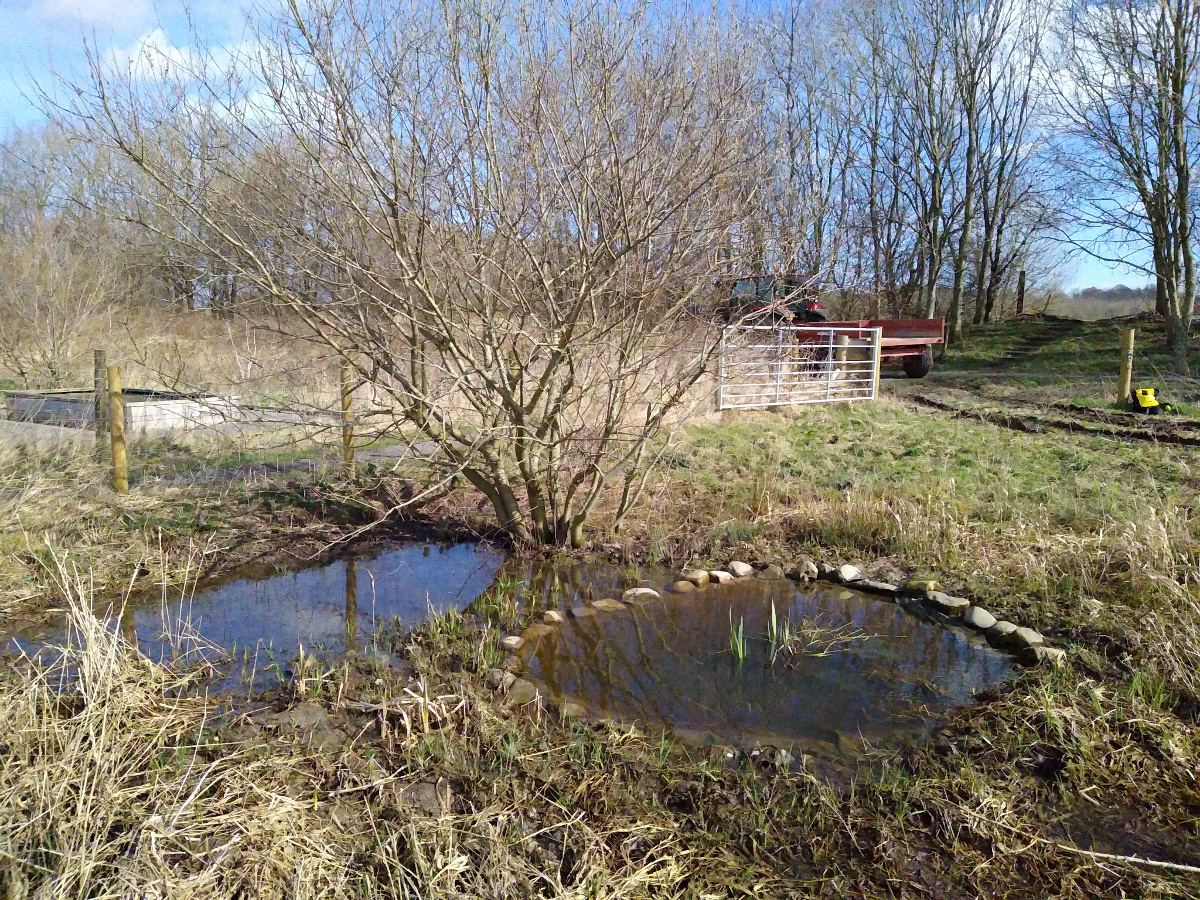
A Study in Honesty

I.
You are the plant who tells the truth
(as if other plants are fickle).

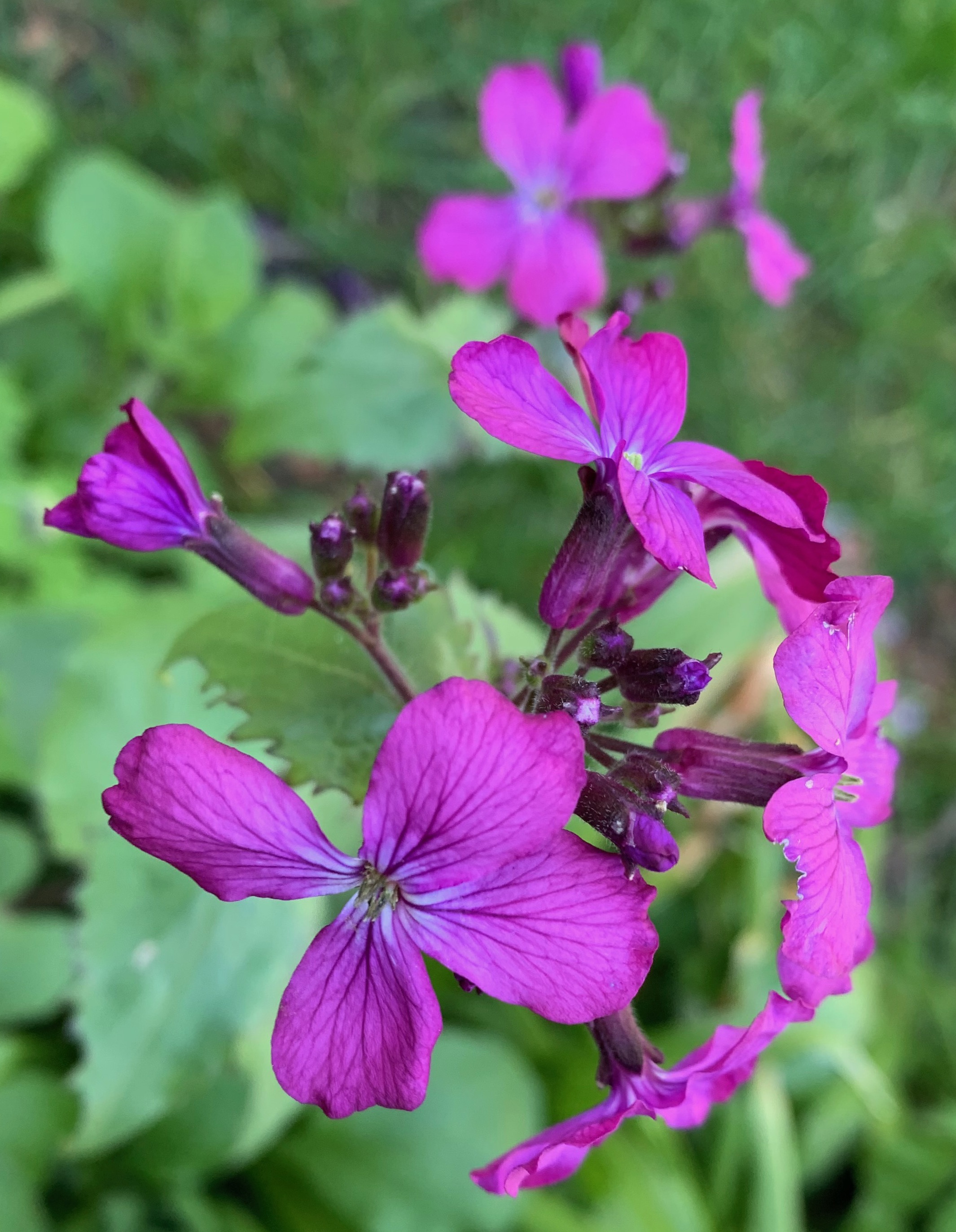
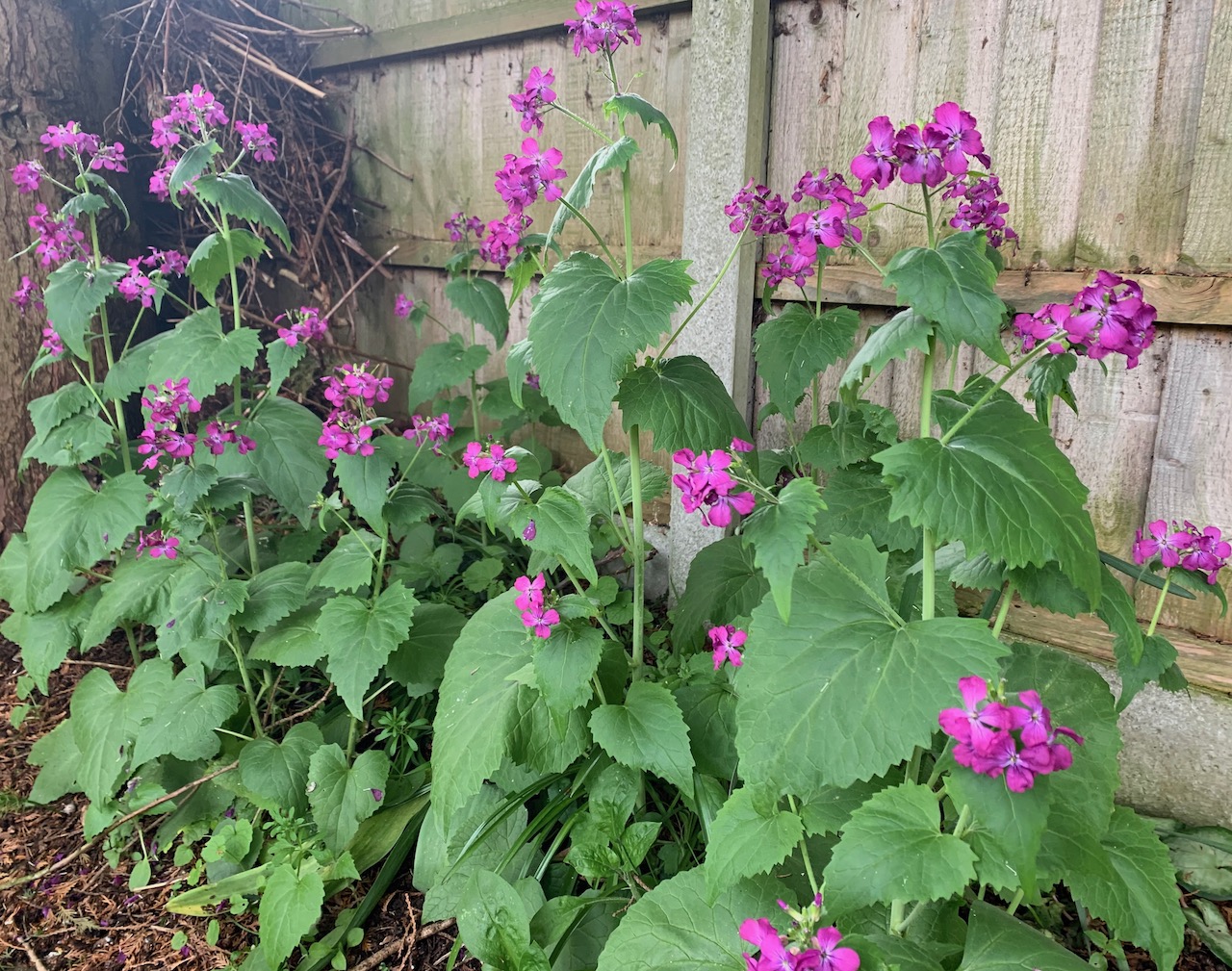
Your flowers are purple.
Your leaves are amplexicaul.
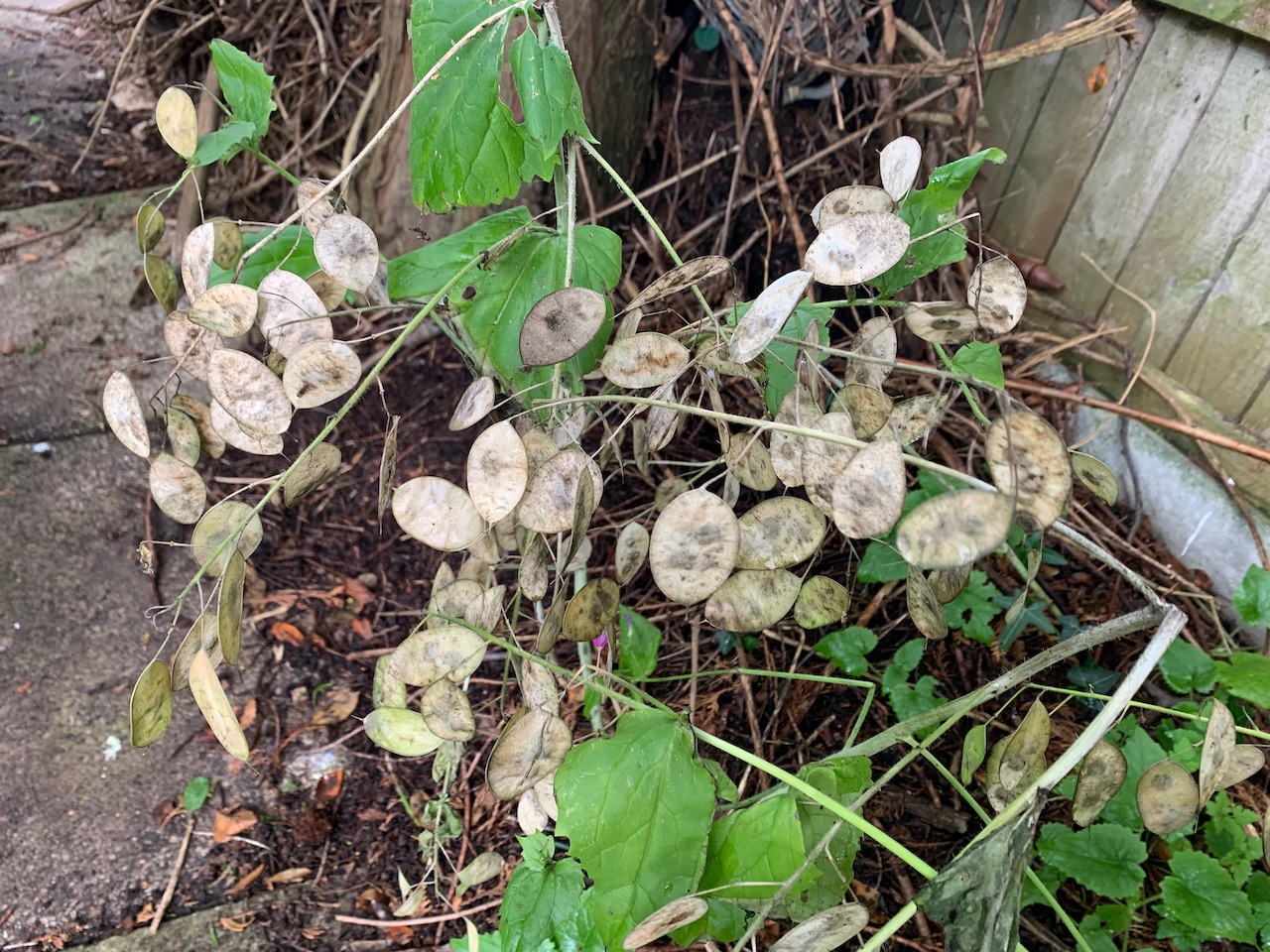
Your seed pods are known as siliques.

Their stubble reminds me of a dice game.

I count them – no ones, twos, threes.
I see some fours, fives, sixes,
sevens, eights, no nines.

To count in nines is just too terrifying.

II.
I was brought up to tell the truth thinking
it would lead to praise, to handclaps,

not to snotty sobbing no tissues
can stem, no pillow can smother, no word.

I did not know that truth is ugly and unflowerlike.

That your long long taproot reaches into the underworld
where the dark moons of your seeds fall and fall
and fall and fall and fall and germinate.

III.
Lunaria, you are like the moon,
waxing and waning, the call of magic
that attempts to assemble all the parts of my soul

in the dark tower of your being before the time of your fall.

The dark nun, the dark magician speaking
our truths in our tears and blood,

learning discipline and devotion
to the truths before our eyes.

V.
In your presence
we are held by our God
who is the darkness of the edges
all around us even when He is asleep or dead
haunting the shadows of the inbetween places in leafy dapples.

VI.
There are two sides to your coin, to your money pennies, to your bets.

You pose the question of how many nuns are in the void,
how many spirits of Annwn can dance
on my fingertips.

As many
as the seeds
that will fall in my garden
this year and grow and germinate

beneath the soil and beneath my skin

as I strive to make a study in honesty
through the seasons
every year.

How to Speak of a Newt

in the twenty-first century?

Unreptilian metaphors –

white paint spots
orange nail varnish
road-marking tail

cannot capture his majesty.

When he comes to me
with his great tail-question
forefeet planted firmly on the floor

waxen crest waving like a dragon’s

and asks me to bear his progeny –
in back-leg leaf origami
to fold up our eggs

I am tempted by his
awesome belly-signature

the colour of fire the setting sun
reminding me of his salamandrine past
in ponds and pools of the Jurassic

to make his lek my dwelling place and give birth to efts –

each with their unique belly-stamp only one
of each in this ever-burning universe

with a fire-tipped tongue give them
mystical names – Sun-Spotted, Fire-Born,
Gold-Eye, Dragon Crest, Alchemist.

He forgets I am a nun – instead

I promise to renew the pond-ways,
the pond-scape, the ecology of land
and language so he, his mate, his young
will inspire poetry here on and on.

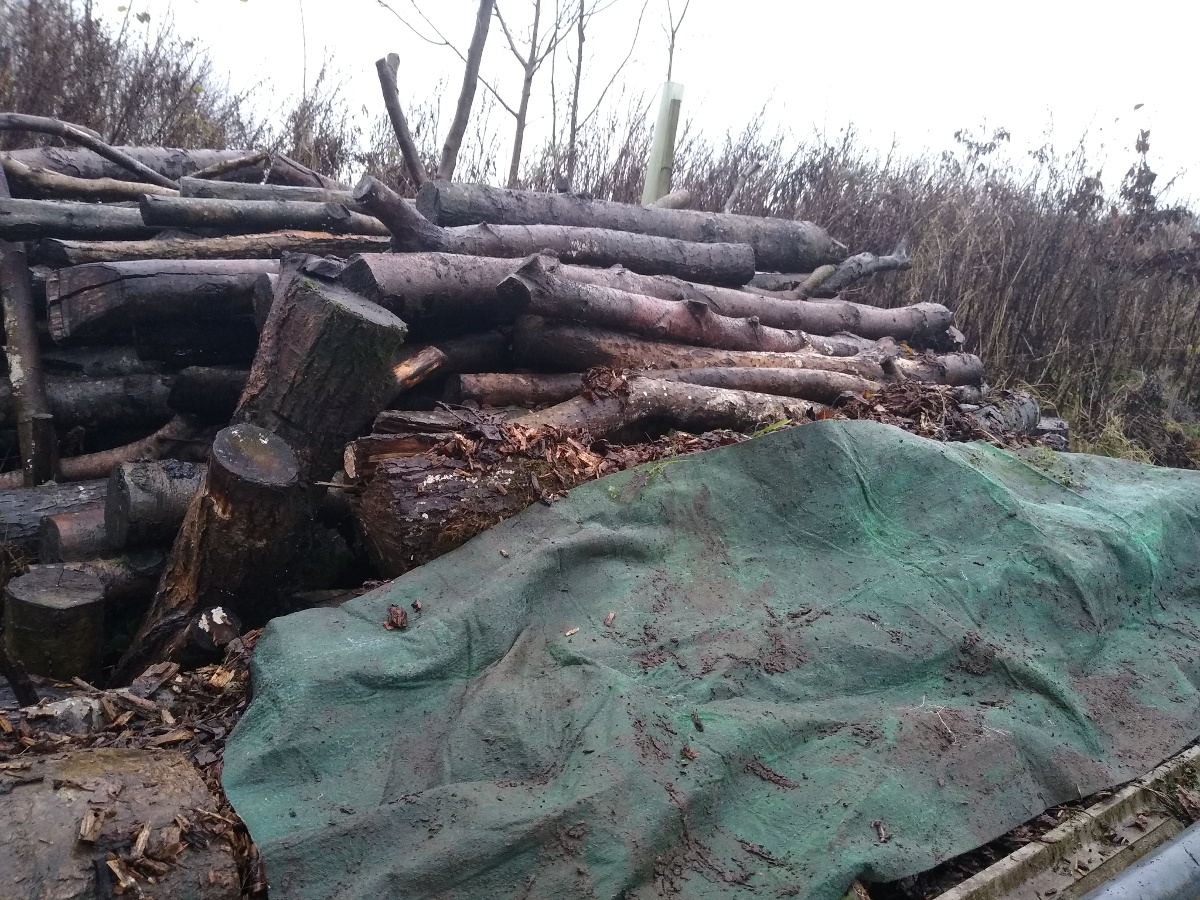
*I recently started a conservation internship at Brockholes Nature Reserve and the task of the volunteer work party on Tuesday was building habitat heaps from alder logs. Later in the day, serendipitously, Lorna Bennett, the reserve officer, found a great crested newt along with approximately 20 adult and juvenile smooth newts, 2 juvenile toads, and 5 frogs whilst moving some old compost bags. These amphibians have been placed safely into a habitat heap to hibernate over winter before they emerge in spring and hopefully head to the new ponds to breed. The ponds were created for them by LWT’s work with Natural England to remedy the decline in great crested newts.

Dragonfly Vision

The dragonfly
his face is very nearly
only eye!’
Chisoku*

‘His face is very nearly only eye’. To look into the eyes of a dragonfly, to imagine seeing through them takes us beyond the limits of human eyesight and perception back to a more primordial way of seeing.

Unlike humans, whose eyes have only one lens, dragonflies have compound eyes. Their eyes are composed of 30,000 facets called ommatidia (from Greek ommat ‘eye’) and each has its own lens. This results in a single mosaic image, formed from many pixels of light.

Each ommatidium contains a series of light-sensitive cells called opsids. Whilst humans have only three types of opsins, allowing them to see green, red, and blue light, dragonflies have between 11 and 30. This means they see in ultra-multicolour and can perceive ultraviolet and polarised light.

Their swift judgement of the speed and direction of prey arises from them having three additional smaller eyes called ocelli, which transmit vision to the motor centres in just a fraction of a second. This is the basis of their skills as acrobatic hunters who are able to pick out a single insect from a swarm.

Their perception of time is also very different to that of humans. Whereas we see 60 images per second they see 300 images per second. This means they experience the world five times slower than us.

The earliest eyes began developing from simple eyespots – patches of photoreceptor cells – during the Cambrian explosion 500 million years ago. The first creatures to possess them were arthropods such as Fuxianhuia protensa and Anomolocaris (which, akin to dragonflies, had over 16, 700 lenses in each eye). The development of eyesight played a major role in the ‘arms race’ of the Cambrian explosion.

Dragonflies were amongst the first winged insects to evolve 300 million years ago during the Carboniferous period. That their eyes have remained unchanged suggests they have achieved a degree of perfection.

It is near-impossible to imagine seeing like a dragonfly – 30,000 pixels of light forming an ultra-multicoloured image 300 times per second. We can only guess at the brightness and intensity of their world. Apparently because the upward facing eye has receptors for only blue and UV the sky looks exceptionally bright. The longer light waves are picked up by the downward facing eye. Perhaps seeing not only more intensely but more slowly makes up for what seems like a short life to us.

Dragonflies not only look beautiful but what they see could be of a beauty far beyond human perception. In their ability to bring together what is fragmented and to be open to far more waves of light we glimpse an older and deeper way of perceiving. This might appear inaccessible until we remember that we have evolved from creatures like Fuxianhuia protensa, Anomolocaris, and Odanata (dragonflies).

The Brythonic bard, Taliesin, lists all the animals he has been – a blue salmon, a dog, a stag, a roebuck. This provides evidence for ancient British beliefs in reincarnation and may be suggestive of a shapeshifting tradition in which bards learnt to become and see through the eyes of different creatures.

For us, in the modern world, this would mean setting aside the presuppositions of our rational and scientific worldview and learning to listen to, become, and see through the eyes of the non-human world again. Perhaps, if we could relearn to see like a dragonfly, we might be able to bring together the fragments of our world in a new mosaic – a dragonfly vision- that could provide guidance for the future?

*I first saw this quote in the visitor centre at Risley Moss where I was doing a tree identification course with the Carbon Landscapes Partnership a couple of days ago.

SOURCES

Catherine Brahic, ‘Dragonfly Eyes See the World in Ultra-Multicolour’, New Scientist, https://www.newscientist.com/article/dn27015-dragonfly-eyes-see-the-world-in-ultra-multicolour/ (accessed 16/11/2019)
Grrlscientist, ‘30,000 Facets Give Dragonflies a Different Perspective: The Big Compound Eye in the Sky’, Science Blogs, https://scienceblogs.com/grrlscientist/2009/07/08/30000-facets-give-dragonflies (accessed 16/11/2019)
Kate Hazelhurst and Lisa Hendry, ‘Eyes on the prize: the evolution of vision’, Natural History Museum, https://www.nhm.ac.uk/discover/eyes-on-the-prize-evolution-of-vision.html (accessed 17/11/2019)
Marged Haycock (transl), Legendary Poems from the Book of Taliesin, (CMCS, 2007)
Mashpi Lodge, ‘Dragonfly Vision’, National Geographic, https://www.mashpilodge.com/blog/dragonfly-vision/ (accessed 16/11/2019)
Roaring Earth Staff, ‘Dragonfly Experiences Time in Slow-Motion’, Roaring Earth, https://roaring.earth/dragonflies-see-time-slower/ (accessed 16/11/2019)

The Death of a Dragonfly

Dyed he is with the
Colour of autumnal days,
O red dragonfly.
Hori Bakusui

It was an accident. Still, if I’d accidentally killed a human I’d have been jailed for murder. I’m often killing midges, greenflies, flies, as I cycle down the Guild Wheel along the Ribble to Brockholes Nature Reserve. Not on purpose of course – they just have a terrible habit of getting in my eyes, in my mouth, down my top. It’s said there were more flying insects before cyclists, cars, climate change…

I’m not sure why killing a dragonfly somehow seems worse than killing all those tiny things. I didn’t even see him. I was too busy thinking about the fantasy novel that I was planning to set in a marshland and how the flora and fauna of Brockholes, as a wetland nature reserve, might inspire me.

Thinking not listening. There was just a buzzing at my neck and a kind of crackling against my skin. Without thinking I swatted at it compulsively, then stopped in a panic, fearful of what I’d done. Looking down, for a moment I felt relief, seeing what looked like a twig before I realised it was a ruddy abdomen. Severed from it a furred red-brown thorax, two cobwebby filmy wings, and a head with two huge dark red globular eyes and three small eyes that, between them, didn’t see me coming.

I didn’t know what he was right then, that he was a he, or a common darter. Only that I’d killed a dragonfly. I laid the broken pieces at the side of the cycle way with an apology to dragonfly kind and rode onward more slowly, more aware of other ruddy darters rising from where they were basking on the path. After I’d arrived, locked up my bike, they haunted me for the short period I was there. Flying in front of me, landing on the wooden walkways and handrails.

One, in particular, caught my eye. Beholden by the huge round portals of his eyes I drowned in the utter inadequacy of not knowing what he was thinking. Did he know I was a murderer? Did he know what I was? Could he sense my awkward reaching? My overall impression was one of curiosity. That it seemed likely he was thinking dragonfly thoughts distant from my own – trying to place this gigantic monster with its small eyes within his brief sunlit world of eating and flying and mating.

Dragonflies are old. The oldest fossils date back to the Carboniferous period – 350 million years ago. They spend most of their lives as nymphs, living for up to four years in muddy waters. They then crawl up the stem of a plant and shed their nymph-skin, emerging as dragonflies, leaving behind the exuvia. In the brief six months of their adult life they feed on smaller flying insects and find a mate, in an acrobatic display forming a spectacular mating wheel, then afterwards the female lays her eggs on the leaves of plants or in the water. Death follows shortly and the life cycle begins again.

It’s impossible to know if that dragonfly had fulfilled his life’s purpose before I killed him. And, of course, in that all-too-human way that has reduced the earth and its creatures to resources, I’m searching for a meaning, like nature is here to teach us lessons. I can’t help it. That’s human nature.

And it’s pretty obvious, slow down, listen, maybe just maybe I’m heading off on the wrong path trying to write a fantasy novel about an imaginary marshland when our existing wetlands need our voices. Making up new creatures when it may be more valuable to introduce people to Sympetrum striolatum ‘common darter’, Sympetrum sanguineum ‘ruddy darter’, Anax imperator ‘emperor dragonfly’.

This is leading me to think that, rather than writing second world fantasy, I might be best off writing a novelset in this landscape, but further back in time. Not only before the wetlands, the marshes, the peat bogs, the lakes, were drained off, but before the people lost their spiritual relationship with the land.

I’ve long been drawn to the archaeological evidence for the ancient marsh-dwellers in my local area. During the Romano-British period they were known as the Setantii ‘The Dwellers in the Water Country’ but had lived here far longer. Here, on Penwortham Marsh (now drained) and not far from the river Ribble (now moved) they had a Bronze Age Lake Village evidenced by the remains of a wooden platform, dug-out canoes, a bronze spearhead, 30 human skulls, and skulls of aurochs and deer. There were numerous other settlements such as those beside the great lakes Marton Mere and Martin Mere (now drained), wooden trackways such as Kate’s Pad, and the (now lost) Port of the Setantii.

If I was to write about that time, rather than making up critters and magic and gods and monsters, I would be able to draw upon the real magic of an animistic and shamanistic culture rooted in a lived relationship with the ‘water country’ – its reeds and rushes, its wetland birds, its dragonflies and damselflies. With the spirits of the ancestors, gods we know throughthe Romans, such as Belisama and Nodens, and those who are unknown such as the goddess I know as Anrhuna, Mother of the Marsh.

That dragonfly was one of her children perhaps. She who has been here as the marshland since, at least, the thaw of the Ice Age and thousands of years of water country, these last four centuries of its draining off, and is still here in the last remnants preserved by wetland nature reserves such as Brockholes.

Would it be too very human to read, in an unlucky accident, a message from a goddess?

O red dragonfly,
Colour of autumnal days,
Dyed he is with the

Mother of the Marsh
Returned to mud and water
Rest well O red one.

***

Those who follow this blog will note this event has led me to returning to its old name ‘From Peneverdant’. This was the name of my hometown of Penwortham in the Doomsday Book and signals a homecoming from an exodus through Welsh mythology and Annwn. It makes sense in relation to my lifelong dedication to Gwyn, here, in January.