Gwythyr and the Lame Ant

In Culhwch and Olwen there is an episode which opens with a curious scene. Gwythyr ap Greidol, ‘Victor son of Scorcher’, ‘was travelling over a mountain’ and heard ‘weeping and woeful wailing… terrible to hear.’ The source was a burning anthill. ‘He rushed forward, and as he came there he unsheathed his sword and cut off the anthill at ground level and so saved them from the fire.’

anna-popovic-187219-unsplash_med

What to make of this strange opening? Why, on earth, was the anthill on fire? Was Gwythyr having a burning bush moment akin to that of Moses on Mount Sinai? The fire shared a similar revelatory and numinous quality. However, the anthill, unlike the bush, definitely appeared to be burning up.

Did Gwythyr’s scorching feet cause the fire? His patronym suggests that, like his father, he is a god of fire and war. If so, his rescue of the ants shows a softer and more compassionate side to his nature. Or did the anthill catch fire on its own? It’s well known that wood ants orientate their complex homes (which have tunnels, storerooms, bedrooms, nurseries and even a graveyard) south toward the sun as if using solar panels in order to harness the energy for heat. Did it just get too hot?
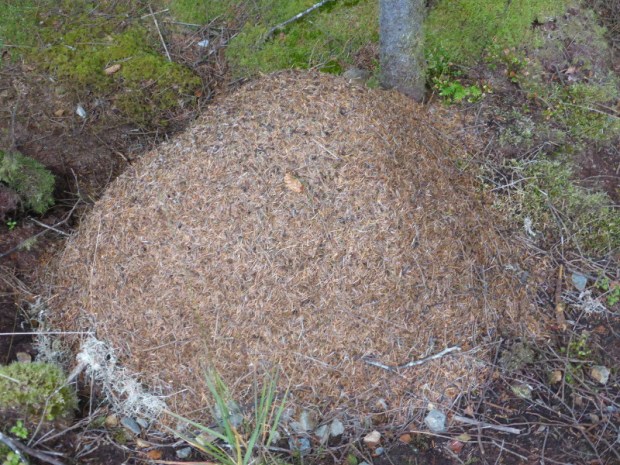
Wood Ant Nest Coed y Brenin

Whatever the case, Gwythyr, rescued the ants. The symbolism of this act reveals Gwythyr’s connections with fire, the sun, the South, summer, and the building, heating, and saving of civilisation. These underlie the rest of the episode and his role in the narrative of Culhwch and Olwen.

Following their rescue the ants said to Gwythyr, ‘Take with you God’s blessing and ours, and that which no man can recover, we will come and recover it for you.’ ‘After that’ they ‘brought the nine hestors of flax seed that Ysbaddaden Bencawr had demanded of Culhwch, in full measure, with none missing except for a single flax seed, but the lame ant brought that before nightfall.’
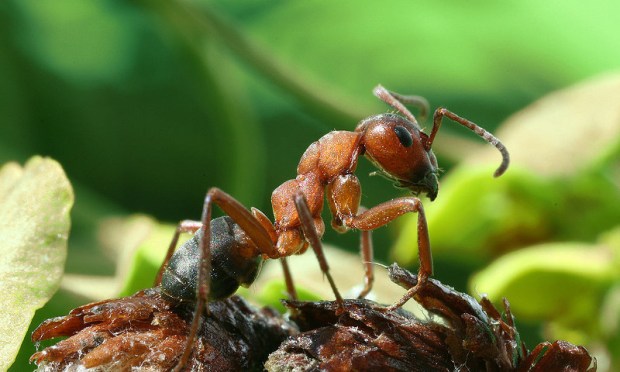
1024px-A_Formica_rufa_sideview

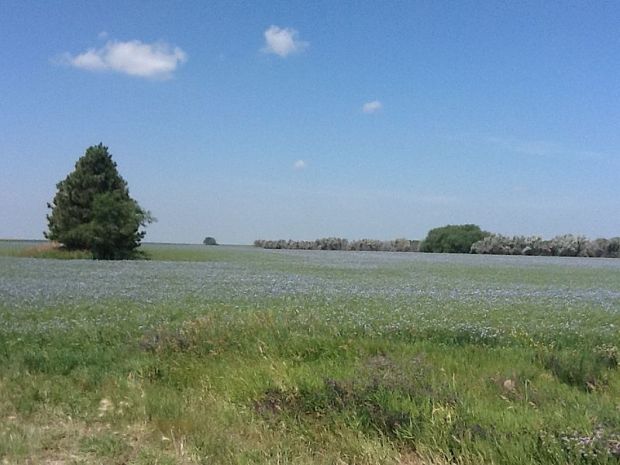
The retrieval of the flax seed was one of the forty amoethau, ‘impossible tasks’, that the giant, Ysbaddaden Bencawr, set Culhwch to win his daughter, Olwen. The flax seed was sown in ‘tilled red soil’ the day Ysbaddaden first met Olwen’s mother yet had never flowered. Culhwch was told he must resow it in a newly ploughed field to make a veil for Olwen in preparation for their wedding day.

Culhwch and Olwen is rooted in the folk motifs of ‘The Giant’s Daughter’ and ‘Six Go Through the World’. However, in this retelling, Culhwch did not fulfil the tasks with six helpers. Instead, his uncle, Arthur, completed them with aid from six warriors and a retinue of outlandish figures with strange abilities (such as Sgilti Sgafndroed who ‘would travel along the tops of trees’, Osla Gyllellfawr whose dagger could bridge a torrent, and Clust son of Clustfieniad ‘if he were buried seven fathoms in the earth he could hear an ant fifty miles away stirring from its bed in the morning’) and pre-Christian gods including Gwythyr, Amaethon the plough-god, and Gofannon the smith-god.

On the surface this narrative is about the overthrow of the primitive and oppressive reign of Ysbaddaden to bring fertility to the land as symbolised by Culhwch and Olwen’s marriage. The story of Gwythyr and the Lame Ant shows how, through an act of kindness, Gwythyr enlisted the aid of helping insects to perform a task no human could accomplish – crawling into the airy interstices of the soil to retrieve the flax seed. It’s possible to imagine that in longer versions there was far more suspense surrounding whether the flax seed was gained by the giant’s deadline and veritable relief when the lame ant finally appeared, limping valiantly, to add the final flax seed to the measure. The sowing and flowering of the seed demonstrates the fertilisation of a barren landscape.
800px-Flax_field

This gentle and benign episode is at odds with the violence pervading the rest of Culhwch and Olwen. Giants were mutilated and beheaded. Orddu the witch was cut in half and her blood drained and bottled. Ysgithrwyn was slaughtered for his tusk, Twrch Trwyth’s seven piglets were killed, and the Twrch only just escaped. Culhwch’s quest to win Olwen was twisted by the narrator to demonstrate Arthur’s civilising of the wild and banishment and all-out slaughter and destruction of the Other.

This conflict is embodied in Arthur’s allegiance with Gwythyr against his rival, Gwyn ap Nudd. In other texts we find out that Greidol was one of Arthur’s forty-two counsellors and that Gwythyr was the father of one of Arthur’s three wives (who are all named Gwenhwyfar!). Gwyn is a ruler of Annwn contrastingly associated with wildness, winter, the North, destructive Annuvian spirits, and death.

In Culhwch and Olwen, Arthur went North to intercede in the battle between Gwyn and Gwythyr for Creiddylad, a fertility goddess. He rescued Gwythyr and his men from Gwyn’s imprisonment, then bound the rivals in combat every May Day and said neither could take the maiden until Judgement Day. This seems to be a Christianised reworking of a seasonal myth in which Gwythyr, Summer, won Creiddylad on Calan Mai and this was surrounded by fertility rites, then she returned to Annwn with Gwyn, Winter, on Nos Galan Gaeaf, and Gwythyr and the powers of summer were imprisoned.

Once Arthur had defeated Gwyn – the Head of Annwn – and the body of Annwn had fallen, he usurped Gwyn’s leadership of the hunt for Twrch Trwyth and slaughtered Ysbaddaden. When his nephew, Culhwch, married Olwen, his civilising hegemony over the wild and the Otherworld was complete.

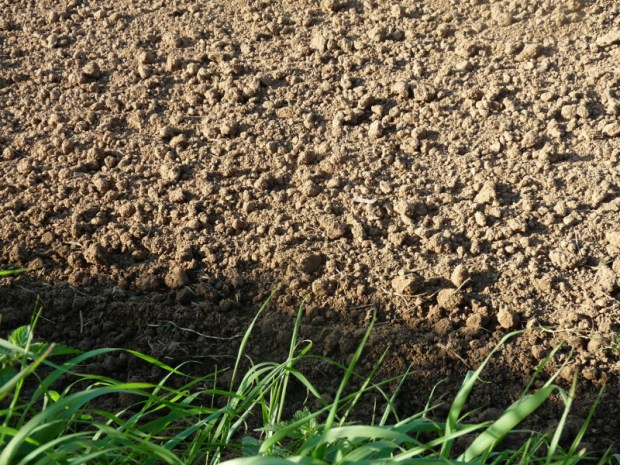
Yet it will not last forever. Otherworld gods don’t stay dead for long and dead giants, witches, and monstrous boars, having joined the furious and vengeful spirits of Annwn, will not remain shut out. Arthur is still dependent on the aid of the gods. And the gods of civilisation are dependent on the Other. Gwythyr depends on the help of the ants to traverse the chthonic regions beneath the red soil to rescue the seeds from the underworld, from the clutches of the spirits of Annwn. And one of those ants is lame. This mission is dangerous and touch-and-go. As more and more of our soil blows away, becomes barren and red, it seems less and less likely the Lame Ant will make the deadline.
soil_free_stock_photo_med

Orddu, the Very Black Witch

There is no document of civilization which is not at the same time a document of barbarism.’
  Walter Benjamin

Orddu has been a powerful presence in my life since I started investigating the story of her death. In the medieval Welsh tale, Culhwch and Olwen (1070AD), she meets a gruesome end. She is cut in twain by Arthur’s knife, then her blood is drained and bottled to dress the beard of the giant, Ysbaddaden Bencawr.

The murder of Orddu is the penultimate act in a trail of bloody atrocities committed by Arthur and his men so Culhwch can win Olwen. Ancient animals are hunted down, giants butchered, otherworldly treasures stolen, numerous historical and mythical figures subordinated and incorporated into Arthur’s court. Finally, Ysbaddaden is barbered and beheaded.

The civilising rule of Arthur as a champion of Christianity unifying Britain is asserted by his barbaric assault on this land’s divinities and those who interact with them. His reign as a national hero is based on his wiping out not only of the lives, but the stories, of a myriad Others cast into an abyss of ignominy from which few of us hear their screams.

Orddu’s death cry has resounded in my ears for several years now. Sadly she does not appear in any other sources. Nothing is known about her outside Culhwch and Olwen, where she takes to the stage for a brief and brutal battle before her life is snuffed from the page and from history. However, clues to her significance can be gleaned by reading the surface text otherwise, from the perspective of Annwn, ‘the deep’, the ancient British Otherworld.

Orddu is introduced as ‘the Very Black Witch, daughter of the Very White Witch’ (Orddu means ‘Very Black’ and Orwen ‘Very White’). This is suggestive of a matrilineal tradition of witchcraft passed on from mother to daughter through the generations. Whether Orddu and Orwen are titles, or refer to the witches’ skin colour, hair colour, or the type of magic they practiced remains unclear. Still, these women can be pictured singing spells, passing on plant knowledge, caring less for labels than the flow of magic that runs in their blood and sings in their souls.

When Arthur embarks on his quest to bottle Orddu’s blood he sets out for the North. Northern Britain, with its rough terrain and cold weather, where the influence of Rome struggled harder to maintain its hold, is traditionally viewed as hostile and dangerous in medieval Welsh literature.

Orddu is located in ‘Pennant Gofid in the uplands of hell’. Pennant Gofid means ‘Valley of Grief’. This may be viewed simultaneously as a place where people come to grief and a place where they come to grieve. ‘Hell’ is translated from ‘Uffern’, ‘Inferno’, a word used synonymously with ‘Annwn’. The associations with mourning and the Otherworld suggest Pennant Gofid was a valley of the dead and that Orddu was its custodian. As such it would have been viewed as profoundly sacred by local ‘pagans’, but as hellish by Christian intruders with no understanding of their beliefs. I have not managed to locate Pennant Gofid within the physical landscape, but when I journey there in spirit it is steep and stony. A white river with foaming rapids roars through it. Through its ever-present mists hardy stumpy trees can be glimpsed, cairns, dolmens and, occasionally, mountain ghosts.

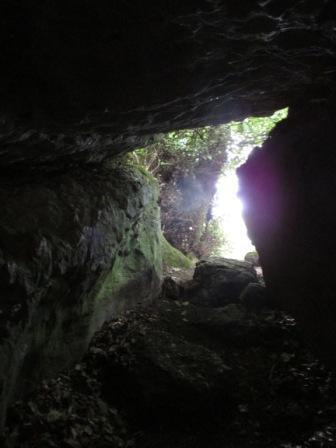
Orddu is found in a ‘hag’s cave’. This signifies her connection with ancient ancestral traditions which have no place in the civilised world of Arthur. Caves are places of access to Annwn and its mysteries. The bones of Orddu’s ancestors may have been buried in the cave’s recesses. In my journeywork it is half way up the valley; a precarious scramble. Nearby a spring emerges from the rock. There I received the gnosis it is the place Orddu and her kindred grieved for their predecessors and the dead who are buried in the valley. Their salt tears are the source of the white waters of the River of Grief. There I mourned Orddu’s death.

To find Orddu’s cave, Arthur is dependent on the guidance of the pre-Christian deities Gwyn ap Nudd (‘White son of Mist’) and Gwythyr ap Greidol (‘Victor son of Scorcher’). Gwyn is a god of Annwn and ruler of its spirits who are referred to as ‘demons’ in Culhwch and Olwen. In The Black Book of Carmarthen (1350AD) he appears as a gatherer of the souls of the dead.

Gwyn and Gwythyr are deadly rivals for the love of a maiden called Creiddylad. In an earlier episode, Arthur put an end to their conflict by placing a command on them to fight for Creiddylad every May Day until Judgement Day. Their appearance together and as advisors to Arthur seems contrived as a way of demonstrating Arthur’s power.

Read beneath the surface and we see that Gwyn’s presence in Orddu’s story has deeper roots. If Orddu is located on the edge of Annwn, then Gwyn is the deity who must be called upon to part the mists to find her. Orddu’s witchcraft may be rooted in her relationship with Gwyn as a god of Annwn and with the spirits and the dead who he presides over.

Evidence of groups working magic with the deities of the Otherworld has been found in Gaul. The Tablet of Larzac (90AD), from a seeress’s grave, refers to a coven of witches practicing andernados brictom ‘underworld-group magic’. The Tablet of Chamalieres (50AD) evidences a group of men calling on ‘Andedion’ ‘Underworld God(s)’ for aid in battle. ‘Annwn’ and ‘Andedion’ share the same stem. The poet Dafydd ap Gwilym refers to ‘witches of Annwn’ suggesting similar groups existed in Britain.

We also have records of a native tradition of prophesy and spirit-work. In his Description of Wales (1194AD), Giraldus Cambrensis refers to ‘Awenyddion’, ‘people inspired’ who are possessed by spirits and perform oracular trance when consulted on ‘doubtful events’. Orddu can be pictured prophesying with the spirits of Annwn and invoking their aid. Arthur’s subordination of Gwyn represents the negation of her source of magic.

When Arthur and his men approach Orddu’s cave she shows no sign of fear. Arthur hesitates until Gwyn and Gwythyr advise him to send in two of his servants, Hygwydd and Cacamwri. Orddu grabs Hygwydd by the hair and wrestles him to the ground, disarms and thrashes them both and beats them out ‘shrieking and shouting’. When Arthur tries to rush the cave, Gwyn and Gwythyr say, “It is not proper and we do not want to see you wrestling with a hag.” They tell Arthur to send another pair of servants in. We do not hear what Orddu does to Hir Amren and Hir Eiddil (Hir means ‘long’ or ‘tall’ – these are formidable men), only that their fate is ‘far worse’ and the four are so severely incapacitated they cannot escape without being put onto Llamrei, Arthur’s gigantic mare. After this, Arthur loses his temper and strikes Orddu dead.

It is uncertain whether Gwyn and Gwythyr are being presented as stupid or as tricking Arthur to defend Orddu. Whatever the case, in spite of being alone in her cave and outnumbered, Orddu displays considerable skill in hand-to-hand combat and puts up a courageous fight.

Comparisons may be drawn with the witches of Caer Lowy who teach Peredur how to ride a horse and handle weapons. Afterward, Peredur turns on them and slaughters them with Arthur’s aid. Conspicuously he kills one of the witches by striking her on the helmet so her head is split in two. As she dies she tells Peredur he was destined to kill her. It may be conjectured that Orddu belonged to a similar lineage of women who were not only witches but also trained the warriors of the North.

Thus it makes sense that for Arthur’s tasks to be completed this powerful woman must be removed from her position at Pennant Gofid where she teaches the arts of warriorship and utters prophecies from the mouth of Annwn. Her death signals the end of a tradition that may be as old as the ancestral remains in the cave where she abides.

Long has she lain there, her skull split in twain, her bones in two weary piles. Long has her story been forgotten, until now, as the rule of Arthur and the hegemonic brand of Christianity that gave us the Crusades, witch hunts and the British Empire united under ‘One King, One God, One Law’ begins to crumble.

The blood of witches does not stay bottled forever even in the bottles of a dwarf. The glass walls that contain magical women are shattering. Orddu’s call is to win back our powers of prophecy and fighting strength, to rebuild our relationships with Annwn and its gods and spirits. To reach into our caves of potential and fulfil our vocations with courage, remembering how her life was cut short.

Picture

*This article was solicited by Kate Large and was first published in Pagan Dawn, No 202, Spring 2017

Gods and Radicals's avatarGODS & RADICALS

We have started rebuilding from the ruins.

We are the children you never knew you would have.

We do not see you but we keep on building

the future you made your crossing for.

Gods&Radicals is pleased to announce that the fourth issue of our journal, A Beautiful Resistance, will be released into the world 15 November.


Edited by Lorna Smithers and Lia Hunter, foreworded by Peter Dybing, and yet again featuring the brilliant cover artistry of Li Pallas, A Beautiful Resistance: The Crossing features literary and artistic works from Europe, Africa, Asia, and North America, by:

Nina George, Nimue Brown, S. A. O’Hungerdell, Angharad Lois, Nicole Heneveld, Bryan Hewitt, Rex Butters, Rhyd Wildermuth, Lorna Smithers, Dennis Mombauer, Dr. Bones, Boham, Ingi House, Jason Derr, Aicila Lewis, Joe DiCicco, Tahni J. Nikitins, Shane Burley, Innocent Chizaram Ilo, Michael Browne, Nebulosus Severine, Finnchuill, Rune Kjær Rasmussen, Sean Donahue, Sonali Roy, Christine…

View original post 16 more words