Shattered Vessels and Scattered Sparks

Notes on Welsh Mythology and Lurianic Kabbalah

In 2015 my patron god, Gwyn ap Nudd, showed me a cauldron filled with stars. Shortly afterwards I was transported into the scene in The Story of Taliesin, where Gwion Bach steals three drops of awen (1) and the cauldron breaks, spilling the deadly remnants of the brew across Gwyddno Garanhir’s lands. With it I saw the stars pouring out and was told by Gwyn my task was to gather them.

This story continues to play a guiding role in my path as an awenydd. I was recently astonished when I found similarities between my personal gnoses and Lurianic Kabbalah. This system was created by the Jewish Rabbi, Issac Luria (1534 – 1572) the Ari or the Holy Lion, who lived in Safed in Israel.

According to Luria Or Ein Sof ‘God’s Infinite Light’ was withdrawn in the Tzimtzum ‘contraction’ that made possible the creation of this finite world. The light continued to emanate through the ten eyes of Adam Kadmon ‘Primordial Man’. Each point of light formed the keter ‘crown’ of a sefirot ‘emanation’ in the world of Tohu ‘Chaos’. These lights were contained by ten vessels. Because the seven bottommost vessels could not contain the intensity of the lights they died, shattering, descending into Tohu. This was known as shevirat ha-kelim ‘the shattering of the vessels’. The three vessels at the top were more powerful and those lights continued to shine, emanating the Infinite Light.

Notozin ‘sparks’ of light clung to the fragments of the vessels. By the act of tikkun, the repair of the world above and below by gathering the sparks (seen both as divine light and holy souls)and returning them to the Creator the unity of the shattered God-Head could be re-established.

Parallels can be found between the broken cauldron and the shattered vessels and between tikkun and the task I was assigned by Gwyn, Gatherer of Souls, gathering the stars back into the cauldron. The three remaining vessels, emanating the Infinite Light, resemble the modern symbol for awen /I\.

In the Welsh myths the cauldron is the womb of Ceridwen. She is replaced as the source of awen and as a creator goddess by God in medieval poetry (2). Her cauldron lies in Annwn ‘the Deep’ and its guardian is Gwyn/Pen Annwn ‘Head of the Otherworld’. In ‘The Spoils of Annwn’ it is stolen by Arthur and his men. We find the lines: ‘cledyf lluch Lleawc idaw ry dyrchit, / ac yn llaw Leminawc yd edewit’, ‘Lleog’s flashing sword was thrust into it, / and it was left in Lleminog’s hand’ (3). This potent image of violation is suggestive of the shattering of the cauldron in a lighting-flash and the theft of its pieces.

This scene might originate from an older creation myth akin to the Mesopotamian story of the slaying of the dragon-goddess, Tiamat ‘Deep’, by the lightning-god Marduk, and Indra’s release of the waters from the dragon, Vritra, by a thunderbolt in the Hindu tradition. In Genesis, before God creates the world, we are told ‘the earth was formless and empty, darkness was over the surface of the deep, and the Spirit of God was hovering over the waters,’ suggesting the existence of an older water-deity.

The shattering of Ceridwen’s cauldron is the Big Bang, the moment of creation, when the waters spill out with the stars (4). Ceridwen may have created of her own will before Lleog broke her sacred vessel.

The cauldron is shattered repeatedly in Welsh mythology and these instances are bound up with the near-destruction of the world. In the Second Branch the cauldron breaks after pouring out the speechless dead in a battle that leaves only seven Britons alive and five pregnant women in Ireland. In The Story of Taliesin its breaking poisons Gwyddno’s lands. The survivors are left to pick up the pieces.

My task as an awenydd living in the Anthropocene, this Sixth Mass Extinction, precipitated by Lleog’s sword and Gwion’s theft of the awen shattering the cauldron, is to regather the stars. By gathering constellations of stories in service to Gwyn and Ceridwen I strive to repair the cauldron, the womb of Old Mother Universe, and mend the ways between Thisworld and Annwn. This is my Tikkun.

Photo by Marika Vinkmann on Unsplash

(1) The Welsh word for poetic inspiration stemming from the Indo-European *uel ‘to blow’ and sharing its root with awel ‘breeze’.
(2) This is evidenced in ‘The Chair of Teyrnon’ and ‘The Childhood Achievements of Taliesin’ from The Book of Taliesin and the poems of Cuhelyn Fardd and Prydydd y Moch.
(3) Lleog ‘death-dealer’ (from Lleawc) and Lleminog ‘the leaper’ (from Leminawc) may be names of the same person, who may also be identified with Lleu Llaw Gyffes ‘the Fair-Haired One with the Skilful Hand’. It would certainly take his skill to steal the cauldron. All may be reflexes of the Pan-Celtic god, Lugus.
(4) This was suggested to me by an initiatory experience. After my first dedication to Gwyn, before the star cauldron (the candlelit White Spring at Glastonbury), I experienced swimming through a sea of stars.

SOURCES

Howard Schwartz, ‘How the Ari Created a Myth and Transformed Judaism’, Tikkun
Kristoffer Hughes, From the Cauldron Born, (Llewellyn, 2013)
Laurence Fine, ‘Tikkun in Lurianic Kabbalah’, My Jewish Learning
Marged Haycock (transl), Legendary Poems from the Book of Taliesin, (CMCS, 2007)
Moshe Miller, ‘Shattered Vessels, Kabbalah Online
Patrick Ford (transl), Mabinogi and Other Welsh Tales, (University of California Press, 2008)
Genesis 1., New International Version, The International Bible Society

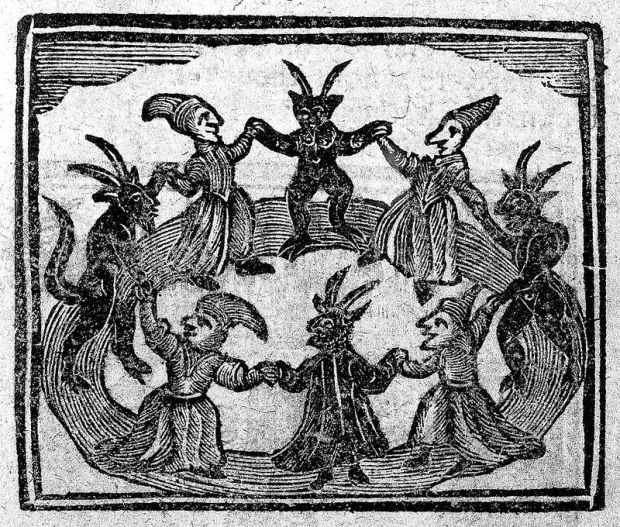
Those are but Devils

Witches dancing with devils from the History of Wizards and Witches 1720

An essay on the demonisation of Gwyn ap Nudd and the Spirits of Annwfn

Gwyn ap Nudd, ‘White son of Mist’, is a god of the dead and ruler of Annwfn, ‘the Deep’, the Brythonic underworld. In two medieval Welsh texts he and the spirits he rules are identified with devils.

In How Culhwch Won Olwen we are told, ‘Gwyn ap Nudd… God has put the fury of the devils of Annwfn in him, lest the world be destroyed. He will not be spared from there.’

The introduction of God’s agency is clearly a Christian attempt to explain Gwyn’s containment of the spirits of Annwfn. These spirits include the restless dead who have died suddenly or violently:

Some headless stood upon the ground,
Some had no arms, and some were torn
With dreadful wounds, and some lay bound
Fast to the earth in hap forlorn.

And some full-armed on horses sat,
And some were strangled as at meat,
And some were drowned as in a vat,
And some were burned with fiery heat,
Wives lay in child-bed, maidens sweet…

…such the fairies seize and keep.

Others such as the Tylwyth Teg, ‘Fair Family’, or ‘fairies’ and ellyllon, ‘spectres’, ‘goblins’, ‘elves’ occupy a liminal position between life and death, humanity and nature, and mitigate between the worlds. Christians identify these complex and ambiguous spirits with dieuyl, ‘devils’.

Gwyn presents a paradox that does not sit easily with Christianity’s black-and-white theology: because he contains the spirits of Annwfn within him and/or within his realm he is the only being who can hold back their aryal, ‘fury’, and prevent them from destroying this world.

In The Life of St Collen, Collen, the abbot of Glastonbury, overhears two men conversing outside his cell saying Gwyn is ‘king of Annwfn and of the Fairies’. Putting his head out he shouts, ‘Hold your tongues quickly, those are but Devils’.

Collen is invited to feast in Gwyn’s castle on the Tor. There he refuses to eat, saying the food is ‘leaves’ and the red and blue clothing of Gwyn’s host signifies ‘burning’ and ‘coldness’; it is hellish. Collen supposedly banishes them with holy water.

***

Gwyn’s association with devils stems from a longstanding Christian tradition of identifying pagan deities with the Devil and demons and the realm of the dead with Hell. Any god who was not the one God, who demanded no other gods be worshipped before him, was seen as demonic.

In The Bible, Beelzebub, a Semitic deity originally called Baal-zebul, ‘Lord of Princes’, is equated with the Devil along with Satan and Lucifer. The ‘false gods’ of the Canaanites are referred to as ‘demons’ and the se’irim ‘hairy beings’ or satyros (ie. satyrs) as ‘goat-demons’.

The concept of Hell developed much later. In The Old Testament the original Hebrew word is Sheol, ‘the place of the dead’ (it is frequently translated as ‘the grave’). In The New Testament, Hell is translated from Hades, Tartarus and Gehenna. Hades means ‘the unseen place’ and is the name of the Greek underworld and its ruler. Tarturus is ‘the deep place’ beneath Hades. Contrastingly, Gehenna is a thisworldly place, the Valley of Hinnom, where the Kings of Judah sacrificed their children by fire, leading to it being cursed.

Hell derives from the Old English hel or helle stemming from Proto-Germanic *haljo ‘the underworld’ or ‘concealed place’. Hel is also the name of its goddess. Ironically it is a borrowed pagan concept which is not of Biblical origin.

The idea of the land of the dead as a place of punishment by eternal fire was developed in the early days of the Church by scholars such as Second Clement, Justin Martyr and Theophilus of Antioch as a means of controlling the populace. Augustine, bishop of Hippo Regus, was the first Christian leader to teach ‘the doctrine of eternal punishment’ during the 4th century.

Annwfn, ‘the Deep’, shares parallels with the other pagan underworlds and places of the dead. In medieval Welsh mythology there is plenty of evidence that, following their Christianisation between the 4th and 7th centuries, the Britons resisted the view that Annwfn was a place of punishment.

In ‘The First Branch’ of The Mabinogion and even in The Life of St Collen it is a place of beautiful courts and castles, lavishly dressed courtiers, and sumptuous feasts. These paradisal depictions are echoed in later fairylore demonstrating Annwfn became byd Tylwyth Teg, ‘Fairyland’ or ‘Faerie’.

Gwyn’s name means ‘White, Blessed, Holy’ and Gwynfa ‘Paradise’. In Barddas, Iolo Morganwg speaks of Cylch y Gwynvyd, ‘the Circle of White’, ‘the Holy World’ noting gwynvyd denotes ‘bliss or happiness’. Gwynfa and Gwynvyd might originate from a tradition wherein, like Hades and Hel, Gwyn and his realm bore identical names.

When Annwfn became Faerie its associations with the dead were severed and it was reduced to a fantasy realm. However, superstitions remain, many of these pertaining to the uncanny and dangerous nature of the fairies and their associations with abductions, madness, and death.

***

The Conversation of Gwyn ap Nudd and Gwyddno Garanhir’ contains Gwyn’s clearest literary representation as a pre-Christian god of the dead. Gwyddno addresses Gwyn as a ‘bull of battle’: a divine warrior and psychopomp. Other epithets include ‘awesome leader of many’, ‘invincible lord, and ‘lord of hosts’.

Gwyn’s identity as a death-god is revealed when he states he comes from ‘many battles, many deaths’. He asserts his presence at the deaths of Gwenddolau ap Ceidio, Bran ap Ywerydd, Llachau ap Arthur, Meurig ap Careian, and Gwallog ap Lleynog before speaking the lines:

I was there when the warriors of Britain were slain
From the east to the north;
I live on; they are in the grave.

I was there when the warriors of Britain were slain
From the east to the south;
I live on; they are dead.

Here Gwyn laments the downfall of the Brythonic kingdoms to the Anglo-Saxons and his living on as a gatherer of souls. He is a venerable figure. The only thing devilish about him is the bull-horns.

Contrastingly How Culhwch Won Olwen presents Gwyn as a sinister being and pits him against Arthur: a champion of Christianity who rose to popularity by slaughtering and subordinating a variety of Annuvian deities, ancestral animals, giants, and witches.

It is my belief that Arthur’s overcoming of Gwyn was a primary step in the destruction of Brythonic Paganism and the assertion of Christianity. Gwyn’s mythos had to be erased and reconfigured in a new literature documenting his defeat and replacement by Arthur as a protector of Britain who fights against the ‘devils’ of Annwfn rather than containing their fury.

In How Culhwch Won Olwen Arthur intercedes in the ancient seasonal struggle between Gwyn, ‘Winter’, and Gwythyr, ‘Summer’, for their beloved, Creiddylad, a fertility goddess. Gwyn takes Creiddylad from Gwythyr by force, presumably abducting her to Annwfn, explaining the coming of winter on Calan Gaeaf.

Gwythyr raises an army and attacks Gwyn. It might be assumed they also descend to Annwfn. Gwyn defeats them singlehandedly and imprisons Gwythyr and seven of his men. The imprisonment of Summer in Annwfn may also be part of a mythos explaining the rule of Winter.

During their imprisonment Gwyn kills Nwython and feeds his heart to his son, Cyledyr, who goes mad. Whether this scene should be read as a punishment for invading Annwfn demonstrating Gwyn’s furious nature, a muddled echo of a rite transferring ancestral strength from father to son, or Christian propaganda demonising Gwyn remains uncertain.

Whatever the case, Arthur comes to the rescue, presumably storming Gwyn’s prison in Annwfn. He defeats Gwyn, then binds Gwyn and Gwythyr in battle for Creiddylad every Calan Mai until Judgement Day. Arthur’s agency is introduced to explain an existing duel on Calan Mai where Winter is defeated and Creiddylad returns to this world, explaining the rule of Summer. The purpose is to display Arthur’s control over these two old seasonal gods and Creiddylad who he locks in her father’s house saying neither can take her until Judgement Day!

The scene where Gwyn and Gwythyr appear together as advisors to Arthur on his assault on Orddu, ‘the Very Black Witch’, who lives in Pennant Gofid, ‘The Valley of Grief’ in ‘the uplands of Hell’ is again designed to demonstrate his power over them and this Annuvian woman, who he slices in half with his knife, Carwennan, before draining her blood.

It is notable that Gwythyr’s father, Greidol, ‘Scorcher’, is one of Arthur’s forty-two counsellors and Gwythyr’s daughter, Gwenhwyfar, is married to Arthur. This is suggestive of a long-standing alliance between Arthur and the powers of summer against winter and death.

The rescued prisoners join Arthur on his hunt for Twrch Trwyth, ‘King of Boars’. That Gwyn must be found before the hunt can start suggests Gwyn was its original leader. Gwyn’s identity as a hunter god is suggested by his ownership of a white stallion, Carngrwn, ‘Round-Hoofed’, and white red-nosed hound, Dormach, ‘Death’s Door’. In Welsh folklore Gwyn and the Cwn Annwfn, ‘Hounds of the Otherworld’, hunt the souls of the dead. He is the Brythonic leader of the Wild Hunt.

Twrch Trwyth’s transformation from a human king into a boar hints at the tradition of a soul hunt. Arthur’s usurpation of Gwyn’s hunt and its depiction as just a boar hunt marks the end of the mythos featuring Gwyn as a god of the dead and leader of the Wild Hunt.

Many of Arthur’s famous landmarks, including Carn Cafall, where the footprint of Arthur’s gigantic dog was left during the hunt for Twrch Trwyth, may formerly have been associated with Gwyn and Dormach.

The Spoils of Annwfn’ shares similarities with Arthur’s attack on Gwyn suggesting they are two different variants of the same story. Taliesin, the narrator, accompanies Arthur on his journey to seven otherworldly fortresses (which I believe may be faces of the same fort) where he takes on Pen Annwfn, ‘the Head of Annwfn’.

Storming the glass walls and defeating six thousand unspeaking dead men in a devastating battle, Arthur and his raiding party rescue Gweir (who may be equated with Graid, one of Gwyn’s prisoners), steal the legendary Brindled Ox, and seize ‘the Cauldron of the Head of Annwfn’. Escaping with only seven survivors Arthur slams ‘Hell’s Gate’ shut.

Arthur’s defeat of the Head of Annwfn and seizure of his cauldron represent the triumph of Christianity over Paganism, the realm of death, the dead and their ruler, and the mysteries of death and rebirth.

It is no coincidence that Arthur’s raid on Annwfn shares parallels with Jesus’ ‘Harrowing of Hell’ (harrow comes from the Old English hergian ‘to harry or despoil’). Between his crucifixion and resurrection, Jesus descended to Hell to preach to ‘the imprisoned spirits’ and liberate the righteous who had been trapped there since the beginning of the world (the damned were left to stay!) triumphing over the realm of the dead and death itself.

It is my intuition that prior to Christianity and Arthur’s rise to popularity the series of fortresses might have formed part of a Brythonic tradition documenting the descent of the soul to Annwfn. They would have been approached respectfully with due ritual rather than assaulted and despoiled, their guardians killed, their treasures stolen.

***

The demonisation of Annwfn is shown by lines from several poems in The Book of Taliesin equating it with Hell (translated from Uffern which originates from the Latin Inferno ‘underworld’).

And in front of the door of Hell’s gate lamps were burned

What is the measure of Hell?
How thick its veil,
how wide its mouth,
how big are its baths?

Madawg…
Was taken by fierce Erof…
Among the hideous fiends
Even to the bottom of Hell.

Gwyn’s loss of status as a god of the dead led to him being demonised as a demon huntsman who hunted the souls of sinners. His role became punitive as he was subsumed within Christianity’s doctrine of fear and control as a devilish figure.

Charles Squire writes, ‘Gwyn… his game is man… the “mighty hunter”, not of deer, but of men’s souls, riding his demon horse, and cheering on his demon hound to the fearful chase’.

John Rhys notes, ‘What Gwyn hunts are the souls of those who are dying; but Christianity has greatly narrowed his hunting ground, as his quarry can now only be souls of notoriously wicked men.’

Folkloric stories featuring horned figures and/or the devil, Tywsog Annwfn, ‘Prince of Annwfn’, might originally have featured Gwyn, a ‘bull of battle’ who wears bull-horns. The following example is recorded by John Rhys:

‘Ages ago as a man who had been engaged on business, not the most creditable in the world, was returning in the depth of night across Cefn Creini, and thinking in a downcast frame of mind over what he had been doing, he heard in the distance a low and fear-inspiring bark; then another bark, and another, and then half a dozen more. Ere long he became aware that he was being pursued by dogs, and that they were the Cwn Annwfn. He beheld them coming: he tried to flee, but he felt quite powerless and could not escape. Nearer and nearer they came, and he saw the shepherd with them: his face was black and he had horns on his head.’

John Rhys argues this black-faced, horned ‘shepherd’ is Gwyn. This representation is clearly influenced by Biblical tradition, perhaps by the following passage containing Cyril of Alexandria’s interpretation of John 10: 12-13:

‘the father of sin used to put us in Hades like sheep, delivering us over to death as our shepherd, according to what is said in the Psalms: but the really Good Shepherd died for our sakes, that He might take us out of the dark pit of death and prepare to enfold us among the companies of heaven, and give unto us mansions above, even with the Father, instead of dens situated in the depths of the abyss or the recesses of the sea.’

Again we return to Jesus’ ‘Harrowing of Hell’ and his triumph over the realm of the dead. This story forms a large part of the hubristic anthropocentric worldview where ‘Man’ (Jesus/Arthur) conquers all, including death and its deities, which has led to the Anthropocene.

***

For many centuries Christianity has cut us off from the magical underworld beneath our feet and from its deities who we have been taught to fear as devils. As the hegemony of Christianity and its bed-partner, Empire, fail, leaving a void filled by consumerism, materialism, right-wing populism, and regressive nationalisms the need arises to reconnect with the gods of the deep.

Within Brythonic culture there is a tradition of spirit-work referred to by Gerald of Wales. He speaks of awenyddion, ‘people inspired’, ‘the soothsayers of this nation’ who are possessed by and speak with the aid of spirits and receive inspiration from dreams.

Following their example we can rebuild our relationship with the spirits of Annwfn. This isn’t an easy path to take as they have long been demonised, shut out, ignored. The restless dead are growing in number as more people die in war and fall victim to the exploitation of capitalism. They can indeed be furious. As can the fairies who mitigate between the worlds and have witnessed our untrammelled destruction of nature and ignorance of Annwfn.

Yet we have a responsibility to them, to the ‘others’, that deserves a response. Their fury demands the destruction of the exploitative systems of this world and the replacement of the shallow facade of consumer culture with a mythos rich and deep in meaning based in respectful relationship with all beings, human and non-human, living and dead.

Within Brythonic tradition Awen, ‘divine inspiration’, the source of mythic meaning, flows from Annwfn.

The Awen I sing,
From the deep I bring it,
A river while it flows,
I know its extent;
I know when it disappears;
I know when it fills;
I know when it overflows;
I know when it shrinks;
I know what base
There is beneath the sea.

Our existing mythology and folklore shows there are ways into Annwfn/Faerie that are not only traversed by the likes of Arthur but by children, drunkards, poets, fiddlers, and dancers. Admittedly the risk is madness or death, but those who pass the initiatory challenges of the Fairy Kings and Queens emerge with the Awen to guide the way into a better world.

Capitalism thrives on its domination of meaning. With Awen from Annwfn we create our own.

/I\

Gwyn ap Nudd
guide of souls
light of the mist
show us Annwfn’s
disturbing beauty:
shining butterflies
worm-faced death.

Let your dragons
grant us Awen from
unquenchable wells.
Let us be possessed
and ride the fury
of your spirits
into the next world.

***

SOURCES

Charles Squire, Celtic Myths and Legends, (Lomond Books, 1905)
Dennis Bratcher, ‘Demons in the Old Testament: Issues in Translation
Edward Eyre Hunt, (transl), Sir Orfeo, (Forgotten Books, 2012)
Gerald of Wales, Description of Wales, Awen ac Awenydd
John Rhys, Celtic Folklore Welsh and Manx, Volume 1, (Forgotten Books, 2015),
John Rhys, Studies in the Arthurian Legend, (Elibron Classics, 2005)
Greg Hill (transl) ‘Gwyn ap Nudd and Gwyddno Garanhir’, The Way of the Awenydd
Iolo Morganwg, Barddas, (Weiser, 2004)
Lady Charlotte Guest (transl), ‘Gwyn and St Collen’, Mary Jones Celtic Literature Collective
Marged Haycock, (transl), ‘The Spoils of Annwfn’, Legendary Poems from the Book of Taliesin, (CMCS Publications, 2015)
Saint Cyril, Saint Cyril Collection, (Aeterna Press, 2016),
Sioned Davies, (transl), The Mabinogion, (Oxford University Press, 2007)
William F. Skene, Four Ancient Books of Wales, (Forgotten Books, 2007)

*This essay was first published in A Beautiful Resistance 4.

Henwen – The Birthing and Devouring Sow

gloucester-old-spot-sow-public-domain

I. Henwen – ‘Old White’

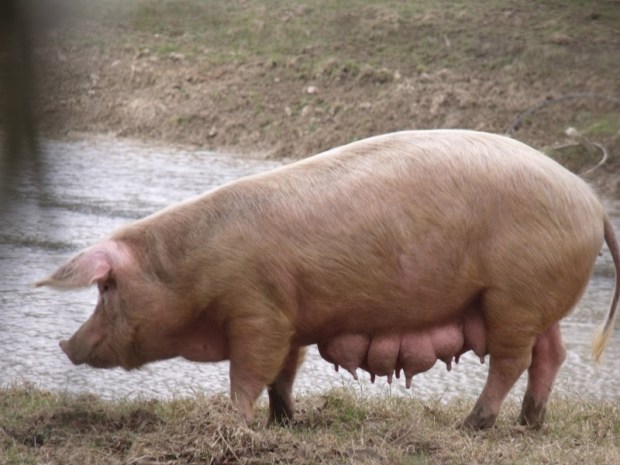
In Triad 26. we find the story of a sow called Henwen ‘Old White’. She belongs to Dallwyr Dalben and is kept in Glyn Dallwyr in Cornwall in the care of Coll, son of Collfrewy, one of three ‘Three Powerful Swineherds.’ She becomes pregnant and it is ‘prophesied that the Island of Britain would be the worse for the womb-burden.’ Therefore Arthur and his warriors set out to destroy her.

When Henwen is ready to farrow she goes into the sea at Penrhyn Awstin and is followed by Coll (and, presumably, Arthur and his men). Landing in Wales she begins to give birth to offspring. Surprisingly, they are not piglets! In Gwent she brings forth a grain of wheat and a bee, giving the name to Wheat Field, and in Pembroke barley, ‘therefore, the barley of Llonion is proverbial.’ In these two instances, in South Wales, Henwen’s births are benign and generative, creating crops and pollinators.

When Henwen reaches North Wales, however, she gives birth to wild creatures. At the Hill of Cyferthwch in Arfon she brings forth a wolf-cub and a young eagle. The wolf is given to Bergaed and the eagle to Breat, princes of the North, and they are both ‘the worse for them.’ We find a contrast between the fertile plains of South Wales and the wilder, more rugged regions of North Wales.

‘At Llanfair in Arfon under the Black Rock’ she gives birth to a kitten who is thrown by Coll into the sea. The sons of Palug foster it in Môn (Anglesey) ‘to their own harm’ and it becomes known as Palug’s Cat. In ‘Arthur and the Porter’ we are told that it was eventually ‘pierced’ by Arthur and his men. However, before they managed to kill it, nine score chieftains fell at dawn and it devoured them. Palug’s Cat was one of Three Great Oppressions of Môn along with Daronwy, and Edwin, King of Lloegr.

II. A Sow’s Feast

It believe that Henwen also makes an appearance in ‘The Fourth Branch’ of The Mabinogion. In this story Gwydion is searching for his nephew, Lleu. Gwydion stays at the house of a peasant in Manor Bennard. He learns his learns his host owns a sow who returns every night to feed her piglets. However, nobody knows where she goes during the day ‘any more than if she sank into the earth’. These lines recall Triad 26. where Henwen sinks into the sea, suggesting her otherworldly nature.

Gwydion follows the trail of the sow to a mighty oak which stands between two lakes and is neither wetted by water nor melted by fire. At its roots the sow is feasting hungrily on rotten flesh and maggots. When Gwydion looks up he sees they are falling from Lleu, who is perching in eagle-form in the top-most boughs, pierced by the spear of his rival, Gronw, the gore dripping from his rancid wound.

In the context of this story it seems significant that Gwydion is led to Lleu by this mysterious sow. Earlier Gwydion stole the seven piglets who were given to Pryderi, son of Pwyll Pen Annwn, by Arawn, King of Annwn (along with Coll and Drystan, Pryderi was one of the ‘Three Powerful Swineherds’).

These piglets were special, ‘some kind of creature that has never been in this island before has arrived in the South’. Gwydion’s theft led to a chase from South to North Wales and several devastating battles between his men and Pryderi’s. Pryderi was finally killed by Gwydion in single combat.

It is my intuition Henwen was the Annuvian mother of the seven piglets. Her devouring of Gwydion’s nephew may represent her taking back from him in exchange for what was stolen from her. The chase South to North and trail of devastation are thematically linked with Henwen’s story.

Another point of note is that Daronwy, ‘The Oak of Goronwy’, is referred to as ‘the radiance of the men of Goronwy’ and therefore associated with Lleu’s rival, Gronw Pebr (pebyr mean ‘radiant’). It could be the oak where Lleu perched after being wounded by Gronw’s spear – a scene based on an older initiatory myth. With Henwen’s clawing child, Palug’s Cat, it is included in the Oppressions of Mon. Thus it makes sense to find Henwen devouring the dying Lleu back into Annwn at its roots.

III. Hwcha Ddu Gwta – ‘Black Short-Tailed Sow’

In Welsh folklore we find a mysterious verse about Hwch Ddu Gwta ‘Black Short-Tailed Sow’:

Black short-tailed sow
On every stile
Spinning and weaving
On Calan Gaeaf night

Get home quick, be the first
The Hwch Ddu Gwta gets the last.

She is said to emerge from the ashes of bonfires on Nos Galan Gaeaf and wait at stiles to prey on people walking home late. It is bad luck to be the last to get home as Hwch Ddu Gwta will eat you.

It seems possible the white Henwen, the birthing mother who provided the harvest, is also the black devourer.

There is a similar legend in southern Sweden. Gloso is a ‘glowing sow’ who appears ‘over the twelve days of Christmas’ with ‘eyes of fire, sparks spring from her bristle, and she travels like a burning flame.’ This recalls Hwch Ddu Gwta’s birth from the embers on Nos Galan Gaeaf.

She is also connected with the harvest. Three blades of wheat are left for her in the field. ‘These are for Gloso: one for Christmas night, one for the night of the new year, one for king’s night.’ This makes me wonder whether similar rituals existed to appease the harvest sow in her darker winter apparel.

IV. Ceridwen – The Old Mother

Greg Hill suggests Hwch Ddu Gwta might be connected with the Ladi Wen ‘White Lady’ who also walks abroad on Nos Galan Gaeaf, and with Ceridwen, the goddess of the cauldron. Robert Graves, in The White Goddess, also identified the sow with Ceridwen, ‘the White Lady of Death and Inspiration.’

It is my personal belief that Ceridwen is the Old Mother of the Universe, the Great Goddess from whose crochan, ‘womb’ or ‘cauldron’, all life is born and to whom it returns at death. This would certainly fit with the Henwen ‘Old White’ as the mother who births harvests and monsters and swallows the dead.

SOURCES

Charles Lecouteux, Phantom Armies of the Night: The Wild Hunt and the Ghostly Processions of the Dead, (Inner Traditions, 2011)
Greg Hill, ‘Traditional Customs for the Calend of Winter’, Dun Brython
Rachel Bromwich (ed), The Triads of the Island of Britain, (University of Wales Press, 2014)
Robert Graves, The White Goddess: A Historical Grammar of Poetic Myth (Faber & Faber, 1999)
Sioned Davies (transl.), The Mabinogion, (Oxford University Press, 2007)
William Skene (transl.), ‘Arthur and the Porter’, Mary Jones Celtic Literature Collective

The Epiphany of Lleu Llaw Gyffes

Lleu

I. The Oak

Lleu-in-the-Tree
Lleu-in-the-Tree
Lleu-in-the-Tree

Tell me why
he has pierced us
with his spear

Lleu-in-the-Tree
Lleu-in-the-Tree
Lleu-in-the-Tree

Tell me why
ooze drips from our
rancid wounds

Lleu-in-the-Tree
Lleu-in-the-Tree
Lleu-in-the-Tree

Tell me why
we are filled with
rot and maggots

Lleu-in-the-Tree
Lleu-in-the-Tree
Lleu-in-the-Tree

Tell me what
visions we must see
in these leaves

Lleu-in-the-Tree
Lleu-in-the-Tree
Lleu-in-the-Tree

Tell me what
lessons we have
failed to learn

II. Lleu’s Lament

I am filled with bitterness:
black bile, yellow bile, phlegm, blood,
yet no theory of the humours
or anatomy of melancholy
explains my sad state

and no letting of blood
or application of leeches can
purge the badness within.

So I am here on this tree
telling the story of how I saw
the sun and it was Fool’s Gold.
My wife was made of flowers.
My armour turned to dust.
My fortress was rubble.

I have lost the meaning of my name.

I have come to doubt I even exist,
yet cannot close my eagle eyes.

Like the Eagle of Gwernabwy
I have watched civilisations rise and fall.
Like the Eagles of Pengwern and Eli
I have sunk my beak into flesh
and tasted rot and maggots.

I have seen the rotting corpses
on the battlefield at the end of the world,
the souls sparkling like iron pyrite
in the veins of the night skies.

I have looked into the abyss
and the bright lights do not console me.

I go with reluctance into Gwydion’s arms.

III. Lleu’s Resurrection

He does not want to live,
this putrid sack of dirty feathers,
bones, rotten flesh, stench,

still I clamp my mouth to his,

massage his reluctant heart
slippery and recalcitrant.

When this does not work
I call upon all the electricity
from Maentwrog Power Station,
take the paddles and recite

the words of a forbidden spell
stolen from the depths of Annwn
to bring life to the newly dead.

An ALMIGHTY FLASH –

his body jerks like frog’s legs
or the monster of Frankenstein.

He breaks the leathery bonds,
shakes off his feathers and rises
like the sun from my stony table
leaving a black charred shape.

A haze of smoke surrounds him.

His eyes are burning his hair aflame!

BEHOLD THE RESURRECTION
OF THE LIGHTNING GOD!

IV. Dinas Lleu

Lleu will not return
to Dinas Lleu tonight

woodbine twines the walls
as if in search for a lover

an owl circles overhead
with a hoot is gone.

Lleu will not return
to Dinas Lleu tonight

thistles break into the hall
to find an empty hearth

the fire long gone out,
a pile of black char.

Lleu will not return
to Dinas Lleu tonight

in the ashes I scrawl
with a feather the outline

of a bird against the sun
unknowing if it is the end

or beginning of a myth.

*I wrote this sequence of poems in a single morning shortly after finding out I’d got an infection following my hernia repair operation. Thankfully it seems to have cleared up now.

Daronwy – The Prophetic Oak

Daronwy Long 300

I. The Oaken Warrior

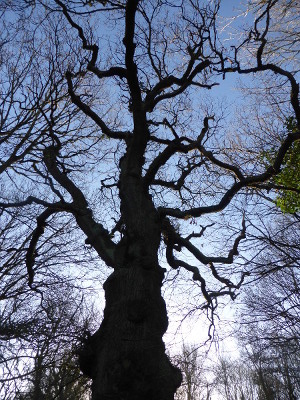
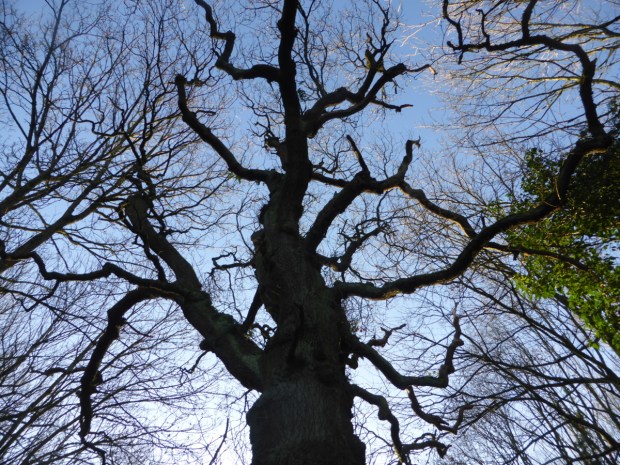
In The Book of Taliesin there is a prophetic poem titled ‘Daronwy’. Taliesin poses the question ‘Py pren a vo mwy; / No get daronwy?’ ‘What tree is greater / Than he, Daronwy?’

Dar is an alternative form of derw ‘oak’. Thus Daronwy is an oak tree. Pren ‘tree’ or ‘wood’ is also a figurative term for a warrior and its fluidity is the key to understanding Daronwy’s nature. In medieval Welsh literature warriors are often referred to as trees and even plants. In The Gododdin the combatants are called ‘trees of battle’ and ‘battle-leeks’. The army of Brân the Blessed is seen as a marching forest in ‘The Second Branch’ and Gwydion enchants trees to do battle against an army of ‘herbage and trees’ led by Brân  in ‘The Battle of the Trees’. Thus Daronwy is both tree and warrior.

In Triad 26 Daronwy is referred to as ‘one of the Three Great Oppressions of Mon’ along with Palug’s Cat and Edwin, king of Lloegr. This suggests he was located on Anglesey and may have been a tree who local people believed had the capacity to come to life and fight on notable occasions.

He perhaps gave his name to the township and stream Dronwy (formerly Daronwy) in North-East Anglesey. Other place-names derived from Daronwy include Daron in Llyn, Darowen near Machynlleth, and Darwen here in Lancashire. They may all once have had their own Daronwy stories.

II. Thundering Prophecies

Additionally, John Williams notes thaty daran is a ‘servile form’ of taran ‘thunder’. Thus ‘dar’ signifies both ‘oak’ and ‘thunder’. The thundering voice of derw ‘oak’ is mentioned in ‘The Battle of the Trees’: Derw buanwr: / racdaw crynei Nef a llawer.’ ‘Oak swift of shout: / Heaven and Earth trembled before him.’ This fits well with the image of Daronwy as a great oaken warrior.

Another word that derives from dar is darogan ‘prophecy’. This is significant because oaks are linked to thunder gods and their prophets across Western Europe. At Dodona the priestesses of Zeus prophesied by the sounds and movements of the leaves and branches of the sacred oaks. There were oaks on the Alban Mount where Jupiter was worshipped and at Praeneste where he was reverenced with his mother (who is elsewhere seen as his daughter) Fortuna whose oracle prophesied with oak rods. Donar’s Oak, sacred to Thor, in Hesse, was sadly cut down by Saint Boniface in the 8th century.

The term ‘Druid’ originates from derw and gwydd ‘knowledge’, suggesting that the Druids gained wisdom and prophetic insights from their relationships with oak trees. In ‘The Battle of the Trees we find the lines: ‘Derwydon, doethur, / daroganwch y Arthur!’ ‘Druids, wise men, / prophesy Arthur!’

Unfortunately there are no direct references to our Gallo-Brythonic thunder god, Taranis, having a sacred oak. However, in his Natural History (77-79), Pliny speaks of the Gaulish Druids sacrificing two white bulls in an oak grove. Bulls were sacred to Zeus and Jupiter and a white bull was sacrificed to the latter during the feriae in the Capitol. Thus it seems likely this sacrifice was to Taranis and that the Druids, like the prophets of Zeus and Jupiter, practiced dendromancy in oak groves. That they communed with Daronwy whose thundering voice was one with the thunder god’s.

III. The Oak Between Two Lakes

Taliesin goes on to say: ‘Yssit rin yssyd uwy – / gwawr gwyr Goronwy; / odit a’e gwypwy.’ ‘There is a secret which is greater – / the radiance of Goronwy’s men; / it is a rare man who knows it.’ Marged Haycock suggests the name Daronwy may mean the ‘oak tree of Goronwy’. The identity of Goronwy is a question of debate. Possible candidates are Goronwy, who hung Roger de Pulesdon during the Anglesey revolt in 1294, and Goronwy ab Ednyfed, who led king Llywelyn ap Grufudd’s troops to triumph against the Marcher Lords in 1263. I suspect Goronwy may be an older mythic figure.

Haycock says it’s possible the name derives from Gronw Befr. An oak is central to the story of the rivalry between Gronw and Lleu Llaw Gyfes in ‘The Fourth Branch’, yet it is far more intimately connected with Lleu than with Gronw. Gronw is the lover of Lleu’s wife, Blodeuedd. Together they plot to kill Lleu, who can only be killed with a spear crafted for a year every Sunday when people are at mass and ‘cannot be killed indoors nor out of doors… on horseback, nor on foot’. Blodeuedd tricks Lleu into enacting the only position in which his death is possible. Lleu stands with one foot on a billy-goat and the other on a bath tub with an arched roof over it and Gronw strikes with the spear.

The wounded Lleu departs in eagle form to an oak ‘between two lakes’ in ‘a valley’ (Llyn Nantlle Uchaf and Llyn Nantlle Isaf in Nantlle). This tree occupies a liminal position and possesses magical qualities: ‘Rain does not wet it, heat no longer melts it.’ Lleu’s wound turns rancid. As flesh and maggots fall from him they are eaten by a great sow. The sow leads Lleu’s uncle, the magician god, Gwydion, to him. Gwydion sings Lleu down from the oak with a trio of englyns and nurses him back to health.

IV. The Lightning Tree

In Lleu’s story we find two liminal images which may have their origin in pre-Christian traditions. The conditions of Lleu’s death distantly echo the story of the infant Zeus being dangled on a rope from a tree so he was was suspended between earth, sea, and water, thus invisible to his child-eating father, Cronus. It is also of interest that Jupiter Dolichenus, a thunder god worshipped throughout the Roman Empire between the 2nd and 3rd centuries, including here in Britain at Vindolanda, was depicted holding a lightning-rod, standing on a bull, and accompanied by an eagle. The strange, parodic, and slightly pathetic image of Lleu on his billy-goat and roofed bath tub may derive from these.

800px-Dolichenusvotive

Lleu’s ascent in eagle-form to the oak following his spear wound contains echoes of Odin’s sacrifice of himself to himself on Yggdrasil, the World Tree,where an eagle sits in the highest branches, to gain the knowledge of the runes. And the fate of Jesus, pierced by a spear on the holy rood – a wondrous and sentient tree. Lleu’s ritual death and rescue by Gwydion, who sings him down from the heights, to the middle, to the bottom of the oak, contains elements of shamanic initiation.

It also seems significant that Lleu’s ability to kill Gronw with a spear results from his initiatory experience. Lleu is cognate with the Irish Lugh who possesses a lightning-like spear. Oak is renowned for being a tree that attracts lightning and mistletoe was believed to be produced by lightning and thus to contain its magical qualities as a gift from the thunder god. For this reason the cutting of mistletoe from an oak, along with the slaughter of the two white bulls, was part of the Druid ritual shared by Pliny. It seems that Lleu won his lightning-spear and, perhaps, also the lightning-like inspiration of prophesy from the thunder god whilst in bird-form in Daronwy’s branches.

Lleu’s associations with the lightning tree suggest it was not connected with his darker rival, Gronw. It seems the identity and stories of Goronwy, who may be referred to by Taliesin in the lines, ‘now no-one visits me but Goronwy from the water-meadows of Edrywy’, have been lost in the mists of time along with the great secret of the radiance of his men. Perhaps this was the lightning-like battle-skills and prophetic inspiration gained by initiates of the mysteries of Daronwy?

IV. The Fruitful Wand

The following lines, which mention Mathonwy, who is referred to in ‘The Fourth Branch’, add strength to the argument that Daronwy is associated with Lleu’s epiphany:

Hutlath Vathonwy,
ygkoet pan tyfwy,
ffrwytheu rwy kymrwy
ar lan gwyllonwy.

Mathonwy’s magic wand,
when it grows in the wood,
promotes fruits/successes
on the bank of the Gwyllonwy.

Mathonwy is the father of Math, who is the uncle of Gwydion. Math uses his own magic wand to punish Gwydion and his brother, Gilfaethwy, for plotting the rape of his footholder. He turns them into boars, deer, and wolves, alternately male and female, who mate with each other and bear offspring.

Lleu is ‘born’ as a ‘small something’ dropped by Arianrhod after the sturdy yellow-haired boy Dylan when she steps over Math’s wand. He is raised by Gwydion who takes the role of foster-father.

The hutlath ‘wand’ or ‘staff’ is essential to Mathonwy and his descendants for the arts of magic and enchantment. As these lines appear in a poem dedicated to Daronwy it seems likely their wands were made of oak and channelled the lightning of the thunder god. Perhaps by this power Math and Gwydion brought Taliesin and Blodeuedd to life, respectively from the seven elements and the blossoms of oak, broom, and meadowsweet, and Gwydion enchanted the trees to battle against Brân’s army.

The image of the wand growing in a wood is a fascinating one that works on many levels. Here it regains its life as a tree, bearing fruit, both literally and metaphorically. Haycock notes that, in the Christian tradition, ‘Aaron’s rod (sometimes equated with the rod of Moses)… put forth buds, blossoms and ripe almonds… this miraculously flowering staff of Scripture was connected typologically with the incarnation of Christ, and its wood with both the Tree of Life and Christ’s Cross.’

V. The River of Madness

The location of the wand ‘on the bank of the Gwyllonwy’ is also significant. This river-name derives from gwyllt, which means ‘mad’, ‘wild’ and ‘spectre’. Throughout the Celtic tradition there are many instances of people becoming gwyllt or geilt in the Irish language. One of the most famous is Sweeney Geilt, who becomes geilt and takes bird-form after being cursed for murdering a psalmist:

His brain convulsed,
his mind split open…
His fingers stiffened,
his feet scuffled and flurried,
his heart was startled,
his senses were mesmerized,
his sight was bent,
the weapons fell from his hands
and he levitated in a frantic cumbersome motion
like a bird of the air.

It may be suggested that when Myrddin Wyllt becomes gwyllt after murdering his son and daughter at the Battle of Arferderydd he takes the form of a merlin before retreating to the forest of Celyddon. The experience of becoming gwyllt gives Myrddin his powers of poetry and prophecy.

Suffering trauma, becoming gwyllt, taking the form of a bird and taking to the trees are common motifs in Celtic literature. This is exactly what happens to Lleu. It may thus be suggested that the wand/oak is located ‘on the bank of the Gwyllonwy’ because this river represents the stream of gwyllon, of those who have become gwyllt, living and dead, who have received initiations in the trees.

V. Daronwy – The Brythonic World Tree?

The centrality of Daronwy, the prophetic oak, in the epiphany of Lleu suggests he may have been seen as the Brythonic World Tree. The image of the wounded Lleu in eagle-form receiving lightning-like inspiration from the thunder god in his upper branches whilst down beneath the great sow (who may be the goddess Ceridwen, who takes the guise of a black tailless sow on Nos Galan Gaeaf) devours the rotten flesh and wriggling maggots of his former being is a powerful one.

Perhaps it is because Daronwy was associated with initiatory rites and prophetic wisdom along with sacrifices to the thunder god that he was viewed as an oppression. I wonder whether such rituals were viewed as giving power to the oak, who could be invoked as a warrior for strength in battles, who might come to life with a marching forest of oaken warriors to the aid of his people at times of need?

Daronwy Wide

*With thanks to Greg Hill for passing on Marged Haycock’s translation of ‘Daronwy’, which is cited here.

SOURCES

A.O.H. Jarman (transl.), Aneirin – Gododdin, (Gomer Press, 1998)
Arthur Bernard Cook, ‘Zeus, Jupiter and the Oak’, The Classical Review, Vol.17, No.3, (1903)
Diego Chapinal Heras, ‘Between the Oak and the Doves: Changes in the Sanctuary of Dodona Over the Centuries’, Simple Twists of Faith, (2017)
James George Frazer, The Golden Bough, (Oxford World’s Classics, 2009)
John Williams, Gomer; or a Brief Analysis of the Language and Knowledge of the Ancient Cymry, (Hughes and Butler, 1854)
Marged Haycock (transl), Legendary Poems from the Book of Taliesin, (CMCS, 2007)
Marged Haycock (transl), Prophecies from the Book of Taliesin, (CMCS, 2013)
Rachel Bromwich (ed), The Triads of the Island of Britain, (University of Wales Press, 2014)
Seamus Heaney, Sweeney Astray, (Faber & Faber, 2001)
Sioned Davies (transl.), The Mabinogion, (Oxford University Press, 2007)
Will Parker, The Four Branches of the Mabinogi, (Bardic Press, 2005)

Caer Wydion

I go to the fortress of Lleu and Gwydion.’
The Dialogue of Taliesin and Ugnach

I.
Beneath
the mountain
there is a fighter jet

emblazoned with the name GWYDION.

On the passenger seat
there is a single
mushroom.

EAT ME it says.

I’m a sucker for a trick.

A one-way flight to Caer Wydion.

II.
I take one bite.

It’s enough –
the plane dismantles
and the bonds of my atoms break.

Whatever is left is hurtled through space
to a fortress in a woodland
where trees bow down
to only one.

III.
In a giant’s crown
Gwydion holds court
with the eagle-headed Lleu

and his three animal children –

Hyddwn, Hwchddwn, Bleiddwn,
fawn, piglet, snarling wolf-cub
polite in their bibs.

Gilfaethwy sits beside him –
brother and bride and groom
with sow’s ears and a snout.

Gwydion wears polished silver antlers
and a wolf-skin coat studded
with stars on the inside.

He throws down his wand.

At the look on my face his courtiers
laugh until their sides split
and their insides

fall out and roll about the floor
like jellies still trembling
with laughter.

Of course I can’t help but step over
the wand of the enchanter
then watch helpless

as my insides fall out –
an hysterical woman clutching
her wandering womb.

IV.
Two men with pencils
in the pockets of their lab coats
and long silky ass’s ears

take me down to the basement

where homunculi with eyes
in their foreheads are singing
eerie prophecies in glass jars:

a dozen miniature Taliesins
with tiny imperfections like
missing ears, fingers, toes.

V.
Along an endless corridor
are countless doors opening
into rooms where hybrid plants
turn toward fluorescent lights
to the pulse of a water pump.

“Gwydion will never create
the perfect wife for Lleu.”

A feather light voice in my ear
then talons grip my shoulders

and bear me back to my home.

Fly Agaric, Coed Felinrhyd

Gwyn’s Hunt

Within modern Paganism Gwyn ap Nudd is generally understood to be a leader of ‘the Wild Hunt’. Before Jacob Grimm developed the term Wilde Jagd ‘Wild Hunt’ and applied it to various otherworldly hunts across Europe in his Deutsch Mythologie (1835), they were known by individual names, often referring to their leaders, such as ‘Woden’s Hunt’, ‘Household of Harlequin’, and ‘Herla’s Assembly’. This essay will focus on the Brythonic tradition of ‘Gwyn’s Hunt’.

The earliest literary reference to Gwyn as a hunter comes from Culhwch and Olwen (1090) where it is stated, ‘Twrch Trwyth will not be hunted until Gwyn son of Nudd is found.’ This suggests Gwyn was the leader of the hunt for Twrch Trwyth, ‘King of Boars’, prior to Arthur. According to the text, which was penned by Christian scribes, Twrch Trwyth was a king changed into a swine by God ‘for his sins’. This overlay conceals a pagan tradition wherein the ‘boar’ was a human shapeshifter. Gwyn’s hunt was for a man: a shapeshifting human soul.

The following lines, ‘God has put the fury of the devils of Annwn in him, lest the world be destroyed. He will not be spared from there’ form another Christian overlay obscuring Gwyn’s role as a protector and ruler of Annwn containing furious spirits including the fay and the dead within his realm and person. The comb, razor, and shears Twrch Trwyth mysteriously carries between his ears may have been grave goods, suggesting he is a restless soul Gwyn hunts down into the ocean (symbolic of Annwn ‘the Deep’) on a cyclical basis to lay to rest.

In later folklore Gwyn is depicted hunting for souls with the Cwn Annwn, ‘Hounds of the Otherworld’, who are also known as Cwn Wybyr, ‘Hounds of the Sky’, and Cwn Cyrff, ‘Corpse Dogs’. These include Dormach, Gwyn’s fair red-nosed hunting dog. To hear or see the Cwn Annwn is a portent of death. This belief may be rooted in earlier traditions where wolves and dogs along with carrion birds (Gwyn is also associated with ravens who ‘croak over blood’) devoured the corpses of the dead before Gwyn gathered their souls.

A fascinating legend surrounds the minstrel Ned Pugh or Iolo ap Huw who disappeared into the cave of Tag y Clegyr playing ‘Ffarwel Ned Pugh’, ‘Ned Pugh’s Farewell’:

‘To leave my dear girl, my country, and friends,
and roam o’er the ocean, where toil never ends;
to mount the high yards, when the whistle shall sound,
Amidst the wild winds as they bluster around!’

Exchanging ‘his fiddle for a bugle’ the minstrel became Gwyn’s huntsman-in-chief and can be found ‘cheering Cwn Annwn over Cader Idris’ every Nos Galan Gaeaf.

SAMSUNG CAMERA PICTURES

There are numerous instances where Gwyn (by this name or as a spectral or demon huntsman or fairy king), sometimes with his hunt and sometimes alone, also carries off the souls of the living. On Nos Galan Gaeaf, Gwyn wins back his beloved, Creiddylad, from Gwythyr and takes her to Annwn. Creiddylad’s descent with Gwyn to the underworld explains the coming of winter. Later folktales featuring abductions may have some basis in this old seasonal myth.

Here, on the borders of Lancashire and Yorkshire, there is a story featuring Sybil, the Lady of Bearnshaw Tower, who spends an unseemly amount of time on the hills and moors chasing wild swans whose hound-like calls remind her of ‘wild hunters and the spectral horseman’. She is swept from the dizzy heights of Eagle Crag overlooking Cliviger Gorge by a ‘demon’:

‘Immediately she felt as though she were sweeping through the trackless air… she thought the whole world lay at her feet, and the kingdoms of the earth moved on like a mighty pageant. Then did the vision change. Objects began to waver and grow dim, as if passing through a mist; and she found herself again upon that lonely crag, and her conductor at her side.’

Gwyn ap Nudd, ‘White son of Mist’, goes ‘between sky and air’ and moves ar wybir ‘through the clouds’. I believe Gwyn is ‘the spectral horseman’ and Sybil’s demonic ‘conductor’.

Sybil’s ability to shapeshift may have been learnt from Gwyn: a god of transformation. In deer-form she is hunted down by a human huntsman called William Towneley and forced to marry him. Her failed attempt to escape in cat-form leads to her death and burial at Eagle’s Crag where she was captured; her ghost and William’s can be seen there every Nos Galan Gaeaf.

eagle-crag-drawn-by-g-pickering-and-engraved-by-edward-finden-copy

The Cliviger area is also haunted by Gabriel Ratchets, corpse hounds who may be an Anglicised variant of the Cwn Annwn. In his poem, ‘Gabriel Ratchets’, which is based on Sybil’s story, Philip Hamerton opens: ‘Wild huntsmen? ‘Twas a flight of swans / But how invisibly they flew.’

Gwyn and his hunt are associated with soul flight and ecstasis. Ecstatic experiences with otherworldly beings were frowned upon by the Christian church and twisted into stories of abduction by a demon huntsman or fairy king who was confronted by knights and heroes who won those ‘poor souls’ back (whether they wanted to return or not…).

When I accepted Gwyn’s challenge to ride with him to the Otherworld and offered my soul into his care he showed me parts of Lancashire where people lived in lake villages and walked on wooden trackways then glaciers creeping across the landscape with blizzard winds.

This has led me to believe Gwyn was worshiped as a god of hunting and the transitions of the souls of the dead and living between worlds by this land’s earliest inhabitants after the Ice Age. Yuri Leitch identifies Gwyn with the constellation of Orion and Dormach with Canis Major (Sirius, the dog star, is Dormach’s nose). Gwyn is our ancient British Hunter in the Skies who rises from Annwn on Nos Galan Gaeaf and presides over the dark months of winter.

Nos Galan Gaeaf is an ysbrydnos ‘spirit night’ when Gwyn’s Hunt rides and the borders between thisworld and Annwn, life and death, and the laws that govern time and space break down. It is a time of migrating swans and geese and transitions of souls. It is a time of deep magic.

I’ll end with a passage from Sian Hayton’s ‘The Story of Kigva’ because, for me, it evokes so beautifully the experience of flying with Gwyn:

‘She felt a hand on her arm… steady, comforting her in her despair. The strongest one of all was there, as he had been in the forest and he promised, silently, that he would stay with her for the rest of her vigil. With tears she thanked him and felt herself gathered up in his arms. Together, from then on, they wandered the universe. He showed her things which only he knew. With him she touched the cold, hard moon and walked on the black rind of the sky. She found the stars felt like the taste of blaeberries and the north wind was truly a great river whose source was the mountains of the sun. He gave her jewelled collars and crowns and broke open an oak-tree so that she could feast on the honey. There was no one equal to him.’

*This article was first published on Dun Brython HERE.

SOURCES

Jacob Grimm, Deutsch Mythologie, https://archive.org/details/deutschemytholo07grimgoog
J. Gwengobryn Evans, The Black Book of Carmarthen, (Lightning Source,1901)
John Rhys, Celtic Folklore: Welsh and Manx (Oxford, 1901)
John Roby, Traditions of Lancashire I, (1872) http://www.gutenberg.org/files/15271/15271-h/15271-h.htm
Philip Hamerton, The Isle of Loch Awe and Other Poems of My Youth, (Forgotten Books, 2017)
Sian Hayton, ‘The Story of Kigva’, Within the Hollow Hills, (Lindisfarne Books, 1995)
Sioned Davies (transl.), The Mabinogion, (Oxford University Press, 2007)
T. Gwynn Jones, Welsh Folklore and Folk-Custom, (Redwood Burn, 1979)

A Grave for Pryderi

In Aber Gwenoli
Lies the grave of Pryderi
The Stanzas of the Graves

He was buried in Maentwrog, above Y Felenrhyd, and his grave is there
The Fourth Branch

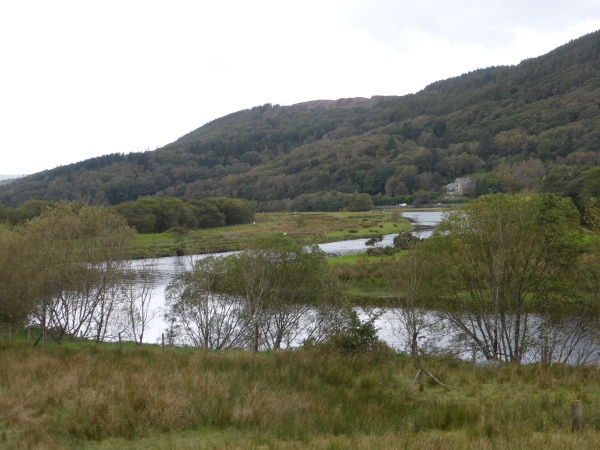
In autumn last year I visited Aber Gwenoli in Coed Felinrhyd, the village of Maentrwog, and the Coedydd Maentwrog. These locations are all part of Snowdonia’s Atlantic oak woodland or temperate rain forest and are associated with the death of Pryderi, ‘Care’ or ‘Worry’, the son of Pwyll and Rhiannon.

Dyffryn Maentwrog Med

Pryderi is the only character who appears in all four branches of The Mabinogion. This has led scholars to speculate he may be the central figure. If this is the case he is a hapless kind of ‘hero’. Although he enjoys success in battle, he is constantly in trouble, sometimes on account of forces beyond his control, at others because of his impetuousness and lack of discernment. He is particularly unskilled at dealing with magic and with the uncanny forces of Annwn and this proves fatal.

On the night of his birth Pryderi mysteriously disappears when his mother and her women fall into an enchanted sleep. He reappears just as mysteriously when Teyrnon cuts off the enormous claw of a monster to save his foal. It’s clear he was stolen by the forces of Annwn, but the reason isn’t stated.

After Pwyll dies, Pryderi becomes the ruler of Dyfed and manages to conquer the three cantrefs of Ystrad Tywi and the four cantrefs of Ceredigion, incorporating them into the seven cantrefs of Seisllwch.

He is named as of one of the seven survivors of the terrible battle between the British and Irish in Ireland where the Irish dead are thrown into the Cauldron of Regeneration and reborn. Whether he survived through his skills in battle, sheer luck, or by cowering in a corner is not revealed.

Pryderi falls victim to Annuvian magic again when he pursues a white boar into a fortress and, enraptured by a golden bowl, gets stuck to it. His mother follows and suffers the same fate. With a ‘tumultous noise’ in a ‘blanket of mist’ they are both whisked away in the enchanted fort. It takes all the wit and persuasion of Manawydan to win them back from the otherwordly enchanter, Llwyd Cil Coed.

It is later revealed Pryderi is the owner of a herd of pigs whose ‘flesh is better than beef’. They were were sent to him by Arawn, a King of Annwn. This gift has its basis in Pwyll’s special relationship with Arawn. Pwyll traded places and identities with Arawn, literally becoming the Annuvian King and ruling in Annwn for a year. He won Arawn’s friendship by defeating his rival, Hafgan, and not sleeping with his wife. Pwyll received the title Pwyll Pen Annwn and they began to exchange horses, hunting dogs, hawks, and other treasures between their kingdoms.

It is possible to conjecture that this relationship has a deeper meaning. If Pwyll ‘is’ Pen ‘Head’ of Annwn, his and Arawn’s roles and identities remain fluid and interchangeable. Pryderi is the son of both Pwyll and Arawn, and thus a semi-Annuvian figure. This might explain why the forces of Annwn snatched him away the night of his birth – perhaps to initiate him into the Otherworld and meet his other father*. It is of interest he and his mother, Rhiannon, who is herself a divinity who originates from Annwn, are captured by the enchanted castle whilst Manawydan and Cigfa remain free.

In Triad 26. Pryderi appears as one of ‘Three Powerful Swineherds of the Island of Britain’. In Celtic mythology swineherds are often powerful magicians. The triad tells us Pryderi tends seven swine brought by ‘Pwyll Lord of Annwn’ and given to his foster father, Pendaran Dyfed. He keeps them in Glyn Cuch (the place Pwyll met Arawn). He is called a ‘powerful swineherd’ because no-one can ‘deceive or force him’. This portrait of Pryderi is much at odds with his gullibility in The Mabinogion.

The magician-god, Gwydion, nephew of Math, the ruler of Gwynedd, tricks Pryderi into giving him the pigs. He does this by disguising himself and eleven of his men as poets and conjuring twelve stallions with golden saddles and bridles and twelve hounds from toadstools. Pryderi agrees to exchange them for the pigs.

Fly Agaric, Coed Felinrhyd

A day later, when the enchantment wears off and Pryderi finds only toadstools in his stalls and kennels (a scene sadly left to the imagination of the reader), he raises an army and pursues Gwydion north.

Gwydion’s flight with the Annuvian pigs explains the place names Mochnant, Mochdref, and Creuwrion (moch means ‘pig’ and creu means ‘pen’). Gwydion waits for Pryderi to attack in Arfon, ‘the strongest part of Gwynedd’. A ‘great massacre’ takes place. Gwydion’s army retreats to Nant Call and there is, again, ‘immeasurable slaughter’. At Dol Benmaen Pryderi makes peace by giving twenty-four hostages.

The two armies travel together in peace to Y Traeth Mawr. However, at Y Felenrhyd, ‘The Yellow Ford’, a bank of sand across the river Dwyryd, battle breaks out again because the foot soldiers cannot resist shooting each other.

Y Felinrhyd

To prevent further slaughter Pryderi sends a message requesting Gwydion engage him instead in single combat. Gwydion agrees. ‘Because of strength and valour, and magic and enchantment, Gwydion triumphs and Pryderi is killed.’ Pryderi shows courage in taking on the trickster-god. Yet, surprisingly, his prowess in combat is not described. If he is the central character his swift end is a disappointing climax.

After being stolen away to Annwn on two occasions Pryderi returns there for his third and final sojourn.

We are told ‘he was buried in Maentwrog, above Felenrhyd, and his grave is there.’ A possible place of burial might be the village church where there is a marker stone. However, the church is dedicated to Saint Twrog, who reputedly threw the boulder from the Moelwyn mountains and killed a she-devil. In other accounts a giant threw the stone and destroyed a pagan altar. Aside from the line in The Mabinogion there are no folk memories connecting Pryderi with Maentwrog, ‘Twrog’s Stone’.

Maentwrog

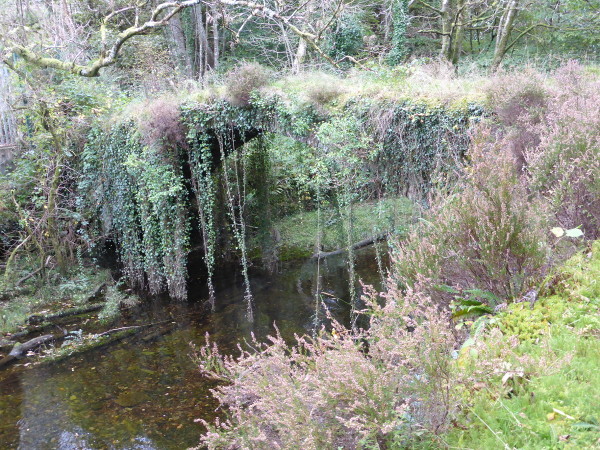
An alternative location for Pryderi’s burial place appears in ‘The Stanzas of the Graves’ in The Black Book of Carmarthen. ‘In Aber Gwenoli / Lies the grave of Pryderi’. Aber Gwenoli is a stream that runs down from Llyn Tecwyn into the river Prysor, which then joins the Dwyryd at Y Felenrhyd. With help from Greg Hill and another friend I managed to locate it just below Ivy Bridge.

Ivy Bridge

Stream near Pryderi's Grave

Afterwards we completed the circular walk of Coed Felinrhyd, taking in the autumnal colours, the multitude of lichens, mosses and liverworts supported by the rainforest climate.

Lichens

Just before we reached the end we found a ‘story telling chair’, placed there as if it was just for us, and took it in turns to read Pryderi’s story from ‘The Fourth Branch’.

Story Telling Chair

After departing I was not sure of the meaning of this visit. I now have an inkling of understanding. If Pryderi is the son of both Pwyll and Arawn and of Rhiannon he is an Annuvian figure who was killed by Gwydion. Gwydion’s theft of Pryderi’s pigs and slaughter of Pryderi are not the only instances of him stirring up trouble with the Otherworld.

Gwydion also stole a dog, lapwing, and roebuck from Annwn, inciting Arawn, ‘the Wealthy Battle Dispenser’ to lead an army against him. This included enchanted plants, trees, monsters, and giants. Arawn (presumably with the Cauldron of Regeneration) even brought Brân the blessed back from the dead!

Gwydion in turn enchanted 34 different trees and shrubs against Arawn. With help from his nephew, Lleu, ‘radiant his name, strong his hand, / brilliantly did he direct a host’ and the warrior-bard Taliesin, Gwydion’s men and the battling trees defeated the forces of Annwn.

For some reason I’m being drawn by the deities of Annwn to look at the damage Gwydion’s trickery has caused. Whether my patron god, Gwyn ap Nudd, is ‘the same’ deity as Arawn, Llwyd ‘Grey’ and Brenin Grey ‘The Grey King’, who all haunt the mist-soaked oak forests of Snowdonia, is not for me to determine. All I know is I feel ‘his’ influence drawing me back to these stories of the British Foretime and to North Wales where land, language, myth, and the misty breath of the gods are one.

Dyffryn Maentwrog II

*For a detailed discussion of joint fatherhood in Celtic mythology see Will Parker’s The Four Branches of the Mabinogi p167 – 170.

SOURCES

Lorna Smithers and Greg Hill, ‘Y Felenrhyd’, Caer Feddwyd, (2017)
Meirion Pennar (transl.), The Black Book of Carmarthen, (Llanerch Enterprises, 1989)
Rachel Bromwich (ed), The Triads of the Island of Britain, (University of Wales Press, 2014)
Rachel Dixon, ‘Walking in a Welsh rainforest‘, The Guardian, (2015)
Remy Dean, ‘Welsh Folklore: Significance of the Maentwrog Standing Stone’, Folklore Thursday, (2016)
Sioned Davies (transl.), The Mabinogion, (Oxford University Press, 2007)
Will Parker, The Four Branches of the Mabinogi, (Bardic Press, 2005)
The magical swineherds of Irish mythology’, Atlantic Religion, (2015)

Caer Nefenhyr

I was in the Fort of Nefenhyr:
herbage and trees were attacking.
Poets were singing;
soldiers were attacking.’
The Battle of the Trees

The trees are still. Frozen. Still stained with blood thigh-deep. It trickles down trunks, drips from boughs. Mighty Oak is soaked in it and whomping Willow and Alder, who marched at the fore as Brân clashed his spear on his shield and Lleu, strong-handed, radiant, rode in the branches like an Eagle.

Blood is dripping from heart-shaped Ivy. Honeysuckle cannot shake off her tendrils. Clover is drowned. Bramble is, of course, in his element, and Blackthorn is bloodily pretty. Birch regrets putting on his armour, now speckled white and red like a hound, he is kneeling like a sorrowful knight.

Raspberry, who did not put on his defensive palisade, lies broken and bereft of his blood-red fruits. Vine the destroyer is destroyed, Pear the oppressor oppressed, Bracken the pillager pillaged. Heather, no longer purple but red, regrets being enchanted into the army. Cherry’s commotion is silenced.

Pine, in the place of honour, downed his needles and wept. Dogwood, bull of battle, hangs his head. In the woodland beyond Caer Nefenhyr it rains nothing but blood and the cry of a lapwing ever circles.

Souls of soldiers and poets flit between the trees like birds fighting over blood-red berries like harpies. They have gazes like the fragile doe who wanders leaving bloody footprints between worlds.

A sagging snakeskin is strung up, stretched out in the trees like an afterbirth, emptied of a hundred souls.

Amidst the alders is a bloody pool. In it float the bones of a toad and his hundred claws. In the centre is the green and glowing toadstone from his head which, like a crown, symbolised his majesty.

Beyond the woodland, on a hill, like a cairn or totem, are piled the hundred heads of a great-scaled beast. The roof of his tongue and his napes are empty of battalions yet cries still echo from the hollows.

Atop the heads, like a flag of victory, is Gwydion’s staff with Eagle feathers fluttering in the wind.

In the Woodlands Beyond Caer Nefenhyr it Rains Nothing but Blood

‘In the woodland beyond Caer Nefenhyr it rains nothing but blood’


The Ghost of Myrddin Wyllt

Mountain ghosts come to me
here in Aber Caraf
A Fugitive Poem of Myrddin in his Grave

He haunts me. He who speaks from his grave at Aber Caraf with other wyllon mynydd, ‘mountain ghosts’ – Myrddin Wyllt.

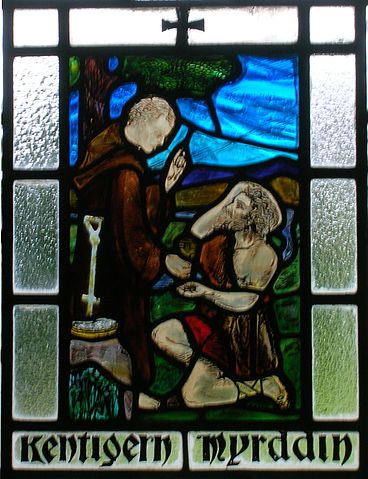
He entered my life when he broke from a scene we both despise. In Stobo Kirk, in a stained glass window, he kneels before Kentigern, begging for the sacrament, as The Life of St Kentigern claims.

368px-Merlin_and_St_Kentigern,_Stobo_Kirk

“This isn’t true!” the gnosis struck me like shattering glass as Myrddin leapt free in an explosion of splinters; ethereal blue, red, green. The bishop fell in pieces with his chalice and crozier. The light swept in. Not just sunlight but that otherlight, the unendurable brightness that Myrddin gazed upon after the Battle of Arfderydd, which made him gwyllt, ‘wild’, ‘mad’. The light of truth. The ‘White/Clear Light’ of Vindonnus, Vindos, Gwyn ap Nudd, Lord of Annwn.

It illuminated Myrddin in all his naked glory, leafy-haired, bony-limbed, spry and supple as a sapling even in his old age. It glinted in the scintillae of his pupils, declaring him wildman, madman, prophet, awenydd: one who speaks the Awen from the tangled heart of the forest, from the wind-swept mountains where ghosts scream, from the deep wells of Annwn.

The stories of this wild Myrddin have been smothered beneath the fusty robes of Merlin. The popular wizard, who is frequently depicted as an advisor to King Arthur in film and television, was created by Geoffrey of Monmouth in The History of the Kings of Britain (1136) and The Life of Merlin (1150) from the lives of two very different men.

Merlin Ambrosius was based on the Romano-British war leader Ambrosius Aurelianus. He acted as advisor to Vortigern and helped Uther Pendragon to father Arthur by magically disguising him as Gorlois, the husband of Igraine, so he could sleep with her.

Merlin Caledonensis was based on Myrddin Wyllt: a northern British warrior who became gwyllt after the Battle of Arfderydd in 573 and retreated to Celyddon (the Caledonian forest) where he learnt the arts of poetry and prophesy and used them to warn against future wars. The two Merlins became conflated.

In Robert de Boron’s Merlin (1190-1200), Merlin became Uther Pendragon’s advisor and responsible for Arthur’s fosterage, his pulling the sword from the stone, and building the Round Table. The ‘Mage Merlin’ appears as Arthur’s advisor and as a guide to the grail quest in Thomas Malory’s Le Morte D’Arthur (1485). His later depictions draw upon these associations.

The conflation of the two Merlins and the downplaying of Myrddin Wyllt’s stories is deeply problematic. Firstly Myrddin lived after Arthur making their association impossible. Secondly Myrddin would never have supported the warmongering of Arthur and his ‘knights’.

Yet he has been subsumed within the Arthurian tradition and its vile strain of Christian militarism, which brought about the slaying of the dragons, giants, and witches of ancient Britain, then the Anglo-Saxons, then ‘the infidels’ who fell in the Crusades, leading to our War on Terror.

He rages against his identification with Merlin: a political advisor to the warlords of Britain who supports going to war over chemical weapons that don’t exist and approves arms sales to countries using our weapons in attacks that breach international humanitarian law.

He calls to me, a fellow awenydd, to shatter the illusion of his complicity in Arthurian imperialism with the otherlight of Annwn from our god, Gwyn ap Nudd. Here I share his story.

Myrddin grew up amongst the warband of Gwenddolau, the last Pagan warlord of the Old North. He was fierce in those days, blood thirsty, callous, with a love of gold and strong mead. Warring in nothing but the golden torque gifted him by Gwenddolau, his battle-madness was legendary. He piled up corpses for Gwenddolau’s two sea-eagles to strip their flesh.

View from Liddel Strength

Caer Gwenddolau (present-day Liddel Strength)

A great change came over Myrddin after the Battle of Arfderydd. This was fought between the armies of Gwenddolau and Rhydderch, who was married to Gwenddydd, Myrddin’s twin sister. Rhydderch had allied with a number of Gwenddolau’s kinsmen.

Gwenddolau was slaughtered. Aggrieved by the death of his lord Myrddin was consumed by such a battle rage that he killed his niece and nephew, the son and daughter of Gwenddydd and Rhydderch, who were fighting on Rhydderch’s side.

After the battle Myrddin was near-blinded by an unendurable brightness illuminating the carnage. By it he recognised the pale faces of his sister’s offspring who he had hacked apart. Martial battalions filled the sky. To his horror he realised they were the victims he had slaughtered gathered in the form of a cold and angry god staring at him with countless dead eyes.

One of those spirits swept down and tore Myrddin out of himself. With a howl of terror and pain that became a whimper and squeak he leapt and fluttered up like a bird-puppet on a string. He was tossed on the winds of Annwn, on a merlin’s wings, to the forest of Celyddon where he shivered in the branches of an apple tree.

That image of Gwyn ap Nudd containing all the dead who he had killed was indelibly impressed on his mind like an irremovable afterimage from staring foolishly at the sun.

Myrddin does not remember the days when he flitted from tree to tree, a lost soul, birdlike, unable to feel or think or see. He remembers some of his slow return to himself, to chill recumbent flesh, relearning the contours of his body and its need to eat and drink, sights, sounds.

Blog 6. Coille Coire Chuilc

A last remnant of Celyddon at Coille Coire Chuilc

The birds of the forest guided him to tasty berries, the squirrels to hazelnuts, and a happy little piglet to roots and grubs and the most exquisite truffles. When the bleak northern winter brought snow to his hips and icicles to his hair a white-haired wolf taught him the secrets of endurance.

Words came last. Stuttering, stammering, then in a sudden stream. With them the wells of the past opened. Every memory flooded back to him and he poured them out to his apple tree and little pig in a poetry that was only stemmed when each wound had bled, was cauterised, could heal.

Most terrible were his outpourings of guilt and desire for death; his attempts to drown and leaps from trees. Gwyn ap Nudd would not take him. Instead he showed him black holes in the fabric of reality from which the otherlight of Annwn streamed in illuminating future battles.

Myrddin knew then that he must give his suffering a purpose by using his prophetic abilities to warn against those devastating wars. Knowing the influence of Kentigern he took himself to the stone above Molendinar Burn, where the bishop spoke his sermons, to share his prophecies.

Kentigern did not listen. Preoccupied with teaching the word of the one true God he had little time for the words of a wildman naked as a new born rabbit and rambunctious as a rutting stag. Yet the truth of Myrddin’s words pierced some of Kentigern’s followers like antlers. The otherlight in his pine-green eyes terrified and enticed them and some began to believe him.

When Myrddin came to Kentigern to prophesy his death the bishop did not think he could die thrice: by being stoned, pierced by a stake, and drowning. He thought the impossibility of this prediction coming true would put an end to his peoples’ belief in the madman’s prophecies.

Myrddin died as predicted. Kentigern constructed the story of him begging for the sacrament to prove his power over him and his uncanny prophecies, which he claimed were no match for the word of God.

Afterward Myrddin haunted Kentigern with the furore of a soul unable to live out its entelechy because more powerful forces have got in its way.

The poetry of a lonely voice was not enough to stop the rise of Christian militarism seeded by Arthur which dominates Britain to this day. Yet Myrddin opened in many people the portals through which the otherlight comes in, illuminating the horrors Merlin’s illusions cannot conceal.

Myrddin walks amongst us opening doors and haunting us with the countless eyes of the dead until we cannot bear to be complicit with the world of Arthur and the wizard Merlin anymore.

Breaking every window, every text, every screen, he tears us out of ourselves and takes us back to the forest.

The ghost of Myrddin Wyllt sets us free.

*First published in Pagan Dawn, 204, August 2017

SOURCES

Geoffrey of Monmouth, The History of the Kings of Britain, (Penguin Classic, 1973)
Geoffrey of Monmouth, The Life of Merlin, (Forgotten Books, 2008)
Meirion Pennar (transl.), The Black Book of Carmarthen, (Llanerch Enterprises, 1989)
Neil Thomas, ‘The Celtic Wild Man Tradition and Geoffrey of Monmouth’s Vita Merlini: Madness or Contemptus Mundi?’, Arthuriana, Vol. 10, No. 1 (Spring 2000)
Nikolai Tolstoy, The Quest for Merlin, (Sceptre, 1985)
Robert de Boron, Merlin and the Grail: Joseph of Arimathea, Merlin, Perceval (DS Brewer, 2008)
Thomas Malory, Le Morte D’Arthur, (Cassel, 2003)
Tim Clarkson, Scotland’s Merlin, (Berlinn, 2016)
William F. Skene, The Four Ancient Books of Wales, (Forgotten Books 2007)