They Died With Hazel – Sacrifices to Nodens in the Water Country?

The wetlands of the old counties of Lancashire and Cheshire which were inhabited by the Setantii tribe ‘The Dwellers in the Water Country’ are well known for their bog burials; Lindow Man and Woman, Worsley Man, severed heads from Pilling Moss, Briarfield, Red Moss, Ashton Moss, Birkdale.

The archaeological evidence suggests that Lindow Man and Worsley Man were human sacrifices. Lindow Man (also known as Lindow II) was strangled, hit on the head, and his throat was cut before he was cast into the peat bog. Worsley Man was garotted and his skull fractured before his beheading. These ‘overkill’ injuries are suggestive of ritual killing rather than death in battle or murder.
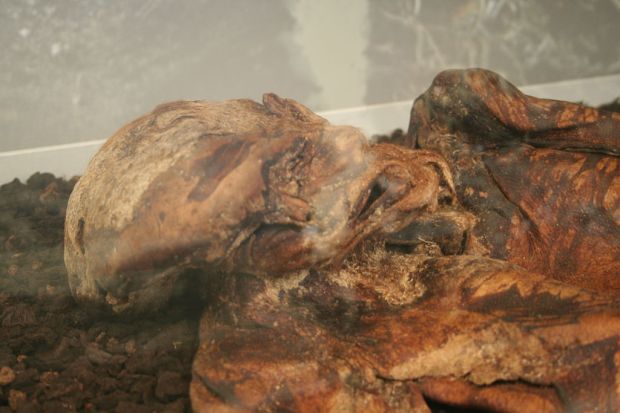
This is supported by the fact many bog burials from Britain and Europe ate special last meals. The last meal of Lindow Man was a griddle cake baked from finely ground wheat and barley. Lindow III, another man whose remains were found nearby, ate a meal of wheat and rye with hazelnuts. Old Croghan man from Ireland, and Grauballe Man and Tollund Man from Denmark also ate similar meals.

The head from Briarfield was ‘deposited in a defleshed state without the mandible’ ‘with abundant remains of hazel’. Further north, at Seascale Moss in Cumbria, a body was buried in the bog with a hazel walking stick. Miranda Aldhouse Green notes that bog bodies from Gallagh in Ireland and Windeby in Germany wore hazel collars and another from Undelev in Denmark was buried with three hazel rods.

She connects them with a lead defixio of ‘late Roman date’ ‘from the river Ouse near the Hockwold Roman temple’ in Suffolk: ‘Whoever… whether male or female slave, whether freedman or freedwoman… has committed theft of an iron pan, he is to be sacrificed to the god Neptune with hazel’.

The Romans equated Neptune with our ancient British water-god Nodens at Vindolanda on Hadrian’s Wall where an inscription reads ‘DEO NO/NEPTU’. At his Romano-British temple at Lydney, Nodens is depicted on a mural crown driving a chariot pulled by four water-horses accompanied by winged wind-spirits and centaurs with fish-tails and a fish-tailed fisherman.

Nodens gifted pilgrims with healing dreams but was also called upon to remove health. A curse tablet reads: ‘For the god Nodens. Silvianus has lost a ring and has donated one-half [its worth] to Nodens. Among those named Senicianus permit no good-health until it is returned to the temple of Nodens.’

It thus seems possible the people who ingested hazel prior to their deaths or were buried with it were sacrifices to Nodens who was equated with Neptune due to his watery qualities by the Romans.

***

The associations between Nodens and hazel have deep mythic roots. In Ireland Nodens was known as Nuada Airgetlám ‘Silver Hand’ and Nechtan (from the Old Irish necht ‘clean, pure, white’). Nechtan was the keeper of the Tobar Segais ‘Well of Wisdom’. Around it stood nine hazel trees which dropped their hazelnuts, containing imbas ‘inspiration’, into the water. They were eaten by salmon and this special poetic wisdom, known as awen in the Welsh myths, was infused into their flesh.

Only Nechtan and his three cup-bearers: Flesc, Lam, and Luam, were allowed to visit the well. Of those who transgressed their eyes would explode (!) – a possible metaphor for the effects of poetic vision.

When Nechtan’s wife, Boann, disobeyed this command the well overflowed and became the river Boyne. One of its kennings is ‘the forearm of the wife of Nuadhu’ and it was known in the early 2nd century CE as Buvinda (from early Irish *Bou-vinda ‘the white lady with bovine attributes’).

When Finn ‘White’, a descendant of Nuadha, cooked the Salmon of Wisdom for his master, Finnegeas, he burnt his thumb, put it in his mouth, and accidentally imbibed his eye-bursting imbas.

I believe it is likely a similar mythos surrounded Nodens here in Britain. On his mural crown a fisherman is catching a large fish and, on a mosaic on his temple floor at Lydney, two sea monsters are surrounded by salmon. Additionally, in medieval Welsh mythology, Arthur and his men ride up the river Severn, past the Temple of Nodens, on the back of the Salmon of Llyn Llyw, to rescue Mabon.

In the dindsenchas the river flowing from Segais has many names. In Ireland it is not only known as the Boyne, but the Trethnach Tond ‘Ocean Wave’ and Sruth Findchoill ‘Stream of White Hazel’. Abroad it becomes Lunnand in Scotland, the Severn in England, then the Tiber, Jordan, Euphrates and Tigris.

At Lydney we also find iconography depicting Nodens’ wife and our British Boann: a stone statuette, thirty inches in height, left leg crossed over right, holding a cornucopia. Pins were offered to her by women seeking aid with childbirth. Unfortunately we do not know her name but the early Irish Bou-Vinda may relate to Vindos/Gwyn ap Nudd, the son she bore Nodens/Nudd. Gwyn’s name not only means ‘White’, but he is referred to as a ‘bull of battle’ in ‘The Conversation of Gwyn ap Nudd and Gwyddno Garanhir’, suggesting he inherited her bovine attributes.

As Vindonnus, at a spring in Gaul, he was offered bronze plaques depicting eyes. It has been suggested they were for aid curing eye ailments but they may also have been connected with poetic vision.

In medieval Welsh mythology, Gwyn, as Pen Annwn ‘Head of the Otherworld’, is the guardian of a cauldron that is warmed by the breath of nine maidens and will not brew the food of a coward, suggesting it is associated with initiation into the mysteries of the awen tasted from its bubbling waters.

It seems Gwyn, who like Finn, has tasted the wisdom of the salmon from the hazelnuts from the nine hazel trees, and received his awen, later adopts his father’s role as a wisdom-keeper.

***

How, then, does this ancient Celtic mythos appear in and relate to the Water Country? On Cockerham Moss two Romano-British silver statuettes dedicated to Nodens as Mars-Nodontis were found. This suggests that a temple lay nearby. Cockersand Abbey, the closest sacred site, is dedicated to Mary of the Marsh, a Christian overlay on an earlier water-goddess – the wife of Nodens. I know her as Anrhuna which means ‘Very Great’ and is probably only one of her names.

The church on Castle Hill, the pen which gives its name to Penwortham (earlier Peneverdant ‘the Green Hill on the Water’ as it stood on Penwortham Marsh), is dedicated to St Mary the Virgin, as was the holy well at the hill’s foot. The large number of Marian dedications in the marshy areas of Penwortham and Preston with their sacred springs hint at the underlying presence of this water-goddess.

The legend of Penwortham Fairy Funeral, set on Castle Hill, with its fairy leader ringing a passing bell and singing a mournful chant as he leads a procession of little black-clad men in red caps, bearing the fairy-double of an unfortunate young man to his grave suggests the presence of Gwyn.

Past the pen, sacred to Anrhuna, Nodens, and Vindos/Gwyn/Pen Annwn, runs the river Ribble. From Ptolemy’s Geography (2AD)we know Belisama is the goddess of the Ribble. She is the sister and/or consort of Bel, who is later known as Beli Mawr, father of Nudd/Lludd. The Ribble is rich in salmon and Maponos/Mabon and his mother Matrona/Modron were worshipped upriver at Ribchester. Modron is the daughter of Afallach (from afall ‘apple’), King of Annwn, a name of Gwyn.

Here, at the Green Hill on the Water, we find a parallel with Lydney ‘Lludd’s Island’. With salmon swimming upriver past a site associated with Mabon to the source where perhaps once stood nine hazel trees.

These stories run deep through this land as they ran through the land of our ancient British ancestors. Before its draining it was truly a water country of intertidal marshlands, reedbeds, carr, lakes and pools, peat bogs, and a damp oak woodland in which hazel and its nourishing nuts were precious.

It’s no wonder they were associated with Nodens, ‘the Catcher’, the wise fisher-god. Perhaps, by sacrificing their enemies to Nodens with hazel, the water dwellers repaid him for his generosity.

Another possibility is that some of the bog burials were devotees of Nodens sacrificed willingly to their god. Awenyddion who, like his son, had imbibed the hazel-rich awen. Lindow III’s consumption of hazelnuts before his death may have been a last act of communion. The man buried with the hazel staff might have carried it as a symbol of his role as a wisdom-keeper.

Hazel grows on the banks of Fish House Brook, which runs through the area once known as Fish Pan Field in Greencroft Valley into the river Ribble. In autumn its nuts are eaten by grey squirrels before they can drop into the brook where, due to changes in water level and pollution, fish no longer swim.
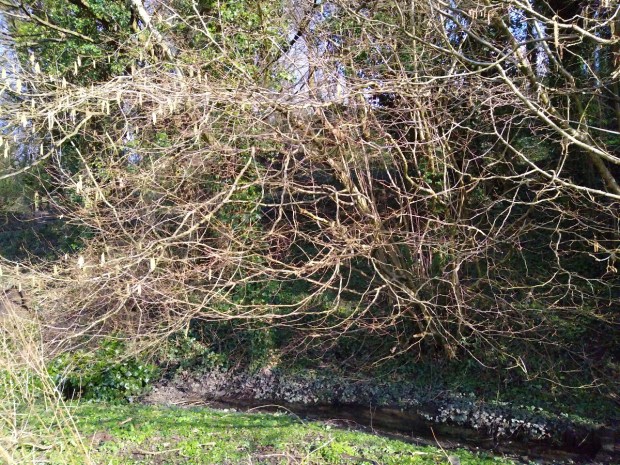
Still, as I pass, I think of the myth of Nodens and his nine hazel trees, Anrhuna’s transgression, Vindos/Gwyn eating the salmon imbued with awen from the hazelnut and his eye-bursting poetic vision, which he has gifted to me as his awenydd to pass on and share with my communities.

***

SOURCES

Anne Ross, Pagan Celtic Britain, (Cardinal, 1974)
Anne Ross, Life and Death of a Druid Prince: The Story of Lindow Man, an Archaeological Sensation, (Touchstone, 1991)
David Barrowclough, Prehistoric Lancashire, (The History Press, 2008)
Finnchuill, ‘Catching Wisdom: Nuadha, Nechtan, Nodens’, Finnchuill’s Mast, (2016)
Jody Joy, Lindow Man, (The British Museum Press, 2009)
Kay Muhr, ‘Water Imagery in Early Irish’, Celtica 23, (1999)
Miranda Green, Dying for the Gods, (The History Press, 2002)
The Calling of Creiddylad

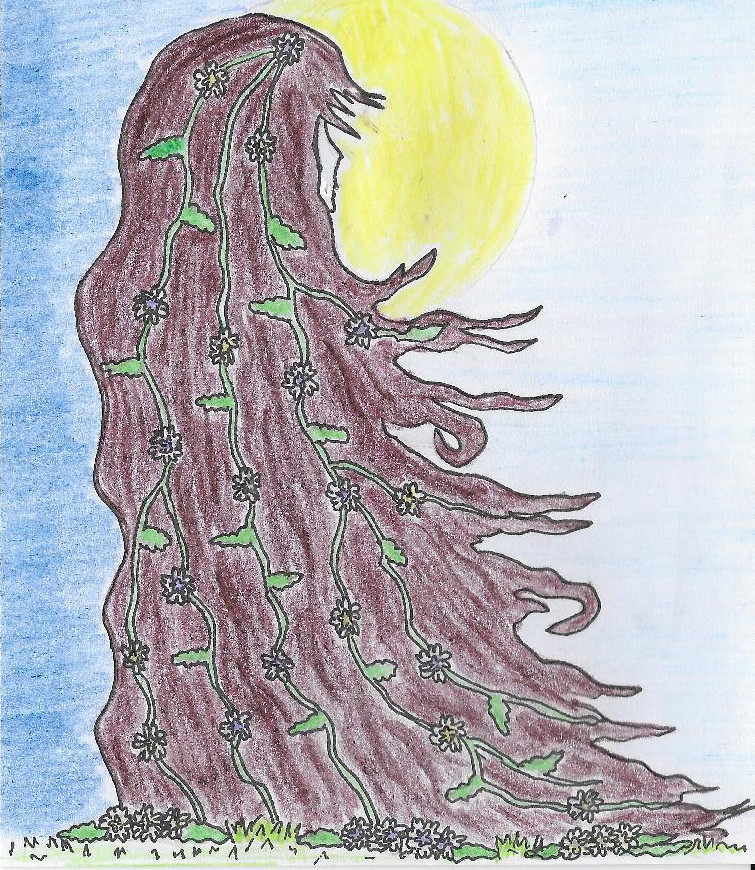
Creiddylad,
strings of birdsong
pull your hair.

Creiddylad,
they turn your head
towards the sun.

Creiddylad,
your face is a gently
opening petal.

Creiddylad,
your footsteps call
the flowers from sleep
in hill and mound
and dun.

Creiddylad,
you are unstoppable
in your majesty

although a part of you is weeping inside
for the love of winter
who will soon
be gone.

Creiddylad,
do not turn back,
do not turn
back

to the darkness
of Annwn.

Creiddylad,
step into the light
of the spring sun.

First Rose

You
flowered
in my garden
all winter

no waiting
patiently
for spring

first rose.

You
dared to
be in colour
outside my window
whilst I wore
dark clothes
carried

the dark
from my room
past you

brought
it back daily
unable to

imagine

how you
stay so yellow
or red or purple
or blue when
my moods

flicker
flimsier than
your hardy
petals.

When
I wonder
if your beauty
might adorn
my corpse
you try

to smile

remind me
of hardiness.
Of my god who
loves winter
flowers.

“Creiddylad.”

I speak her name.

“Prima rosa.
Rhosyn gyntaf.
First rose.”

“We endure
Annwn’s darkness,”
she smiles back.
“We endure.”

The Forge of Gofannon

Do you sense your maker, world?
Friedrich Nietzsche

My surname is Smithers. On and off I’ve been aware of the presence of a smith-god. The sound of hammer blows in the back of my mind. A vision of a forge at the fiery core of the world. The chisel-strokes of Nietzsche’s world-artist working in the Blakean moment between Thisworld and Annwn, beyond good and evil, where there is no past or future, but only the eternal of now creation. Making artefacts of great beauty, world-shattering technologies, weapons that are unconscionable, a dire world.

Over the past few years, as I have been working with the Brythonic mythos, Gofannon has been appearing in my stories forging important treasures – Caledfwlch (the sword of King Arthur), the Shield of Urien Rheged, the golden ring of Gwyn ap Nudd and the horse shoes for his horse.

The art of smithing is seen in most cultures as a magical process which literally transforms the world. It brought into being the Bronze Age and Iron Age and played a major role in the Industrial Revolution and Information Age. The smith is a central figure in many world myths. Yet, surprisingly little is known about Gofannon, our Brythonic smith god. This article summarises our knowledge from the Welsh myths and uses Irish parallels and modern gnosis to illuminate this ancient figure at his forge.

***

We know Gofannon is a smith-god as his name derives from the Middle Welsh gof ‘smith’. In Culhwch and Olwen his aid is required to set the plough used by his brother, Amaethon, the god of agriculture. This shows that, like the other children of Don, he was seen as skilled and as a culture god.

This is supported by lines in ‘The First Address of Taliesin’ where the legendary bard says:

I’ve been with skilful men,
with Math Hen, with Gofannon,
with Eufydd, with Elestron,
I’ve been party to privileges.
For a year I’ve been in Caer Gofannon.

In the Fourth Branch of The Mabinogion, Gofannon inexplicably kills his nephew, Dylan, the daughter of Arianrhod, who can swim ‘as well as the best fish in the sea’. This is named as one of ‘Three Unfortunate Blows’. Why he does so is never explained. However, we can go some distance to finding an explanation through a comparison with the story of Gofannon’s Irish cognate, Goibnu.

In the Lebor Gabála Érenn, Goibniu is the metalsmith of the Tuatha Dé Danann, the Children of Dana. Like the children of Don possessing skills is intrinsic to their identity as culture gods. With Credne the silversmith and Luchta the carpenter Goibnu is one of Trí Dée Dána ‘three gods of art’. Goibniu is the half-brother of Brighid. Their mother is Dana and their fathers are Tuirbe Trágma and the Dagda.

Brighid has a son with the Formorian, Bres, called Ruadan. During the Second Battle of Moytura, which takes place between the Tuatha Dé Danann and the monstrous Formorians, Ruadan is sent by the Formorians to find out the secret of how the craftsmen of the Tuatha Dé Danann make their weapons.

Ruadan finds Goibniua at his forge crafting lance-heads with three blows of his hammer, Luchta cutting shafts with three blows of his axe, and Credne fixing the two parts together. After he reports back, Ruadan is sent by the Formorians to kill Goibniu.

Ruadan goes to the forge and asks Goibniu for a spear. Goibniu, unsuspecting, gives a spear to him. Ruadan thrusts it through Goibniu and, to his surprise, the smith-god plucks it out and hurls it at Ruadan, who is mortally wounded, and returns home to die. Brighid mourns Ruadan and this is the origin of keening.

One wonders whether a similar story lies behind Gofannon’s slaying of Dylan with Arianrhod replacing Brighid/Brigantia as his mother. It certainly seems to be no coincidence that Arianrhod’s second son, Lleu, is mortally wounded by Gronw, his rival for his wife, Blodeuedd, with a poisoned spear.

This spear is crafted by a smith (it does not say by who) when ‘people are at Mass on a Sunday’. This is suggestive of a pre-Christian forger working at a liminal time. Lleu then, in turn, strikes a mortal blow to Gronw with his spear. This exchange is not unlike that between Ruadan and Goibniu. That Gofannon is a forger of spears is backed up by lines from ‘The Dialogue of Myrddin and Taliesin’. The ‘seven spears of Gofannon’ are used at the devastating and futile Battle of Arfderydd.

***

In support of the existence of an earlier variant of the story of Gofannon killing Brighid/Brigantia’s son I would like to mention the personal gnosis of Potia Pitchford – a modern devotee of both these deities.

Potia and I were (virtually) together in a guided meditation led by Gemma McGowan at a conference on Brighid earlier in the year. This involved meeting the goddess at a forge deep within the land. Potia had a powerful experience which involved not only Brighid but Gofannon. In her blog post ‘Marked by Gofannon’ Potia writes of Gofannon holding her whilst Brighid pulled from her ‘what was needed to be reworked’ and placed it back inside her in three parts – ‘one band for each of three cauldrons’. Finally Gofannon placed an inch-wide copper band on her upper arm. This led to her to her getting the armband created as an item of devotional jewellery by Runecast Copper.

Potia’s vision of Gofannon and Brighid/Brigantia working together at this forge in the core of the earth spoke deeply to me. I’m tempted to see Brighid/Brigantia (who is both a smith and a poet) and Gofannon as the forces of creativity and smithing that shape our world and its technologies for good and for ill. As I work I am aware of their presence in the words I type and the laptop I type them on.

If Gofannon and Brigid/Brigantia are co-forgers, then Gofannon’s slaying of her son, perhaps as the result of an attack, would certainly add a layer of tragedy and poignancy to their relationship.

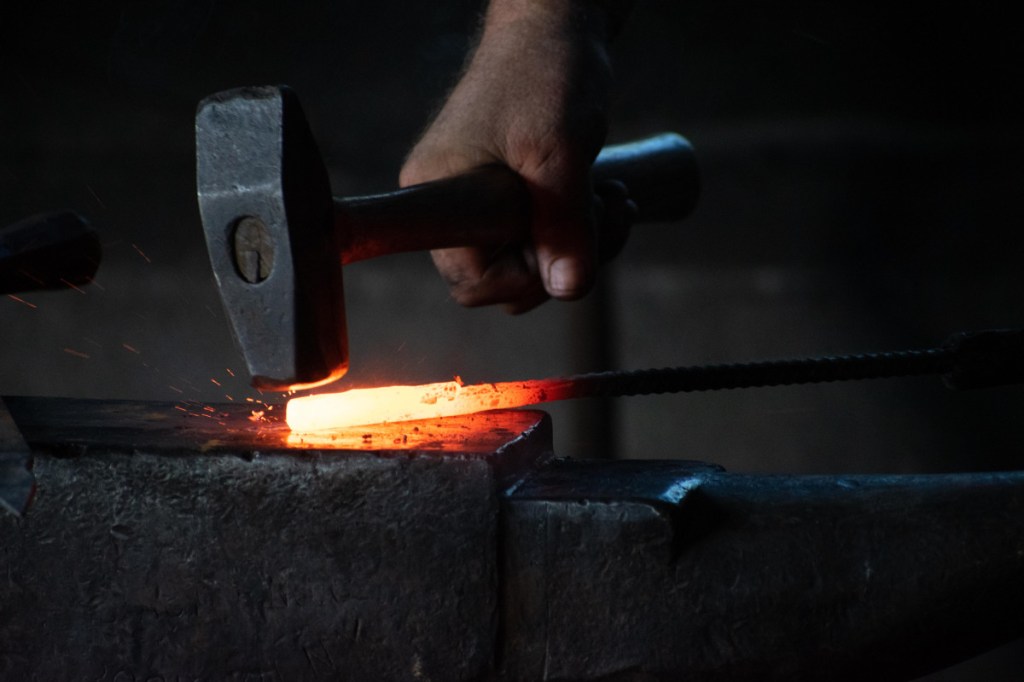
*With thanks to Hannah Gibbs for the image ‘Blacksmith‘ on Unsplash.

The Hunt is Late

I fear
the hunt
is late
this year

because
of the green
canopies

because
of the unfallen
leaves

because
your presence
is just

a whisper
of an antlered
figure in

boughs
not yet shaken
by wind.

You are here.

You are here

I know it
by the black cat
who leaps

into my
arms trembling.
The quick-

ening beat
of my heart and
the shiver

of winter
rain falling by
lamplight.

You are here.

You are here.

I know it
when I recite
my poem –

the rain
falls harder your
night-drum

beating
within me and
the wood.

Shadows
stretch and prowl
yet your

hunters
remain dark to
the seer.

I fear
the hunt
is late
this year.

*This poem is addressed to Gwyn ap Nudd, a Brythonic god whose hunt traditionally rides to gather the souls of the dead on Nos Galan Gaeaf. It is based on my marking of the occasion by reciting my poem ‘When You Hunt for Souls in the Winter Rain‘ (in the winter rain!) for Gwyn in Greencroft Valley. I find it disturbing that some of the leaves are still green and many have not yet fallen at this time of year, which in the Celtic calendars marks the beginning of winter. (The Welsh Nos Galan Gaeaf means ‘The night before the first day of winter’ and the Irish Samhain means ‘Summer’s End’).

The King of Annwn’s Treasures

The golden horn of endless mead.
The golden plates that make even leaves edible.
The golden cauldron that boils the flesh of the dead.
The golden helmet that lends the strength of the bull.
The golden armour that makes its wearer invincible.
The golden shield that deflects not only blows.
The golden spear that pierces every heart.
The golden leashes that hold back the hounds
and the spirits who strain against the possible.
The golden horseshoes for the horse that runs
between worlds and his golden saddle and bridle.
The golden ring that turns time into a circle.
The golden mist that makes terror beautiful.
The golden keys to the gates of every soul.
The golden secret in the stone chest that rattles
and bleats and sings a strange prophetic song.

~

This poem is based around the depiction of Gwyn ap Nudd as a ‘bull of battle’ in ‘The Conversation of Gwyn ap Nudd and Gwyddno Garanhir’ and his role as a King of Annwn presiding over its spoils. It is one of the poems in the narrative of Y Darogan Annwn.

Mabon Learns to Play the Harp

It was Mabon who played then in the youth of the world
Greg Hill

Take the hand of the invisible
and make it visible.

Pluck a chord of light
like a string from the ball of the sun.

Imagine spiders spinning their webs

between the constellations;
the songs of the stars,

make them audible.

Fashion the nine chords
of my harp – the harp of Teirtu –

do not think of how it will play alone
as you in this House of Stone

in the hall of Pen Annwn.
Think not of the turning of his fortress

‘in Annwn below the earth’
or ‘in the air above’.

Do not ponder the reason
for your imprisonment – why

you must become an awenydd or bard.

Reach into the darkness with the audacity
of youth and imagine the discovery

of the wealthy realms of Pluto.

Ask not why the sun does not shine there,
why a dog’s jaws are the doors

and questions remain unanswered.
Reach deep within for the chord that moves

the hearts of planets – underworld gods.

In the river of tears consume the hazel nut
unknowing if it contains the awen

or countless meteoric souls.

Escape down the trail of a meteor
on the salmon of Llyn Llyw.

Take the hand of the visible
and make it invisible.

Forget this story –
you have always been the harper
and my harp has always played on…

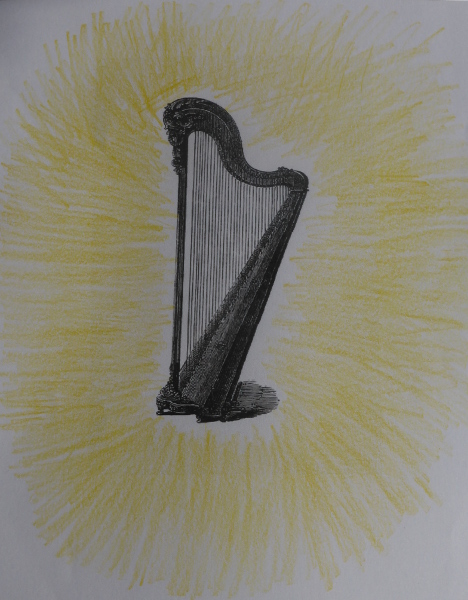
Mabon's Harp

For Tonight

I am a shape who shifts
like the costumes of mosses
like the rabbit eyes of trees

Tockholes I

leaping out of my skin
plunging into the dark arms
of underwater trees

Tockholes III

for once knowing beauty and fluidity
as I run down stairs without
missing a single step.

Tockholes IV

I am the waterfall and its deep pool,
the sun reflected and the fear
of loss surrounding him
like the magic of Faerie,
the golden ball,

Tockholes V

the secrets found by bees
crawling into the purple caverns
of foxgloves emerging centuries later
coated in dusty wisdom.

Tockholes VII (copy)

Can it be possible
that I am wide awake
like your rival as you dream
these enchantments

and here, now, even
at midsummer

the aspen trembles
at your name?

SAMSUNG CAMERA PICTURES

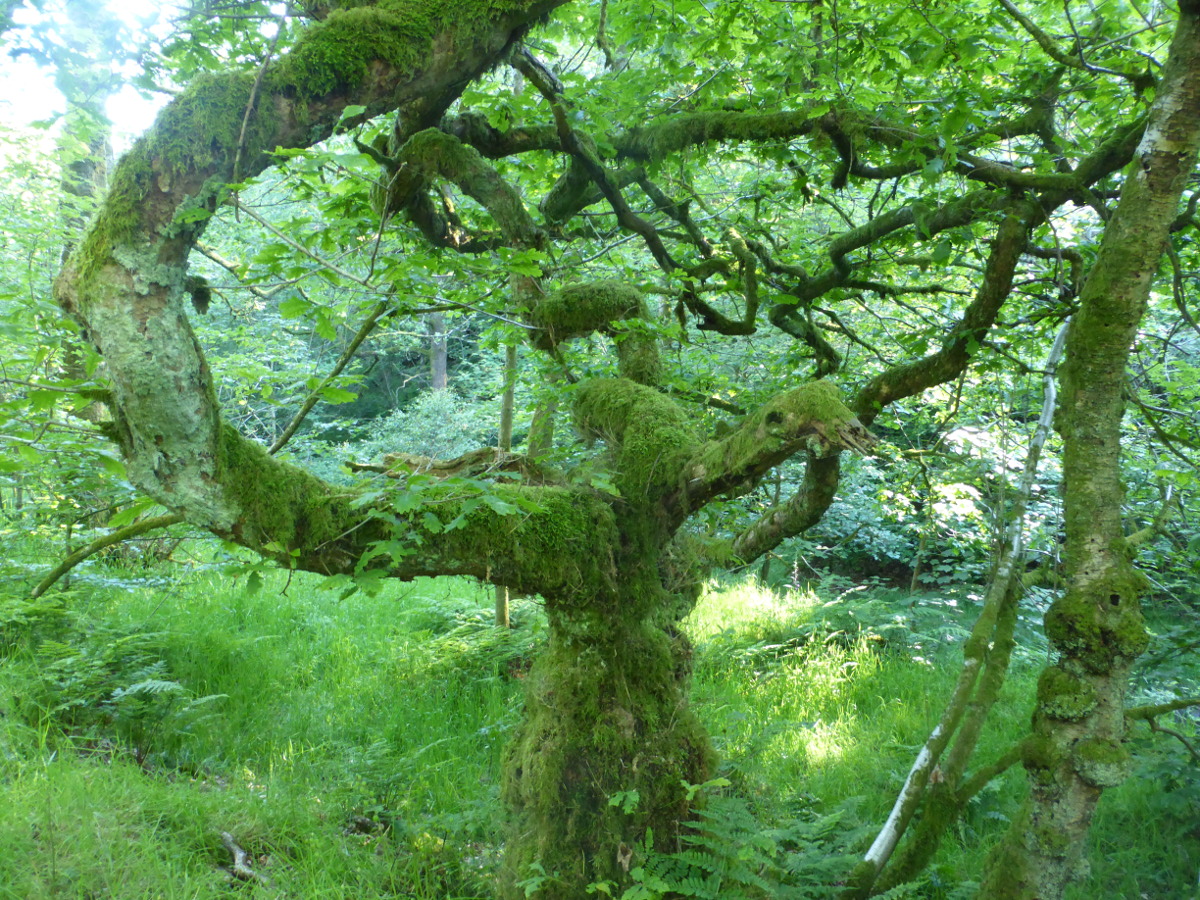
*This poem is based on a walk in Tockholes Wood on Midsummer Eve and is addressed to Gwyn, who remains a presence in my life even in his absence from the landscape.

Her Crying Eye

For Creiddylad

Weep tears
surround me
like a stranger
to all hope like
a Goth song

always winter

in black by
the strobe lights
underground.

In the catacombs
the priestess weeps:
the altar is gone.

Reminders flash.

Was this worship?

Raising my hands
to the other stars of
disco balls drums

pounding sadness
all night in the dark
half of the year?

Pay the price.

Yes I’m paying.

Must I pay by tears?

I stole her ecstasy
in a white-cream pill.

Was this happiness?

Flashbacks repeat.

I am always empty
but her crystal tears
suggest something.

I wish I could cry.


Crying Eye Clip Art Library II

*This poem was inspired by the visions of two participants in a workshop I ran on ‘Honouring Creiddylad’ at the Space to Emerge camp – they both saw a crying eye.

Blodeuwedd and the Owl Kind

I.
I’m wandering through a bleak windswept landscape in Annwn and screaming down from the skies come two haggard-looking owl-women who almost look like harpies with shabby feathers, bare breasts, and long claws. At first I’m afraid of them, but less so as I examine their faces, old, wise, grey.

They tell me they are ‘the Owl Kind’ – those who have gone into owls. They watch over families and communities until they stop watching for them. They watch over lands until they become unrecognisable. They watch over the dead and those who go between worlds – their owl eyes are always on them.

They can often be found in graveyards. They show me how they watch over the spirit of a child who is afraid to leave her grave where she thinks she is safe and wants to sleep forever because she died believing there is no life after death and the owlets who sit in a row on the fence who sing her songs.

They tell me the owl kind are becoming less and less as they are leaving the places families and communities have left, where they are forgotten, and fewer know how to or want to go into owls anymore.

They tell me owls watch over my land and to listen for them.

II.
Only once have I met Blodeuwedd, the woman conjured from flowers by Math and Gwydion, then transformed into an owl as a punishment for her part in the plot to murder her husband, Lleu. It was during a journey when I was tricked into Caer Gwydion and she helped me escape, picking me up in her claws and taking me to the Forest at the Back of the World where the Owl Kind dwell. At this point I knew they were connected, that Blodeuwedd was one of the Owl Kind, perhaps the most significant.

This has led me to suspect that when Gwydion and Math conjured Blodeuedd from the blossoms of oak, meadowsweet and broom, when they imbued the blossoms with spirit, that the spirit they unwittingly summoned to animate them was hers – flowers on the surface, owlish huntress and killer beneath. (Thus it’s no wonder she was attracted to the Hunter when he rode into her kingdom).

Perhaps in an older variant of the tale Gwydion did not turn Blodeuwedd into an owl as a punishment but recognised her true nature, that he, the trickster, had been tricked. She couldn’t be confined by his spell.

III.
In modern Britain owls are, rightly, revered as symbolic of wisdom. Yet, appearing wide-eyed and innocent and slightly goofy-looking on bags, pencil cases, cushions, earrings etc. the darker side of their nature (which was emphasised for many centuries in British folklore) has been forgotten.

In a chapter titled ‘Night’s Black Agents’ in The Folklore of Birds Edward A. Armstrong notes that ‘Over Europe and Asia, indeed, most of the world, the owl is, and has long been, a bird of witchcraft, death and doom’. He notes examples of sightings of owls – ‘the trees were covered with owls’ ‘there were a scret (screech) owl on his roof, scretting something horrible’ as precedents of death.

Spenser refers to the owl as ‘death’s dreadful messenger’. Webster writes ‘The Scritch Owle and the whistler shrill / Call upon our dame aloud / And bid her quickly don her shroud.’ Armstrong notes connections between ‘ratchet owls’ and the corpse-eating Gabriel Ratchets and Hounds of Annwn.

In ‘The Owl’ Dafydd ap Gwilym speaks of the ‘Crazy Owl’ of Gwyn ap Nudd who ‘incites the hounds of night’ and no doubt flies at the head of his hunt heralding the chase of the souls of the dead.

IV.
In The Witch Ronald Hutton suggests our associations between owls and witchcraft derive from the Classical figure of the strix. These large-eyed, hungry-beaked, grey-white feathered birds of ill-omen dwelled on the outskirts of Tartarus, feasted on flesh and blood and snatched away the bodies of the dead. The term striges was also applied to ‘women who practice witchcraft’ and ‘flying women’.

The striges seem closely linked to harpies ‘snatchers’. They are described both as ‘lovely’ and ‘repulsive’. By Virgil as ‘Bird-bodied, girl-faced things… abominable their droppings, their hands are talons, their faces haggard with hunger insatiable’. Their names are evocative – Aello ‘storm swift’, Ocypete ‘swift wing’, Celaeno ‘the dark’, Podarge ‘fleet-foot’. Seen as the embodiments of the destructive winds they served as ‘the Hounds of Zeus’ snatching away evil-doers to the Erinyes.

VI.
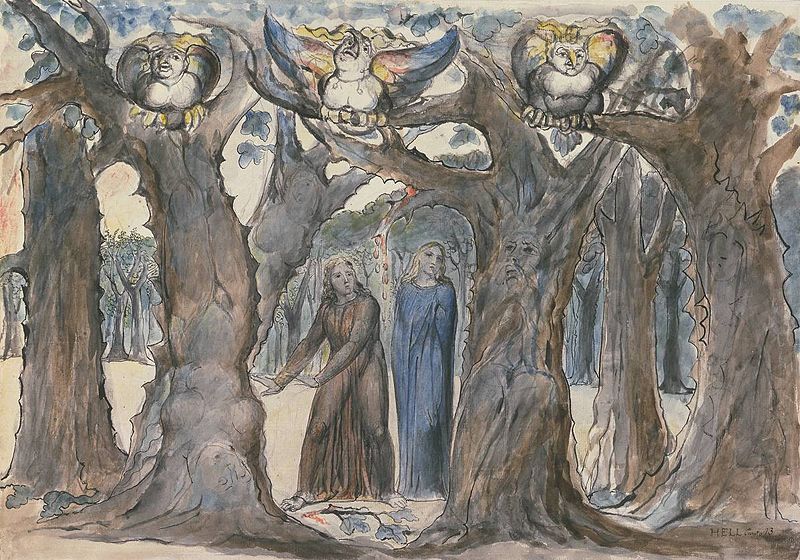
In Dante’s Inferno harpies are depicted in the seventh circle of Hell in the ‘Wood of Suicides’:

No green here, but discoloured leaves and dark,
No tender shoots, but writhen and gnarled and tough,
No fruit, but poison galls on the withered bark…

Wide-winged like birds and lady-faced are these,
With feathered belly broad and claws of steel;
And there they sit and shriek on strange trees.

Dante is horrified when he realises that the trees are the souls of suicides. Their transformation and their fate of being tortured by the harpies, who feast on the boughs, is described by Augustus:

When the wild soul leaps from the body, which
Its own mad violence forces it to quit,
Minos dispatches it down to the seventh ditch.

It falls in the wood; no place is picked for it,
But as chance carries it, there it falls to be,
And where it falls, it sprouts like a corn of wheat,

And grows to a sapling, and thence to a wild tree;
Then the Harpies feed on its leaves, and the sharp bite
Gives agony, and a vent to agony.

VI.
In ‘The Wood of the Self-Murderers: The Harpies and the Suicides’ William Blake provides a vivid depiction of the scene. This partly resonates with my personal vision of the Owl Kind in the Forest at the Back of the World, where the souls of the dead shift into trees, plants, and animals.

800px-The_Wood_of_the_Self-Murderers

Only I do not see the role of the Owl Kind, although they are hunters and devourers of the dead, as punitive. Like the Hounds of Annwn they are simply serving their role hunting down the dead and devouring their dead flesh before bearing their souls back to the otherworldy forest where they can heal.

Perhaps they have always been connected with suicides – teaching them to be tree, plant, flower, blossoming until their bloomy faces are the faces of owls and, like Blodeuwedd, they fly free.

SOURCES

Edward A. Armstrong, The Folklore of Birds, (Dover Publications, 1958)
Dorothy I. Sayers, Dante, Hell, (Penguin Classics, 2001)
Rachel Bromwich (transl), Dafydd ap Gwilym, Poems, (Gomer Press, 1982)
Ronald Hutton, The Witch, (Yale University Press, 2018)
Sioned Davies (transl.), The Mabinogion, (Oxford University Press, 2007)
William Blake, William Blake’s Divine Comedy Illustrations, (Dover Publications, 2008)
Harpy’, Wikipedia
Strix’, Wikipedia