The Slow Thaw

On the second of February, the date of the Celtic festival of Gwyl Ffraid/Imbolc, I was not celebrating the first signs of spring but was in hospital having an umbilical hernia repair operation.

Snowy GCV 3

The land was covered by snow and ice and I was aware of the presence of my god, Gwyn ap Nudd, Winter’s King. To he, who guides our souls between the worlds of the living and the dead, I prayed to lead me into the near death-like state of coma that is general anaesthesia and back to wakefulness again.

To he, who dies a ritual death at the hands of his rival Gwythyr ap Greidol every year at Calan Mai, who enters a frozen sleep throughout the summer months in Caer Ochren, the Castle of Cold Stone before reviving again in autumn to lead his hunt across the winter skies. I knew I could trust my soul.

I knew he understood what I was about to go through and worse for he comes from ‘many deaths’.

And so he took me, but not to where I’d expected. Just two weeks previously I made my lifelong dedication to Gwyn and that night during my vigil I was taken on a really intense journey of descent. I was expecting something like that or worse like waking up whilst I was being operated on.

Instead I awoke feeling as if I was roaring drunk raving about Maredsous. For about fifteen minutes I had no idea what Maredsous was and neither did anyone else in the recovery room. Finally I remembered it was a Belgian beer. Gwyn had taken me on a tour of the bars in Belgium! I have always loved Belgian beers but never been able to afford to visit Belgium and he had taken me there.

Another uncanny thing that happened is that, afterwards, the nurse told me that when I went under everywhere went icy cold and they had to turn the heating up – a definite sign of Gwyn’s presence.

So I woke up feeling wowed and grateful and much firmer in my trust of him.

Post-operation I have been stiff, sore, and had more far more bloating and swelling than I expected. However, as the snow has slowly thawed, I have been making a slow recovery. As I have walked a little further from my house every day I have noticed the snowdrops in my garden in full flower, the first celandine flowering in Greencroft Valley, a yellow wagtail dipping in the brook, the wood alive with the songs of tits and robins.

Since the beginning of November, when I drew the Hagalaz rune, ‘Hail’, at the Way of the Buzzard drumming circle I have experienced a winter of harsh descent which began with a stress fracture of my metatarsal leading to me being unable to walk for over six weeks. Then I had my lifelong dedication to Gwyn, which was challenging and intense, but ultimately confirming and wonderful. Now, finally, this operation, significantly on my naval, my natal place, which seems bound up with the visions of death and dissolution and rebirth that I experienced during my vigil on my dedication night.

The Anglo-Saxon rune poem for Hagalaz/Hægl speaks of my experiences of being the white grain of the initiate in Gwyn’s cold castle, tossed about on the winds of his hunt, and finally brought back in celebration and confirmation to melt into water and take seed in this soil as his lifelong awenydd.
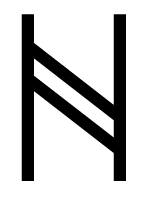
Rune-Hægl

Hail is the whitest of grain;
it is whirled from the vault of heaven
and is tossed about by gusts of wind
and then it melts into water.

So mote it be.

On Becoming Gwyn’s Awenydd

Gwyn Altar

In Pum Llyfr Cerddwriaeth (1570) Simwnt Fychan lists three main stages of poet-hood; disgybl ysbâs heb radd, ‘unqualified apprentice’, disgybl disgyblaidd ‘qualified apprentice’, and pencerdd ‘master poet’.

In January 2013 I took vows to Gwyn ap Nudd, a Brythonic god of the dead and ruler of Annwn, embarking on an apprenticeship to him that would lead me to becoming a disgybl disgyblaidd and his awenydd.

Undertaking an apprenticeship to a god is little known or spoken about in the Western world. In English schools the myths of ancient Britain contained in medieval Welsh literature are not taught. The names of the gods and spirits associated with our localities are not told. Nobody speaks of Annwn, the Brythonic Otherworld, as a place of initiation. An apprenticeship is a route to a secular career rather than to a vocation, a word stemming from vocātiō, a call or summons by the divine.

Because of this I did not recognise the first intimations of my calling. I did not understand the impulse that led me to read, walk, dance, drink myself to the heights of ecstatic visions, to the depths of abyssal despair. Lacking the framework of religion or knowledge of shamanistic experience I did not know whether my visions or the beings I saw were real or symptoms of madness.

Not knowing that it was possible to communicate with them (speaking back would mean I was surely mad!), to walk the Otherworld with will and intention, I could neither embrace or shrug off my calling. I stumbled through life like a drunken teenager, failing in my ambitions to become a philosophy lecturer, a riding instructor, or a fantasy writer because none fulfilled this inexplicable urge.

It was only after learning about the revival of animism and polytheism in the West that I realised my experiences were real and meaningful. That it was possible to communicate with gods and spirits. When Gwyn showed up when I was thirty years old I finally put a face to that calling and understood that my visions were of his realm, Annwn/Faerie, and his people, the spirits of Annwn/fairies.

My life suddenly made sense. Following a haunting vision of a satyr-like spirit in my local woodland in the depths of winter who spoke the words ‘a sadness is coming this land – you must become Gwyn’s apprentice’ I knew for sure what was already in my heart and the depths of my soul; that I must devote myself to Gwyn.

So I made three vows to Gwyn at the White Spring beneath Glastonbury Tor: to honour him daily, to stand in my truth, and to walk between the worlds with reverence. I chose this place not only because it is Gwyn’s best known sacred site, but because of powerful experiences at Glastonbury Festival I believe were associated with this enigmatic god and his bright spirits.

Soon afterwards the name of the vocation I was working towards as an apprentice was revealed. I was to become Gwyn’s awenydd – a spirit worker and inspired poet who travels between the worlds questing the awen, the divine breath of inspiration, from the land and the depths of Annwn.

During my apprenticeship to Gwyn I have learnt and done far more than I ever did at university. Gwyn has taught me how to journey back into the land’s deep memories to retrieve stories from distant times, those of ancestors who have left little or no trace, or have been erased by the victors.

Gwyn has taken me deeper into Annwn, where history fades into myth, to reveal the extent of the atrocities committed against his people by Christian warriors such as Arthur and his warband and by ‘saints’ and the effect on our psyche of our violent separation from our ancient deities and the Otherworld. To me he gave the task of revealing and thus beginning the process of healing these wounds.

Gwyn finally called upon me to recover his forgotten mythos from the mists of time, from the pens of Christian scribes bent on portraying him and his spirits as demons; to give voice to the inspired ones who have served him, whose souls he has gathered, since the last of the ice departed from this land.

I have recorded my personal journey since its beginning along with my research and creative writing on my blog and now have nearly a thousand followers and several patrons who support my work. I have shared my poems and stories in individual and group performances in my local area. At Pagan events in the North West of England and beyond I have spoken on the lore of the land and the Brythonic gods.

With the launch of Gatherer of Souls, my devotional book for Gwyn and Annuvian counter-narrative to Arthurian mythology, my apprenticeship is complete. I am now a disgybl disgyblaidd and his awenydd. Whether I will ever reach, or want to reach, the Taliesinic heights of pencerdd is doubtful.

I am currently happy knowing that I am one of the first of a new generation of awenyddion to complete something ancient and profound, with knowing the joy of being devoted to this terrible beautiful god whose mists shroud the mysteries of the Otherworld; that the well of learning is infinite.

I am planning to take new lifelong vows to Gwyn as his awenydd here in Penwortham, where he first appeared to me in person and where most of my work for him takes place, on this January’s full moon.

Shattering the Nunnery

Somewhere between here and Annwn

a part of me is cloistered

thinking already
about the spring flowers

as she paints another saintly visage.

In another life she has been drinking
the truth from a forbidden cup.

The saints no longer look the same:

their hands are red with blood and filled
with splinters and chips of stone
from shattered pagan idols.

The stained glass is blood stained.

Her voice catches on the songs and tears
as if upon nails – she SCREAMS

and the stained glass shatters.
The nunnery falls down.

~

This poem, which is based on a spirit-journey, signals my release from a malaise I have been calling ‘nun envy’. Although I realised Christianity was not for me when I experienced its dull and stuffy sermons and the patriarchal presence of the Christian God in my local C of E church as a Brownie at church parade a part of me has longed for learning and ritual and shared devotion in a religious community.

I have been deeply jealous of Christians because they have a system of support for people who have a sense of vocation. For those who are called to serve God there are ways of living by this calling. Vicars and priests receive an education and a salary for their work and nuns and monks lead lives of dedication to God based around prayer, manual labour, and artistic and intellectual pursuits without worrying how to pay for housing or food. When I hit thirty-five I realised that was the last chance I would have of becoming a Christian nun and living what looked the ideal life except for… the Christianity.

Of course, I decided against, because I did not want to betray my god to the God and saints of the religion that destroyed the pagan traditions and, in particular, demonised him and the Otherworld he rules.

Yet, still I kept yearning for what Christian monastics have. Researching local monasteries and abbeys. Finding myself drawn to Preston’s Carmelite monastery.


Visiting the Tabor Retreat Centre, which was once a Carmelite nunnery but is now run by the Xaverian Missionaries (this provides regular meditation classes, Lectio Divina, short courses and even a book club as well as retreats which I’d have loved to go to … if only I was Christian!).


Wanting to go back to the ruins of Fountains Abbey (which I visited every weekend when I worked at the Yorkshire Riding School) to sit and mourn something I will never have.

Fountains Abbey II
A strange impulse I believe may be rooted in a past life as a nun. A few years ago when I read in a biography about the ritual burial of Julian of Norwich – entombed like Christ to become his bride and an anchoress who would never see the outside world again I felt like I was being buried alive. As if I’d experienced something similar before. I flung the book into my wardrobe, slammed the door, and went for a walk feeling immensely grateful for my freedom to see trees and taste the fresh air.

I’ve always had a push-pull relationship with Christian mysticism, art, literature, and song. A yearning for its richness and beauty but a dislike of its unhealthy obsession with suffering and punishment.

As a consequence of years of learning about how nearly every splendid church and cathedral is based on the takeover (violent or non-violent) of a pagan sacred site; how nearly every haloed saint is associated with the defeat of a pagan mythic figure or with the slaughter or conversion of pagans; how the Christian tradition is founded on the death of paganism, it has finally lost its fusty-fingered hold on me.

Being an awenydd attempting to reweave the ways between Annwn and This-modern-world isn’t easy. But I think I will be able to do it better and more happily now my yearning for what Christians have and my nun envy is gone. From the ruins of the shattered nunnery may new shoots and tendrils grow.

Fountains Abbey


My Annuvian Path

I’m at liberty to share this because I don’t live in the age of Queen Victoria, King James, or King Arthur. I’m not Orddu, ‘the Very Black Witch’, in her cave waiting for the knife to cut her in twain. I’m not Elizabeth Southerns, Anne Whittle, Isobel Gowdie, or Isabella Rigby. Nobody blinks an eyelid when I say I worship a god of Annwn and speak with otherworldly spirits and in this I am blessed.

Still, my path is a lonely one not many choose to walk. Annwn means ‘the Deep’, ‘the Otherworld’. In this age the reign of superficiality and normalism is stronger than the influence of any monarch. There’s an inner policing – not a hanging or burning at the stake, just dismissal, lack of interest, in the mystical, the magical, the mythic, when they’re not reduced to cosplay or methods of self-development.

Paganism and Druidry have been demystified and the mystical systems that exist (in Druidry) still hinge around Taliesin and Arthur, ‘heroes’ who slaughtered and oppressed the gods and ‘monsters’ of Annwn. I keep returning to these traditions like a restless horse pacing its box, like I’m picking a scab, each time find myself more deeply disappointed; an outsider, a black sheep amongst the white-robed herds.

Perhaps our deepest myths died when Taliesin and Arthur stole the cauldron from the Head of Annwn. Something big must have perished to leave the void, filled for 1500 years by Christianity, now filled instead by the new religion of the self, the selfie, everyone wanting to be a celebrity bard in the virtual otherworlds, in the god-sized holes in their heads, which no longer have room for real gods. I have only a dim intuition what that was. If it is contained in our existing texts, it’s very well concealed. Seeking it out feels important and I can’t do so whilst wrestling with wider disillusionments.

I’ve finally reached the point my box-walking is at an end. A knowing I’ll never feel at home in mainstream Paganism or in Druidry. That my dream of being part of a physical community who get together for devotions, to work with myths, to discuss how such work can change the world, is unlikely to happen. I’ve complained of my disappointments and voiced my criticisms for the last time.

Now for some affirmations: I am an awenydd. I walk an Annuvian path. I will make the most of this opportunity my spiritual ancestors such as Orddu never had. I will reclaim our deepest myths. I will learn to live by them.

Annuvian Awen - Awen Ac Awenydd

Annuvian Awen

Annuvian Awen

Allan o dywyllwch caf fy ngeni
Allan o waed caf fy ngeni
Allan o ysbryd caf fy ngeni

Yn canu o Annwn

Tri phelydryn golau
Tri phelydryn llais
Tri phelydryn wirionedd

I oleuo â rhyfeddod
Ac yn torri’r galon wytnaf

Yn canu o Annwn

~

Out of darkness I am born
Out of blood I am born
Out of spirit I am born

Singing from Annwn

Three rays of light
Three rays of voice
Three rays of truth

To illuminate with wonder
And break the hardest heart

Singing from Annwn

~

About a month ago I awoke with the symbol above in my mind with the name ‘Annuvian Awen’. Awen derives from the Indo-European *-uel ‘to blow’ and has the same root as the Welsh awel ‘breeze’. It is the primordial breath that binds all things, as Kristoffer Hughes says, ‘the voice of the universe speaking to itself’.

The Awen symbol was popularised by Iolo Morganwg in the 1860s. He claimed it was derived from a Welsh alphabet recorded by Nennius in the ninth century and that its meaning was ‘I am that I am’. It has been used by Neo-Druids since.

In medieval Welsh poetry ‘the ogyrven of threefold inspiration’ originate from the cauldron of Ceridwen. Crochan means both ‘cauldron’ and ‘womb’. It is the place from which all beings of the universe are born and to where they return at death.

The cauldron of Ceridwen lies in Annwn, ‘Very Deep’, the ancient British Otherworld. It is guarded by the Head of Annwn: a god with many names who I know as Gwyn ap Nudd. Gwyn guides the souls of the dead and of living initiates to the cauldron.

The black background of the Annuvian Awen represents the origin of Awen from the darkness of Ceridwen’s cauldron in the depths of Annwn. The red stands for the blood of the dead (human and non-human) whose sacrifices have made it possible the living can have Awen. The white is spirit: the breath, the voice of truth, the misty otherlight of the ogyrven ‘spirits’ contained in the person of Gwyn ‘White’ who is also known as the giant Ogyrven.

When I had created the design I received the gnosis I must write a poem to accompany it in English and Welsh. My Welsh is very basic. Having written the English version with an eye to how it looked and sounded in Welsh, translating as I went, I contacted fellow awenydd and Welsh-speaker Greg Hill for help with the translation.

Greg corrected my grammatical errors and helped me with choices of individual words. Interestingly this led to changing the tense of the English poem from past to present which was a big improvement. This fortuitous exchange of Awen between awenyddion gave birth to the poem in its present form. We decided to use it with the symbol on the front page of ‘Awen ac Awenydd’: a website providing a repository of information on the awenydd path.

For me the Annuvian Awen forms an expression of the path of the awenydd that acknowledges the importance of depth in our increasingly superficial world; the need to recover the inspiration that lies in the deeps of Annwn and in the deep places of our souls to combat the soullessness that allows the destructive systems that are wrecking Thisworld to thrive.

The ways to Annwn are dark, misty, uncertain, steeped in blood, for the most part forgotten. Yet there are gods and guides who offer to walk with us and share our quest. So we go with them through the darkness, across the river of blood, to return with the otherlight to illuminate the beauty of Thisworld because not only our lives but the lives of our souls depend on it.

SOURCES

Angela Grant, ‘A Short History of the Awen’, The Druid Network
Greg Hill, ‘Awen’, Awen ac Awenydd
Greg Hill, ‘Taliesin, the Bardic Tradition and the Awen’, The Way of the Awenydd
Greg Hill, ‘The Girl in Ogyrven’s Hall’
Kristoffer Hughes, Natural Druidry, (Thoth Publications, 2007)
Kristoffer Hughes, From the Cauldron Born, (Llewellyn, 2013)
Marged Haycock, Legendary Poems from the Book of Taliesin, (CMCS, 2007)
Awen’, Wikipedia