So far January has been pretty grim. Not only due the slippery alternation of icy weather and heavy rain, but because the UK is back in national lockdown due to a sharp rise in coronavirus cases as a result of holiday gatherings combined with a new variant that is 30 to 50 per cent more infectious. Hospitals are teetering on the brink of being overwhelmed and, on Wednesday the 13th of January, 1, 564 deaths from COVID-19 were recorded – the highest number since the pandemic begun.
My conservation volunteer work parties have been cancelled and my internship at Brockholes Nature Reserve has been limited to one day. Again we’re back to the horrible dichotomy between essential workers being stressed and overstretched whilst others have no work and feel useless.
However, unlike during the first lockdown in March, with the new vaccines and the vaccination programme underway there is hope of a return to some degree of ‘normality’ on the horizon. I have lived with the fear of catching coronavirus and passing it onto my parents, who are over seventy and have health issues for nearly a year, and am hoping they will be vaccinated by mid-February.
This moon cycle Gwyn has prompted me to look more deeply into the nature of the coronavirus and how this relates to his role as a ruler of Annwn who gathers the souls of the dead from battlefields, and arguably those who die of plagues, such as Maelgwn Gwynedd, who died of the Yellow Plague after seeing a golden-eyed monster through the keyhole where he was self-isolating in the church at Llan Rhos.
Gwyn is also said to contain the fury of the ‘devils’ of Annwn to prevent them from destroying the world. We might, perhaps, include viruses amongst this host. It is also notable that Gwyn’s father, Lludd/Nudd, put an end to three plagues in Lludd ac Llyefelys.
When I set out on and progressed with my research I was stunned by the proficiency of the coronavirus and more so by the cleverness and complexity of the human immune system and its cells. As I learnt about them and viewed their 3D representations I was filled with awe and wonder at their agency and beauty and more so because they are part of me.
Here is an account of my discoveries about the nature of coronavirus and the wonders of the immune system upon whose agency and efficacy the success of the vaccine depends. I write this for Gwyn and his father, Lludd/Nudd, defenders against plagues.
***
SARS-CoV-2 is the coronavirus that causes the disease COVID-19. Like other coronaviruses it is spherical in shape and consists of a membrane, which encloses its RNA, and protein spikes (which look like a corona). These are really important as they help the virus bind onto and attack host cells.

When droplets of the virus are inhaled or transferred from surfaces to the eyes, nose, or mouth of a healthy person it is provided with passage to the mucous membranes. These epithelial barriers not only provide a barricade against pathogens, but have their own defences such as tears, saliva, and mucus.
However, coronavirus has developed a particularly smart way of penetrating them. On these surfaces is a protein called angiotensin-converting enzyme 2 – ACE2 – and to this it binds its spike protein ‘like a key being inserted into a lock’. Thus ACE2 is the doorway by which it enters the host.
Once the virus gets into the membranes of the nose, throat, airways, and the lungs (where ACE2 is particularly abundant on type 2 pneumocytes in the alveoli), it hijacks the original function of the cells and turns them into ‘coronavirus factories’ in which it creates countless copies of itself, which go on to infect more cells, which go on to infect more cells, which go on to infect more cells…
Luckily, the invasion does not go unnoticed for it triggers a response from the innate immune system. (It is worth mentioning here that humans have not only one but two immune systems. The innate immune system, which is shared with other animals, plants, fungi, and insects, is the most ancient and the most primitive, having developed 500 million years ago. This provides a ‘front line’ general response. If it is unsuccessful, the adaptive immune system, which developed in vertebrates only, is activated and provides a more finely honed response, which targets a specific pathogen.)
Upon the invasion of the coronavirus, cells of the innate immune system stationed in the tissues and patrolling in the blood stream, which possess specialised pattern recognition receptors (PPRs), recognise pathogen-associated molecular patterns (PAMPs) and damage-associated molecular patterns (DAMPs), and send out chemical signals that initiate the inflammatory response.
Chemicals such as histamine increase the blood flow to the infected area and cytokines attract white blood cells called phagocytes ‘eating cells’ (from Greek phagein ‘to eat’ and cyto ‘cell’) – firstly neutrophils and, within 24 hours, macrophages ‘big eaters’ (from Greek makrós ‘large’ and phagein ‘to eat’)
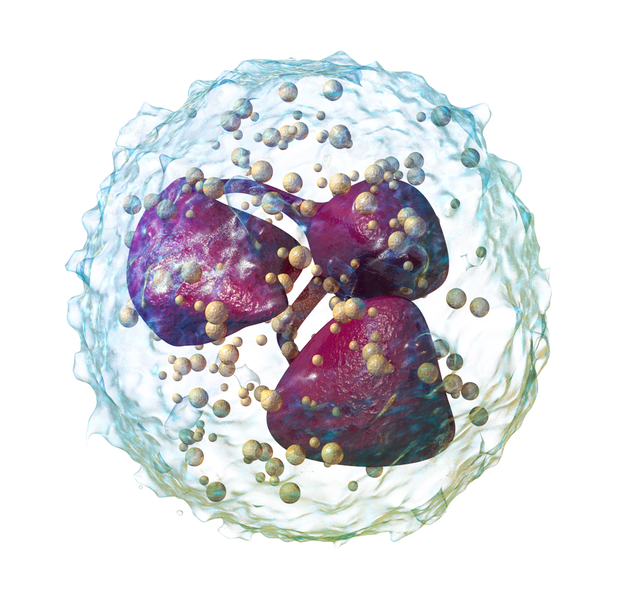

These phagocytes strive to destroy the virus through a process called phagocytosis that is unlike anything seen in the outside world. They engulf the virus within their membrane, enclose it within a vacuum known as a phagasome, then kill it by bombarding it with toxins. Afterwards neutrophils self-destruct via a process called apotosis. Macrophages also perform the role of devouring the dead cells. Around three days into the infection more phagocytes known as natural killer cells join the fight.
If the innate immune system fails to fend off the virus, the adaptive immune system steps in. The cells of the adaptive immune system target only specific antigens – molecules on the outside of a pathogen – and cannot recognise new antigens alone. Therefore they must be presented with them by antigen-presenting cells, such as macrophages and the dendritic cells of the membranes. These cells not only devour but process the virus and display its antigen on their surface. Thus they play an essential role in mediating between the innate and adaptive immune systems.
The main cells of the adaptive immune system are white blood cells called T-cells (because they are produced in the thymus) and B-cells (because they are produced in the bone marrow). When T-cells are activated by the presentation of an antigen they begin to mature and proliferate.
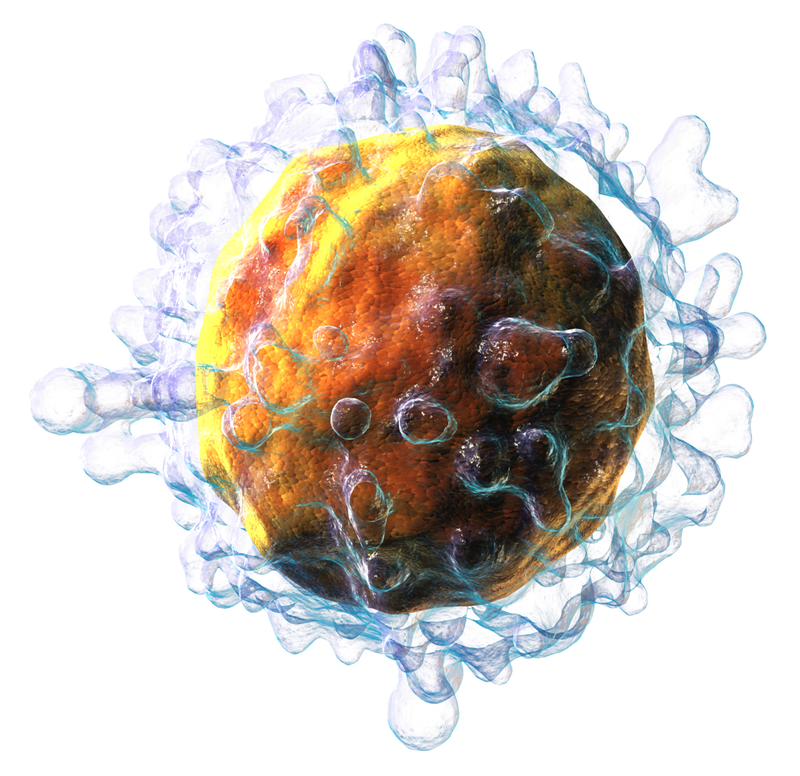
Four types of T-cell are produced. Cytotoxic T-cells specific to the coronavirus antigen bind to an infected cell and produce a chemical called perforin, which penetrates it, then cytotoxins called granzymes which destroy the cell and any virus inside by causing it to self-destruct via apoptosis.
Helper T-cells produce chemicals such as cytokines, interleukin (a pyrogen which increases molecular activity) and interferons (which cause nearby cells to heighten their viral defences) and activate B-cells. Regulatory T-cells stop the immune response and memory T-cells remember the antigen.
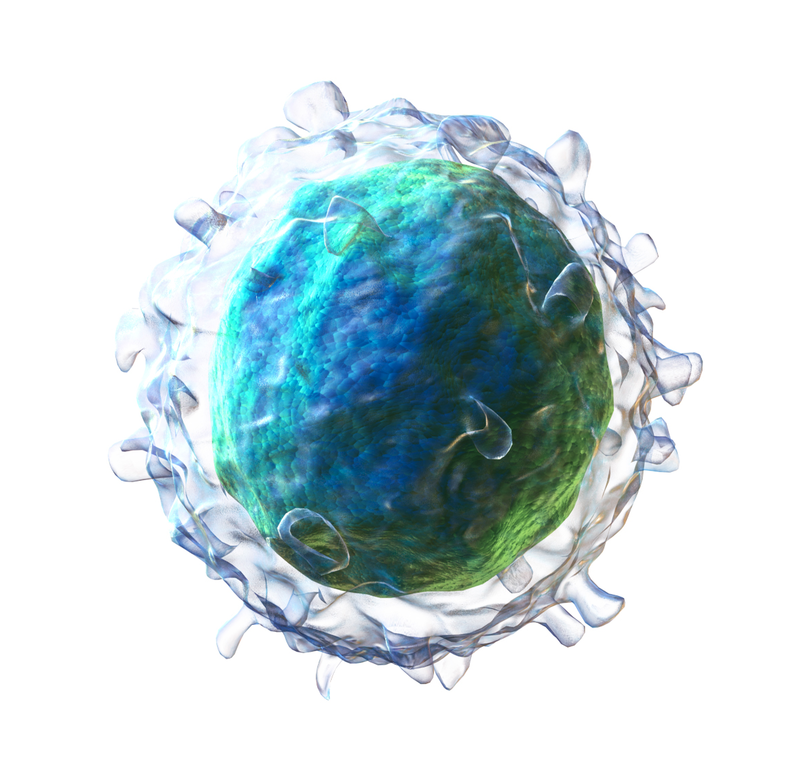
Once activated, B-cells produce and release antibodies that are perfectly fitted to the antigen. These perform several functions. They neutralise the virus, making it incapable of attacking the host cells; bind virus particles together in a process called agglutination; and bind to antigens, labelling them as targets. Memory B-cells, like memory T-cells, which remember the virus antigen, are also formed.
After five days, once the T-cells and B-cells are recruited, and the battle begins in earnest, the infected person starts to feel the symptoms of COVID-19. A sore throat, loss of smell and taste, and a persistent cough are caused by the inflammatory response. The mucus from a runny nose and that coughed up from the lungs is composed of dead phagocytes, dead cells, inflammatory exudate, and dead and living microbes. It is through these particles an infectious person spreads the disease.
Pyrexia, caused by the pyrogen interleukin (which you might recall increases molecular activity), is what brings about a heightened temperature, loss of appetite, and feelings of fatigue.
Most healthy people fight off the virus within 7 – 10 days. Those who do not become more seriously ill because the immune system overreacts and this leads to pneumonia, a condition in which the alveoli fill with water as a result of excess inflammation and tissue damage. This may be caused by coronavirus binding to ACE2 on type-2 pneumocytes and other membranes. ACE2 regulates a protein called angiotensin II, which raises blood pressure and causes inflammation. When coronavirus binds to ACE2, it inhibits its ability to regulate angiotensin II, thus the overreaction.

This can lead to acute respiratory distress syndrome, which happens when the inflammation of the lungs is so severe the body cannot get enough oxygen to survive, and can lead to organ failure. At this point a person is at risk of death and is admitted to intensive care and put on a ventilator.
Knowledge of the immune system not only helps us to understand how the body fights off coronavirus but also how the vaccines work. The Oxford-AstraZeneca vaccine, like other flu vaccines, uses a weakened form of the virus to activate the immune system’s response, so the T-cells and B-cells have memory of the antigen and can respond immediately upon a repeat infection.
The Pfizer-BioNTech is more novel because it takes the genetic code from the coronavirus antigen and uses it to create a messenger RNA (mRNA) sequence that tells the vaccinated person’s cells to produce antigens and present them to the T-cells and B-cells, preparing them for an immediate response.
***
My research has provided me with an illuminating revelation of hidden processes inside my body I was unaware of. In the death-eating phagocytes who process the dead virus and present its antigens it is possible to find elements of the Annuvian.
Could the white blood cells be seen as ‘guardians’ posted by Gwyn ‘White’ to help us defend ourselves from viruses like he and his host hold back the fury of the spirits of Annwn?
Perhaps… but I think truth of the matter is more complicated for Gwyn is said to contain the spirits of Annwn not only in his realm, but in his person, which is equivalent to us being able to contain the virus. This is impossible for us – for each side it is a battle to the death. It can only be contained by a god.
Paradoxically, Gwyn might be associated both with the breath-stealing life-stealing coronavirus and with the white cells who act as defenders and mediators within our bodies.
As a ‘bull of conflict’ he embodies the dark truth that, without and within, existence is ‘battle and conflict’. Yet that in this, beauty and wonder – the poetry of Annwn – can be found.
SOURCES
Anne Waugh, Alison Grant, Ross and Wilson Anatomy and Physiology, (Elsevier, 2018)
‘What is the ACE2 receptor, how is it connected to coronavirus and why might it be key to treating COVID-19? The experts explain’, The Conversation, https://theconversation.com/what-is-the-ace2-receptor-how-is-it-connected-to-coronavirus-and-why-might-it-be-key-to-treating-covid-19-the-experts-explain-136928
‘Coronavirus: What it does the body’, BBC News, https://www.bbc.co.uk/news/health-51214864

 The Sanctuary of Vindos