Yesterday I planted a new rose bush to represent the growth of the sanctuary.


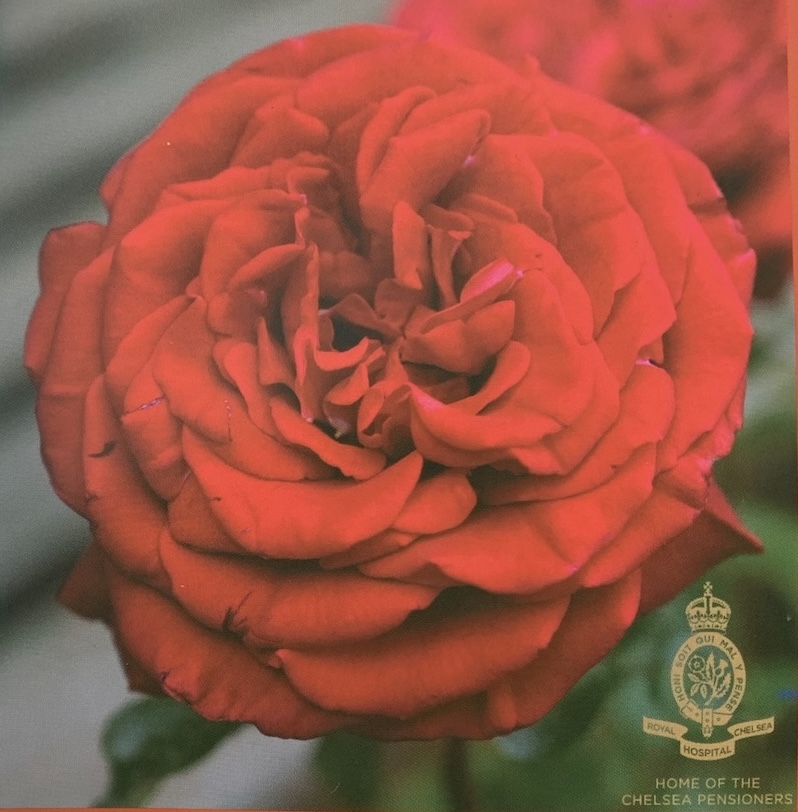
This morning I was gifted a logo – a white winged horse against a red rose.

This inspired me to open a donations page to enable others to help the sanctuary to grow HERE.
Yesterday I planted a new rose bush to represent the growth of the sanctuary.
This morning I was gifted a logo – a white winged horse against a red rose.
This inspired me to open a donations page to enable others to help the sanctuary to grow HERE.
I have been practicing Antar Mouna ‘inner silence’ for over a year. I first learnt it on an Introduction to Meditation course at the Mandala Yoga Ashram. The founder, Swami Nischalananda defines it thus:
‘Antar Mouna is one of the core meditation practices of the yoga tradition. It is a precise, systematic process of cleansing the mind of its accumulated tensions and conflicts, disrupting the habit of compulsive thought and externalisation, leading to inner tranquility and silence.’ (1)
Over this period I have found it incredibly helpful for quieting my mind and for learning to witness, identify and let go of distracting and troubling thoughts.
There are six stages to Antar Mouna and I have experience of the first three. The first is ‘awareness of sense perceptions’. This involves focusing on the five senses: touch, sound, hearing, taste and inner sight. This develops the discipline of paying full attention to one sense at a time and honing each. For example, listening to sounds that are far away, then close up, following one sound, letting it go, then choosing another sound, then listening to all the sounds at once as if you’re in ‘a sea of sound’. Part of this practice is to separate the sounds from what’s causing them (ie. ‘a car’ ‘next door’s baby’).
This stage has been really helpful for me as an autistic person with sensory sensitivities for gating out sounds and not getting as annoyed with their causes.
The second stage is ‘awareness of spontaneous thoughts’. This involves watching and bearing witness to thoughts as they arise then letting them go. Thoughts are not labelled ‘good’ or ‘bad’ but ‘just thoughts’. This helps us to develop a stronger witness, not to get so caught up in our thoughts and to let them go more easily. It also helps us to see that we are not our thoughts.
Watching thoughts come and go and having experienced many occasions when I’ve been sucked in because they have been overwhelming and I’ve felt unable to continue meditating until I’ve solved that problem, got that thing planned out, contacted that person… has made me more aware of my mental processes and what types of thoughts remain problematic. I haven’t reached the point I’m able to immediately let go of more difficult thoughts yet.
I’ve only practiced the third stage very briefly. This is ‘conscious creation and disposal of thoughts.’ Here you create a thought, contemplate it for a minute, then release it. I haven’t pursued this in any more depth as it isn’t recommended without an instructor as traumatic memories can arise.
The fourth stage is ‘awareness and disposal of spontaneous thoughts.’ This is basically being aware of thoughts and dismissing them. Saying “no” to thoughts isn’t recommended until you have mastered stage three.
The fifth stage is ‘thoughtlessness’ – the inner silence that is the aim of the practice. After this, in the sixth stage, ‘spontaneous symbols’ might occur. Through practicing the first two stages I have experienced brief periods of being without thoughts and caught a glimpse of what inner silence might feel like.
In this thoughtless state enlightenment and union with the Source might be attained.
~
For me, as a Brythonic Polytheist with a near-henotheistic devotion to my patron God, Gwyn ap Nudd, I’m less concerned with enlightenment and more with a mystical union with Him and through Him with the universe. I’ve felt the need to adapt the aim to entering silent prayer to Gwyn.
Silent prayer is found in the Christian religion and particularly in the tradition of the Discalced Carmelites, who were founded by Teresa of Avila in 1562, and spend two hours a day silently communing with God. (2)
Like with Antar Mouna, there are several stages in the process of attaining silence. They are described my Teresa in The Way of Perfection. She distinguishes formal spoken prayer from mental prayer which takes place within.
At the outset she instructs her sisters: ‘I am asking you only to look at Him. For who can prevent you from turning the eyes of your soul (just for a moment, if you can do no more) upon this Lord?’ Here she urges them to look not at ‘a picture of Christ’ but His living image – ‘the Person Himself.’
She speaks of the process of recollection through which the nuns must withdraw their senses from worldly things and turn them instead within. She tells us: ‘the Lord is within us and that we should be there with Him.’
In a description which resembles the depictions of the castle of Gwyn ap Nudd in medieval Welsh mythology she describes the palace of the Lord in the soul:
‘And now let us imagine that we have within us a palace of priceless worth, built entirely of gold and precious stones— a palace, in short, fit for so great a Lord. Imagine that it is partly your doing that this palace should be what it is— and this is really true, for there is no building so beautiful as a soul that is pure and full of virtues, and, the greater these virtues are, the more brilliantly do the stones shine. Imagine that within the palace dwells this great King, Who has vouchsafed to become your Father and Who is seated upon a throne of supreme price—namely, your heart.’
She emphasises throughout that we not need to go Heaven to find God because He is always so near. This resembles how Gwyn might be seen as distant in Annwn yet He is always close, in our souls, in our hearts.
She describes the Prayer of Quiet as ‘perfect contemplation’. ‘This is a supernatural state, and, however hard we try, we cannot reach it for ourselves; for it is a state in which the soul enters into peace, or rather in which the Lord gives it peace through His presence… In this state all the faculties are stilled. The soul, in a way which has nothing to do with the outward senses, realizes that it is now very close to its God, and that, if it were but a little closer, it would become one with Him through union.’ She goes on to say that the will also ceases its striving and is united with God’s.
The Prayer of Union is the next stage and this might be followed by rapture. (3)
~
There are several major differences between these spiritual techniques. For Teresa neither the physical senses or the inner world of thoughts, feelings or emotions are viewed to be worthy of contemplation. The sole focus is on God.
Teresa does not provide a way of quieting the mind. This is likely because the seclusion of the monastery provides a quiet environment for the nuns. (It’s due to the lack of this that I have had to turn to the yogic tradition).
Another difference is that the aim of Antar Mouna is to use the thoughtless state to attain enlightenment whereas that of silent prayer is to enter union with God.
I am currently experimenting with combining the two – firstly dedicating the process of purifying my mind through Antar Mouna to Gwyn then secondly entering silent prayer with the aim of experiencing deeper union with Him.
I pray to the Gatherer of Souls,
You who waits patiently,
You who works ceaselessly,
gathering the souls of the dead,
being there for those who are on the brink.
May I be a good guide of souls.
May I share and lessen your burden
by guiding others on their paths in this world
and through Your doors and into Annwn.
May I be a good guide of souls
for the living and for the dead.
May I serve You patiently and ceaselessly
on my days of joy and my days of sorrow
on this sacred day and on every day until my end.
The gift of shamanism lies in each and every one of us. It’s a gift from the Gods, from the spirits, from the spirit world. Over the past six months I have been gifting my time and energy to help others access this magical gift.
As part of my training towards becoming a shamanic practitioner I offered a course of six one-to-one weekly ‘Introduction to Shamanism’ sessions to newcomers covering journeying safely in the Lower World, Upper World and Middle World and meeting animal spirit guides and spirit teachers. I also covered the basics of shamanic healing.
It’s been a gift for me to watch others grow from having little to no knowledge of shamanism and doubts about their ability to journey to making their first connections with their guides and beginning to explore the spirit world.
I have witnessed eight people begin to find their ways around the worlds and build relationships with their guides in ways that have been fun, loving and spine-tinglingly powerful. The process has been moving and surprising as I’ve come to see the spirit world in new ways through other people’s eyes and observed their tenacity and the ingenuity of the answers from their helpers.
Each six-week long journey has had its own magic and been healing in its own right. Each person has met guides in each the worlds and has the confidence and ability to journey alone and to access basic healing from the spirits.
Shamanism is our birth right and it has been near-lost to the British Isles since the coming of Christianity and its denegration of our native Gods and spirits as devils and more recently the hegemony of the reductivist worldview wherein spirits are not seen to exist, which has led to industrialism and capitalism.
It cheers me greatly that so many people in my local area from different walks of life are interested in shamanism and are claiming this innate gift back.

With my eight case studies complete I am offering my six week ‘Introduction to Shamanism’ at student rates (£15 per hour or £70 for six) HERE.
To read the testimonials from my volunteer clients click HERE.
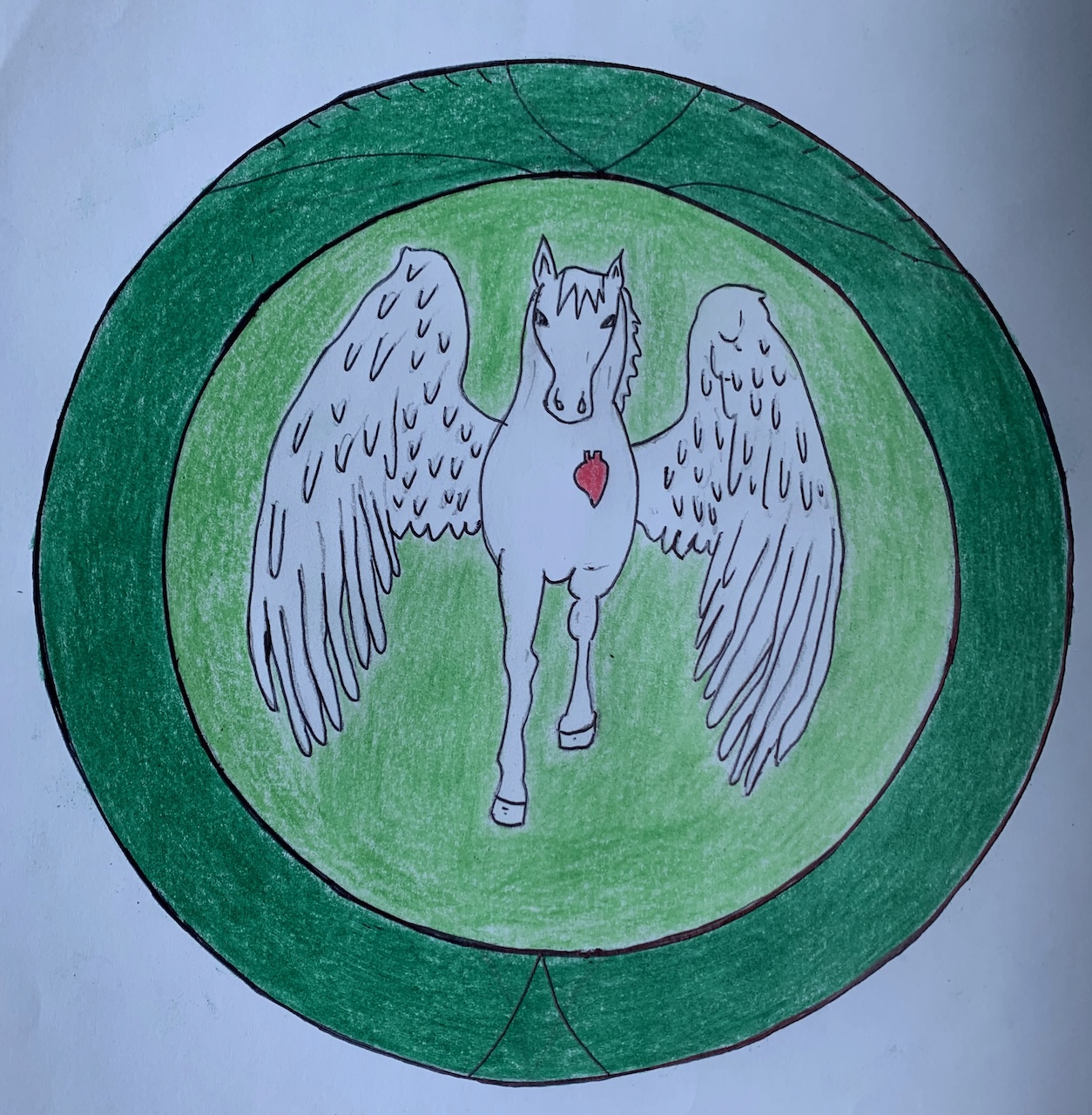
The wings of my heart are beating
into the great unknown.
The voice of my Beloved
close yet distant calls me home.
~
I experience my heart as wayward and flighty like my white winged mare who resides in this chakra. But that’s a judgement of the brain.
I learn that it’s Western culture which has come to value the thoughts of the brain over the feelings of the heart. This is not how we’re biologically made to be. Stephen Buhner’s* research shows the sensory information received from our surroundings goes first to the heart and then to the brain which processes it and sends it back for the heart to analyse and make decisions on. Andreas Weber** notes there are more afferent nerves leading from the heart than to the brain than vice versa and the heart is the manager.
Buhner tells us the heart contains pace making cells which entrain together to form the heart’s beat. These create its electromagnetic field which is five thousand times stronger than the brain’s. The heart’s electromagnetic frequencies are experienced as feelings as emotions and they are constantly affected by our interactions with the world and others. The heart, Buhner states, ‘is an organ of perception.’
When did we start valuing the thoughts of our heads over the feelings of our hearts? I think of the Celtic tradition of head-hunting and suspect it began with the warrior cultures of the Bronze Age and Iron Age and their druidic elites. That it was at this time the belief was propagated that the soul resides in the head.
I think of the story in Culhwch and Olwen wherein Gwyn ap Nudd feeds the heart of Cyledyr to his father and suspect it reflects an older belief in hunter-gatherer societies wherein the soul was believed to reside in the heart.
And the landscape of my heart chakra is a an ancient oak wood, a temperate rain forest, where the people follow the ways not of the head but the heart.
One of my biggest lessons has been learning to trust my heart.
Several years ago I sacrificed my heart to Gwyn and it journeyed through fire and ice to be returned by Him to my chest in preparation for our sacred marriage.
Fire and ice. Hot and cold. Red and blue. The extremes of the heart. And still I suffer them with my rosacea (hot red face) and Raynaud’s (cold blue toes).
I recognise both are rooted in being trapped in a sympathetic nervous system response due to being an autistic introvert with anxiety living in a loud neurotypical social world. I learn to calm my nervous system with meditation – by tuning into my breath and the beat of my heart. I strive to align my heartbeat with Gwyn’s and find when I’m doing shamanic and meditative work with others I’m able to cohere with their hearts. My resting heart rate falls and my heart rate variability rises but I know (not only in my brain but in my heart) I won’t be able to fully unstick myself from being in fight or flight mode until I’m financially independent.
For now I follow the Monastery of Annwn’s Rule of the Heart, striving to trust my heart, to align it with Gwyn’s, to listen to its perceptions as His people once did.
~
Chakra: Heart / Location: Chest / Colour: Green / System: Circulatory / Gland: Thymus / Sense: Hearing / Realm: Relationships / Element: Air / Faculties: Emotions and feelings / Animal: Winged Horse
~
*In The Secret Teachings of Plants: The Intelligence of the Heart in the Direct Perception of Nature.
**In ‘Heart Wisdom: Exploring the Heart’s Role in Philosophy, Science and Mysticism’ https://advaya.life/
‘They strive to lead their lives in the world but not of the world’
~ Carmelite Sisters of the Most Sacred Heart Los Angeles
When I took my monastic vows as a nun of Annwn in October 2022 I was leading a very solitary life centring on devotion to my Gods and on my writing. My only connections with the outside world were online – with fellow members of the Monastery of Annwn and with the Pagan and Polytheist blogosphere.
Things changed after I realised my book, The King of Annwn, wasn’t destined to be professionally published and I received the gnosis I must give my ambition to be a professional writer up for good.
In spring 2024 in a shamanic journey I was shown I must ‘re-root the monastery’. It took me a while to work out what that meant. I took it literally and tried returning to horticultural volunteering but ran into physical limitations with knee problems and Raynaud’s.
I also began training as a shamanic practitioner and have now realised that is where my true calling lies. Over the past six months I have been providing shamanic guidance and running shamanic circles in my local community and have recently begun to offer shamanic healings.
In some ways that I’m able to go out and work shamanically with individuals and groups of people has come as a surprise as I’m autistic and an introvert and usually find social interaction draining. In other ways it hasn’t because from the very first time I did a shamanic journey I felt a sense of potency and calling and a deep connection with the spirit world that I wanted to share.
Fifteen years since that first shamanic journey, following completing my apprenticeship to my patron God, Gwyn, a ruler of Annwn, the Brythonic Otherworld), I have finally proved ready to guide and heal others.
This has opened the possibility of leading a more outward-facing life than I guessed when I first took my vows. Of serving not only the Gods but other people.
For this I’ve looked for inspiration to other groups of monastics and have found my deepest sense of kinship with the Lay Carmelites. This an order of the Discalced Carmelites who were founded by St Teresa of Avila in 1562.
Their charism is contemplative prayer, community, and ministry. Their rule of life is characterised by six obligations: meditation, morning and evening prayer, mass, Mary, meetings, mission. (1)
These come very close to what included in the Monastery of Annwn nine vows: keeping morning and evening prayers to the Gods and Goddesses of Annwn, deepening our relationships with Them through prayer, meditation and trance, checking in and praying with other members, and building the monastery. (2)
I particularly like what the Carmelite Sisters of the Most Sacred Heart Los Angeles have to say about secular Carmelites being those who are called to ‘devotion to prayer’, ’an intimacy with Jesus Who dwells within the soul’, a ‘heart-to-heart encounter with God’ and cultivating a ‘friendship’, ‘a conversing’, a ‘listening to Him which becomes the normal way of life.’ (3)
This fits with my striving to make all my daily activities offerings to Gwyn with my shamanic work fitting so well with Him being a God of the Otherworld.
They also refer to Lay Carmelites being ‘In the world but not of the world.’ (4) That also fits with my life being centred around my Gods first and foremost rather than on money, career or social life, with my service to other people being one of the ways I serve my Gods.
I’m now two-and-half years into living by vows and am now contemplating the possibility that when I take my lifelong vows in autumn 2026 they might be as a lay nun as opposed to a nun who is leading a near-hermitic life.
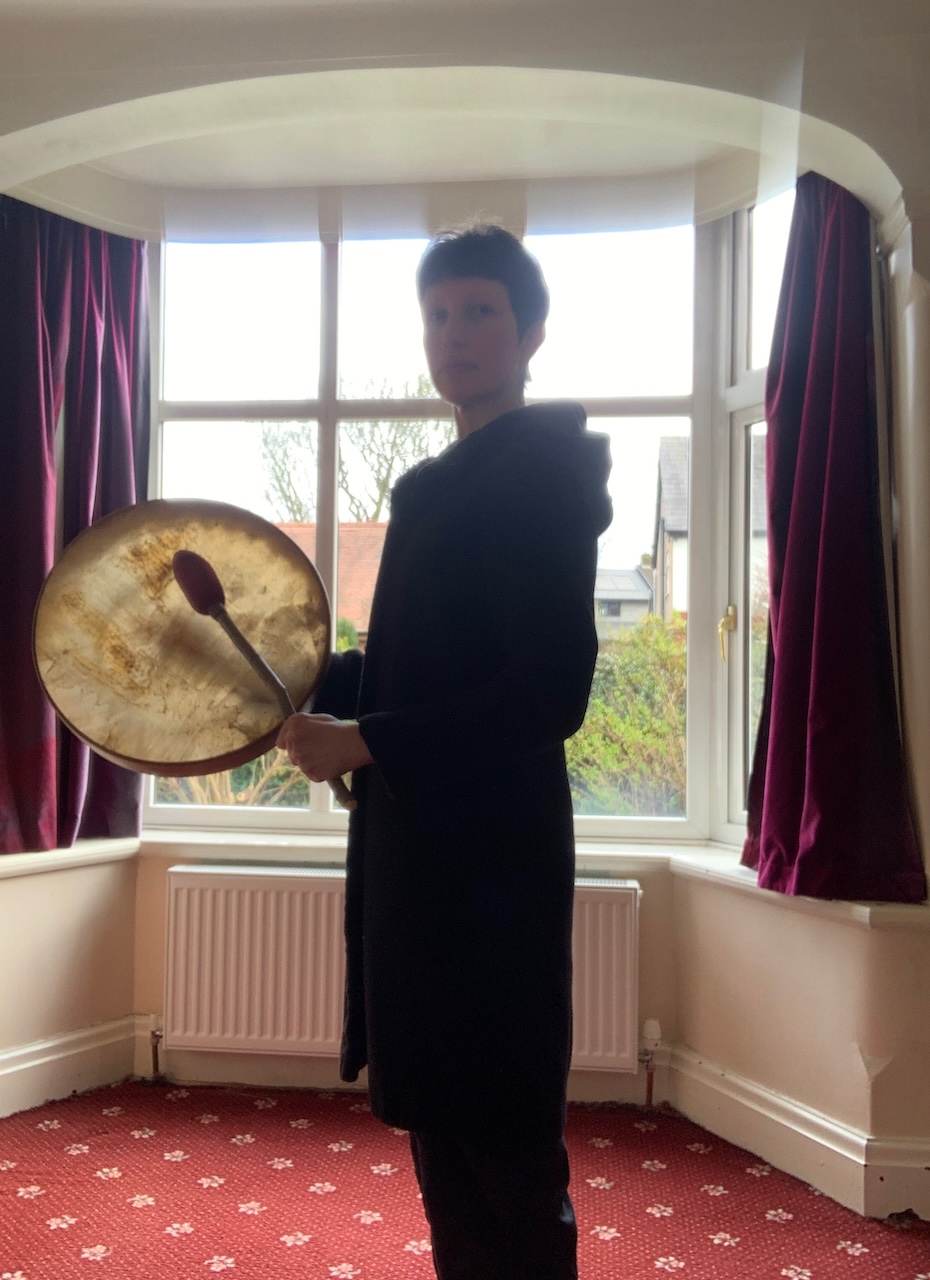
“You’re a nun with a drum,” Gwyn told me when I asked if I could bring monasticism and shamanism together. His joking words now summarise my path.
(1) ‘The 6 M’s on being a Carmelite’, Life as an OCDS Carmelite, https://ocds-carmelite.blogspot.com/2009/01/6-ms-on-being-carmelite.html
(2) ‘Our Nine Vows’, The Monastery of Annwn, https://themonasteryofannwn.wordpress.com/our-nine-vows/
(3) ‘Can a Lay person be a Carmelite?’, Carmelite Sisters of the Most Sacred Heart Los Angeles – https://carmelitesistersocd.com/2013/lay-carmelite/
(4) Ibid.

My lion is raging.
My City of Jewels is burning.
I am feeding the fire in my belly
to fill the void within.
~
Connecting with this chakra has been like wrestling with a lion. Unsurprisingly I’ve discovered that, like the digestive system which it governs, it has a mind and a will of its own. It’s a greedy guts but it’s not very gutsy. It will spill its guts over any tiny little thing.
Both this chakra and my digestive system are overactive. I’ve long had difficulties with IBS. “Slow down,” “slow down,” the constant messages I’ve been receiving from the rest of my body and from my Gods.
I journey to my bowels and see the microbiota are overwhelmed by ‘reds’ (Streptococcus sp.). I take probiotics and ‘greens’ (Bifidobacterium sp.) and ‘whites’ (Lactobacillus sp.) become more dominant. Things slow down. Too much. I see them lying on a beach on their bath towels. I stop the doses and give them extra green vegetables to chew on and tell them to get back to work.
I succeed in slowing my bowels but what about my life? This chakra is associated with vital energy, power, will, with the ego, with striving in the world. I’ve always been very active whether it’s exercising or creating. I’ve been ambitious too. Since becoming a nun I’ve pared that down a bit. Made more time for meditation – for being not doing. Hard. I can meditate for a couple of hours a day now but even that can easily become a competition.
This chakra also governs the adrenals and the animal there is Scrappy Doo from Scooby Doo. Scrappy with zoomies with his boxing gloves on. “Let me at ‘em, let me at ‘em.” He’s great for starting new projects but not at getting them done.
At first I’m both afraid of and annoyed with the lion. Why is it (and why I am I) so hungry? Why does it roar so at tiny vexations then disappear beneath the table when real courage is required?
I go “raargh!” at the lion. It goes “raargh!” back. We roar together and as we roar the lion shrinks until it so bigger than a tiny cub that fits on my fingernail. It reveals that it’s afraid of the void, that’s why it’s always hungry, always roaring.
I take it into my heart chakra with my white winged mare, with Gwyn, show it love and reassurance. We go to the void and show it there is nothing to be feared.
I go to other digestive organs. Courage has long been associated with the liver – the part of us that wants to live. Lily-livered is a term for a coward. I’m relieved to find mine is dark and healthy – regenerating now my drinking has ceased. Overactivity has perhaps been good for my pancreas as unlike my mum and grannie on her side I have so far not developed diabetes.
“Let’s try to work together, be brave, truly brave, not roar but no resilience, not bark but no bite,” I tell the lion and the pup that looks like Scrappy Doo.
I’m doing my best to befriend this chakra – perhaps a lifetime of work.
~
Location: Abdomen / Colour: Yellow / System: Digestive / Nerve Plexus: Solar Plexus / Gland: Adrenals / Sense: Taste / Realm: The World / Element: Fire / Qualities: Vital Energy / Animal: Lion
In the Monastery of Annwn meditation group we have recently been exploring the medieval Welsh poem ‘The Spoils of Annwn’ from an Annuvian perspective rather than from the views of the ‘victors’ Arthur and Taliesin.
Last week, in the guided visualisation meditation, we journeyed to the first fortress, Caer Siddi ‘the Fairy Fort’, on our magical monastic boat and gained personal visions based on lines from the poem:
Maintained was Gwair’s prison in Caer Siddi
throughout Pwyll and Pryderi’s story.
No-one went there before he did –
into the heavy grey chain guarding the loyal lad.
And before the spoils / herds of Annwn he was singing sadly,
and until Doom shall our poetic prayer continue.
I found myself standing before Gwyn wearing chains with Gwair in a scene resembling the Devil card from the Rider Waite Tarot. Whilst Gwair was imprisoned in a heavy grey chain I was wearing only toy-like silver handcuffs and felt they were close to breaking and to my being released.
Gwyn said:
‘As long as you sing you will be in chains.
In the silence of meditation you will be free.’
Gwyn’s words reminded me of the shift in my path from being a bard in the mead hall to becoming a Nun of Annwn. To moving away from performing poetry to a more monastic and shamanic path.
Another way of looking at it was that the singing is the voice of the incessant thoughts in my head and that only when I’m silent in meditation will their song and the chains be gone.

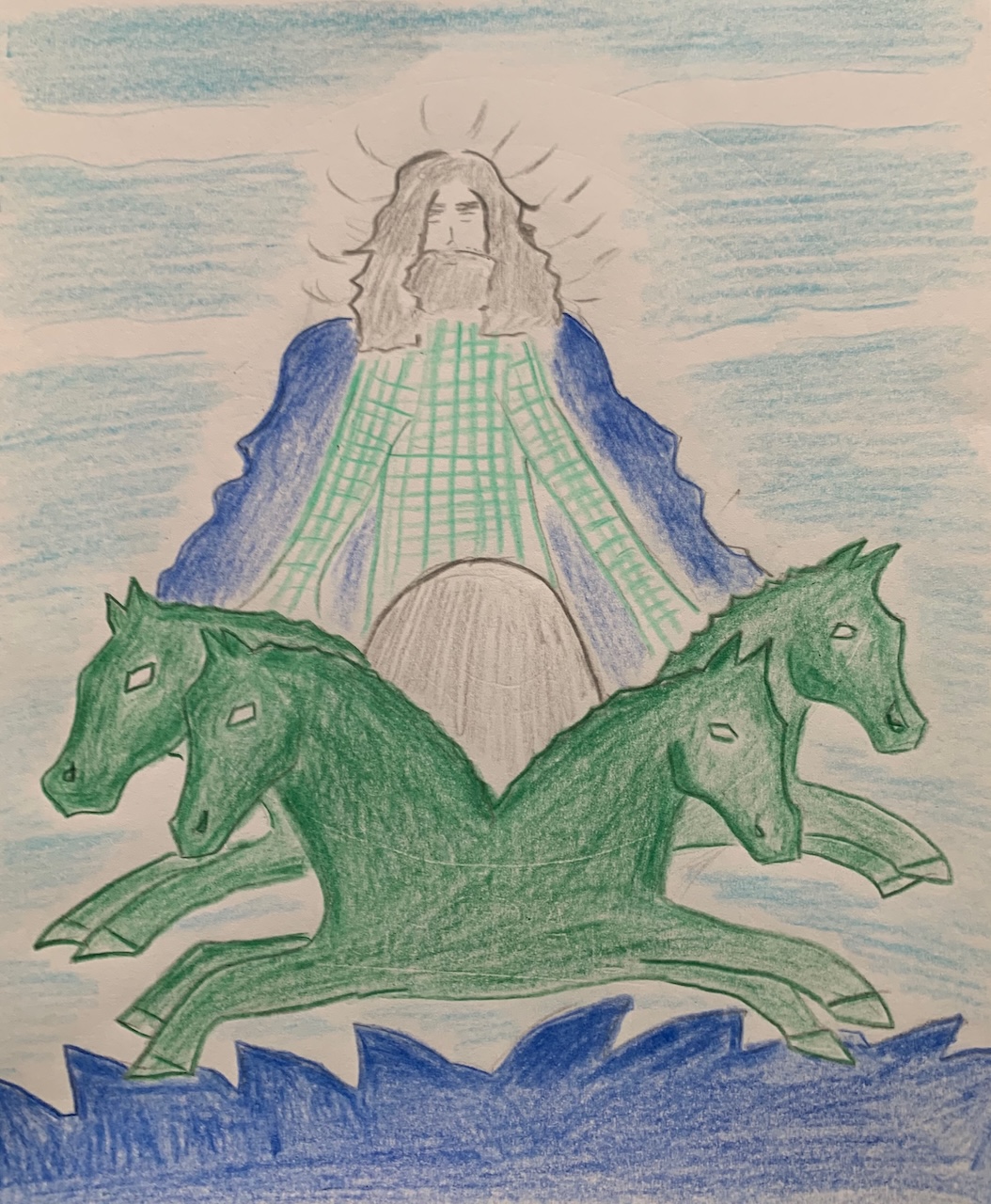
Recently, in one-to-one sessions with another monastic devotee of Annwn, we have been exploring her intuitions about Gwyn ap Nudd’s associations with the sea. Gwyn’s father, Nodens / Nudd, is equated with Neptune at Chesterholm in an inscription which reads Deo No / Neptu. This suggests, like Neptune, He is associated with freshwater and the sea, seahorses, and with horses more widely (Neptune was worshipped as Neptunus Equestris – God of horse racing).
Little is known about the myths of Neptune but there are many about His Greek counterpart, Poseidon Hippios ‘of the horse’, the Father of Horses. When Demeter fled Poseidon’s lust in the form of a mare He took the form of a stallion and mated with Her and She bore a colt called Arion ‘Very Swift’. In another tale He mated with Medusa and She gave birth to Pegasus.
These stories remind me of my personal gnosis about Nodens mating with Anrhuna, the Dragon Mother of Annwn, to bear Gwyn and Creiddylad and other children who might have included horses and seahorses. Intriguingly Rhiannon, who like Creiddylad is a Queen of Annwn, is a Horse Goddess. I often wonder if Creiddylad and Rhiannon are titles for the same Goddess who takes horse form. If so this would suggest that Nodens is the Father of Horses and likely Sea Horses here in Britain. That He might be the father of Gwyn’s sea-going steed, Du y Moroedd, ‘the Black of the Seas’.
It also make me wonder if Nodens and Anrhuna might be the parents of white winged horses like pegasus from whom my closest spirit animal, a white winged mare, is descended. March allelog, ‘flying horses’, are known in Wales.
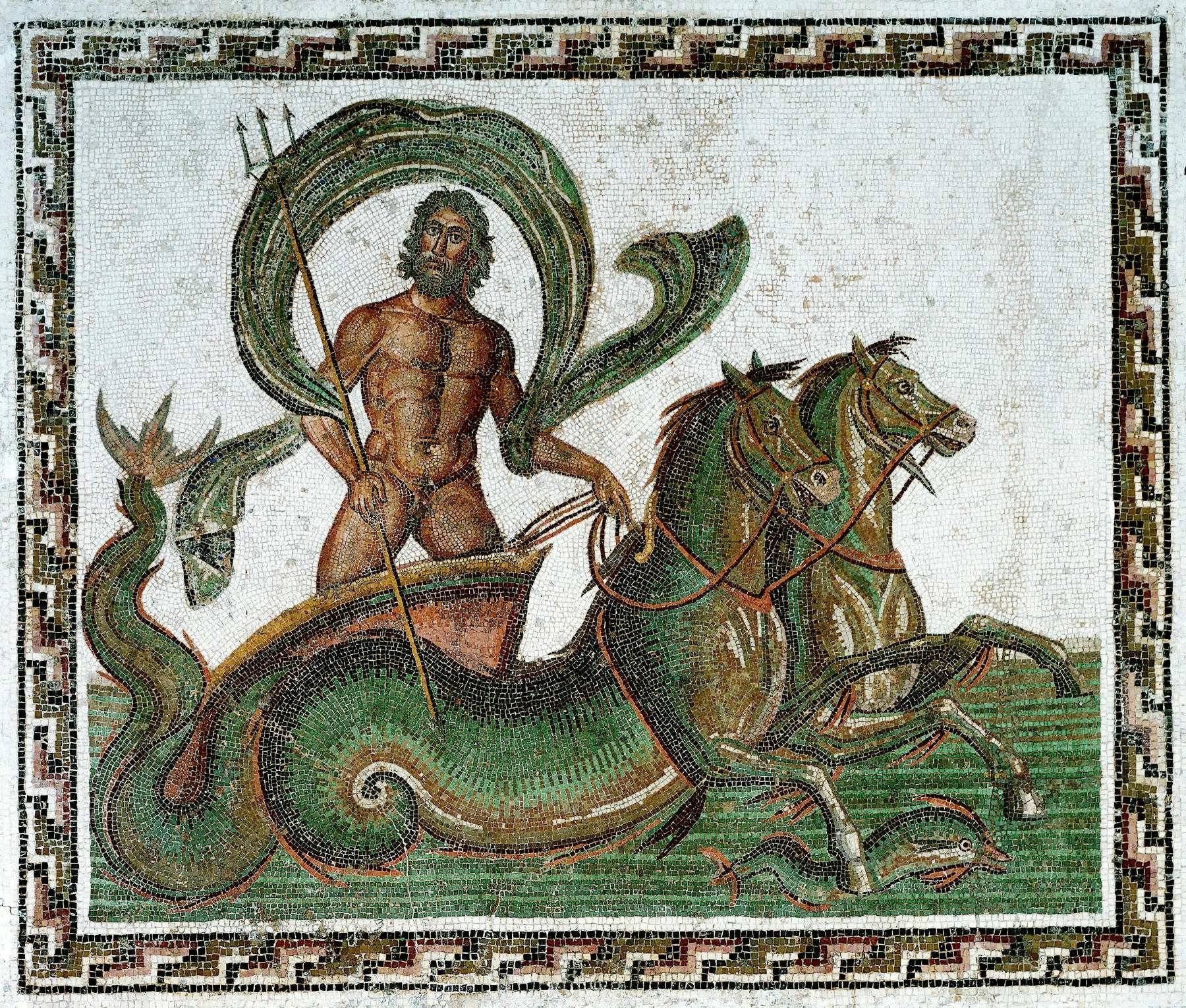
The devotional art above was born from these musings and is based on the mural crown depicting Nodens on a chariot pulled by four seahorses from Lydney and a triumph of Neptune in a chariot drawn by two seahorses from Sousse Archaeological Museum.


They say you should be my sacred place.
They say you should be my own abode.
Why, then, when I visit do I feel like I am
stranded on an island far from home?
~
The sacred place that houses the waterworks of the urinary system and, for me, a reproductive system centred on a womb from which menstrual blood and vaginal fluids might flow and a baby and its afterbirth might be born.
Traditionally the sacral chakra is the locus of sexuality and desire. So it’s a strange one for me to approach as someone who is asexual and has been struggling with secondary amenrrhoea on and off for over five years. Is the latter caused by exuberant exercise, being on the lighter side, living with autism and anxiety or stress about not earning a living from my vocation? Or has my womb shut down simply because it knows it is pointless putting energy into being active when I have no desire for sex or for children?
In one shamanic journey my reproductive system appears as a grandfather clock that has stopped. In another I am shown two playing cards – a Jack of Diamonds and a Jack of Diamonds falling from my ovaries. “You’ve had your last chance,” they tell me suggesting I may never see a period again.
I learn that excess cortisol caused by stress inhibits the release of gonadatopin-releasing hormone in the hypothalamus, which fails to move to the pituitary gland to instruct it to make follicle stimulating hormone and lutinising hormone to tell the ovaries to make an egg and bring about ovulation. Because no egg is released the ovaries fail to make oestrogen and progesterone. Thus the reproductive cycle shuts down. Yet I’m not that stressed at present. The inertia of my womb remains a mystery.
Yet my kidneys are healthy. I follow the cleverness of my nephrons – filtering, reabsoring, secreting, excreting, making sure there is enough glucose, protein and vitamins in my blood and removing urea and uric acid. Water reuptake and thus thirst and needing to pee carefully regulated by the hormones aldosterone and anti-diuretic hormone.
My relationship with my urinary system is good and it thanks me. The only thing I drink these days is water and only when I’m thirsty. It hasn’t always been that way. When I was drinking a small bottle of vodka every night to get to sleep it sent me cystitis and a kidney infection and made me cut down. Caffeine went due to panic attacks. Hot chocolate due to lactose intolerance. Beer and wine due to IBS and lifestyle changes. Finally herbal teas because of my rosacea. I feel healthier. Water feels good all the way down.
Let’s return to desire. What’s desire detached from sexuality? The desire to create, the desire for spiritual connection, the desire for mystical union with my God, my Beloved, my Husband outside the limits of sex and romance.
I also associate the sacral chakra with the watery subliminal realm of dream. The animal who appears here is a seahorse and I recall that in seahorses it is not the female with the active womb who bears young but instead the male.
~
Location: sacrum / Colour: Orange / System – Reproductive and urinary / Nerve Plexus: Lumbo-sacral / Endocrine: Ovaries and Testes / Sense: Smell / Realm: Dream / Element: Water / Qualities: Sexuality and Desire / Animal: Seahorse
 The Sanctuary of Vindos