I. You are the plant who tells the truth (as if other plants are fickle).
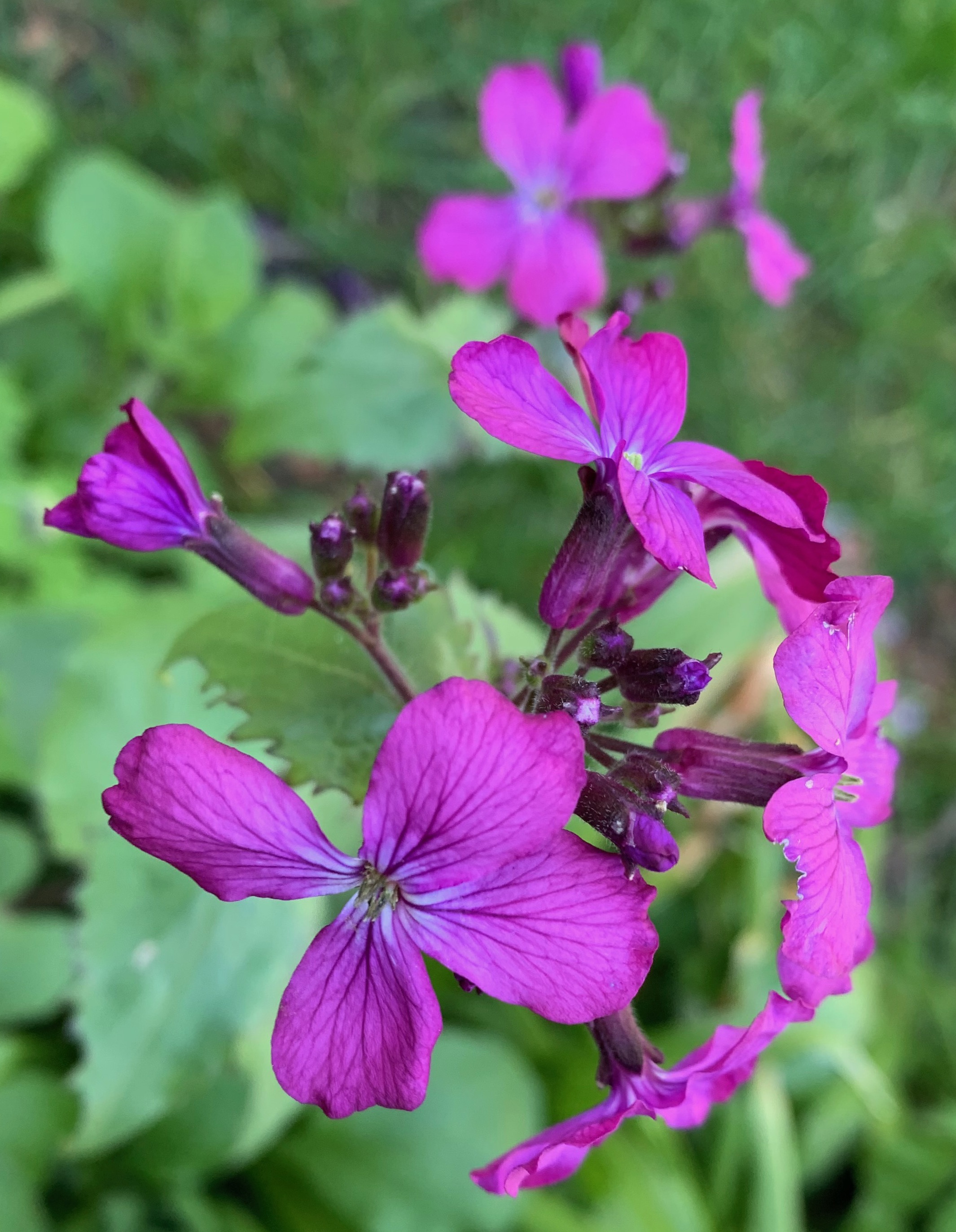
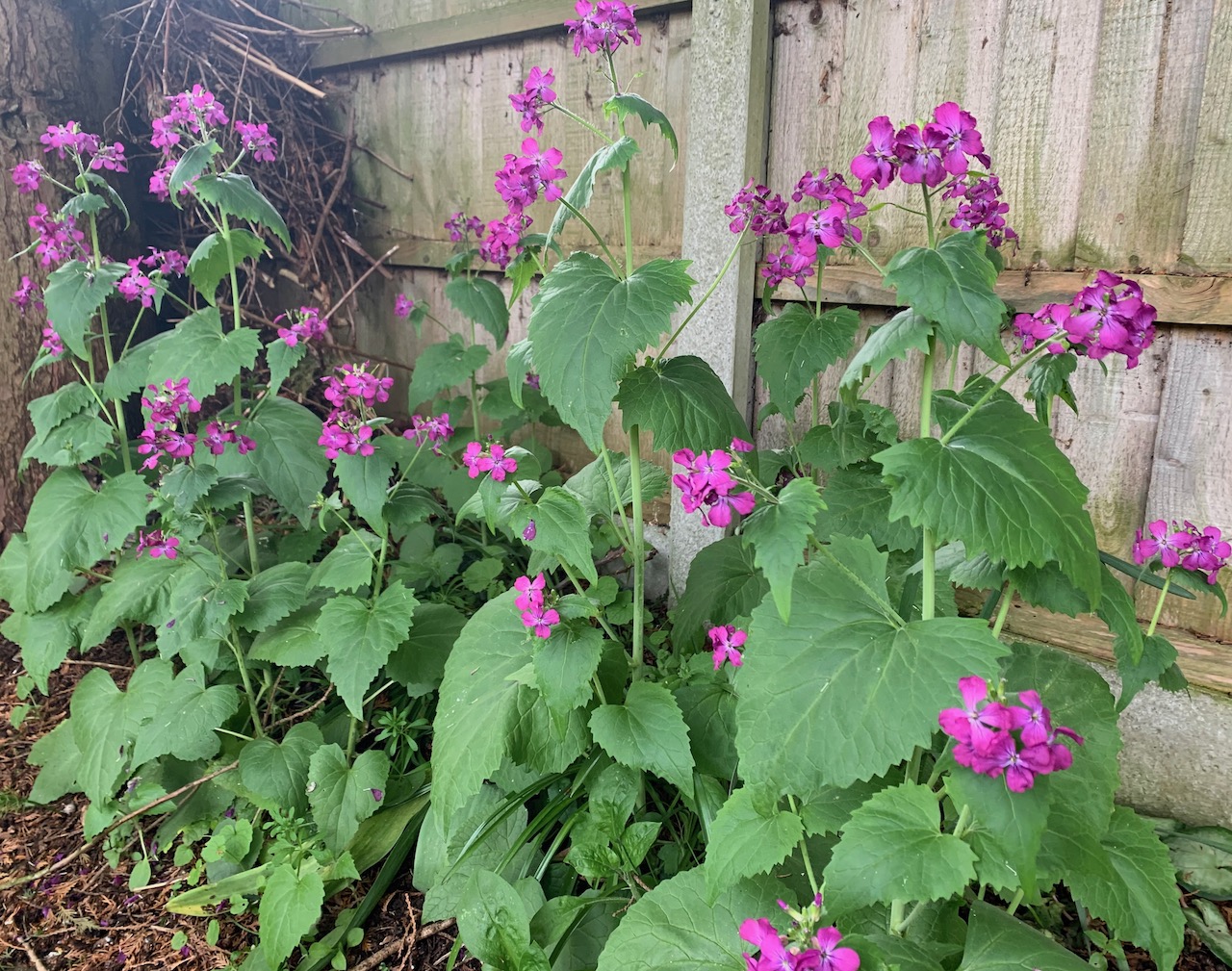
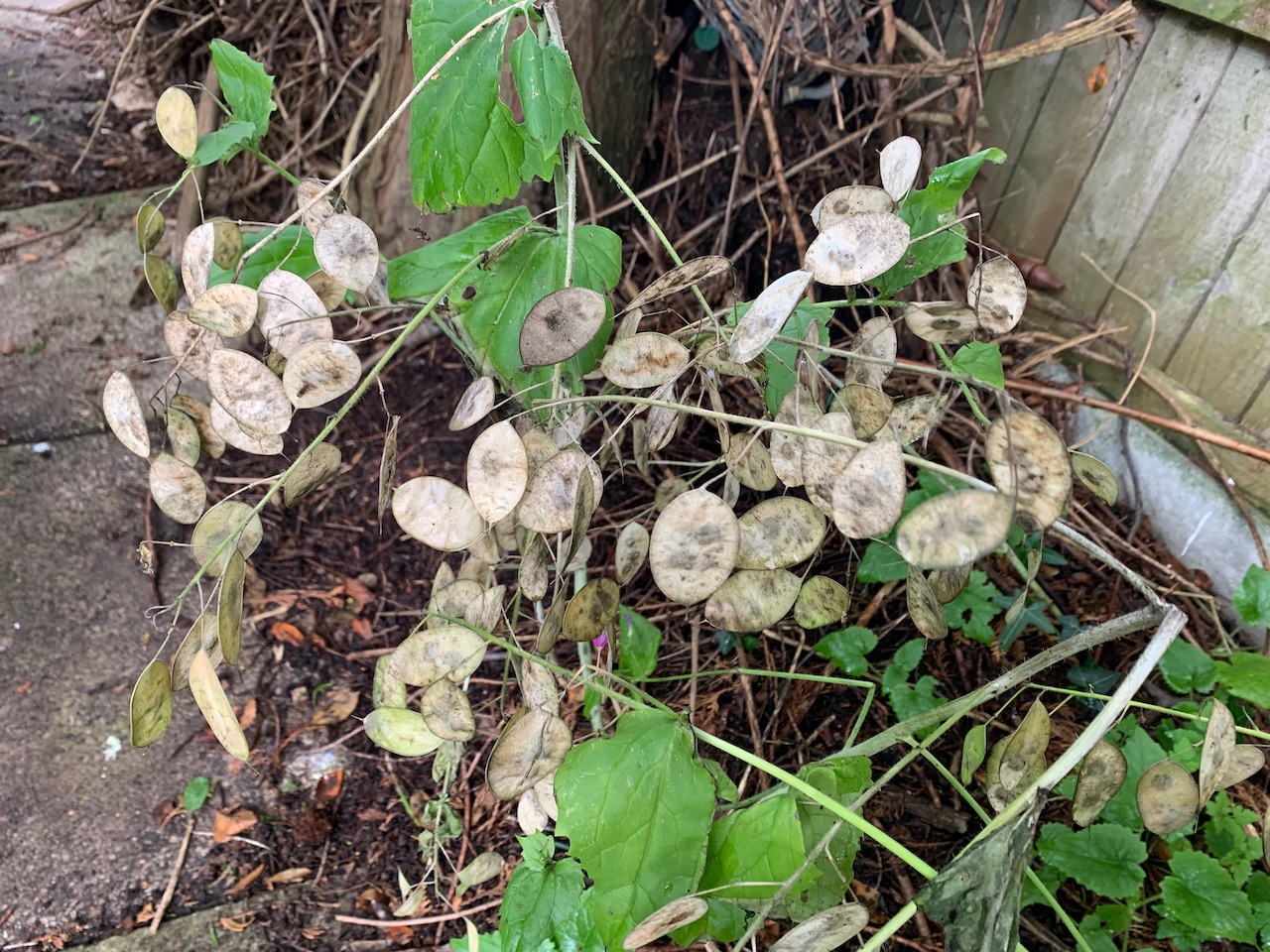
Your flowers are purple. Your leaves are amplexicaul. Your seed pods are known as siliques.
Their stubble reminds me of a dice game.
I count them – no ones, twos, threes. I see some fours, fives, sixes, sevens, eights, no nines.
To count in nines is just too terrifying.
II. I was brought up to tell the truth thinking it would lead to praise, to handclaps,
not to snotty sobbing no tissues can stem, no pillow can smother, no word.
I did not know that truth is ugly and unflowerlike.
That your long long taproot reaches into the underworld where the dark moons of your seeds fall and fall and fall and fall and fall and germinate.
III. Lunaria, you are like the moon, waxing and waning, the call of magic that attempts to assemble all the parts of my soul
in the dark tower of your being before the time of your fall.
The dark nun, the dark magician speaking our truths in our tears and blood,
learning discipline and devotion to the truths before our eyes.
V. In your presence we are held by our God who is the darkness of the edges all around us even when He is asleep or dead haunting the shadows of the inbetween places in leafy dapples.
VI. There are two sides to your coin, to your money pennies, to your bets.
You pose the question of how many nuns are in the void, how many spirits of Annwn can dance on my fingertips.
As many as the seeds that will fall in my garden this year and grow and germinate
beneath the soil and beneath my skin
as I strive to make a study in honesty through the seasons every year.
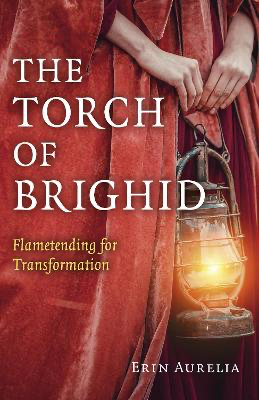
The Torch of Brighid is a book by Erin Aurelia who has tended the sacred flame of the Celtic Goddess Brighid for over twenty years. The book provides historical information about Brighid based on existing sources and introduces a transformational flametending practice that is rooted in tradition and inspired by mythic connections and by Brighid herself. The author makes it clear at the beginning that she is not reconstructing a past Pagan practice.
Working with traditional material Erin has produced a series of meditations forming a transformational journey based upon Brighid’s roles as smith, healer and poet (and dreamer*), the ogam, the three cauldrons and the celebration of Imbolc.
She begins by providing Brighid’s historical background followed by guidance for setting up an altar to Brighid and beginning a flame tending practice through making a Brighid-flame candle ‘to light and tend Brighid’s fire’.
As further preparatory work there are meditations in the form of visits to the Inner Temple, the Well of Wisdom and opening to Brighid’s energy through the Mantle of Brighid. These felt like a firm foundation for a flametending practice.
Erin bases the twenty day flametending journey on the ogam and the life cycle of a tree (relating to St Brighid’s sanctuary Cill Dara ‘The Church of the Oak). The first five days focus on growth, the next five on fruiting, the next five on ripening, the last five on seeding. Meditations are given for each of the days guiding the devotee through the transformational processes.
The ritual year is based around the four Celtic festivals Imbolc, Beltane, Lughnasadh and Samhain which are identified with four ogam characters and mapped onto the Celtic cross with the fifth in the middle.
A new rite Erin introduces that particularly resonated with me was holding an ‘advent’ for Brighid’s return to the land at Imbolc based upon Her four faces.
Although I am not a Brighid devotee or a flametender myself so haven’t been called to participate in the practices outlined in the book I can see that they would provide an excellent grounding for both newcomers and practicing Polytheists to meet Brighid and begin flametending as a devotional practice.
I admired the way Erin has reimagined this series of rites from traditional material. I would recommend this book to anyone interested in Brighid and flametending and to all Polytheists seeking inspiration on how to create new rituals from existing sources with the guidance of their Gods and Goddesses.
The Torch of Brighid is available from Moon Books HERE.
*This is based on gnosis surrounding Brighid as the serpent who sleeps in winter and comes out of the mound in Scottish folklore.
I’ve enjoyed running on-and-off since my early twenties as a form of exercise that has been really beneficial to my physical and mental health. I haven’t been able to run very long distances due to problems with anterior knee pain ‘runners knee’ and with my sciatic nerve. My furthest is 15 miles. Since starting strength training I’ve been running around 30 miles a week relatively injury free.* Last year I beat my goal of running a sub 2 hour half marathon with the time of 1 hour 54s.
Before I took monastic vows as a nun of Annwn one of the things I was concerned about was whether I would still be allowed to run and continue with my strength training. When I looked into rules about exercise in monastic traditions I found they differed widely. For example in Thailand the Buddhist monks are not allowed to ‘do weight lifting’ or ‘jog’ as it is ‘not proper’ (resulting in obesity)**. Contrastingly another Buddhist order, ‘the Marathon Monks of Mt Hiei’ in Japan, have to run distances between 18.6 miles a day for 100 days to 52 miles for 100 days over a seven year period.***
It is also notable that many monastic orders incorporate martial arts such as the Chinese Shaolin Monastery, the Hindu Naga Sadhus, and the monks of the Knights Templar during the Crusades.
The moment I thought about this question in relation to my patron God, Gwyn ap Nudd, who is a warrior and a huntsman, I knew I didn’t really need to ask as He has encouraged me to run and do Taekwondo (before my local club closed) and more recently to take up strength training. I often feel closer to Him when I am running through the woods than when doing more formal devotions.
When I formulated the nine vows for the Monastery of Annwn I received the gnosis that one of them must be ‘to take care of our health’ and that could include exercise for those able to do it.
Over the past couple of years, when I am ‘in the zone’, I have found myself filled with energy that I can gift back to the Gods and the land in ad hoc prayers of thanksgiving as I have been running.
As a couple of examples this is one for my river Goddess, Belisama, as I run beside the Ribble –
‘My beautiful river, my beautiful river, my beautiful river – joy – my beautiful river, my beautiful river, beautiful river.’
This is a fragment of a praise poem that I tend to change in accordance with where I’m running –
‘I praise the land, the trees, I praise the sound of running feet, I praise the skies, I praise the clouds, I praise the sound of feet so loud…’
When I’ve had bad days and am in no mood for words I’ve offered my perseverance and effort to my Gods.
More recently I have begun using running as a form of prayer to bring myself closer to Gwyn reciting this ‘mantra’:
‘My breath with Your breath, my heart with Your heart, my feet on Your path, You and I as one.’
I am embracing running as a physical, mental, and spiritual practice that brings me into unity with my God.
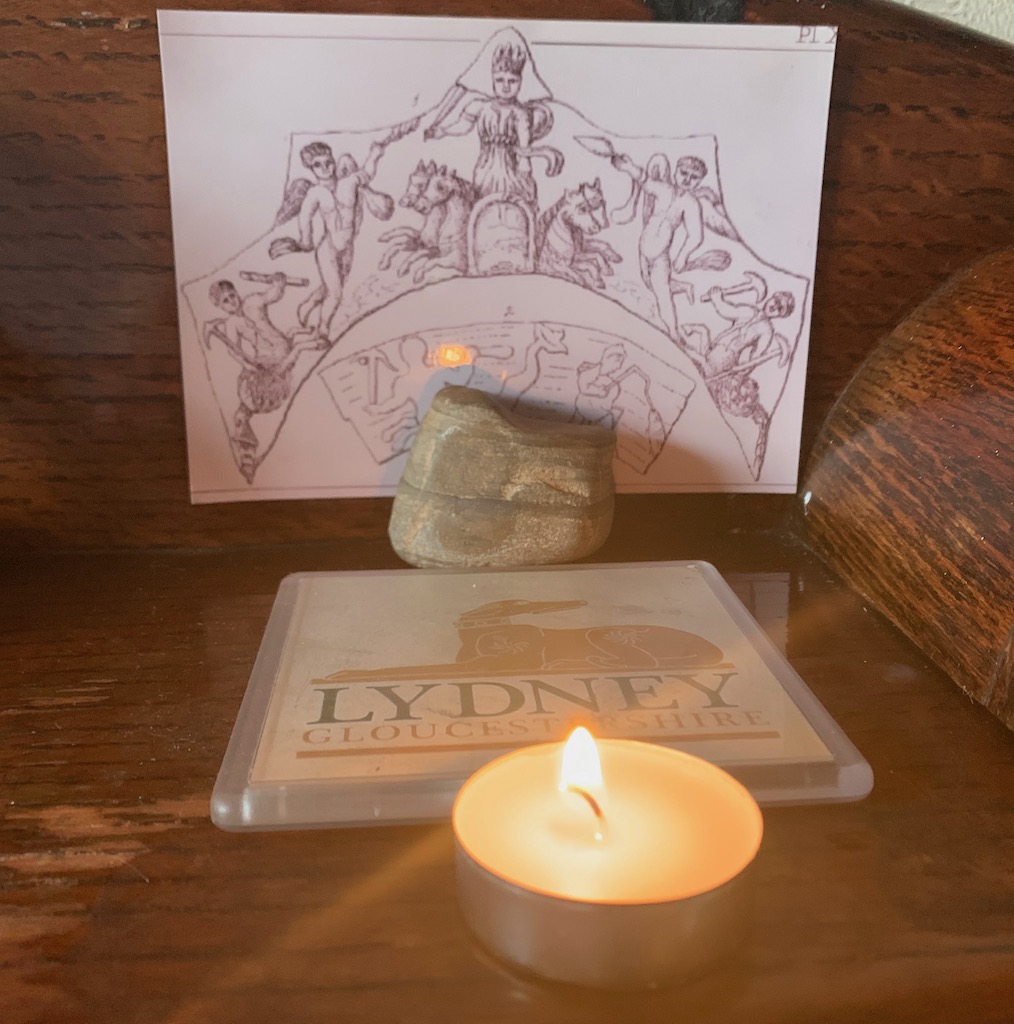
Nodens is an ancient British God of water and healing dreams. This is evidenced from His temple at Lydney where He is pictured on a mural crown driving a chariot pulled by water-horses and flanked by spirits of the wind and sea. The layout suggests that pilgrims took a ritual bath in the bath house, made offerings in His temple, then retired to a dormitory to enter a sacred sleep. On waking their dreams were interpreted by an ‘interpretus’.
I have been relating to Nodens as a God of dreams since 2012. I started connecting with Him around the same time I met His son, Vindos/Gwyn ap Nudd*. At this time I found out that Nodens was also worshipped here in Lancashire as evidenced by two Romano-British silver statuettes, dedicated to Him as Mars-Nodontis, found on Cockersand Moss.
I used to suffer from insomnia and started praying to Nodens as a dream God when I was desperate to sleep the night before travelling to the midlands for a Druid Network Conference in the midlands at which I was speaking for the first time on the bardic tradition. I was nervous not only about the talk but staying away from home in the company of so many people.
I prayed to Nodens… and I slept… and when I returned home I made Him an offering of mint tea and thus began my practice of praying to Him every night before I go to sleep and making regular offerings. Since then I have never struggled to getting to sleep although I still sometimes struggle with early waking. Skeptics amongst you might argue this is simply the consequence of having a winddown routine and spending time in darkness in front of a candle but I personally believe that my prayers to Nodens are the driving cause.
Nodens has also helped me to build a dreamwork practice. Several years ago He instructed me to collect a ‘dream stone’ from the Ribble and to place it on His altar then to put my dreams into it as an offering to Him when I wake up. I also journal my dreams for the purposes of remembering them. In the evenings I reflect on my dreams before I pray to Nodens and go to sleep.
Interestingly Nodens has never played an active role in interpreting my dreams, although I have sensed His guidance when making interpretations. I have never used books, but have been encouraged to explore the personal symbology of my dreams and what certain images and themes mean when they arise.
I often dream that I am ‘back at the stables’ – mainly at Oakfield Riding School where I spent a large part of my childhood working on the yard for free rides and where I worked as a riding instructor after giving up my PhD. In my dreams it represents my desire to return to a safe and a familiar place.
Another common theme is visiting shops that are selling a combination of rock/goth clothing and accessories and Pagan paraphenalia. These consistently have multiple levels, like Preston market, or Affleck’s Palace in Manchester, where I used to shop and hang out. I often see people from the past. I find I can’t relate to them and I cannot find what I am looking for. These dreams remind me that although I had friends with a similar taste in music we had nothing in common outside that and I didn’t truly fit in. Also that what I was searching for, some kind of deeper meaning, cannot be bought.
It’s not that often the Gods show up in my dreams but when they do it is deeply meaningful such as when Gwyn showed me how to send my soul into a hazel tree, then a beetle, then something else, in order to escape execution.**
In many of my dreams, frustratingly, I know I am on a mission for Gwyn, but have failed or forgotten what it is, showing my anxieties about failing Him.
I’ve never had an experience with Nodens in my dreams but sense the touch of His (silver) hand when there is humour. For example a couple of months back I mistakenly allowed a troublesome member who made an inciteful post into the Monastery of Annwn and was not sure what to do about it. I then dreamt I was working at the stables and found someone had put a turd in one of the horse’s water buckets and was furious. The dream told me that, in the same way I could not allow a person who puts turds in horse’s water buckets to come to the stables, I could not have someone who posts inciteful posts in the monastery. With the words of other members this convinced me to ban them.
Dreamworking with Nodens has not given me all the answers to my dreams but it has helped me to remember, record, listen to, honour and act upon them. Over the time I have been recording my dreams I have logged an increasing number each year showing my dream recall has been improving.
I believe this practice is important as dreams are the way our Gods and our souls can speak to us with the least interference from our conscious minds. For this reason I don’t try to control my dreams through techniques like lucid dreaming.***
I would be interested to hear about whether anyone else has been inspired to take up a dream work practice with Nodens or works other ways with dreams.
*Nodens is known as Nudd or Lludd in medieval Welsh literature. **I have recorded an account of this dream HERE. ***Another reason I haven’t experimented with this technique is that asking the question ‘am I dreaming?’ in everyday life would be a trigger for returning to doubts about the nature of reality and blurring of boundaries that led to me not knowing what was real and was not and made me fear I was going mad during a mental health crisis in my early twenties.
A good place to start getting into dreamwork is Nimue Brown’s book Pagan Dreaming HERE
‘Though you may get that, there is something you will not get. Twrch Trwyth will not be hunted until Gwyn ap Nudd is found – God has put the spirit of the demons of Annwfn in him, lest the world be destroyed. He will not be spared from there.’ ~ Culhwch ac Olwen
I. I have completed the impossible tasks.
I have found You and Your water-horse and Mabon and His dark white-maned steed and every one of Your hounds and every single one of their leashes.
I have ridden down Twrch Trwyth ‘Chief of Boars’ and feasted upon him.
I have found all the giants who Arthur killed but I have not found their beards or the pieces of flesh he cut from them – Ysbaddaden’s ears, his cheeks are gone.
I have found all the treasures and returned them to You – their rightful owner.
I have returned the last drop of Orddu’s blood to Pennant Gofid.
As for Culwhch and Olwen I have seen they did not live happily ever after.
Finally I killed Arthur – see his blood beneath my fingertips as I type these words?
II. Your next task feels more impossible.
You tell me to ‘build the Monastery of Annwn’.
How? Why? When you mocked at Saint Collen, taunted him with visions of Your fairy feast.
You tell me “a nun is not a saint.”
III. I think of how Collen derided You and Your people and how I have danced with inspired ones – wild men, mad women, witches, on the brink of the Abyss.
How I danced towards death – too many pills, too much drink, not enough sleep, not knowing if this would be the night, not caring, hoping we would be united.
I wonder, if You’ve got devils within You, I’m allowed to have devils within me too?
You tell me I must “embrace paradox” and “be a servant of mystery”.
IV. You show me a vision of a tapestry detailing all three hundred of the knights in Arthur’s retinue woven by a monk in a distant abbey, You amongst them, my unpicking of the weave
and following of the threads to where we know each other best in the spiralling madness of the Abyss where You, God of the Dead, have known death.
V. You tell me nothing is impossible and I know nothing is impossible except You.
Thus I will strive to fulfil my impossible task for You.
*A poem based on the difficulties of building a monastery that does not fit with recognised religions and that is dedicated to Deities who are ‘other’ / ‘otherworldly’ in relation to practical necessities such as having our own bank account to fund our forum, website and potential Zoom channel.
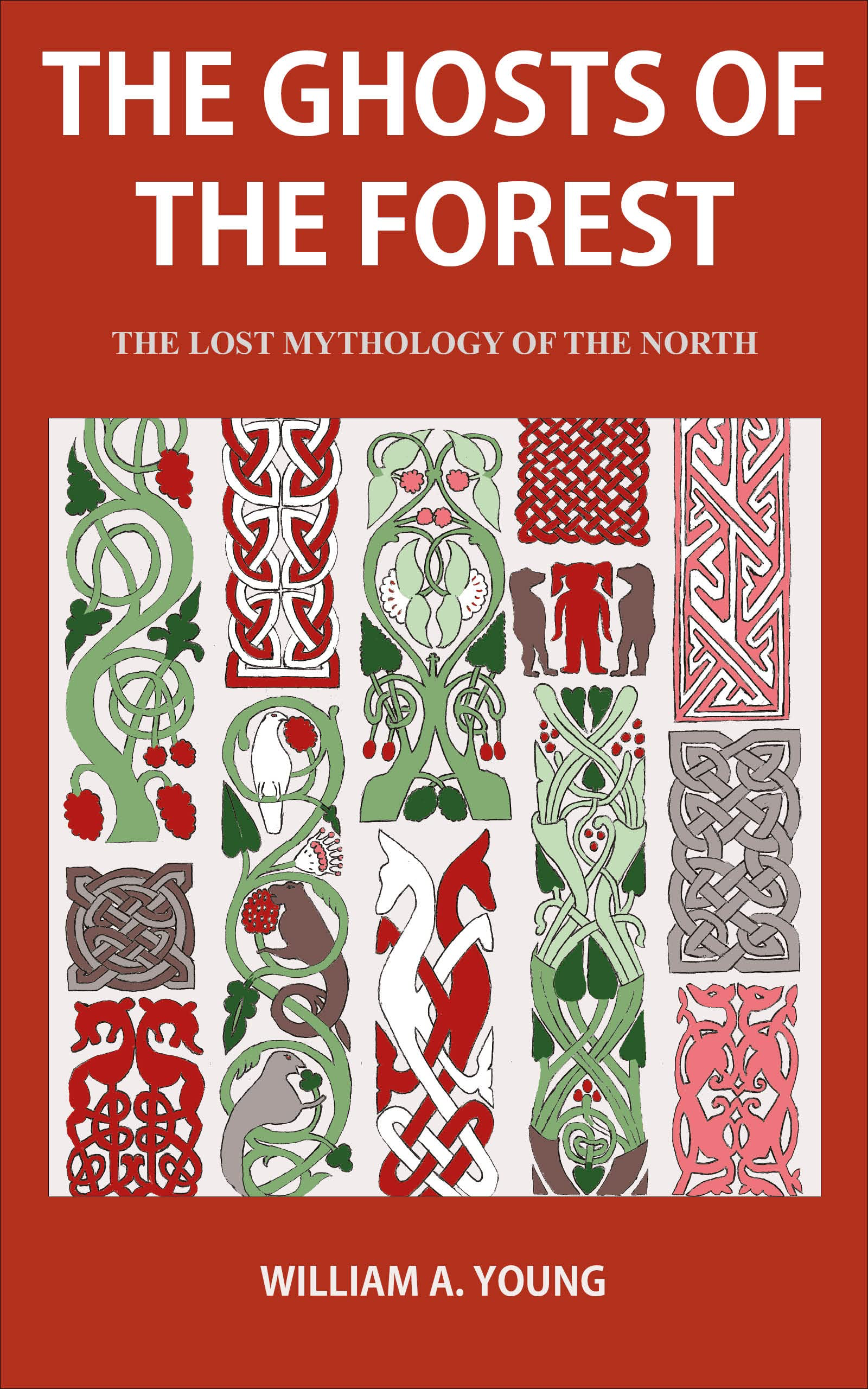
In The Ghosts of the Forest – The Lost Mythology of the North, Edinburgh-based writer William A. Young traces the folklore and legends of southern Scotland and the Borders and the figures within them back into the Brythonic past of Yr Hen Ogledd ‘The Old North’* and prehistoric Britain.
William follows a number of ghosts in literature and on foot, across the landscapes where the stories are set, to trace how they have arisen from the land – from a ‘Dreaming North’. He begins with Walter Scott and notes that his own collecting of the tales echoes Scott’s ‘raids’.
His first journey is to Eildon Hill, the Eildon Tree, and the Rhymer’s Stone. Here he finds connections between the legends of Cannabie Dick and Thomas the Rhymer and conjectures that the Fairy Queen might be linked to the Roman Diana, goddess of hunting and the wilds, to whom stood an altar less than 1km away.
He then journeys with the ghost of Myrthin* Wyllt the ‘surest guide’ to the lost world of the North’. This ‘wild Merlin of the Tweed’ and ‘madman’ is contrasted with ‘the Arthurian Merlin’ and ‘Archdruid’.
The quest to find Myrthin forms the heart of the journey. William begins with a visit to Myrthin’s grave in Drumelzier then follows William Skene and Nicolas Tolstoy in travelling to Arthuret, Liddel Strength and Caer Gwentholye where the tragic battle of Arfderyth took place and Myrthin went mad.
Like Tolstoy he makes links between the black mountain in Fergus and Myrthin’s Peak. These leads and the story of Owain take him not to Hart Fell but to the Bewcastle Fells and the complex of Glen Dhu (Black), Marven’s (Myrthin’s) Peak and Cleugh and Capelstone Fell.
William draws connections between the ‘Dark Man’ in Owain and the churl in Fergus. He identifies these figures with the Brythonic deity Cocidius who was worshipped at a shrine at Bewcastle known as Fanocodi. The spirit of the grove with whom Myrthin associates is tentatively identified with Nemetona, who is known as Diana Nemorensis under Intepretatio Romana. Owain’s links with the Brythonic deities Mabon and Modron and his father, Urien’s, with Nevyd, are also explicated. Here we find a potential ‘pantheon’ underlying these tales and this sacred landscape.
Cocidius is then further traced to legends featuring the ‘Brown Man of the Moors’ whose sacred home might have been the house-sized Kielder stone appearing in the legend of the ‘Colt of Kielder’. William then has a potent encounter with Cocidius ‘the Red God’ at his shrine at Yardstone where he comes ‘face to face’ with the God in a remarkable carving.
These journeys takes us into the heart of the Forest of Celython where Myrthin fled in his madness. William notes that here he finds not only plantation woodlands but, more encouragingly, areas of restoration such as Kielderhead Wildwood and areas owned by the Borders Forest Trust.
Suggestions based on William’s findings are finally made for further archaeolgical research.
This 606 page book is a labour of love crafted from poring over old texts and following them across the land, walking, camping, holding vigil in wild places, showing how by offering his ‘sweat’ and ‘time’ William has come closer to the old Gods. It gives voice to a quest and is the culmination of many years of dedication. I would recommend it to all who have an interest in the folklore and legends of Britain and how they might be traced to their prehistoric origins.
Taranis moving across the dark sky! Hail to the Thunderer!
Taranis moving His chariot wheels cry! Hail to the Thunderer!
Taranis moving His lightning bolts fly! Hail to the Thunderer!
Taranis moving I roar my reply! Hail to the Thunderer!
*We have had very hot weather here in the UK which has been broken by some much appreciated thunderstorms. Whilst I was reading a book in the midst of one this evening a massive roar of thunder made me leap from my seat. I interpreted as a sign that Taranis, ‘the Thunderer’, desired some acknowledgement. I poured Him some tea but it didn’t seem enough. So I wrote this poem and read it for Him and will continue to use it to show my appreciation when, again, He brings our much needed rain.
“Stop thinking about money!” ~ the voice of my God
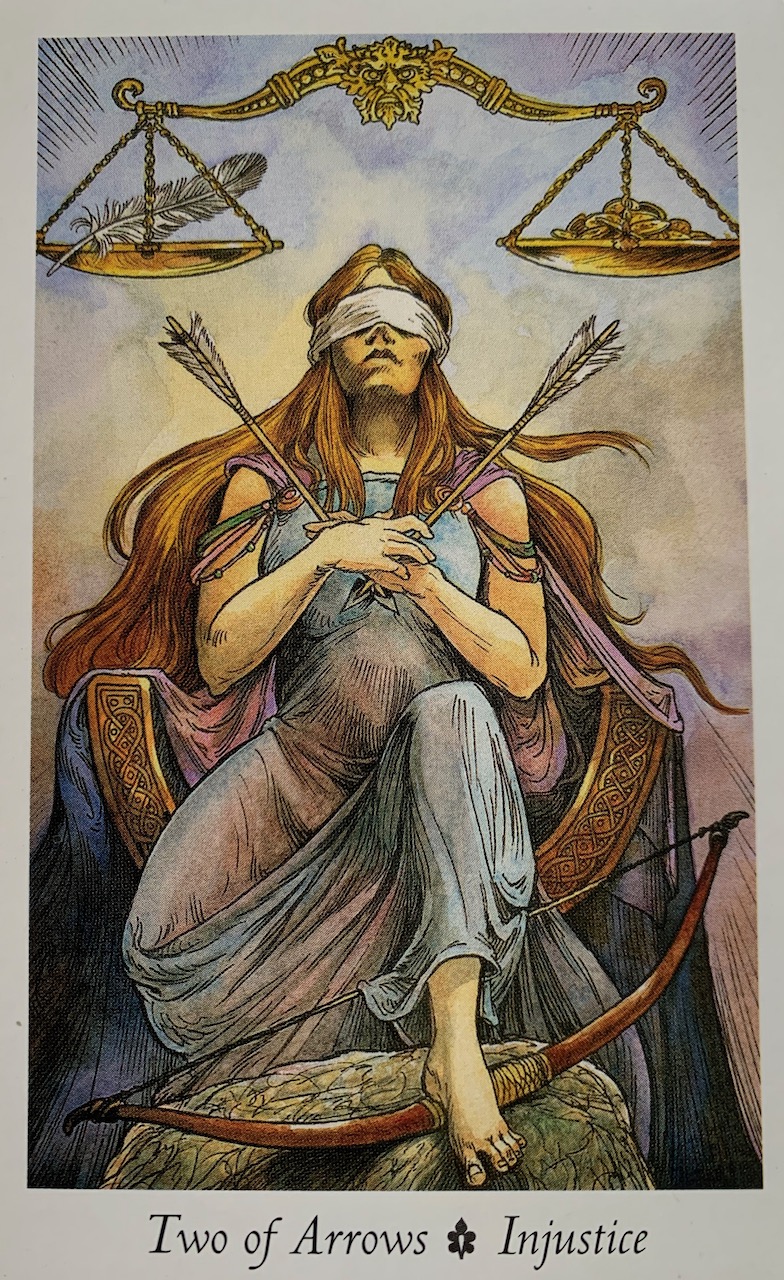
I. I am the blindfolded woman and two arrows have pierced my heart in spite of my charms and incantations against love.
I have been wrapped up in my own heartbreak leaving me blind.
I have been trying to weigh inspiration against money, a feather against gold – one heavy one light.
I have been a slave to what is bled from rocks over millenia at such toil and cost, ignoring what is easily shed, fletched, lifted by a breath.
You are the archer and as always Your arrows strike true.
II. What is it I fear? Hunger? Having no home?
I do not think I could sit and beg but would rather walk, homeless, foodless, until I could walk no longer, lie down and die, be back with You.
III. When I think of my worst fear it is fear of madness –
I am looking into a round tunnel without a train but just a whistling train track rushing through it,
the dance of limbs on the platforms belonging to no-one, not to people, to robots, or to spirits.
That the whole journey of life is nothing but meaninglessness.
IV. I think of my longstanding fear of falling apart.
I recall my vision of a knight riding forth, the plates of his armour rusting, his flesh starting to decay, falling from his limbs,
the skeletal man falling from his skeletal horse
but his horse going on to where the bones of all horses crumble and the dust of dead horses is borne on the winds to where You ride Lord of Annwn.
You taste the wind, lick Your forefinger, another failed quest.
Your hounds prowl and sniff at the dust and Your pale horse rolls in it.
IV. Yet I have chosen to collect feathers not gold for the birds are giving and we are nothing but birds who are learning how to fly and to empty out our pockets.
I want to be light, my lord, to depart from lands where scales exist.
To where we no longer need to weigh, measure, measure up. To where You tear my blindfold off and show me the truths that lie in my unbroken heart.
I. You tell me summer is not a time for absence but for presence,
to be HERE in Creiddylad’s garden
with these plants I have sown, watered, nurtured, grown.
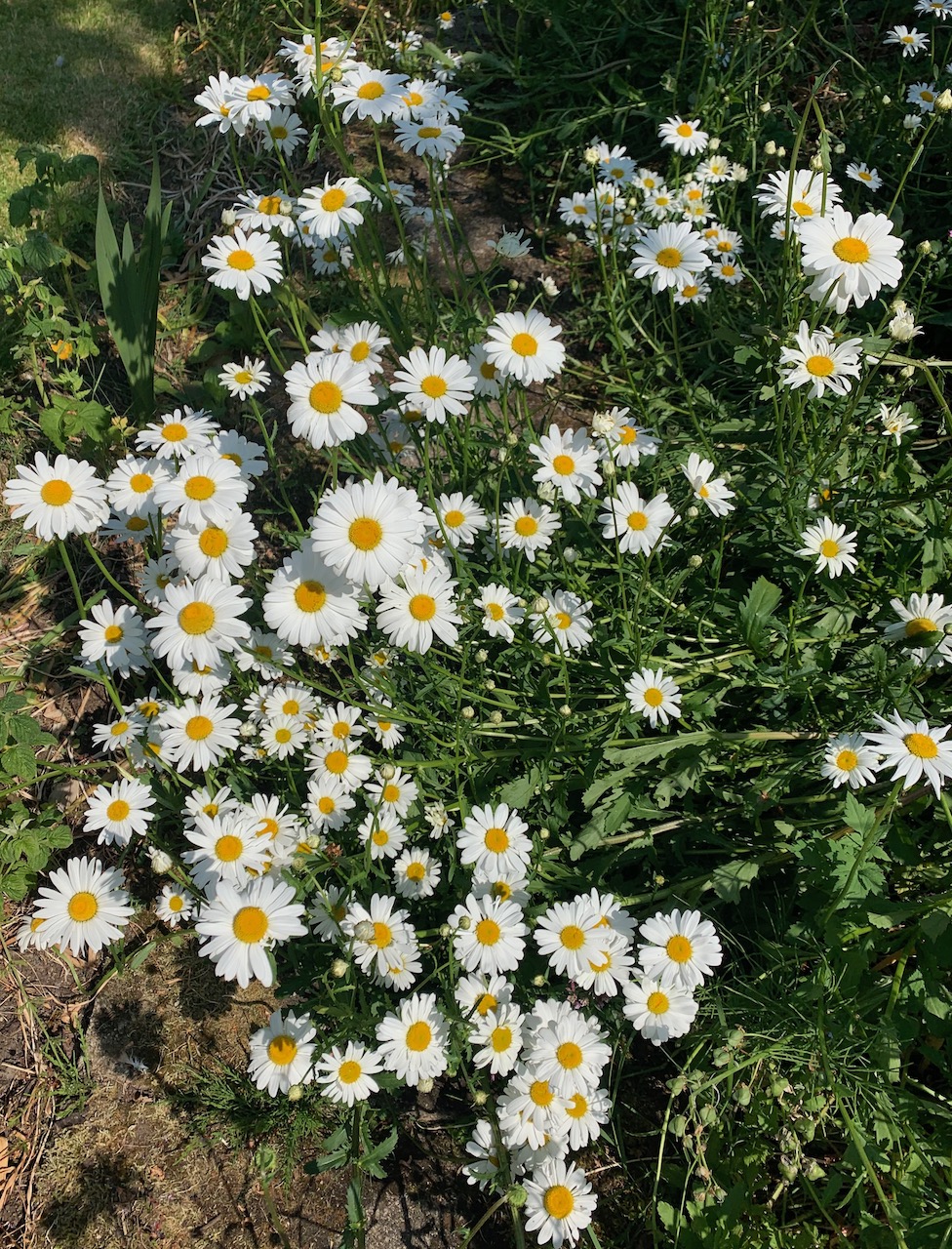
A thousand oxeye daisies reminding me of Your colourful ox and the thousand names for You and Creiddylad forgotten but one day will be sung again by your awenyddion.
The meadow cranesbill that reminds me of Your conversation with Gwyddno Garanhir the wise crane dancer.
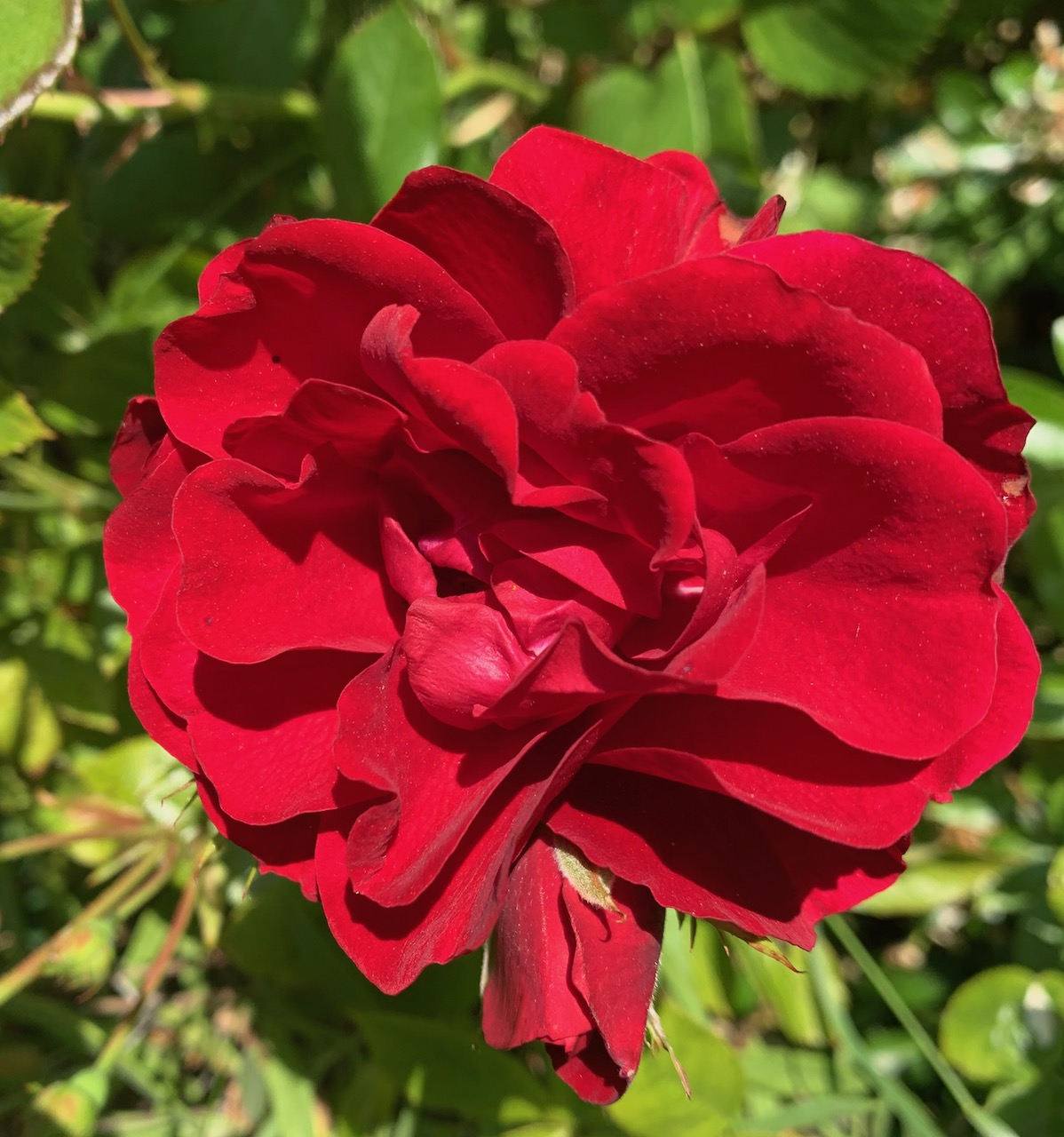
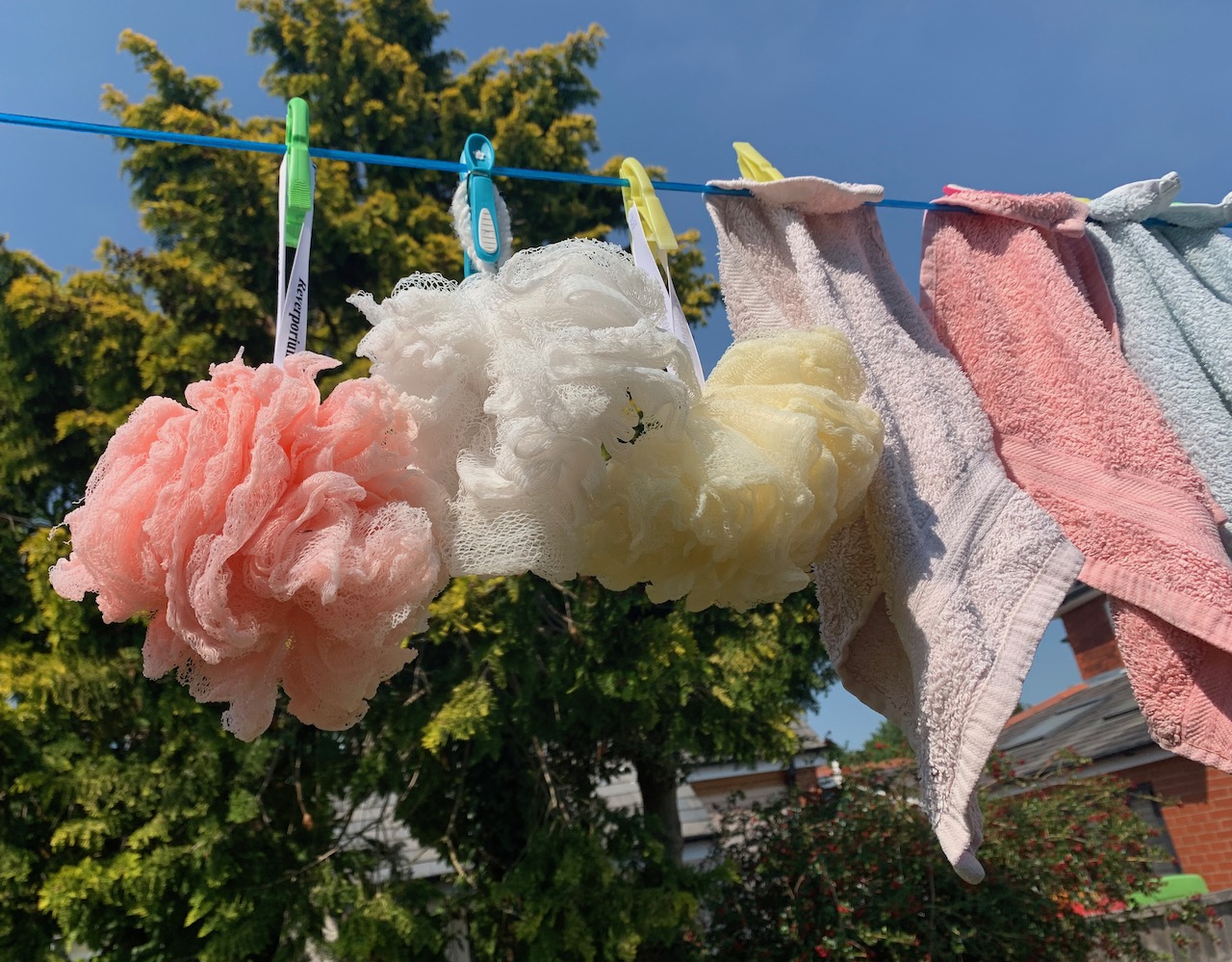
The roses that should have been white and red but white was pink as a bath puff.
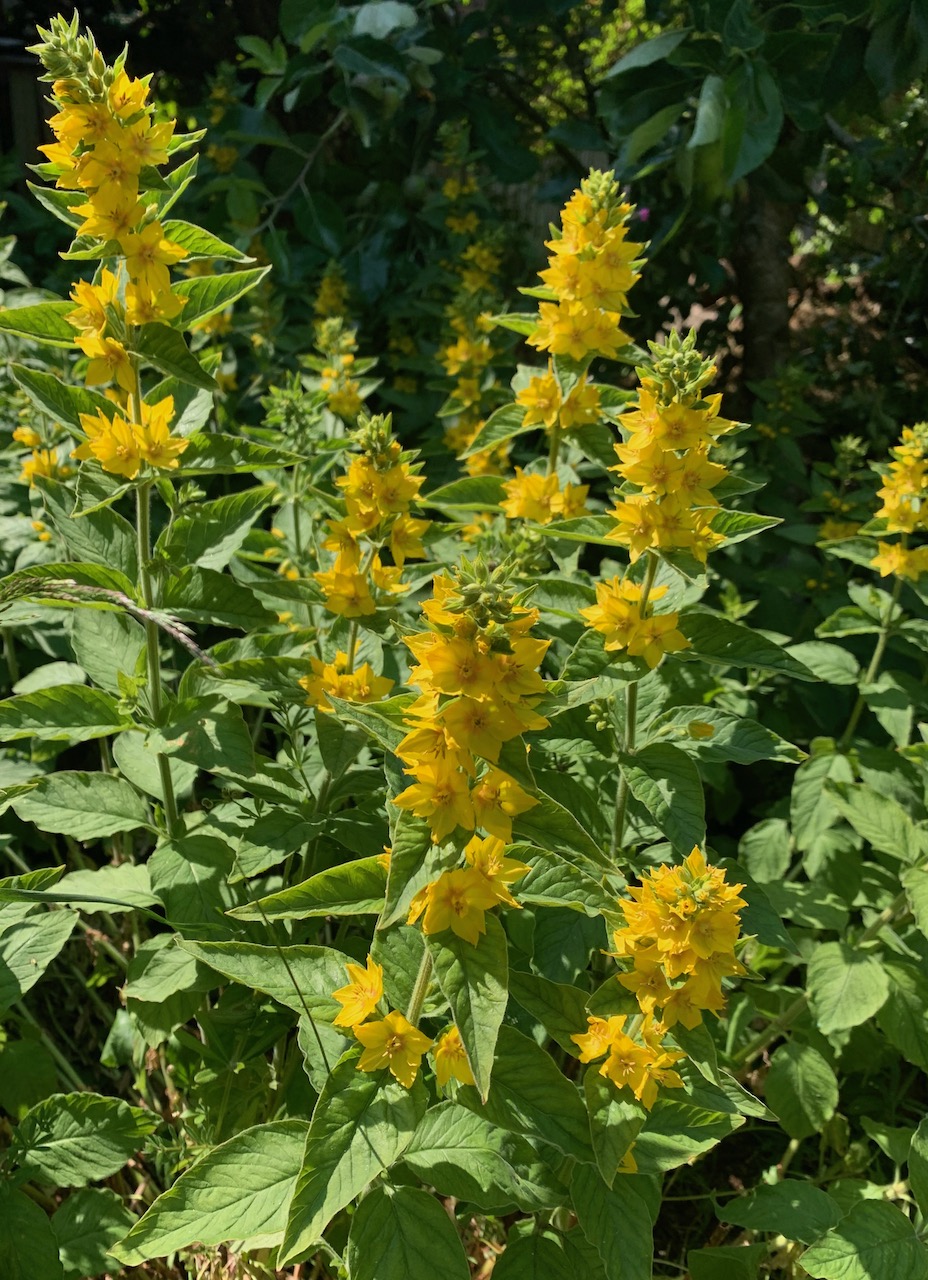
The yellow loosestrife my wand.
The foxgloves in which I would build our monastery if only they lasted all year round.
That I am slowly becoming Sister Patience – I am.
II. And I dream they put me in hospital because flowers are growing between my toes.
I joke about becoming a flower maiden
but I fear they have taken root in my flesh, intertwining with my veins, with my nerves, might be sinking into my soul.
Am I not a beast, another Afagddu, Your dark one?
III. I laugh about the tales of flower maidens who become thorns and owls.
I could never desert You,
turn my face towards the sun god like an oxeye daisy.
The flowers wilt and fall from my feet one by one as I walk from Thisworld to the Otherworld to Your tomb
as Your apprentice, Your awenydd, as Your nun, to speak my poetry as You lie in Annwn’s silence.
*A poem addressed to Gwyn ap Nudd, my patron God, the lover of Creiddylad, who spends winter with Gwyn and summer with His rival Gwythyr.
This is a question many religions have an answer to. One of the most obvious is Christianity with the traditions surrounding the death of Jesus. Within Paganism and Polytheism rites have been developed for many Gods (often grain Gods) including Osiris, Tammuz and figures such as John Barleycorn.
When I started worshipping Gwyn ap Nudd over ten years ago I found out on Calan Mai He fights a battle against His rival, Gwythyr ap Greidol, for His beloved, Creiddylad. Although it isn’t explicit within the source material (1) parallels with other seasonal myths (2) suggest that Gwyn, as Winter’s King, is defeated by Gwythyr, Summer’s King (3) at the turn of summer, ‘dies’, and enters a death-like sleep. He then returns at summer’s end to take Creiddylad to Annwn and assert His rule as Winter’s King.
For most Pagans and Polytheists Calan Mai / Beltane is a fertility festival. The rites of dancing of the May Pole, and crowning of a May / Summer King and Queen have a basis in the sacred marriage of Gwythyr and Creiddylad.
Even before I realised I was asexual I always felt like an outsider on Calan Mai. Whilst I enjoyed the white flowers and verdant energy I never got into the full swing of the celebrations (at least not without a large amount of alcohol).
Then I met Gwyn and found out this was the time of His death. I have now come to understand why it is bittersweet – finding joy in the new growth on the one hand and feeling His loss and commending His sacrifice on the other.
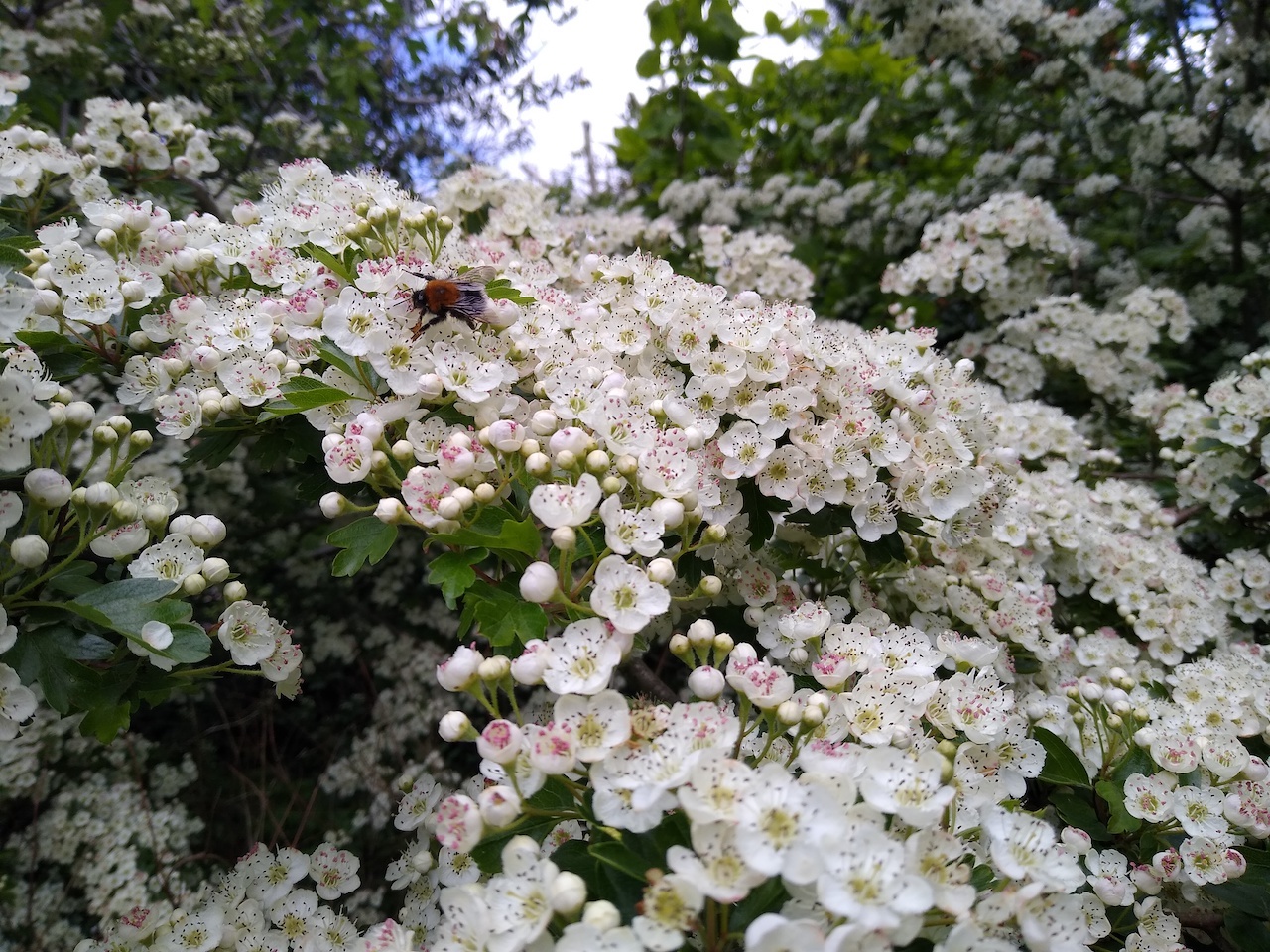
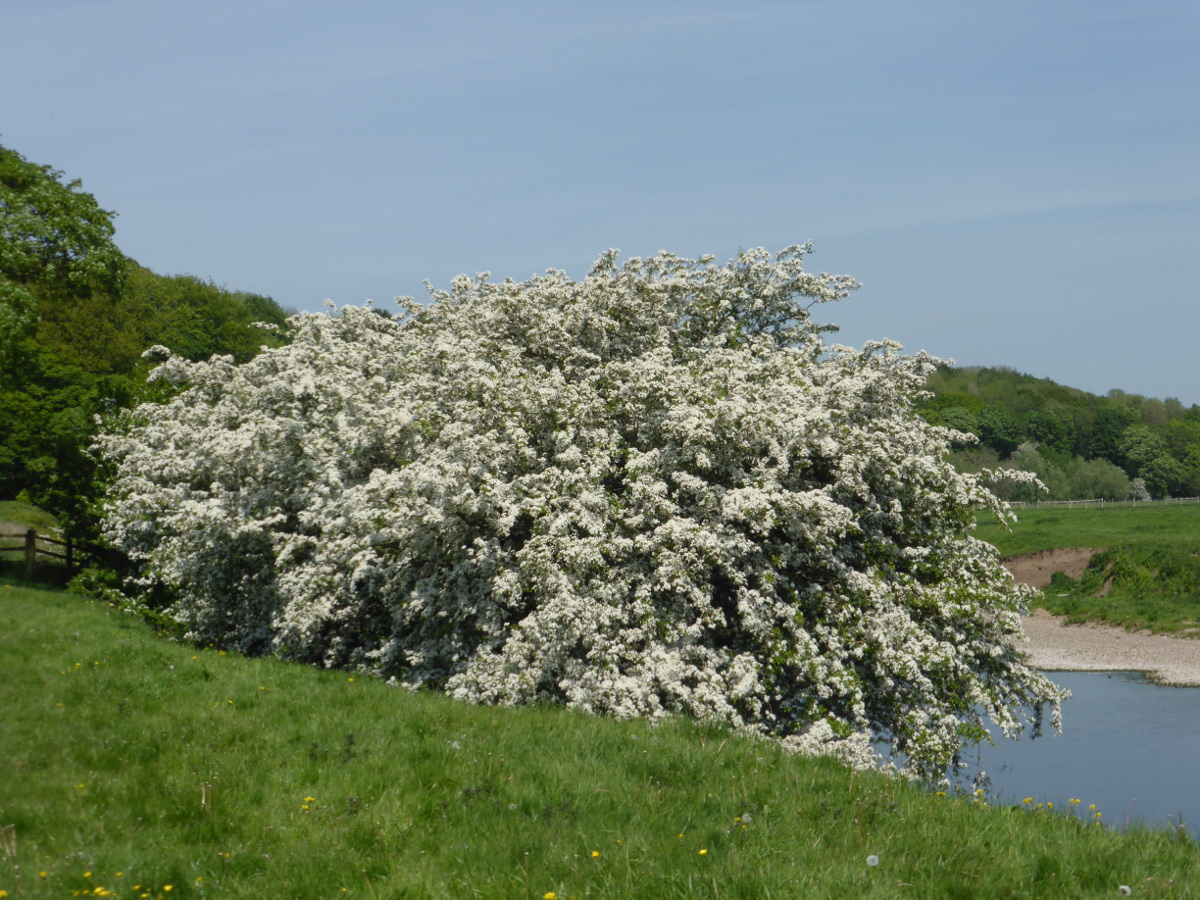
‘From the blood of the King of Annwn the hawthorn blossoms grow.’
Slowly, Gwyn has revealed to me visions of the mythos surrounding His death and ways of honouring it within my personal practice as a Polytheist.
It happens slightly differently every year but I present here a ‘core narrative’ and the rites by which I navigate this difficult time in my seasonal calendar.
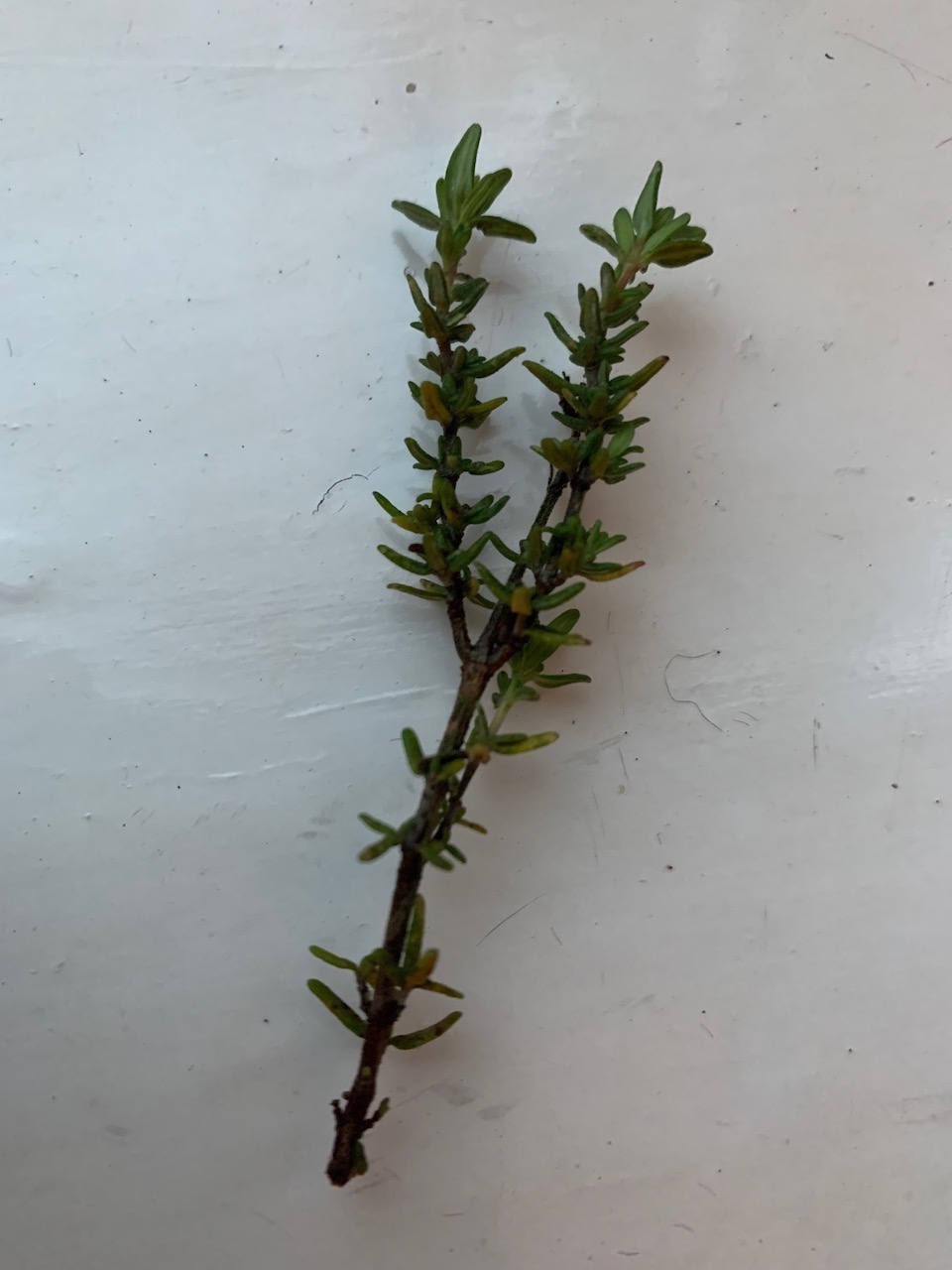
On Nos Galan Mai I offer Gwyn a sprig of thyme for courage and recite my poem ‘If I Had To Fight Your Battle’ and then meditate on its meaning.
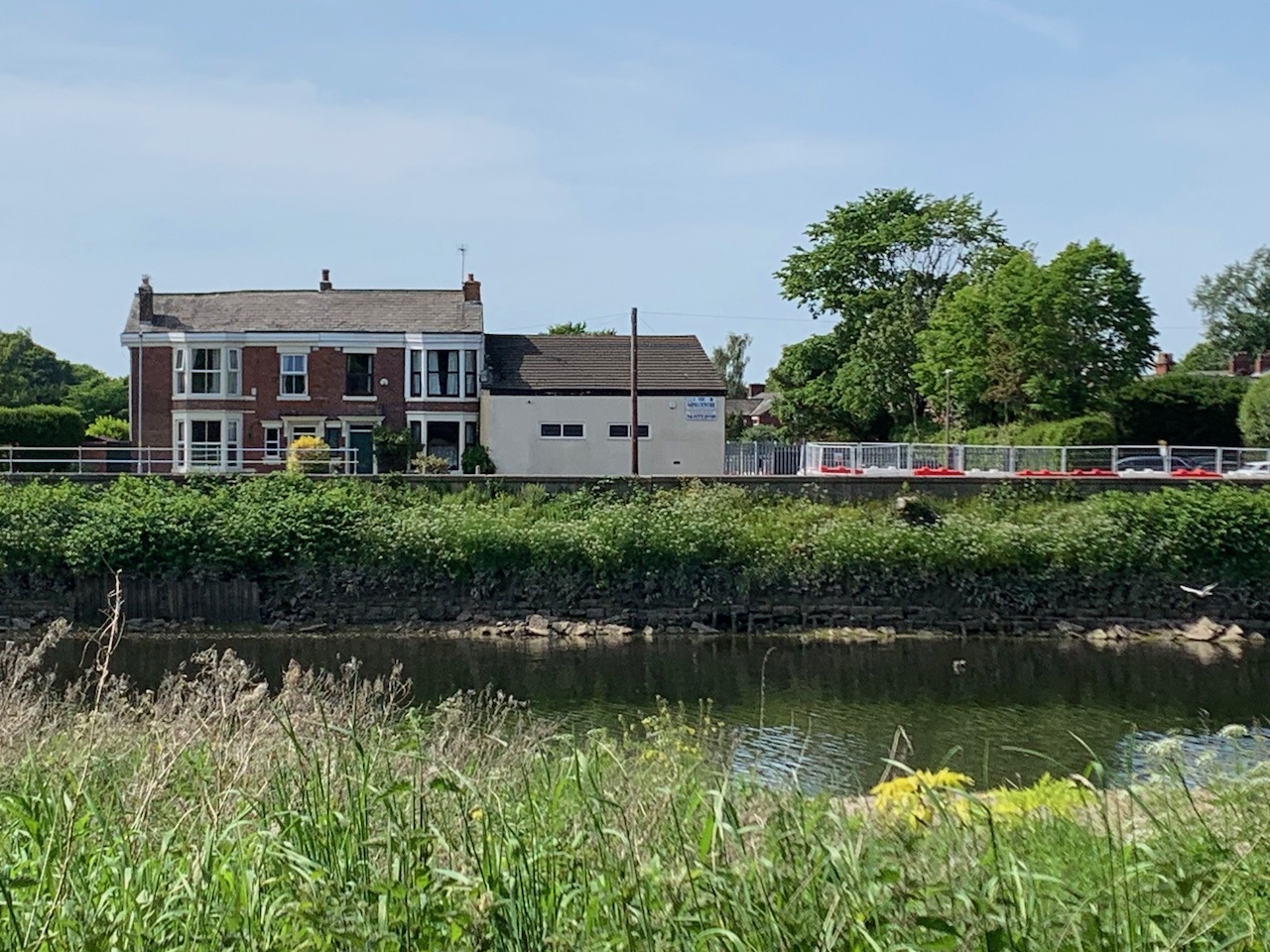
At dawn on Calan Mai I visit Him in spirit as He dons His armour and makes His way to ‘the Middle Ford’, Middleforth on the Ribble, which is the place within my local landscape where His battle takes place and there speak my farewells.
Later in the day I go for a walk and look out for signs of the battle of Gwyn and Gwythyr. I often see Them as warriors, animals, or dragons in the clouds. On one occassion I heard ‘We are the Champions’ playing at a May Day fair.
I place the sprig of thyme at the Middle Ford then look out for signs of Gwyn’s death.
Gwyn’s death takes place before dusk and I have felt it signalled by sudden cold, the coming of rain, and a feeling of melancholy. Once, when I was running, I got the worst stitch ever, like I’d been stabbed in the side, knew it was Gwyn’s death blow and received the gnosis His death was bad that time.
I pay attention to the hawthorn, a tree of Creiddylad’s, symbolic of Her return.
In my evening meditation I bear witness to Gwyn being borne away from the scene of battle by Morgana and Her sisters (4) who appear as ravens, crows, or cranes. They take Him and lay Him out in His tomb in the depths of His fortress in Annwn. His fort descends from where it spins in the skies (5) and sinks into the Abyss (6) to become Caer Ochren ‘the Castle of Stone’ (7).
I then join Morgana and Her sisters and other devotees from across place and time saying prayers of mourning for Gwyn and spend time in silence.
Three days later Morgana and her sisters heal Gwyn’s wounds and revive Him from death. This a process I have taken part in and was powerful and moving. He then remains in a death-like sleep over the summer months.
I would love to hear how other Polytheists honour the deaths of their Gods.
FOOTNOTES
(1) The medieval Welsh tale of Culhwch ac Olwen (11th C)
(2) Such as the abduction of Persephone by Hades in Greek mythology.
(3) Clues to Their identities as Winter and Summer Kings are found in their names Gwyn ap Nudd ‘White son of Mist’ and Gwythyr ap Greidol ‘Gwythyr son of Scorcher’.
(4) I believe Morgana and her sisters are Gwyn’s daughters through personal gnosis based on the associations between Morgana, the Island of Avalon, and Avallach, the Apple King, who I believe is identical with Gwyn and the possible identification of Morgan and Modron, daughter of Avallach.
(5) ‘the four quarters of the fort, revolving to face the four directions’ – ‘The Spoils of Annwn’.
(6) The existence of an Abyss in Annwn is personal gnosis.
(7) This name is not a direct translation (Marged Hancock translates it as ‘the angular fort’) but comes from Meg Falconer’s visionary painting of Caer Ochren ‘the cold castle under the stone’ in King Arthur’s Raid on the Underworld.






 The Sanctuary of Vindos