What’s in a bard’s skull? A topography of lands and dreams and stories and mythic figures from Martin Shaw’s local Devonian story-hunting ground and across Britain to as far away as Crete, Africa, Scandinavia, Siberia. Courted, incanted, summoned, they come to inspire, converse with and possess the bard.
The book takes the form of three ritual journeys in the Devonian landscape wherein Shaw offers up physical gifts and storytelling to court the land into opening, conversing, to spilling forth the visions he and the world need to hear.
It differs from his previous publications in its recording of raw thoughts and experiences rather than more refined reflections on mythic material. Sometimes this leads to brilliance and at others borders on self indulgent rant. There are a few pokes at ‘pagans’ and ‘eco-hippies’ some might find offensive.
The first journey leads along the river Durius and tales include ‘Vita Merlini’ and ‘Rhiannon of the Horses.’ Merlin comes swimming up his local watercourses ‘good rivers all’ but full of ‘effluent’ he ‘drank sloughed off the fields’ and puked up ‘outside Taunton services’ protesting about being reduced to an ‘archetype’. Shaw agrees he is clearly ‘not fucking Gandalf.’
At the end is a particularly striking scene during which Shaw is called to crawl into the ‘pitch-black belly’ of a ‘butchered horse’ by Childe the Hunter (a character from Dartmoor’s legends who got lost hunting through the snow and slew his horse and climbed inside it to keep warm but no avail).
This drives Shaw into his next journey – a one hundred and one night vigil in a ‘nest’ ‘in a thirty foot circle, perimeter articulated by flour and whisky’ in a Dartmoor grove with a ‘little hazel bush’ in the middle where he sits and calls.
What he seeks are stories not for a ‘horse time’ but for a ‘wolf time’. This leads to his possession by old man Vainamoinen, a dialogue with his great-great uncle Hamer Broadbent, a Christian missionary in Russia, and his ‘big dream’, his ‘great, lumbering fuck of a dream’ of Wolferland – Doggerland in the shape of a wolf (some of this is recorded in his previous book of that name).
This section ends with an Old Testament style vision and nine words that will ever be imprinted on his mind that lead to his conversion to Christianity.
Throughout Shaw is haunted by a rider on a ridge but he does his best not to look. ‘I don’t have time for this… Horseman pass by.’ He appears again talking backwards and is warded off – Shaw isn’t one for courting dark things.
The final journey leads up to Big Rock and singings of the songlines of Devon and Shaw’s final taking of every story he has ever told for a walk and offering them up with myrhh, henna blossoms, a vineyard, his ‘plait, a foot of hair cut away’ as a grand finale resulting in a final vision. And what does he see?
*SPOILER ALERT* ‘A great gathering of humans and animals… all the originals of this place… And suddenly, there he is. The rider. My teacher. The one who has stalked me this whole time. And finally he speaks. And finally I understand. What was dark sound has become new wine.’
This passage gave me goose bumps. It reminded me shiveringly of my first meeting with my patron God, Gwyn ap Nudd, an otherworldly huntsman. Shaw never reveals who this rider, his teacher is, but he is led not to devotion to a pre-Christian deity but to ‘crawling into God’.* *SPOILER END*
This book is highly recommended to all who are not only lovers of myths and stories but wish to enter into them and be initiated by the figures within on a deeper level. It speaks of the trials and tribulations and triumphs of courting old tales, of holding vigils, of honouring the land, of awakening its songlines.
To me it forms the grand finale of a series of books charting Shaw’s life and work as an animistic mythteller before his conversion to Orthodox Christianity.
*Shaw’s conversion to Orthodox Christianity, like his friend, Paul Kingsnorth’s, came as a big shock to me. Whilst I totally understand their being claimed by Jesus their choosing to convert to a black and white religion with binary theology that has oppressed countless peoples and their traditions and stories and deities is beyond my comprehension.
Oggdu ‘Black Cave’ is not known from existing Brythonic myths or folklore but has come through to be me as the mother of Orwen, ‘Very White’, who was the mother of Orddu, ‘Very Black’. They were a lineage of ‘witches’ who lived in a cave in Pennant Gofid, in the north, and had associations with Gwyn ap Nudd, a King of Annwn.
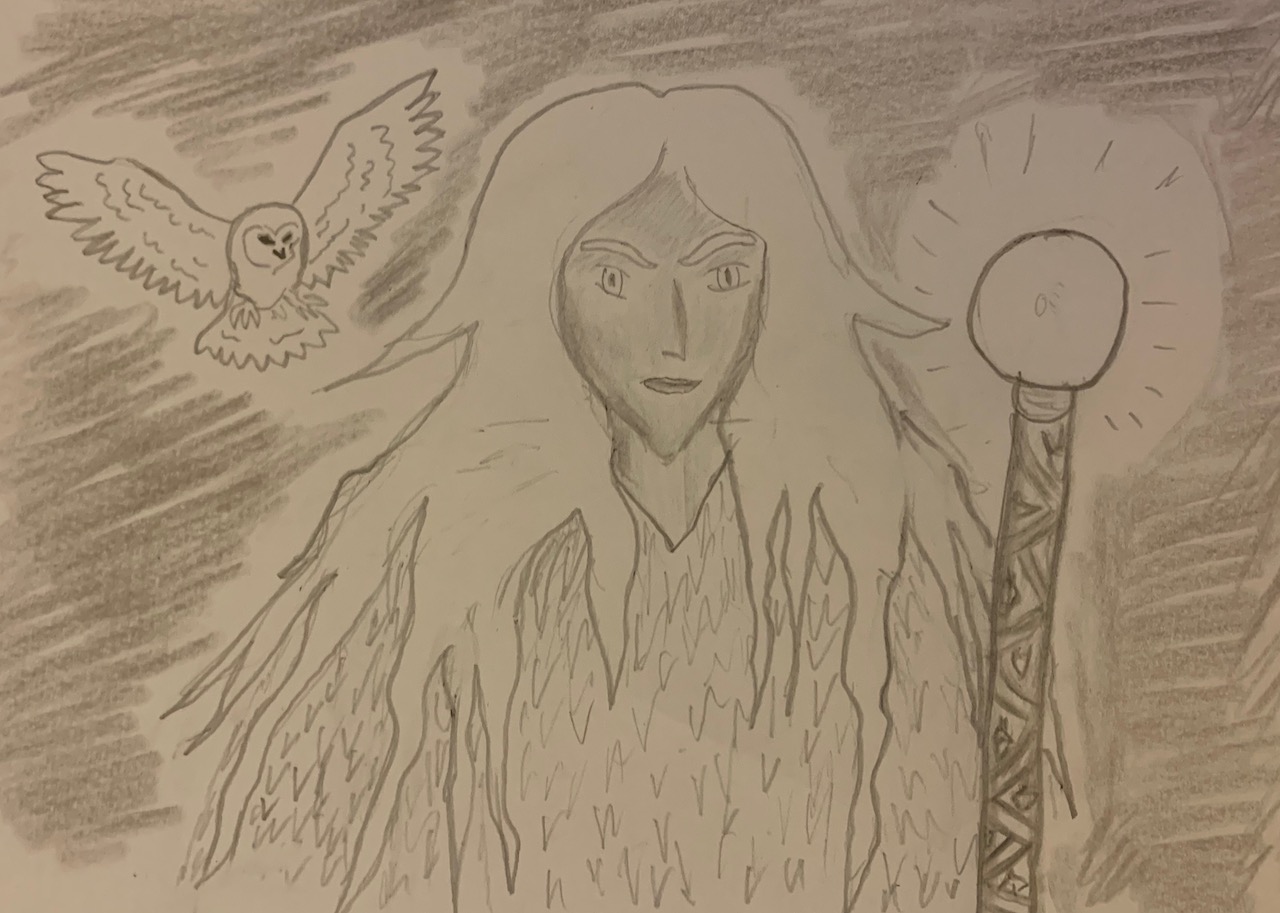
Ogddu first came through as a name, then as a voice, now finally in an image. I wasn’t sure how she was going to look until I started drawing. I’m not sure how she lost her eye(s). A story waiting to be told or a mystery that will never be known?
This is a devotional song for my patron God Gwyn ap Nudd. It began as an experiment in singing in trance whatever came into my mind in a monastic chant style linked with the repetition of the line ‘I bring all my devotion to you’. Slowly the verses Gwyn wanted me to sing coalesced. Hopefully this explains its misty dreamlike nature which I think fits with the meaning of His name ‘White son of Mist’.
White Son of Mist, mist-filled wanderer, Your hound haunts the cloud mountains where Your horse grazes on nothing…
…and I bring all my devotion to You…
Bull of Battle, undying warrior, Your sword parts the veil where carrion birds circle and the past unfurls…
… and I bring all my devotion to You…
Guide of Souls, gentle hunter, the graves lie open and the dead ride the storm of my soul…
… and I bring all my devotion to You…
King of Annwn, Your star shines brightly, I kneel before it at the end when silence rules…
This is a sketch of Orwen ‘Very White’. We know nothing about her from Welsh mythology aside from her being the mother of Orddu ‘Very Black’, a witch who lived in a cave in Pennant Gofid ‘the Valley of Grief’ in the north, and was killed by Arthur. The image and poem below are based on my personal gnosis.
Mine is the wisdom of the owl who takes flight at dusk, crepuscular, like the crescent of the moon beginning to wax.
In the interstices between new and full, dark and light, by the half-light you might meet me.
Although they call me ‘Very White’ you don’t want to see me fully exposed by the white-pitched revealing light of the full moon.
By the full moon’s light I once caught a snowy white hare and took her to be sacrificed in the Castle of Night but somewhere up there in the heavens she escaped me and I found in her stead within my owl feather cloak a piece of dead star and it has since then lit the orb on top of my staff with dead starlight.
They say now that I might be seen at dusk or dawn on the wing or as a light on the marsh too white to behold by the black of night or daylight.
King of Faery, Lord of Annwn, Dragon Ruler of the Not-World.
And yet You are.
You are a paradox.
You are a fortress filled with riddles.
You are an underworld riddled with serpents.
You speak in serpent tongues.
~
The day I saw Your face
You struck me dumb.
You stole my tongue.
From thereon I have known it will turn to stone if it ceases to sing for You.
~
The day I saw Your face
It made all the suffering of my past lives meaningful.
I run through them shouting “We will meet a God”
so loudly some hear me and some believe me.
~
I have seen so many of Your faces I could fill an ocean (none possible).
Today I pour the mead for Your unknown face.
~
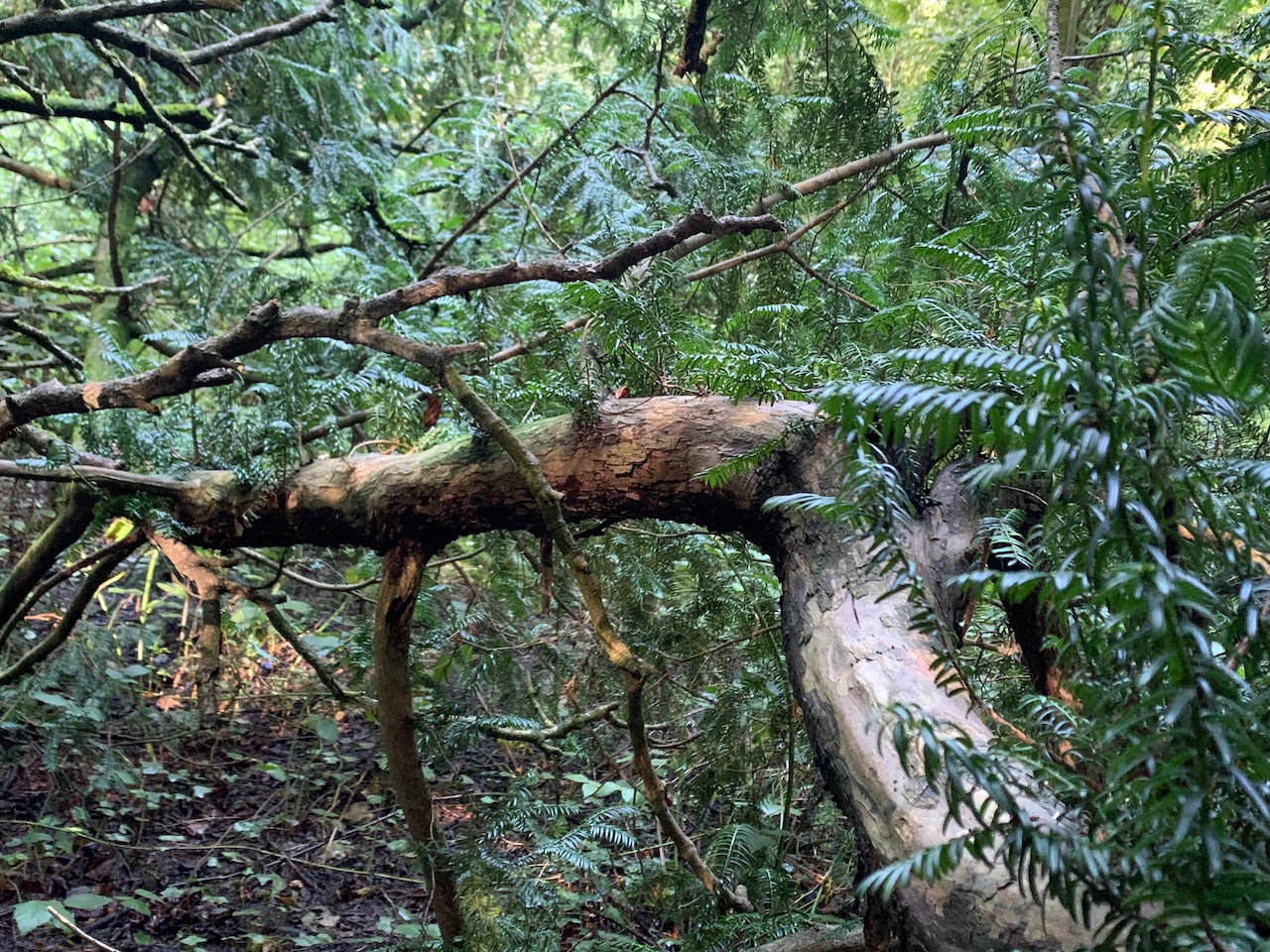
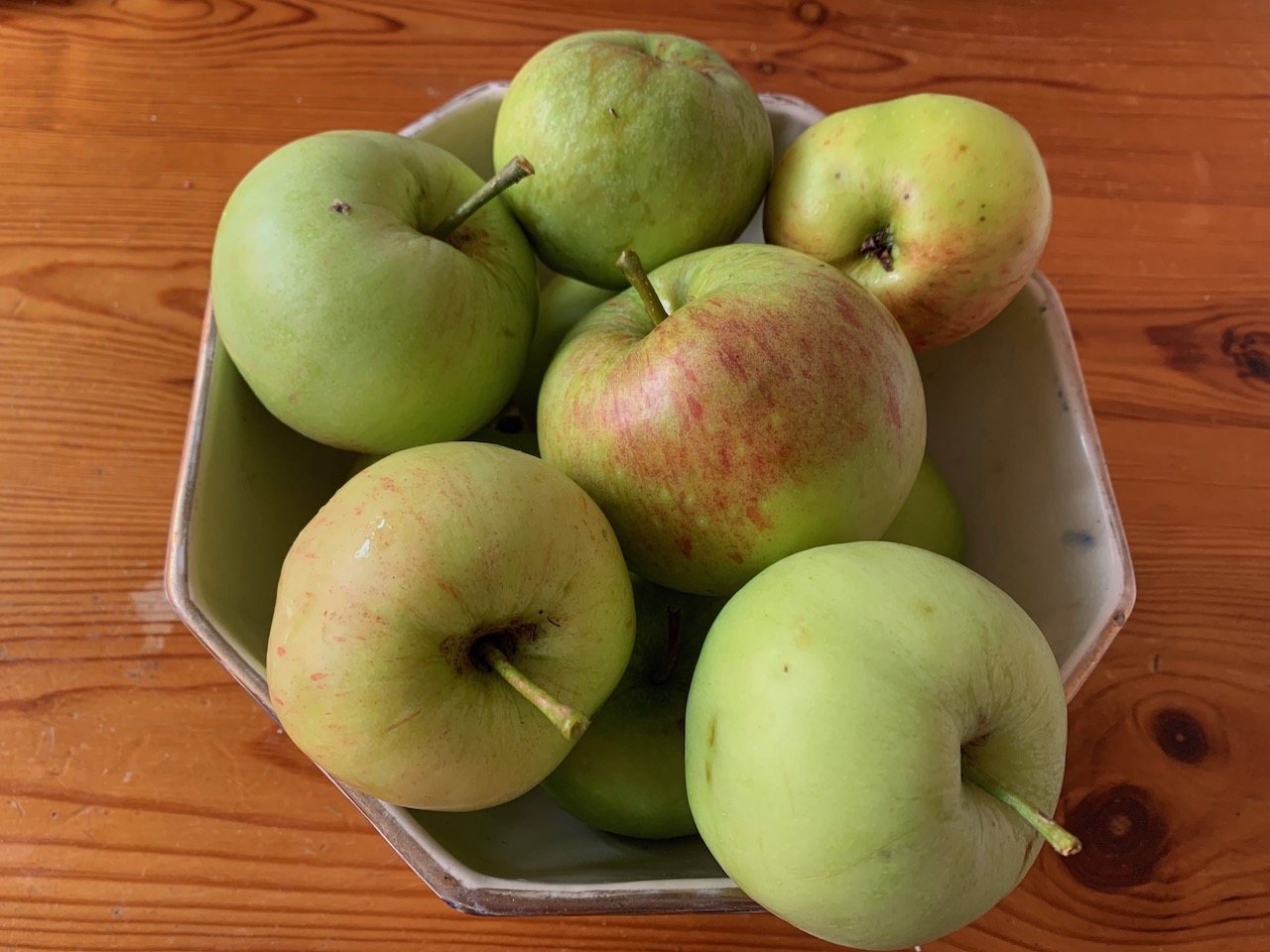
At the end of August I celebrated the eleventh anniversary of my first meeting with my patron God, Gwyn ap Nudd, by reciting this poem to Him where I met Him on Fairy Lane in Penwortham at the leaning yew and making Him an offering of the last of the apples from our apple trees and a serving of mead. I sensed His presence and the approval of the land in the enchantment of the dappled light on the branches of the yew.
As part of the process of introducing Orddu and the Witches of Annwn into my daily practice as spiritual ancestors I am beginning to produce some devotional art for them as well as writing them poems and telling their stories. Here I am trying to capture Orddu’s characteristics as a ‘very black witch’ and ‘hag’ who battles against Arthur as presented in the original tale without inclining towards more traditional caricatures. I aimed to create the sense of harsh formidable and dark figure who was esteemed as a warrior woman and prophet. As you can probably tell I have no formal training as an artist just a history of doodling characters from writings of my own and others from a very young age.
and life is filled with lumps and bumps and knots and cracks.
There will always be problems. You will learn to solve them.
There will always be pain. You will learn to heal.
That is the secret of our art – of the inspired one and the witch.
II. There is a cauldron in the cave and a vision in the cauldron,
the lining of the womb of Old Mother of Universe
and this is the Web of Fate. You are the needle travelling
in and out of the weft of time to re-weave the tapestry.
III. You are not perfect distant daughter of mine
and life is filled with perils worse than the monsters of Annwn.
One-eyed giants, eyeless, blind. You will learn not only to face
but to help these things that should not have been made –
to help them return to the dark of the Old Mother’s womb.
IV. A universe is in the cauldron and the cauldron is in you
kindled by the breath of ninefold wise women,
by wisdom of the ancestors. In it our visions boil and brew.
Be a strong vessel distant child so this old world can be born anew.
These words were received from Ogddu on a spirit journey to the Cave of the Ancestors this morning. I believe Ogddu to be the mother of Orwen and grandmother of Orddu. Her name derives from ogof ddu ‘black cave’ and one of her epithets is ‘the Voice of the Dark Cave’. Receiving this poem from her confirmed that my choice to walk Orddu’s path and to begin working more deeply with this lineage of Inspired Ones of the North (who I perceive to be spiritual ancestors rather than blood ancestors) is the right one.
It’s harvest time. I’ve been gathering in the apples from our back garden. I’ve also started to take some time out to reflect on what I have harvested on a spiritual and creative level whilst, although living with my parents, spending most of my time in solitude since leaving my ecology job in August last year.
I’ve been through a lot of changes. It was a big blow realising that the limitations of my autism rendered me incapable of coping with the demands of working in either conservation or ecology due to my inability to manage projects and people, multi-task, or work flexible shifts or do night work.
Yet my patron God, Gwyn ap Nudd, gifted me with two tasks that gave me purpose and hope. The first, writing a series of books titled The King of Annwn Cycle imagining His unknown story from His birth until the end of the world. The second building the Monastery of Annwn of which He is also the patron.
For the first few months I threw myself into those tasks with utter joy and was completely absorbed in the awen working on my first book In the Deep. I took initial vows as a nun of Annwn on the new moon in October and being part of a group of monastic devotees devoted to the Annuvian Gods and Goddesses has been an ongoing source of inspiration and support.
II. Losing Hope
Yet over the winter I had a few things that derailed me. Blocks with the book after realising that due to it being a personal vision of Gwyn’s story with only subtle links to the existing myths it is unlikely to reach as wide an audience as my work that explicitly related Brythonic content to our environmental crisis.
Minor health problems. Tests around raised liver function that never came to anything. Rosacea. Runner’s knee. Then in spring, just as my knee issues were easing and the weather was getting better I went and pulled my sciatic nerve in my glute and had to reduce my running and strength training.
At this point I was also struggling with breathwork meditation. Gwyn began encouraging me to learn to focus on my breath prior to covid and has told me holding spaces of calm free of chattering thoughts is one of the most important things we can do for the world on an energetic level.
Failing to master my internal chatter alone I tried looking to Buddhism and considered going to meditation classes at a Preston’s Kadampa Buddhist Meditation Centre. To prepare I read one of the books by the Venerable Geshe Kelsang Gyatso Riposte who founded the Kadampa tradition. It led me to the realisation the path of freeing oneself from the suffering of earthly existence isn’t for me and left me feeling profoundly unspiritual so I did not go.
On top of my feelings of despair about being called to write a series of books that would never sell, dread of my savings running out and having to return to menial work, and my nerve pain, this led to me feeling ‘there is no hope left.’
The very moment this thought popped into my mind, when I was open and vulnerable, on my way home from a local walk, my nerve bothering me, I met a person who somehow knew my name and that I ran an online monastery and invited him to join and he caused trouble and had to be thrown out.
This was a big lesson on my failure to address the negative thought patterns that had got a hold on me. I’ve long been quite good at serving my Gods but terrible at taking care of my mental health and spiritual development.
I’ve served as a vessel for Their inspiration without taking care of the vessel.
III. Taking Care of the Vessel
My recovery from what I now believe to be ‘power loss’ began with a ‘power retrieval’ journey with the Way of the Buzzard Mystery School.
Therein I was given a set of ‘wolf’s teeth’ and told that I must be ‘fiercer’. This went against my preconceptions of what being a nun meant as I was striving to be humbler. Yet I took my teeth and the advice. When I reported this to Gwyn, not long before his death and departure on May Day, He told me by the time He returns at the end of August He wanted me to own them.
Shortly afterwards, on the suggestion of my personal trainer, I started practicing yoga to help with my sciatic nerve problems and with flexibility. I had never considered it before due to issues around its appropriation by westerners.
However I decided to give it a go and immediately found a Youtube channel called Breathe and Flow led by a pair of practitioners who make clear from the start the poses are just part of a wider spiritual practice and philosophy and who make the effort to incorporate breathwork and meditation into their classes.
At once I found both a physical practice to help heal my sciatic nerve pain and improve my flexibility and mobility and support with breathwork and meditation.
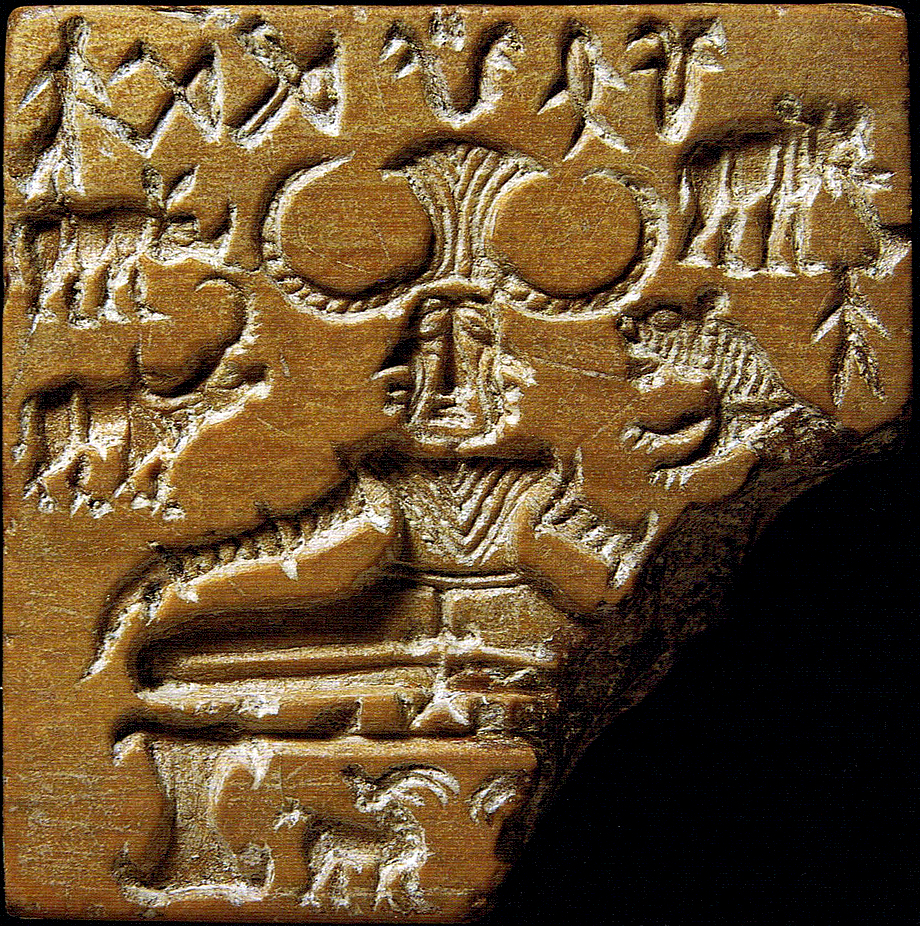
When I started reading up on the religious and philosophical background of yoga to my amazement I found out the Hindu God who is Lord of Yoga is Shiva and He bears similarities to Gwyn as a destroyer and transformer. They both have associations with bulls and serpents and, to my surprise and delight, Shiva’s serpent, Nandi, has a magical jewel on his forehead. In my personal gnosis Gwyn and the serpents of Annwn have similar jewels.
The images of Shiva and the meditating deity who I believe to be Gwyn on the Gundestrup Cauldron bear a striking resemblance. As I persevered with my meditation practice over the summer, although asleep, Gwyn began visiting me in spirit form, as ‘meditating Gwyn’, in the likeness of this image. As if he had been cut from the cauldron, in shining silver, to help me with my breathing. I finally found the practices I needed to take care of my vessel.
Another source of help and support has been working with a supervisor and therapist, who is also a shamanic practitioner and I was put in touch with by Nicola Smalley who co-runs the Way of the Buzzard Mystery School. This is the first time I have had a human teacher and it has taken a long while for the circumstances to come into play that have made this desirable and possible.
When we were looking into my fears around panicking/freezing/melting down when faced with unexpected difficulties, particulary in social situations, we journeyed together on it and she saw a red dragon on my shoulder breathing fire and was told by Merlin that I must learn to ‘tame the dragon’.
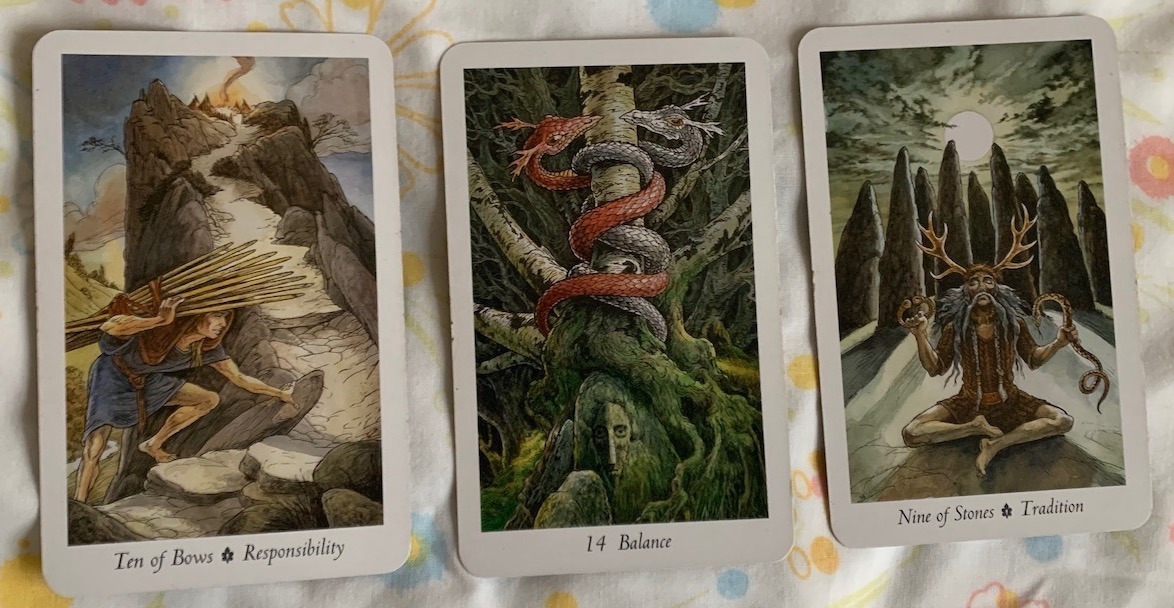
This unsurprisingly led ‘my red dragon’ to rebel which I gave voice to in a poem*. Yet a tarot reading revealed that what Merlin was calling for was the need not so much to tame the red dragon but to balance her energies with those of the white dragon through meditative traditions and taking responsibility.
Of course, in the Welsh myths, it is Merlin who reveals the red and white dragons battling beneath Dinas Emrys where Vortigern wants to build his fortress following their burial by Gwyn’s father, Nudd/Lludd. Amazingly my supervisor knew nothing of my connection with these myths prior to the journey.
I have begun a process of transmuting the anger of the red dragon to strength and the panic of the white dragon to calm in my yoga practice by coupling them with holding postures on either side and with alternating nostril breathing along with trying lion’s breath to release the fiery energy.
V. Unblocking the Flow
Prior to this I had considered alternative options for possible paid work – running courses and workshops or writing a book on Brythonic Polytheism as quite a few people have asked me for reliable material. However, whenever I have attempted to put something together I have met a block.
On the one hand I felt with my background in research into the Brythonic tradition and my experiential relationship with a few of the deities I was in a position from which I could deliver this. Yet I also knew my approach is highly personal and idiosyncratic and critical of the medieval Welsh texts, penned by Christian scribes, in which Gwyn and the spirits of Annwn, the witches, giants and ancient animals are demonised and repressed.
I’m not a person who could deliver the literary background formally, without opinion, without a few of the teeth and claws of the spirits of Annwn getting through.
When I entertained the idea again this year I was told by Gwyn to set it aside and ‘stop thinking about money’. Yet my feeling this might be a future obligation and potential source of income in spite of my blocks continued to persist.
I finally let go of this once and for all following a conversation with my supervisor. She advised that rather than acting from my sense of obligation and presuppositions about what the world wants and needs I should follow my inspiration, the flow of my creativity, asked where my passion really lies.
I said, “in my books”, “in Gwyn,” “in the Annuvian,” “in all He and the Otherworld represent”. She told me this is what I should focus on and write about in spite of my fears about my work not being well received or making money.
For the past year I had increasingly been struggling to create blog content based on what I think my readers want in terms of Brythonic content and poetry. My prayers and songs for Gwyn had all been from the heart but I’d had to drink alcohol to force the poetry out and I hadn’t managed to write much about the other Brythonic Gods and Goddesses in spite of my intent.
As soon as I let go of what I felt my obligations are I had two new poems come through without the aid of alcohol pretty much complete and was inspired to write a couple of pieces on my ‘forbidden pleasure’ – dark fantasy.
VI. The Dark Magician’s Door
At the time I was considering where my future prospects and obligations lie I dismissed the possibility that I might gain a larger readership for my books, which I would describe as mythic fiction containing elements of heroic and dark fantasy, by engaging more with the world of fantasy and its readers.
I flirted briefly with the idea of starting a new blog for thoughts on fantasy and reviews but decided it would be too time consuming and didn’t like the idea of having two blogs and profiles. I also got put off by the fact a lot of engagement takes place on social media and this is an absolute no-no for me. I took one look at Twitter and felt like I was staring into the pits of Hell.
I also dismissed the idea of posting fantasy content on this blog as I have tried it in the past and it hasn’t been well received. I decided there are enough people in the world talking about fantasy and not enough talking about the Brythonic Gods so I should continue to make that duty my focus.
I then had a seemingly unrelated experience that led to my giving up alcohol for good. I used alcohol to self-medicate my anxiety from my late teens until 2020 when I began giving it for periods and cutting down a lot. The habit of weekends and occasional mid-week drinking had snuck back during my difficulties with my sciatic nerve pain even though my body was rebelling against it – expunging it with night sweats and its stink in my piss and shit.
I really wanted to give it up for another long period but was having no success.
Then I had a dream in which my dark magician guide (who is a character in a fantasy novel who has been with me since I was around thirteen) showed up with a vision of planks leading up and down a wall to different doors, told me he was angry I had ‘closed his door’ and left through it.
The next morning he appeared again in my meditation, vivid as in a dream, in Annwn, beside the Abyss, with the part of myself who is addicted to alcohol, sweating, writhing, stinking of its excesses, wrapped in a white shroud. He told me it was time I gave up alcohol for good and that I must cast her in. Although this completely terrified me I went along with what he said. Afterwards I reported it to Gwyn and solemnly promised Him I would not relapse.
Knowing I would never have the comfort of alcohol again was scary at first but has proved to be a big release with the part of my mind obsessing about whether I’ll drink then feel guilty and like a failure having finally been laid to rest. It has opened a lot more space for communion with my Gods and creativity.
I forgot all about the dark magician’s door until the block allowing me only to write Brythonic content and poetry for my blog was released and I came up with new poems and the fantasy book reviews I had denied myself of writing.
I’d closed his door – the door to fantasy – and now it stands open again.
VII. Returning to Orddu’s Cave
Over this year of solitude I have harvested a good many things. I have produced a finalish draft of my first book, In the Deep, and am well on my way with the drafting of my second book, The King and Queen of Annwn. The building of the Monastery of Annwn is going well with our development of our shared practices, meditation group and first year of online rituals.
I’ve come a long way in discerning the direction of my path as an awenydd and nun of Annwn devoted Gwyn and learning to follow my inspiration.
Another important learning is that whereas in the past I forced myself out into various communities, spiritual, creative and environmental, I am happiest when I am alone or interacting with very small groups of like-minded people.
There is a lot of stigma around solitude identifying it with mental ill health. Yet, for me, and I would warrant a lot of autistic people, it is a source of well being.
This has led me back to the cave of Orddu, the Very Black Witch, an inspired one and warrior woman intimately connected to Gwyn who was slaughtered by Arthur.
I no longer see it as my duty to sing back the traditions in which the King of Annwn and his followers are demonised and killed but to join the inspired ones past and present who are perceiving new visions from the Cauldron of Inspiration, brewing them in their own vessels, birthing them in words. Owning my wolf’s teeth, my black beak and claws, all that Arthur forbids.
In my cave, my room, my monastic cell, I tend my cauldron and my awen sings.
*This is the poem recording my initial rebellion against Merlin’s words.
The Dragon on my Shoulder Breathes Fire
I. She sees the things that are unseen but are – the dragon on my shoulder breathes fire.
Not just any fire but Annwn’s fire, the type that warms the belly, implodes the head, bursts forth as poetry (on a good day) but is otherwise expressed as anger.
Anger that will not be satiated by death or by the spilling of blood.
Where do dragons come from?
II. There are fire eaters and fire breathers and those who swallow stars not to make a living but to avoid our soul’s death.
Dragon fire has been within us all along.
III. Red is danger and danger is anger with a letter d at the front.
Red and hatred have the same vibe. Red, goch, iron, the red at the earth’s core. My temper will not be tempered – my metalwork got melted down.
I did not master fire.
Instead I released the dragon soaring soaring from the forge wept the day I did not save my Lord from Arthur’s sword.
But it was I who freed the fiery serpents sizzling, hissing, spitting.
IV. Now a large grandfather clock is ticking down to doomsday. The dragons are fighting again and will not be quieted.
Merlin tells me that I must ‘tame the dragon’.
Why, oh prophet, diviner, madman, must I try to tame what cannot be tamed?
Why, oh son of a demon, who prophecies in dragon fire are you speaking this Arthurian language of taming?
All I know is you have demons inside you too, in your heart, in your head, that both of us like to sit beneath the apple trees.
The dragons are within me.
The Island of Prydain.
The dragons are within you too.
The dragon on my shoulder breathes fire and she sees the things that are unseen but are.
I have recently returned to Sara Maitland’s A Book of Silence and it has raised a number of thoughts about the need for noise and the stigma around silence in our current society.
I first read this book in 2015 which was timely as had I ended up burnt out on noisy social media and attending noisy protests and learnt from this book that ‘noise’ shares the same roots as ‘noxious’ and ‘nausea’.
Throughout my life I have struggled with noise. I was brought up in a bookish household and always preferred reading to the noise of the radio or television. When I started school I was horrified by the noisiness of the other pupils, always talking, shouting, preferred to play alone or flee to the silence of the library. I will never forget the time I first stayed over at another girl’s house. She had the television in her room on not only all evening but kept it on all night because she couldn’t sleep without it. I didn’t get a wink of sleep. When I was involved with horses I didn’t understand the need for the noise of a radio and was horrified by the people who left radios on for their horses in their stables all night based around their personal need for human noise. It’s only since giving up alcohol I have realised how much it played a role in my being able to tolerate the noise of being with groups of people at events and gatherings.
During my involvement with community groups and people in general I have noticed an awkwardness around silence and the need to fill it with noise. If someone is quiet or silent this is seen as a bad thing. Something is wrong. That person needs to be ‘brought out of themself’ – to be noisier.
This present need for noise is beyond my understanding and Maitland goes some way to explain it but I’d like to share first some of the questions she raises about the nature and definition of the opposite of noise – silence.
Maitland notes that the OED dictionary of silence is the absence of noise and speech but notes also that silence can mean ‘without language’. Until I returned to this I had always thought of reading and writing as silent activities and of a library as a silent place.
This then got me thinking about the spaces where we read. I have experienced social media, such as Facebook and Twitter, to be incredibly noisy. Discord too. Old style forums less so. My own room with a book quietist. So it seems here we are dealing with levels of noise grading down to quiet but perhaps not with silence itself if silence is indeed the absence of language.
I found Maitland’s personal conception of silence very interesting. She speaks of it as ‘a separate ontological category’ ‘not a lack of language but an otherness different from language. Not an absence of sound but the presence of something which is not sound.’ Silence is presence. ‘God is silence’.
Maitland is a Christian so her identification of God with silence is based on that tradition. Her words got me thinking about my own relationships with the Gods and how they relate to noise and language and silence. My patron God, Gwyn ap Nudd, is renowned for being quite noisy. He hunts the souls of the dead with a noisy pack of hounds and holds noisy revels at His feast. Like many other pre-Christian Gods and, really, all Gods (including the Judaeo-Christian God who is paradoxically silence yet He speaks His Word) Gwyn is known through language – through myth, through stories, through folklore. Yet, for me, He is both the storm of the hunt and the calm in the midst of the storm. He encourages me to spend time in silent meditation, focusing purely on my breath or on the sights and sounds in nature around me.
Maitland goes on to say our ‘desire to break the silence with constant human noise is… an avoidance of the sacred terror of that divine encounter’. It is a flight from ‘the Great Chthonic Terror’. We have attempted to defeat silence not by magic but ‘our rules – our own laws not the gods… enshrined in language.’
I agree that much of our need for noise and the stigma around silence is a flight from the divine, from the bigger than us, from what terrifies us. We break the silence because we are afraid of the Deities who might break us.
Maitland’s ‘otherness’ and ‘Great Chthonic Terror’ I am tempted to identify with the Annuvian, the ‘Very Deep’, the unknown and unspeakable domain of the 80% of the universe that is dark matter and the unused 90% of our brains.
Maitland notes that silence has long played a strong role and initiatory function within various spiritual and religious traditions particularly for monastics. She speaks of her three year period in silent seclusion at Weardale as ‘a novitiate’ and of herself as a ‘silence novice’.
As a nun of Annwn I have been led to cut down on noise and spend more time in quiet engagement with language reading and writing or in silence. Contrary to the stigma this has been massively beneficial to my mental health.
There is the bard in the mead hall. The one who sings at the feast in Caer Vedwit, the Mead Feast Fort, in Gwyn’s hall, in a heavy blue-grey chain.
I sung there once, where the harp of Teirtu plays on its own. Where the ghost of Maponos walked. Where the fair folk and the dead dance and mix and eat the meat of leaves whilst the king watches from his throne of bones.
I drank enough mead to feast the dead for centuries and took the songs of our king to the halls of towns and cities, to libraries, pubs, shopping centres.
I sang in chains, tried to strangle myself with them, then cast them off.
I walked this path for a while but this path was not for me.
~
There is the path of the madman, the wild woman, the path of the followers of Myrddin Wyllt. Those who are afflicted by trauma and by the claws of Annwn torn out of themselves, split open, as if by a spear, their bird spirits flying out.
Hawk spirits, golden eagle spirits, goldcrest spirits, passerines in strange migrations. All heading to their forests of Celyddon. To pines and raided gold mines. To the damps of the Celtic rainforests where it rains five days a week. To the remnants of woodlands in the suburbs along the trickle of suburban streams.
I was the wren in the bush singing of how I tore myself open for our God and how my heart was my sacrifice on mid-winter’s day still beating beneath the yew.
A part of me is still there, singing for Him, loud yet hidden. No-one hears.
I walked this path for a while but this path was not for me.
~
There is the path of the cave woman, the inspired one, the witch. Orddu ‘Very Black’, Orwen ‘Very White’, all their ancestors around the cauldron.
Black skin, white hair, white skin, black hair, wolf furs, corvid feathers, black beaks.
Those who sing with crows and wash the skulls of their ancestors in holy springs. Cast the wolf bones. Lie beneath wolf furs waiting for visions of the Deep.
Those who drink the awen, scry in the cauldron like our God, sing of past and future things. Swallow stars. Universes. Things too big to speak. Die in His arms.
I swallowed the star of the King of Annwn and it is within me still and I am still in my cave after all these centuries with a murder of crow women inside me.
The nun in her cell who still flies, still runs, divines with black feathers.
I walked this path for a while and have decided it is for me.
I wrote this poem as a step along my journey in discerning what it means to be an inspired one and nun of Annwn devoted to Gwyn ap Nudd in relation to the Brythonic tradition and my solitary life in suburban Penwortham.









 The Sanctuary of Vindos