‘In Annwn below the earth…
there is one who knows
what sadness
is better than joy.’
~ ‘The Hostile Confederacy’
‘No mud, no lotus.’
~ Thich Nhat Hahn
If I was to define my core purpose in life at present, I would say that it is transforming suffering, within myself and within others, in service to my Gods. When I met my patron God, Vindos / Gwyn ap Nudd, I was struggling with suicidal ideation. He showed me the Brythonic Otherworld. He made me His awenydd ‘person inspired’ – a poet and spirit worker in the Brythonic tradition. He gave me meaning and purpose. My vocation has given me the strength to begin to heal my own wounds and, more recently, to help others.
Gwyn is a ruler of Annwn (the Otherworld) and a guide of souls. In a medieval Welsh poem (1), He speaks of gathering the souls of the battle dead. He and His people, the spirits of Annwn, later known as fairies, who also appear as the Wild Hunt, are depicted taking the souls of those who have died suddenly or traumatically to the Otherworld.
I believe Gwyn is the one in Annwn, in the poem ‘The Hostile Confederacy’, attributed to Taliesin, who knows ‘what sadness / is better than joy’. He’s seen countless sorrows, carries the weight of the battle dead, has gathered the souls of countless suicides, murder victims, those who have died in tragic accidents. Thus, He has an investment in the transformation of suffering so that such untimely deaths are less likely to happen.
Gwyn, as the Fairy King, and the fairies, are also renowned for taking living people, often those who have suffered trauma, to Their realm, or for leading them to wild places, where they mostly recover and then return. (2)
Gwyn and His people are associated with trauma and its healing. This usually takes place in the Otherworld or the wild. This is also shown in a fragment from the fourteenth century Latin document, Speculum Christiani, which describes how common folk in Wales invoked Gwyn to cure the evil eye: ‘Some stupid people also go stupidly to the door holding fire and iron in the hands when someone has inflicted illness, and call to the King of the Benevolent Ones and his Queen, who are evil spirits, saying: ‘Gwyn ap Nudd who are far in the forests for the love of your mate allow us to come home.’ This passage suggests that those suffering from the evil eye are ‘away’ and that Gwyn, who has a distant abode in the wild, is able to bring them home.
In medieval Welsh literature and later folklore, the Otherworld is depicted as a place of green hills and lush forests where there are sparkling rivers of wine and mead. The fortress of its king, with towers of glass, lit from within, is the centrepiece. Within are shining treasures, an endless feast of meat, fruit and mead.
Activities in the Otherworld include: hunting, feasting, dancing and carousing. Coming back from the land of no pain is difficult. Some people crumble to dust, some go insane, others pine away, those who survive become poets. The saying ‘Dead, mad, or a poet’ summarises the outcomes.
In the Brythonic tradition, poetry provides the means of processing trauma, transforming suffering and giving voice to experiences of ecstasis and healing. Medieval Welsh bards, such as Taliesin, Aneirin, Myrddin Wyllt, and Llywarch Hen all gave voice to personal and cultural trauma. In, and through them, their suffering and the suffering of their people was transformed into some of the most tragic, beautiful and potent works of poetry within our heritage.
I also found that poetry could help me to transform my suffering and that of the land and the ancestors but, alone, it was not enough. A bardic lifestyle of drinking too much and writing and performing poetry, unsurprisingly, proved to be detrimental to both my mental and physical health. At this point in time, I was very good at having ecstatic, often drunken experiences, and writing lots of poems, but not very good at coming home.
I began building a better relationship with my body and a meditation and mindfulness practice during the period I was a nun and began training as a shamanic practitioner. ‘Being present for Gwyn’ became one of my core practices.
Gwyn, through His likeness with Shiva, guided me to the yogic and Buddhist traditions. Over the last few months, I have been greatly inspired by the works of Thich Nhat Hahn and the Dharma teachings from Plum Village. Unlike other forms of Buddhism I have come across that preach negation of the body and the world to achieve enlightenment and view animals as inferior, the Plum Village tradition is embodied, trauma informed, and is based on inter-being in respectful relationship with the world and all beings. Joy and enlightenment can be found in the present moment at any place and time.
The Plum Village teachings centre on mindfulness, which involves the practice of coming home to our breath and to our bodies in the here-and-now. Mindfulness is the key to transforming suffering. In his book, No Mud, No Lotus: The Art of Transforming Suffering, Thich Nhat Hahn outlines the Buddha’s teachings on suffering and its transformation in the Four Noble Truths.
The first Noble Truth is that there is suffering. Suffering exists within us on physical, mental and spiritual levels and outside us, in our families, friendship circles, within our ancestry, within our culture and within the environment. In the West, rather than being taught how to handle our suffering, we are sold countless forms of numbing and distraction. We drink it away, stuff it down, or lose ourselves in social media and other virtual entertainment.
In the place of distraction, Buddhism posits mindfulness – ‘the capacity to dwell in the present moment, to know what’s happening in the here and now… with mindfulness you can recognise the presence of suffering… it’s with that same energy that you can tenderly embrace the suffering.’ He speaks of taking care of our suffering as being like a mother holding her child.
The second Noble Truth is: ‘there is a course of action that generates suffering’. We are encouraged to look deeply at the roots of our suffering. These often lie in past trauma, ancestral trauma, and the fears and habits that result. They can also lie in our attachments to materialist ideals. Gaining insight into the causes of our suffering helps to prevent us from making the same mistakes.
The Third Noble Truth is: ‘suffering ceases (ie. there is happiness)’. The key to true happiness is that it isn’t an aim for the future, ‘I will be happy when this problem is sorted, I have my dream job, my health is better.’ Happiness lies in dwelling mindfully in the present moment and if we can’t do it now, this very minute, we won’t be able to do it when that future moment arrives either.
This was a big learning for me because I have always been future orientated and placed my happiness in the future at the expense of ignoring the now. ‘I will be happy when I have my shamanic practitioner qualification’. ‘I will be happy when I am earning a living from my vocation’. No. ‘If I can’t be happy with my life now I won’t be happy if I achieve these aims in the future.’
The Fourth Noble Truth is: ‘there is a course of action leading to the cessation of suffering (the arising of happiness’)’. The Noble Eightfold Path, provides a tried and tested framework for generating happiness. It consists of Right View, Right Intention, Right Speech, Right Action, Right Livelihood, Right Effort, Right Mindfulness and Right Concentration. Mindfulness and ethical living form its core.
For me, the art of transforming suffering lies in a combination of mindfulness and shamanic work. Being able to go to the Otherworld and come home. Then, once I am home, making art out of the insights I have been gifted with.
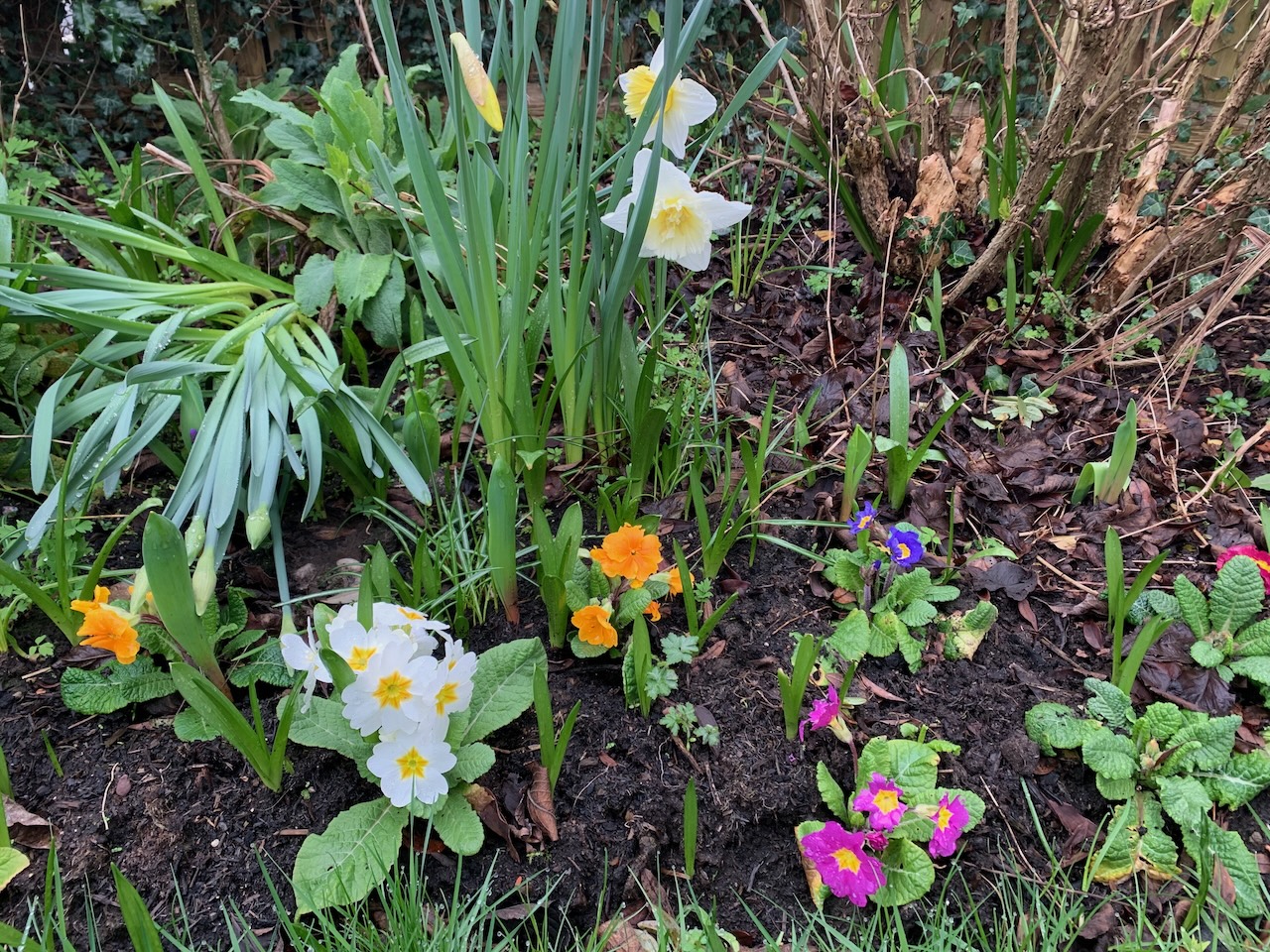
When I gave up being Sister Patience, it was a shock to the system coming back to Lorna Smithers and all her shit (which I thought I’d transcended). Yet the shit has made good compost and flowers have grown from it in the form of three books (3) written in the last few months as well as recent articles.
If you’re interested in the process of transforming your own suffering through shamanic work, creativity, and coming home, I’m currently providing shamanic guidance sessions for £15 an hour at a student rate (contact lornasmithers81@gmail.com).
(1) The Conversation of Gwyn ap Nudd and Gwyddno Garanhir (HERE).
(2) For example, see Sir Orfeo and the mythos surrounding Myrrdin Wyllt (HERE).
(3) A memoir – The Edge of the Dark (HERE), a poetry collection – They Called Me Pig (soon to come), and an epic novel called The Lost Shrine of Nodens, which will be published through Sul Books in May 2017.
 The Sanctuary of Vindos